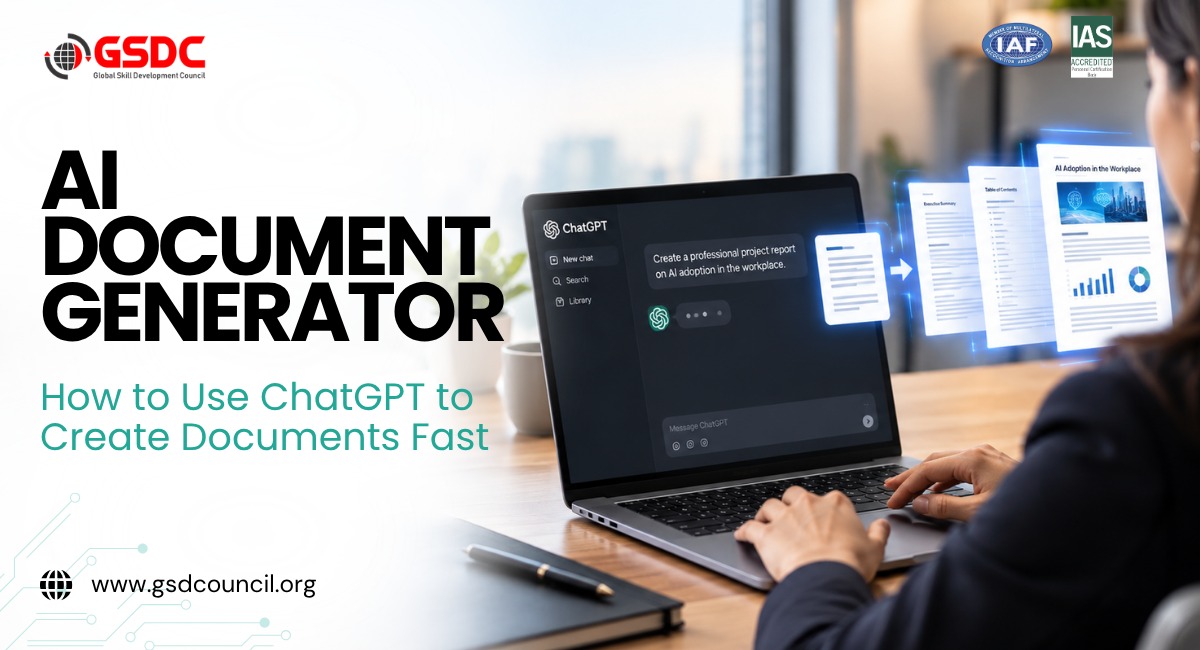
AI Document Generator: How to Use ChatGPT to Create Documents Fast
Written by Matthew Hale
- What Is an AI Document Generator, Really?
- Why This Matters More Than It Did Before
- How to Use ChatGPT as an AI Document Generator: Step by Step
- Which Tool Is the Best AI Document Generator for Your Use Case?
- Best Practices for Consistently Good Output
- The Deep Research Angle: More Than Just Drafting
- Where Formal Training Fits Into This
- Final Thoughts
Nobody has time to stare at a blank page anymore. Not when deadlines are tight and inboxes never stop filling up.
That is exactly why the ai document generator market has exploded. ChatGPT alone recently crossed 1 billion weekly active users, more than double what it had a year earlier, and a huge chunk of that usage is people asking it to draft reports, letters, contracts, and everyday business documents. If you have ever typed "how to use ChatGPT" into Google just to figure out how to get a decent first draft out of it, this guide is for you.
We are going to walk through exactly how to turn ChatGPT into your personal AI document generator, which prompts actually work, and where it fits alongside other ai writing tools you might already be using at work.
What Is an AI Document Generator, Really?
An AI document generator is any tool that uses artificial intelligence to produce a finished, formatted document from a simple instruction instead of you typing every word yourself. That covers everything from a quick meeting summary to a full ai word document generator workflow where you paste the output straight into Word and ship it.
ChatGPT was not built specifically as a document tool, but it has become the default one for millions of professionals because it is fast, flexible, and already sitting in a browser tab most people have open all day. Search interest in terms like "ai document generator" and "project report generator ai" has climbed steadily as more teams realize they do not need specialised software to get professional-grade output. A well-written prompt in ChatGPT often does the job just as well, sometimes better.
Why This Matters More Than It Did Before
A few things have changed recently that make this a genuinely different conversation than it used to be.
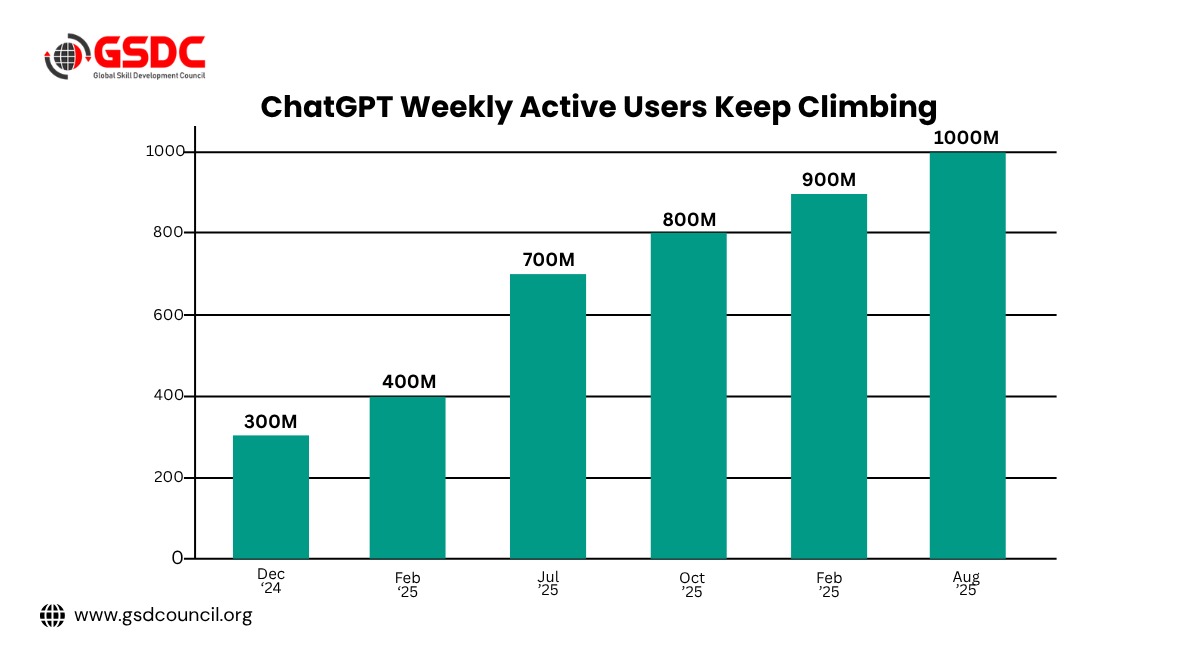
- ChatGPT now handles roughly 2.5 billion prompts a day, and a large share of business usage falls under writing and editing tasks, according to recent usage breakdowns.
- Enterprise adoption has surged too. Over 7 million workplace seats are active on ChatGPT, a nine-fold jump year over year, and more than 9 million paying business users rely on it for daily work.
- Newer models handle longer context windows and messier source material far better than the versions most people tried a couple of years ago, which means fewer awkward, generic-sounding drafts.
In short, the technology caught up to the hype. Using ChatGPT as your go-to ai document generator is not a shortcut anymore. For a lot of teams, it is simply how documentation gets done now, and clean documentation has a direct knock-on effect on faster decision-making across the business.
How to Use ChatGPT as an AI Document Generator: Step by Step
Here is the process that actually produces usable, professional output instead of vague, generic filler.
1. Tell It the Job Before You Tell It the Topic
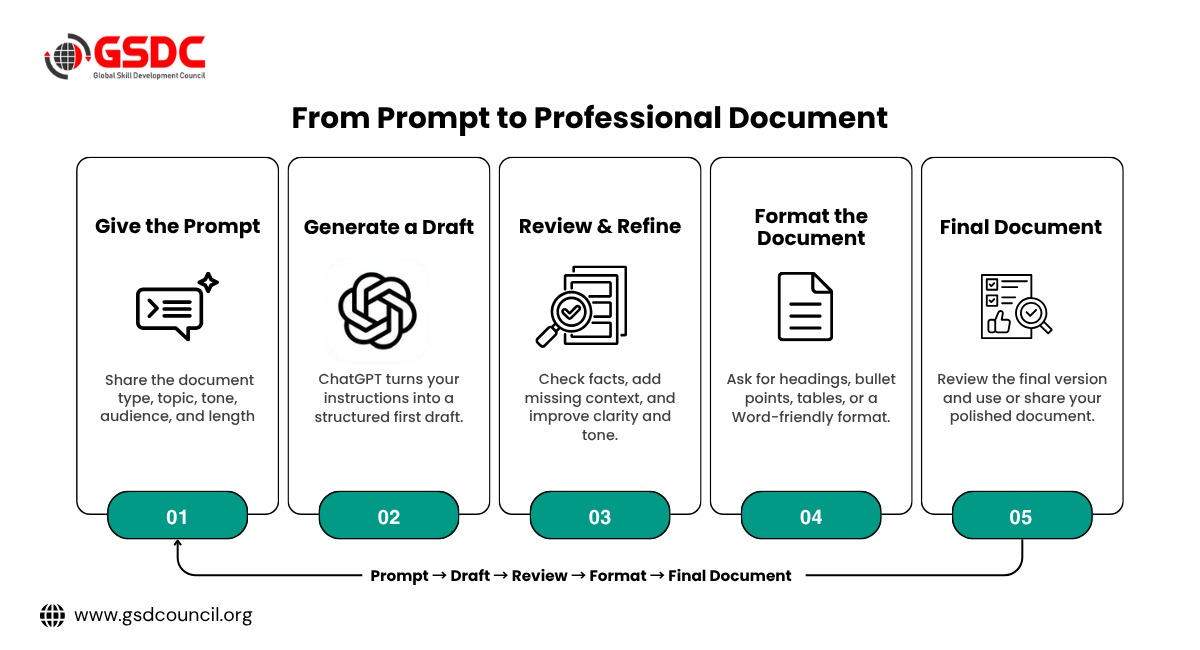
Before you mention your subject, set the frame. This is really just prompt engineering in practice, and ChatGPT performs noticeably better when it knows:
- The document type (report, memo, proposal, contract clause, policy)
- The tone (formal, conversational, persuasive)
- The audience (executives, clients, internal team, legal reviewers)
- The rough length you want
A prompt like "write about our Q3 sales" gives you mush. A prompt like "write a 400-word internal report for senior leadership summarising Q3 sales performance, written in a formal tone, with a short executive summary at the top" gives you something you can actually send. It is the same principle GSDC teaches its learners in prompt-based training: the model is only as good as the brief you hand it.
2. Get Specific With the Instruction
This is the single biggest lever for quality. If you are building a project report generator ai workflow for recurring status updates, save a template prompt and just swap out the details each time. Something like:
"Create a project status report covering milestones completed this sprint, current blockers, and next steps. Use headings for each section and keep bullet points under 15 words."
Reuse that structure weekly and you will get consistent formatting every single time, which matters more than people expect when reports get compared side by side. If you want a deeper primer on how to prompt the AI for consistently sharper output, it is worth spending an afternoon on.
3. Ask for the Format You Actually Need
ChatGPT can output bullet points, numbered steps, tables, or full paragraphs on command. If you are working toward a Word file, ask it to format the response so it pastes cleanly, with clear headings and no stray markdown symbols. This is the part that makes it function like a genuine ai word document generator, since you are not manually reformatting everything after the fact.
4. Use It for Legal and Contract Drafts, Carefully
People increasingly search for a best ai legal document generator or a contract generator ai because drafting from scratch eats hours. ChatGPT can absolutely draft an NDA skeleton, a service agreement outline, or standard contract clauses in seconds. What it cannot do is replace a qualified lawyer reviewing the final version for your jurisdiction and specific situation. Treat it as a first draft engine, not a substitute for legal sign-off. That one habit alone will save you from a painful mistake down the line.
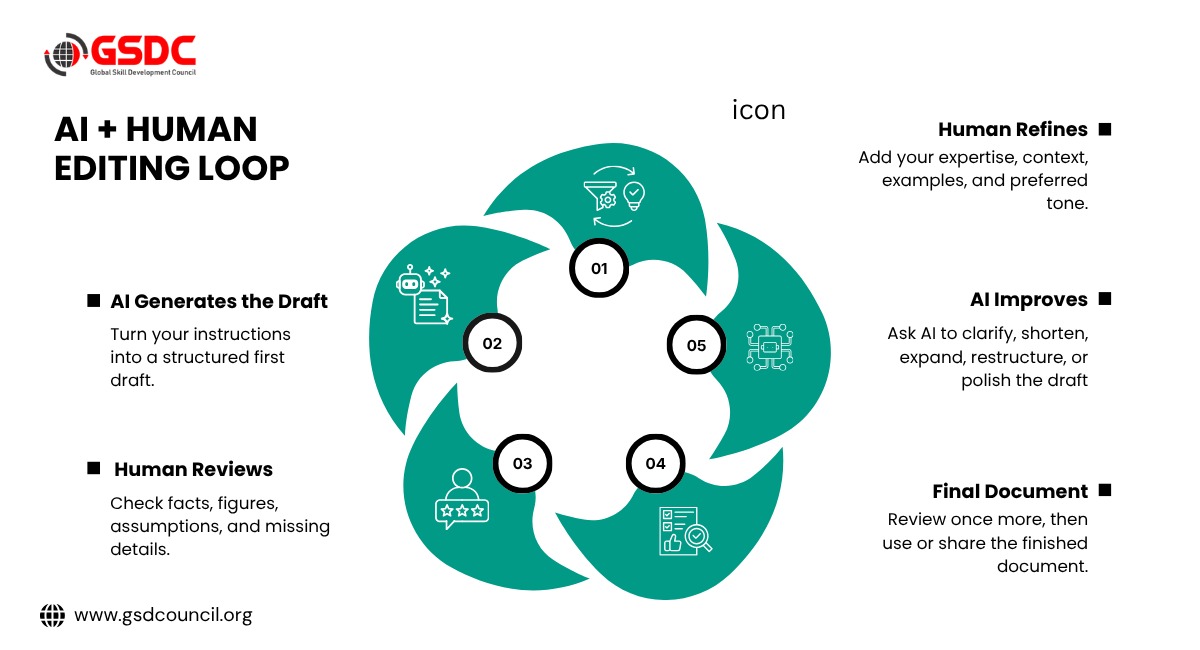
5. Edit Like the Draft Is Not Finished, Because It Isn't
Even the best output from any ai writing tools category needs a human pass. Read it out loud once. Check the facts and figures it may have assumed rather than confirmed. Add the specific detail that only you know, the client name, the internal deadline, the exact number from last week's meeting. That last 10 percent is what turns an AI draft into a document with your fingerprints on it, and it is exactly the judgment call that Certified AI Tool Expert training is built to sharpen.
Which Tool Is the Best AI Document Generator for Your Use Case?
There is no single winner here, and honestly, anyone claiming there is one universal best ai document generator is oversimplifying it. It depends on what you are producing.
Document type | Where ChatGPT fits well | What to watch for |
Reports and summaries | Strong at structuring data into clear sections | Verify any statistics it references |
Word documents and memos | Clean output, easy to paste and format | Double-check formatting after pasting |
Project status reports | Great for repeatable templates | Keep source data accurate and current |
Legal drafts and contracts | Fast first drafts, useful clause libraries | Always get human legal review |
Marketing and creative copy | Flexible tone and style | Fact-check any claims or numbers |
For most everyday business writing, ChatGPT covers the job end to end. For heavily regulated legal work, pair it with a specialist review process rather than relying on the draft alone.
Best Practices for Consistently Good Output
A few habits separate people who get great results from ChatGPT and people who give up and go back to writing everything by hand.
- Be specific every single time - Vague prompts produce vague documents. This is the number one factor in output quality.
- Review before you send, not after - Catching an error in your own inbox is fine. Catching it in a client's inbox is not.
- Ask follow-up questions instead of starting over - "Make the tone more formal" or "expand point three" is faster than regenerating the whole thing.
- Feed it context, not just instructions - Paste in relevant background data and let it work from real information rather than guesses.
- Keep a prompt library - Save the prompts that worked well so your team is not reinventing the wheel every time.
The Deep Research Angle: More Than Just Drafting
One thing that sets ChatGPT apart from a basic template generator is its ability to pull together information from a wide base of knowledge and, with browsing enabled, current web data too. That makes it genuinely useful for:
- Pulling together background research before you write a whitepaper
- Cross-checking figures across multiple sources
- Structuring dense information into something readable
This is where it stops being just an ai document generator and starts acting more like a research assistant that also happens to write the final draft for you, which is also why it stacks up so well against other dedicated content creation tools on the market.
Where Formal Training Fits Into This
Prompting your way to a decent document is one thing. Knowing why a prompt works, how to structure AI use across a whole team, and how to apply it responsibly with legal or client-facing material is another skill entirely. That is the gap organisations like the Global Skill Development Council (GSDC) are stepping in to close. Its Certified AI Tool Expert program is built for exactly this kind of practical, everyday AI use, covering document generation, prompt design, and workflow automation rather than just theory. For anyone who has moved past casually asking ChatGPT for help and wants a structured, recognised way to prove that skill, it is worth a look before you go all in on AI-assisted workflows.
Final Thoughts
Documentation used to be the part of the job everyone dreaded. Now it is one of the fastest tasks on the list, as long as you know how to prompt well and where to draw the line between AI drafting and human judgment. Whether you are writing internal reports, drafting a Word document for a client, or putting together a first-pass contract, ChatGPT has genuinely earned its place as one of the most practical AI writing tools available right now.

Related Certifications
Frequently Asked Questions
Outages happen occasionally, like with any large online service, but they are usually short. If ChatGPT is not loading, check OpenAI's official status page before assuming the problem is on your end.
For simple, low-risk drafts, often yes. For anything with real legal weight, use it to speed up the first draft and have a licensed professional review the final version.
Start small. Pick one recurring document you write often, build a solid prompt template for it, and refine that template over a few uses until the output needs almost no editing.
Yes, and it is one of the easiest starting points. You do not need any technical background, just a clear prompt describing the document you want. The free version handles most everyday documents fine, though the paid tier gives you longer outputs and steadier performance during busy periods.
You can, for routine agreements like basic service contracts or NDAs where the terms are fairly standard. Give it your key terms and ask for a clean draft in plain language. Just do not skip having someone with legal expertise check it before either party signs, especially for anything involving liability, payment terms, or jurisdiction-specific clauses.
Stay up-to-date with the latest news, trends, and resources in GSDC
If you like this read then make sure to check out our previous blogs: Cracking Onboarding Challenges: Fresher Success Unveiled
Not sure which certification to pursue? Our advisors will help you decide!