How to Implement GDPR: A Practical Guide to GDPR Compliance in 2026
Written by Matthew Hale
- What is GDPR and Why Does It Matter?
- What GDPR Implementation Really Means
- The Core Principles of GDPR
- A Step-by-Step Guide to GDPR Implementation
- Common Challenges in GDPR Implementation
- Skills Required to Lead the GDPR Implementation
- How Training, Certification & Audits Fit In
- Conclusion: GDPR Implementation Is an Ongoing Commitment
TikTok was the talk of the town globally in May 2025 when the Irish Data Protection Commission imposed a fine of €530 million on the platform. The regulators determined that the privacy of EU users' personal data that was being sent to China was not kept according to GDPR standards.
A very similar blow was dealt to LinkedIn only a few months back, when it was penalised with a €310 million fine for the use of behavioural and recruitment-related data without giving the necessary transparency and lawful basis.
These instances alone point out one thing: GDPR is not a set of regulations that are only there; it is a living, actively enforced compliance framework that requires continuous monitoring.
The fact that these two giants were hit with such large fines should serve as a powerful warning that no organisation, whether large or small, is free from the obligation to comply with stringent GDPR requirements.
What is GDPR and Why Does It Matter?
The General Data Protection Regulation (GDPR) is designed to protect the personal data of individuals in the EU. Its reach, however, is global - any organisation, regardless of location, must comply if it processes EU personal data.
GDPR matters because:
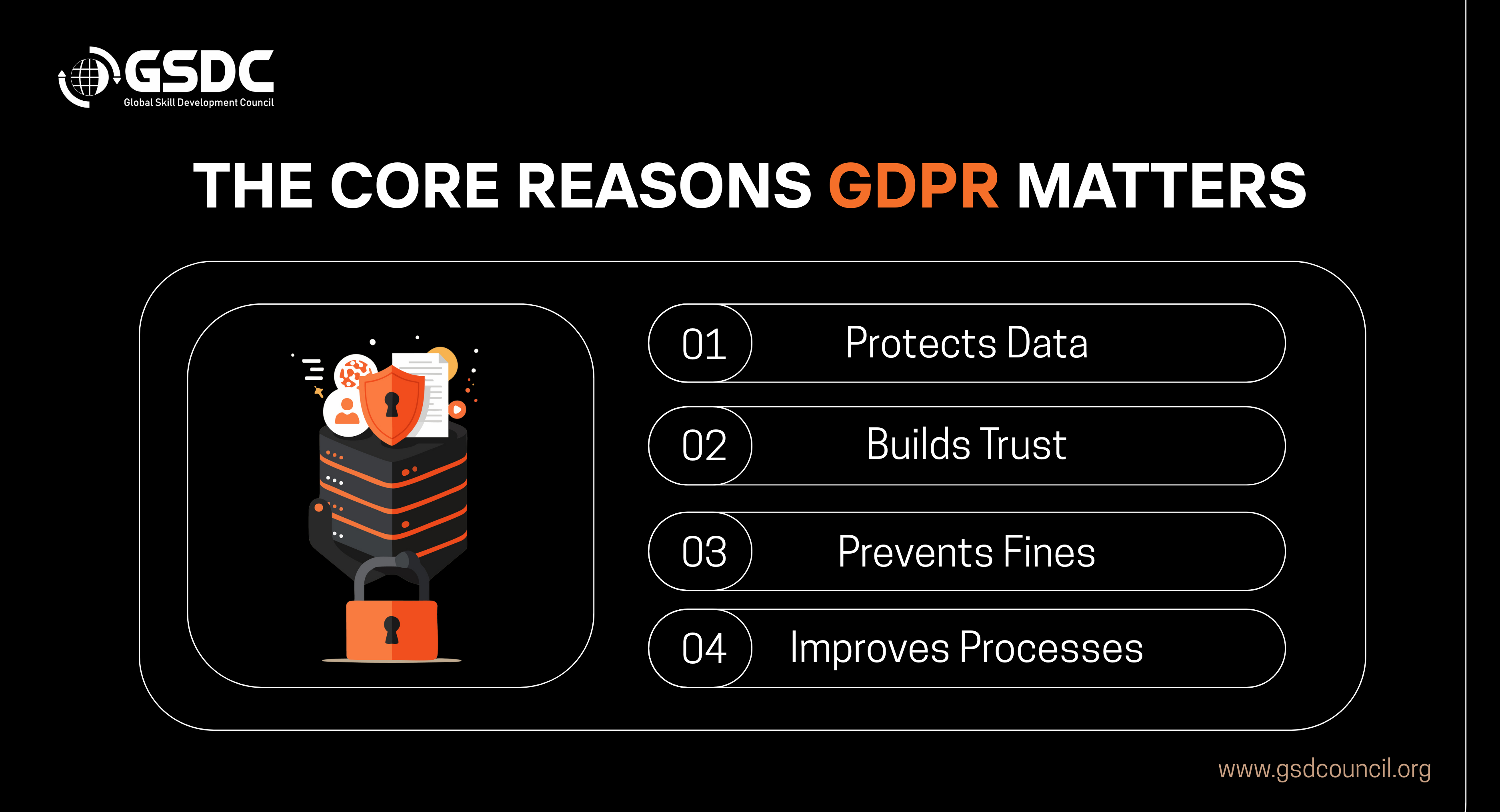
1. It protects personal data: Individuals get control over their information, from names and email addresses to IDs, financial data, and health information.
2. It builds trust: Organisations that take data privacy seriously earn stronger relationships with customers, employees, and partners.
3. It prevents costly penalties: Non-compliance can lead to fines of up to €20 million or 4% of annual global revenue, whichever is higher.
4. It improves business practices: GDPR encourages structured data handling, clearer documentation, well-defined processes, and stronger security.
One of the clearest indicators of GDPR’s importance is the growing enforcement activity. Regulators across Europe have issued significant penalties in recent years, signalling that compliance must be continuous, not reactive.
What GDPR Implementation Really Means
Implementing GDPR goes beyond simply placing a cookie banner on your website or changing a policy. It requires setting up a privacy ecosystem in your organisation.
This ecosystem is composed of:
- Knowing the data you collect
- Recording your GDPR lawful basis
- Protecting data by implementing strong security measures
- Addressing GDPR data subject rights
- Overseeing the third-party vendors
- Performing DPIAs in areas where they are necessary
- Providing employee training
- Checking processes regularly
- Handling international transfers in a fair manner
- Being clear in your documentation
Regardless of whether you are dealing with GDPR for small businesses or a large corporation, the core principles remain unchanged.
The Core Principles of GDPR
These seven principles guide compliant data handling:
- Lawfulness, Fairness & Transparency: Let a person know through a clear explanation the reason for collecting data and how it will be done.
- Purpose Limitation: Data should be used only for the purpose for which it was communicated.
- Data Minimisation: You are allowed to collect only that which is necessary.
- Accuracy: Ensure that the information is accurate and always updated.
- Storage Limitation: It is advised that a GDPR-compliant data retention policy is followed.
- Integrity & Confidentiality: Put enough security measures in place to make sure the data is safe.
- Accountability: Have proof that you are GDPR-compliant.
Noncompliance with these principles has been at the core of most enforcement actions; thus, their recognition as the key to proper data handling.
Those professionals wishing to deepen their knowledge in the application of these principles may consider the Certified GDPR Lead Implementer program, which concentrates on practical, real-world GDPR governance and implementation skills.
A Step-by-Step Guide to GDPR Implementation
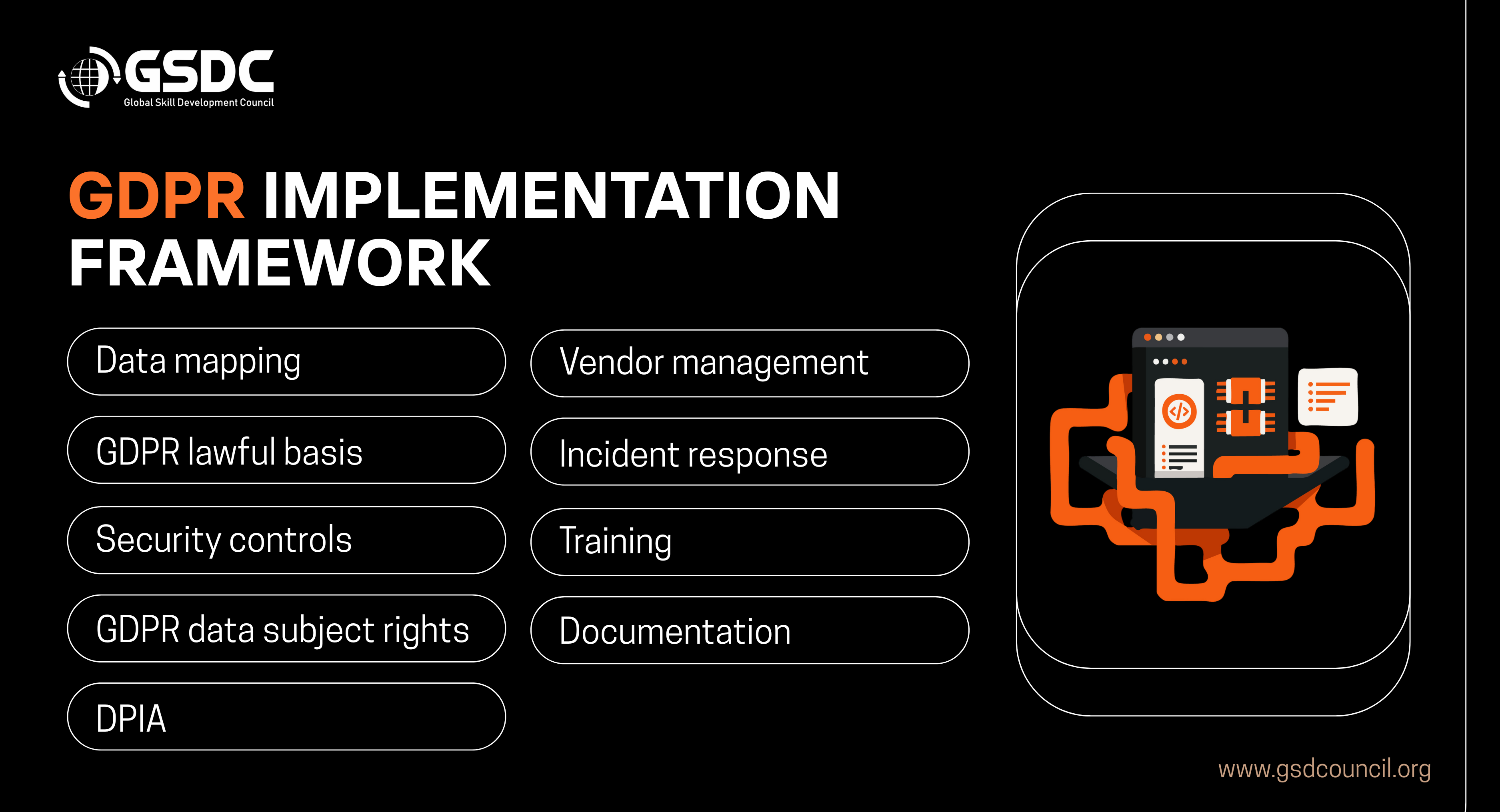
Below is a practical 10-step GDPR implementation process with one relevant real-world example placed where it matters most.
Step 1: Understand Your Data
- Start by mapping all personal data your organisation collects and processes.
- Identify what you collect, where it is stored, how long you keep it, who can access it, and what risks exist.
- Many organisations have faced fines for retaining unnecessary or outdated personal data, something effective data mapping prevents.
Step 2: Identify Your Legal Basis for Processing
- Every data activity must have a documented GDPR lawful basis, such as consent, contract, legitimate interest, or legal obligation.
- LinkedIn’s 2025 penalty highlighted how unclear or invalid lawful bases can lead to violations. Document your basis for each activity clearly and consistently.
Step 3: Strengthen Data Security
- GDPR requires strong security measures like encryption, role-based access control, intrusion detection, and incident response planning.
- Weak security controls have resulted in high penalties, including Meta Platforms’s €1.2 billion fine in 2023 related to insufficient protection during international data transfers. Strengthening your security is one of the most effective ways to reduce risk.
Step 4: Update Privacy Notices & Policies
- Your privacy notice must be simple, transparent, and regularly updated. It should clearly explain what personal data is collected, how it is used, who it is shared with, how long it’s stored, and how individuals can exercise their GDPR data subject rights.
- When organisations fail to provide clear information, regulators act quickly, making well-written notices essential.
Step 5: Improve Consent & Preference Management
- If your processing relies on consent, it must be freely given, specific, informed, and easy to withdraw.
- H&M’s €35 million fine in Germany stemmed from collecting and using employee information without proper consent important reminder that consent must be handled correctly in both customer and employee contexts.
Step 6: Conduct Data Protection Impact Assessments (DPIA)
- A DPIA is required when processing activity poses a high risk, such as profiling, AI-driven decisions, biometrics, or large-scale monitoring.
- Clearview AI faced enforcement action across multiple EU countries, partly due to the absence of valid DPIAs for its biometric data processing. DPIAs are critical for identifying risks early and demonstrating accountability.
Step 7: Manage Third-Party Processors
- Your vendors and processors must also follow GDPR requirements. Regular assessments, security reviews, and Data Processing Agreements (DPAs) are essential.
- British Airways’s £20 million penalty showed how vendor-related vulnerabilities can expose personal data. Strong vendor governance reduces risk significantly.
Step 8: Build an Incident Response & Breach Management Plan
- If a data breach occurs, GDPR requires reporting within 72 hours. Your plan should define how breaches are detected, assessed, reported, and resolved.
- With breaches affecting businesses of all sizes, having a clear response strategy helps reduce impact and ensures timely notification.
Step 9: Train Your Team
- Human error remains one of the most common causes of data breaches. Regular GDPR training helps employees understand how to handle data safely, recognise risks like phishing, and know when to escalate concerns.
- In one notable case, a hospital was fined because staff used shared login credentials issue which training and access controls could have prevented.
Step 10: Keep Records & Review Regularly
- GDPR requires ongoing maintenance. Keep updated records of your processing activities, DPIAs, incident logs, vendor reviews, audits, and staff training.
- With enforcement increasing each year, continuous review is essential to keep your GDPR framework aligned with regulations and best practices.
Common Challenges in GDPR Implementation
A large number of organisations face difficulties in complying with GDPR because of:
- Poor awareness within the company
- Unstructured or outdated data
- Extremely high dependence on third-party tools
- New tech - such as AI, is causing the rise of new risks
- Lack of in-house GDPR expertise
Addressing these challenges requires clear governance, regular training, and strong documentation.
To help organisations strengthen their privacy competencies, the Global Skill Development Council (GSDC) offers training programs designed to support real-world GDPR implementation and governance.
Download the checklist for the following benefits:
Includes data mapping sheets, DPIAs, policies, and the full 10-step guide.
Download the Toolkit now — quick, free, practical ⬇️
Skills Required to Lead the GDPR Implementation
One of the key knowledge areas for the professionals in charge of the implementation of GDPR is the understanding of:
- The general data protection regulation requirements and the legal bases
- The data mapping and classification methods
- Data protection impact assessment (DPIA) and GDPR risk assessment
- Implementation of GDPR policies and the preparation of documentation
- Managing third-party processors
- Getting ready for GDPR audits
- Governance and internal controls
The acquisition of these competences is essential for the establishment of a well-structured, long-term GDPR compliance programme
How Training, Certification & Audits Fit In
Many organisations invest in GDPR training to build internal capability, while professionals often pursue GDPR certification to demonstrate practical expertise. The Global Skill Development Council (GSDC) offers the Certified GDPR Lead Implementer, a recognised credential for those who want to lead GDPR implementation confidently.
GDPR audits, whether internal or external, ensure that policies align with real practices, risks are identified early, and documentation remains complete. Preparing for certification and audits reflects a long-term commitment to strong, reliable data protection across the organisation.

Conclusion: GDPR Implementation Is an Ongoing Commitment
GDPR compliance is not a one-off task; it is an ongoing commitment to managing personal data responsibly. By understanding your data, strengthening security, training your team, overseeing vendors, and keeping documentation updated, you build trust and long-term organisational resilience.
As enforcement continues to evolve, organisations with strong GDPR implementation governance, regular reviews, DPIAs, and well-trained teams will be better positioned to stay compliant and secure in a world where data protection matters more than ever.

Related Certifications
Stay up-to-date with the latest news, trends, and resources in GSDC
If you like this read then make sure to check out our previous blogs: Cracking Onboarding Challenges: Fresher Success Unveiled
Not sure which certification to pursue? Our advisors will help you decide!