From Automation to Agentic AI in L&D: Are Enterprises Ready?
Written by Dhana Mani
The enterprise automation landscape is undergoing a significant transformation. For years, organizations have relied on Robotic Process Automation (RPA) to streamline repetitive tasks, reduce operational costs, and improve efficiency. However, the emergence of Agentic AI systems capable of reasoning, planning, and learning signals the next phase of enterprise intelligence and enterprise artificial intelligence.
This shift is especially relevant in Learning and Development (L&D), where organizations are moving beyond traditional training toward skill-powered workforces capable of adapting to rapidly evolving technologies through ai for enterprise. As businesses explore the transition from automation to intelligent systems, a critical question arises: Are enterprises truly ready for agentic AI and a robust enterprise ai strategy?
This blog examines the evolution from robotic automation to agentic AI, including the opportunities and risks associated with it, and outlines how organizations can prepare for the next wave of AI-driven transformation powered by ai powered automation.
The Evolution of Enterprise Automation
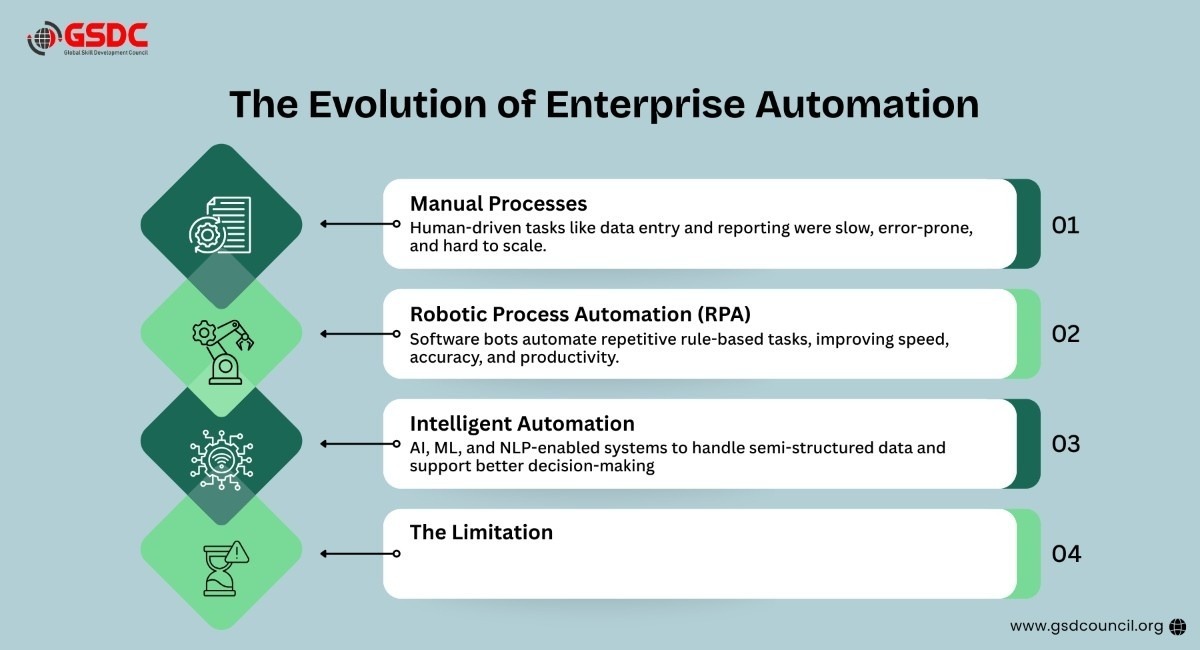
Enterprise automation has evolved in several stages over the past two decades. Understanding this evolution helps explain why agentic AI is gaining attention today.
1. Manual Processes
Before automation technologies became mainstream, most enterprise operations depended on human-driven repetitive tasks. Employees performed activities such as data entry, invoice validation, or report generation manually. While these processes were necessary, they were also:
- Time-consuming
- Error-prone
- Difficult to scale
As organizations grew, the need for efficiency and accuracy drove the adoption of automation technologies.
2. Robotic Process Automation (RPA)
The first breakthrough in enterprise automation came with RPA. These software bots mimic human actions, such as logging into applications, navigating workflows, and transferring data between systems.
Key benefits of RPA include:
- Faster execution of repetitive tasks
- Reduced operational costs
- Improved accuracy and consistency
- Increased productivity
However, RPA works best with structured data and predefined rules. Bots follow scripts exactly as programmed and cannot adapt easily when unexpected changes occur. If workflows change or exceptions arise, bots often fail and require manual intervention.
3. Intelligent Automation
The next stage introduced machine learning, natural language processing (NLP), and traditional AI models into automation systems. This allowed organizations to process semi-structured data and identify patterns in data sets.
While intelligent automation improved decision-making capabilities, it still relied heavily on predefined training patterns. Systems could recognize known scenarios but struggled with unpredictable or complex workflows.
Why Enterprises Are Exploring Agentic AI
Organizations today operate in environments where data is unstructured, decisions are dynamic, and customer expectations are constantly evolving.
Traditional automation struggles to address these complexities.
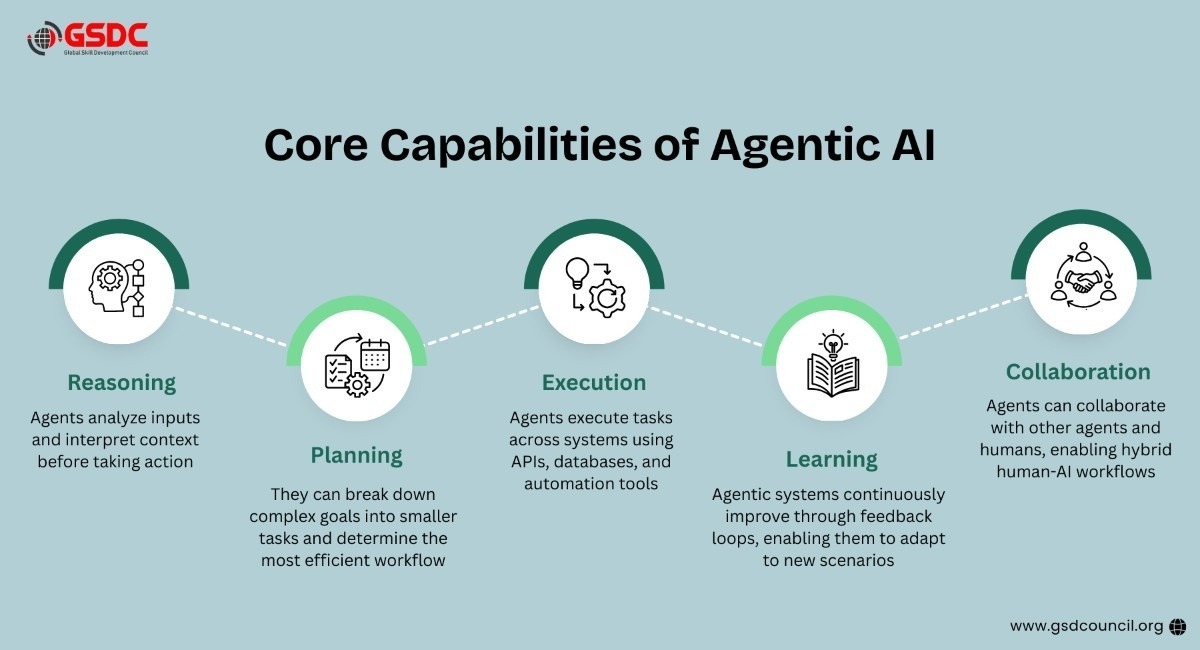
Several factors are driving the interest in agentic AI:
1. Increasing Data Complexity
Enterprises now process large volumes of unstructured data, including emails, handwritten documents, invoices, and customer messages. Traditional RPA cannot easily interpret such data formats.
Agentic AI can analyze and interpret diverse data sources to generate actionable insights.
2. Complex Enterprise Workflows
Modern enterprises rely on multiple interconnected systems, such as CRM platforms, ERP systems, and cloud applications.
Agentic AI agents can interact with these systems simultaneously, enabling end-to-end automation across platforms.
3. Demand for Real-Time Decision-Making
Organizations increasingly require dynamic decision-making capabilities. Businesses need systems that can respond instantly to changes in customer behavior, market conditions, or operational challenges.
Agentic AI enables automated reasoning and faster decision-making.
4. Improved Customer Experience
Customer expectations have undergone a dramatic shift in the digital era. Users expect instant responses, personalized services, and seamless digital experiences.
Agentic AI can analyze context, understand intent, and deliver personalized interactions at scale.
RPA vs Agentic AI: Key Differences
Although RPA and agentic AI are both automation technologies, they serve different purposes.
| Feature | RPA | Agentic AI |
| Approach | Rule-based | Context-driven |
| Data Type | Structured | Structured and unstructured |
| Decision Making | Predefined rules | Dynamic reasoning |
| Learning | Minimal | Continuous learning |
| Error Handling | Often fails on exceptions | Adapts and self-corrects |
Importantly, agentic AI does not entirely replace RPA. Instead, many enterprises adopt a hybrid model, where RPA handles execution tasks, and agentic AI manages decision-making.
Are Enterprises Truly Ready?
Despite the excitement surrounding agentic AI, many organizations are still in the experimental stage.
While executive leadership is increasingly interested in AI adoption, large-scale enterprise implementation remains limited. Several factors explain this gap.
Trust and Governance
Organizations must ensure AI systems operate ethically, transparently, and securely. Concerns around data privacy, regulatory compliance, and AI bias remain significant barriers.
Skills and Workforce Readiness
Implementing agentic AI requires new skill sets. Employees must understand:
- AI governance
- data management
- prompt engineering
- AI system monitoring
Workforce upskilling is therefore essential.
Technology Integration
Enterprises often rely on legacy systems that were not designed to integrate with AI agents. Updating infrastructure and APIs can be a complex process.
Data Quality
Agentic AI systems depend heavily on data. Poor data quality leads to inaccurate decisions and unreliable outcomes.
Organizations must invest in data pipelines, validation frameworks, and governance policies.
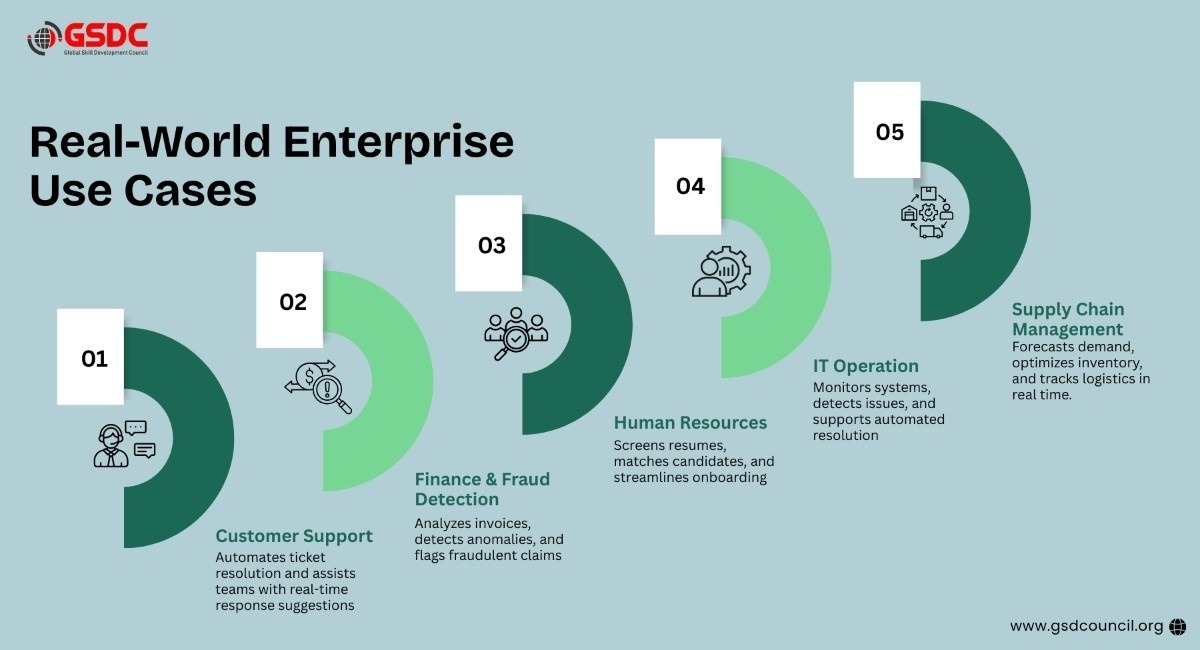
Challenges and Risks of Agentic AI
Despite its potential, agentic AI introduces several risks that enterprises must address.
Loss of Control
Autonomous systems can make decisions independently, which raises concerns about oversight.
Regulatory Compliance
Organizations must ensure compliance with global regulations related to data privacy, AI transparency, and algorithmic accountability.
Job Displacement Concerns
Employees often worry that AI will replace human jobs. In reality, most enterprises adopt human-in-the-loop models, where AI assists rather than replaces workers.
Security Risks
AI systems processing sensitive data must implement strong security measures to prevent data breaches or misuse.
The Hybrid Future: Humans, RPA, and AI Agents
The most realistic future for enterprise automation is not fully autonomous AI but a hybrid model.
In this model:
- RPA handles repetitive execution tasks
- Agentic AI manages reasoning and decision-making
- Humans provide strategic oversight
This layered approach balances automation efficiency with human judgment and accountability.
How Enterprises Can Prepare for Agentic AI
Organizations planning to adopt agentic AI should take a structured approach.
- Start Small: Begin with pilot projects focused on clearly defined enterprise ai use cases within the ai enterprise landscape.
- Define Success Metrics: Organizations must establish measurable outcomes such as cost reduction, improved customer experience, or faster decision-making to understand what is enterprise ai in practice.
- Invest in Workforce Upskilling: Training programs should equip employees with AI literacy and practical skills to effectively work alongside autonomous ai agents and autonomous agents.
- Strengthen Governance: AI governance frameworks should address ethics, compliance, and data protection across ai enterprise initiatives.
- Improve Data Infrastructure: Reliable data pipelines and validation mechanisms are essential for successful AI deployment and scaling enterprise ai use cases.
Agentic AI Professional: Powering Autonomous Intelligence for Smarter Business Outcomes
The Agentic AI Professional Certification from GSDC equips professionals to design, deploy, and manage intelligent AI systems that operate autonomously, make decisions, and achieve defined goals with minimal human intervention. It focuses on building adaptive, goal-driven agents capable of learning, evolving, and executing complex workflows across diverse business functions.

Why it’s beneficial:
GSDC’s Agentic AI certification enables organizations to streamline decision-making, reduce operational costs, and scale efficiently through intelligent automation. It enhances accuracy, agility, and innovation by empowering AI systems to manage dynamic, real-time processes with minimal oversight.
Conclusion
The transition from RPA to agentic AI marks a new chapter in enterprise automation. While RPA has successfully streamlined repetitive tasks, agentic AI introduces the intelligence needed to manage complex workflows and dynamic decision-making, answering what is agentic ai in the context of ai enterprise.
However, enterprises must approach this transformation carefully. Technology alone is not enough people, governance, processes, and data readiness are equally important when implementing autonomous ai agents and autonomous agents.
Organizations that adopt a hybrid automation strategy, combining RPA, AI agents, and human oversight, will be better positioned to unlock the full potential of intelligent automation and real-world agentic ai enterprise use cases.
Ultimately, the question is not whether agentic AI will reshape enterprise operations.
The real question is whether organizations will be prepared when it does in the evolving ai enterprise landscape.
Subscribe to Our Newsletter
Stay up-to-date with the latest news, trends, and resources in GSDC

Related Certifications
Frequently Asked Questions
Stay up-to-date with the latest news, trends, and resources in GSDC
If you like this read then make sure to check out our previous blogs: Cracking Onboarding Challenges: Fresher Success Unveiled
Not sure which certification to pursue? Our advisors will help you decide!