How CHROs Lead Strategic Workforce Planning in Uncertain Times
Written by Nicole Jackson
- Why Strategic Workforce Planning Matters More Than Ever
- CHROs as Strategic Decision-Makers
- Balancing Data-Driven and Ethical Decision-Making
- Scenario Planning for Uncertainty
- The Growing Importance of Skills-Based Workforce Planning
- The Role of AI and Workforce Analytics
- Communication and Transparency During Workforce Decisions
- Lead the Future of People Strategy with Chief Human Resources Officer Certification
- Conclusion
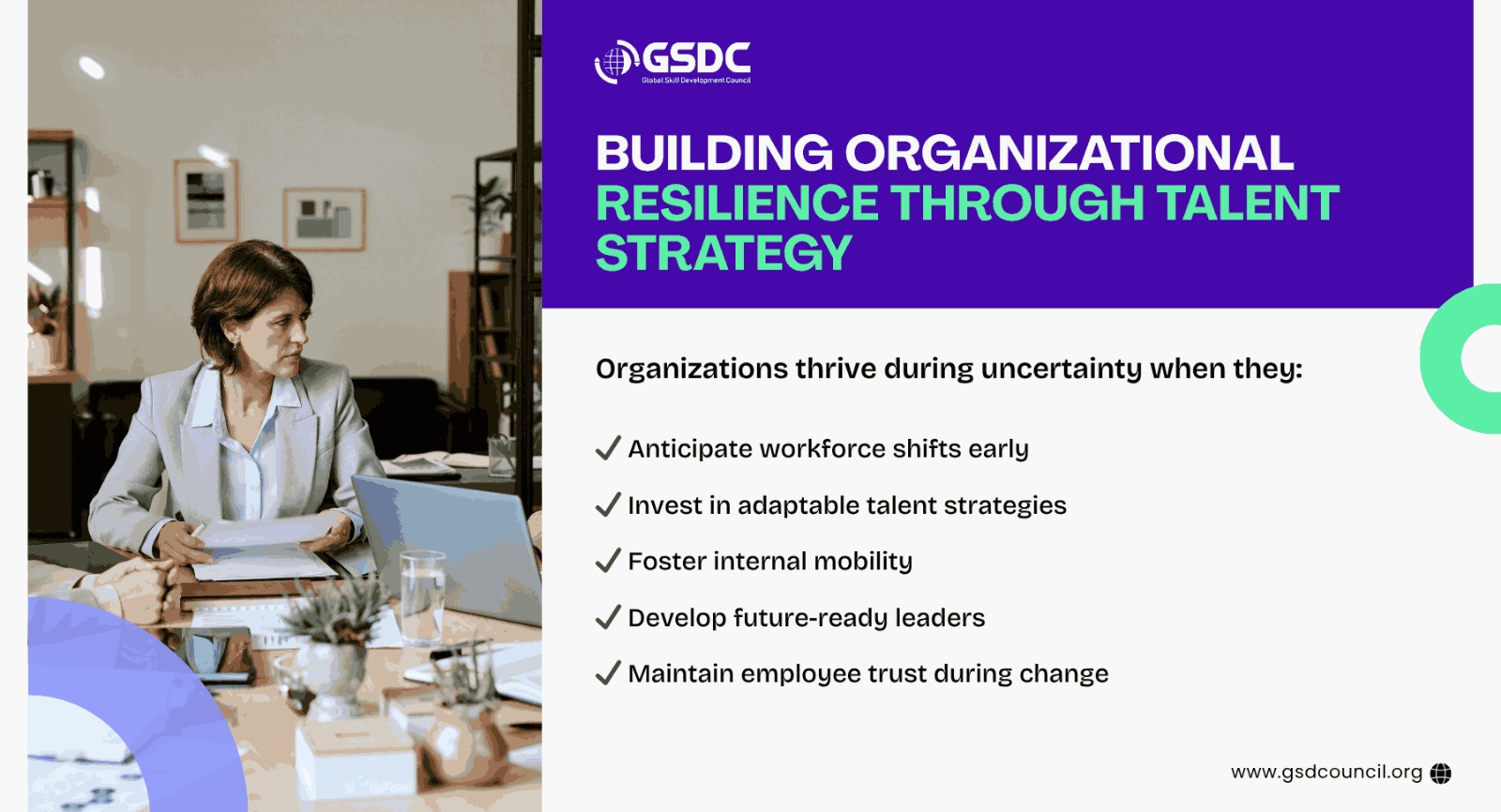
As uncertainty continues to reshape the global business landscape, Chief Human Resources Officers (CHROs) are stepping into increasingly strategic roles that extend far beyond traditional HR responsibilities. No longer focused solely on recruitment and employee engagement, today’s CHROs are instrumental in building long-term organizational resilience and driving strategic business outcomes. As companies face economic volatility, technological disruption, talent shortages, and shifting employee expectations, strategic workforce planning has become one of the most critical priorities for HR leadership.
Modern CHROs are expected to move beyond traditional HR functions and take an active role in shaping enterprise-wide strategy. This requires balancing immediate workforce demands with long-term talent sustainability, while making complex decisions in an environment defined by constant change and uncertainty.
Effective workforce planning today goes far beyond headcount forecasting. It involves aligning talent strategy with business goals, anticipating future skill requirements, preparing for market disruptions, and ensuring organizations remain agile in the face of unforeseen challenges.
This webinar explored how CHROs can lead strategic workforce planning during uncertain times, highlighting the importance of structured decision-making, ethical leadership, and maintaining the right balance between business performance and people priorities.
Why Strategic Workforce Planning Matters More Than Ever
Strategic workforce planning refers to the process of analyzing current workforce capabilities, forecasting future talent needs, and building strategies to ensure organizations have the right people, with the right skills, in the right roles, at the right time.
In uncertain times, this process becomes significantly more complex.
Organizations face challenges such as:
- Economic downturns and budget constraints
- Rapid digital transformation and AI adoption
- Skills shortages in emerging technology areas
- Remote and hybrid work expectations
- Increased employee turnover and changing workforce demographics
Without a proactive workforce strategy, businesses risk talent gaps, productivity loss, and an inability to adapt quickly to market changes.
CHROs must therefore move from reactive staffing decisions to forward-looking workforce planning strategies that align talent management with business objectives.
CHROs as Strategic Decision-Makers
Historically, workforce decisions were often operational and administrative. However, CHROs today are increasingly expected to serve as strategic advisors to CEOs and executive leadership teams.
Their role involves making difficult trade-offs between competing priorities, including:
- Cost efficiency versus talent investment
- Short-term survival versus long-term growth
- Automation versus human workforce retention
- Business performance versus employee wellbeing
Strategic workforce planning requires CHROs to evaluate decisions not only based on outcomes but also on their broader organizational impact.
As highlighted in the webinar, leadership decisions often involve ethical and strategic dilemmas where there may not be a perfect solution, only the most balanced and thoughtful one.
Balancing Data-Driven and Ethical Decision-Making
One of the major themes discussed in the webinar was the importance of balancing consequential outcomes with ethical considerations, a key aspect of effective HR decision-making strategies. In workforce planning, leaders often rely on data and analytics to make decisions.
Metrics such as headcount costs, productivity benchmarks, attrition rates, and performance indicators help CHROs determine where resources should be allocated while strengthening organizational resilience and workforce stability.
At the same time, these insights play a crucial role in shaping a strong talent management strategy, ensuring that workforce decisions align with both immediate business needs and long-term organizational success.
However, data alone cannot drive workforce strategy.
CHROs must also consider:
- Employee trust and morale
- Organizational culture
- Fairness and equity
- Long-term employer brand reputation
- Ethical implications of workforce decisions
For example, reducing headcount may improve short-term financial performance, but it may also damage morale, weaken culture, and create long-term retention challenges.
Strong CHROs understand that strategic workforce planning is not purely mathematical it requires human judgment, empathy, and ethical leadership.
Scenario Planning for Uncertainty
Another key takeaway from the webinar was the need for scenario-based workforce planning.
Rather than creating a single workforce plan, CHROs should develop multiple scenarios based on possible future business conditions.
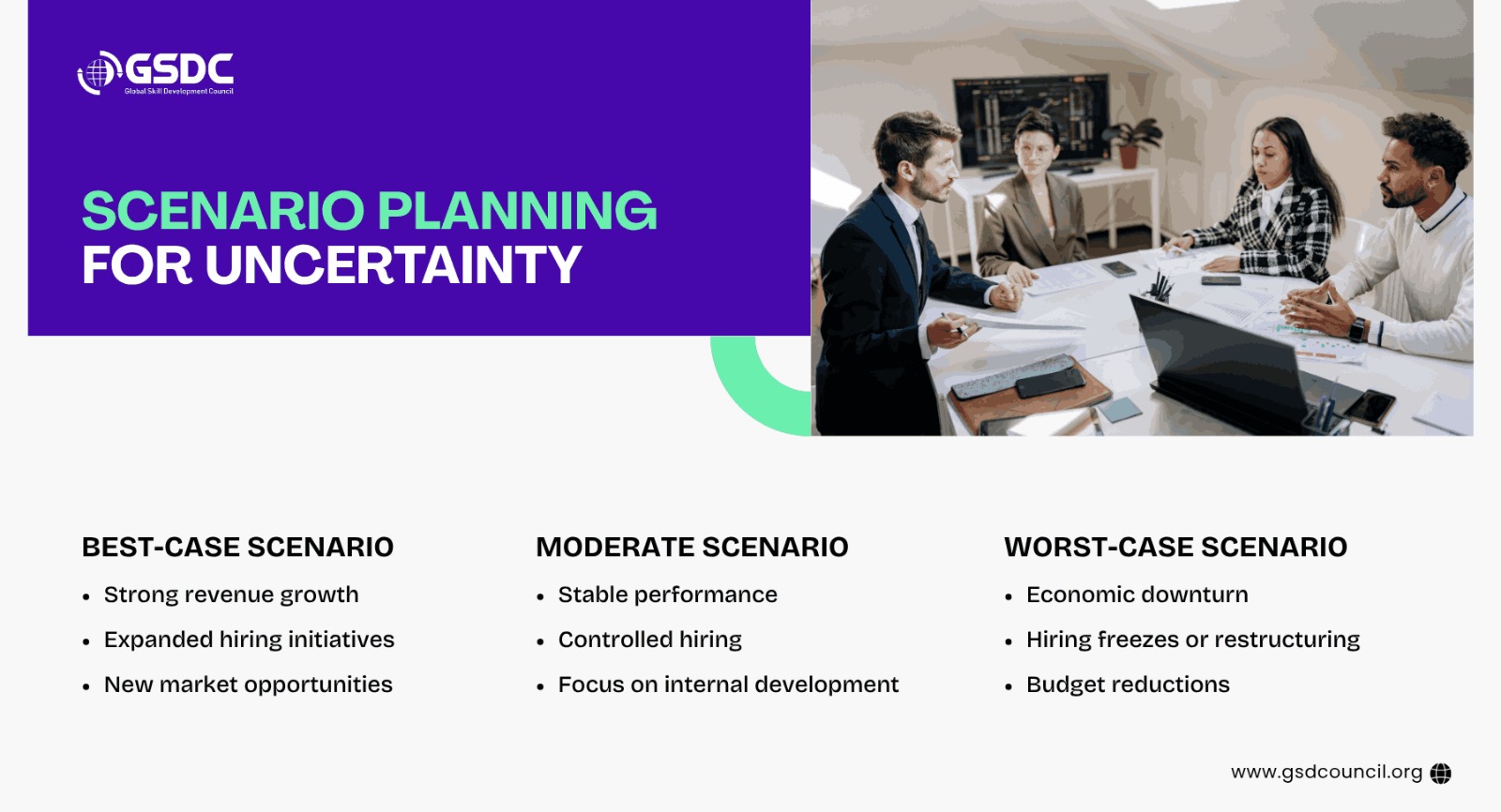
Scenario planning enables organizations to prepare flexible workforce strategies rather than reacting under pressure.
CHROs who use scenario planning can help leadership teams make faster, more confident decisions when market conditions change unexpectedly.
The Growing Importance of Skills-Based Workforce Planning
Traditional workforce planning focused heavily on job roles and headcount. Today, CHROs are shifting toward skills-based workforce planning.
Rather than asking:
“How many employees do we need?”
Organizations are asking:
“What skills do we need to remain competitive?”
This approach is especially important because many future roles are still evolving or may not yet exist.
Skills-based planning helps organizations:
- Identify critical capability gaps
- Prepare for digital transformation
- Redeploy internal talent efficiently
- Build agility into workforce structures
CHROs must assess current employee skillsets, predict future skill demands, and create reskilling/upskilling pathways to close gaps proactively.
The Role of AI and Workforce Analytics
Technology is transforming how CHROs approach workforce planning.
Advanced HR analytics and AI-powered tools now allow leaders to:
- Predict turnover risk
- Forecast hiring needs
- Analyze productivity trends
- Identify skill shortages
- Optimize succession planning
However, while AI enhances decision-making, the webinar stressed that technology should support leadership judgment, not replace it.
CHROs must ensure workforce decisions remain human-centered and aligned with organizational values.
Overreliance on automation without ethical oversight can create bias, inequity, and employee distrust.
Communication and Transparency During Workforce Decisions
Strategic workforce planning often involves difficult organizational decisions such as restructuring, layoffs, redeployment, or role transformation.
In such situations, communication becomes critical.
CHROs must ensure: Transparency around decision-making processes
- Clear explanation of organizational rationale
- Compassionate leadership messaging
- Honest acknowledgment of employee concerns
Poor communication during uncertain periods can create fear, rumors, disengagement, and trust erosion.
The most effective CHROs communicate workforce decisions with empathy while maintaining strategic clarity.
Lead the Future of People Strategy with Chief Human Resources Officer Certification
The Chief Human Resources Officer (CHRO) Certification by GSDC is designed for senior HR leaders aiming to drive strategic impact in modern organizations. This certification equips professionals with advanced knowledge in talent management, organizational development, workforce planning, and HR analytics.
It focuses on aligning HR strategies with business goals while fostering a culture of innovation and employee engagement. Participants gain insights into leadership, change management, and emerging HR technologies, including AI-driven decision-making.
Chief Human Resources Officer (CHRO) Certification is ideal for experienced HR professionals. This certification validates expertise, enhances leadership credibility, and prepares individuals to navigate complex workforce challenges in a rapidly evolving business landscape.
Conclusion
Strategic workforce planning has become one of the defining responsibilities of today’s CHROs. The CHRO role in workforce planning now extends beyond operations to shaping long-term business outcomes. In uncertain times, Chief Human Resources Officer strategy plays a critical role as HR leaders must balance business needs, employee well-being, ethical responsibility, and long-term organizational resilience.
Successful workforce planning requires more than forecasting headcount it demands thoughtful leadership, data-informed strategy, ethical judgment, and adaptability. This is where HR strategic leadership becomes essential in driving impactful decisions.
As workforce dynamics continue to evolve, workforce planning in uncertain times requires CHROs to embrace strategic planning, skills-based thinking, scenario modeling, and transparent communication to guide their organizations toward sustainable growth.

Related Certifications
Frequently Asked Questions
Stay up-to-date with the latest news, trends, and resources in GSDC
If you like this read then make sure to check out our previous blogs: Cracking Onboarding Challenges: Fresher Success Unveiled
Not sure which certification to pursue? Our advisors will help you decide!