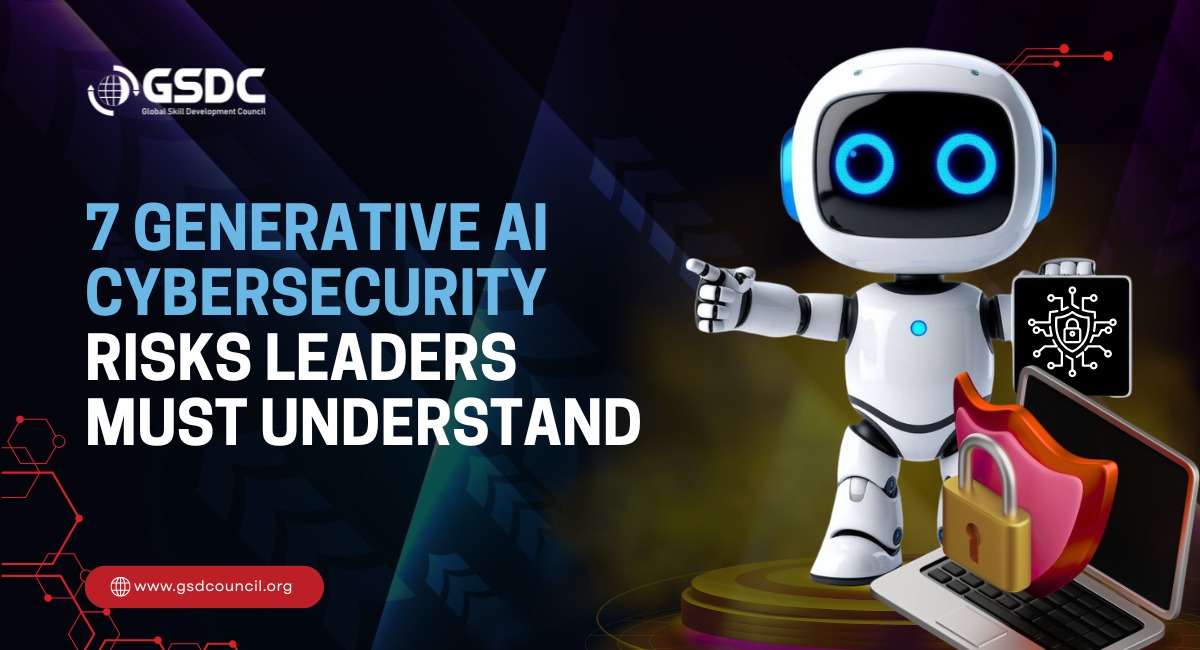
7 Generative AI Cybersecurity Risks Leaders Must Understand
Written by Matthew Hale
- What Is Generative AI Cybersecurity?
- How AI Is Used in Cybersecurity Today
- The Impact of AI on Cybersecurity Is Growing Fast
- 7 Generative AI Cybersecurity Risks Leaders Must Understand
- What Are the Risks of Generative AI in Cybersecurity?
- Why Skills and Certification Matter More Now
- Development of Skills for the Future of AI-Based Security
- Conclusion
Generative AI is changing cybersecurity from both sides. Security teams are using it to detect threats faster, speed up analysis, and support quicker response. Attackers are using it too to create more convincing phishing attacks, adapt malware, and exploit gaps with less effort.
That is why generative AI and cybersecurity have become such an important conversation for leaders. The technology is creating new advantages in defense, but it is also introducing new risks that organizations need to manage carefully. According to research, the generative AI cybersecurity market is projected to grow from USD 8.65 billion in 2025 to USD 35.50 billion by 2031, showing how quickly organizations are increasing investment in AI-driven security capabilities.
For business leaders, professionals, and aspiring security decision-makers, understanding the impact of AI on cybersecurity is no longer optional. It now shapes how organizations assess risk, build resilience, and prepare for a more complex threat landscape.
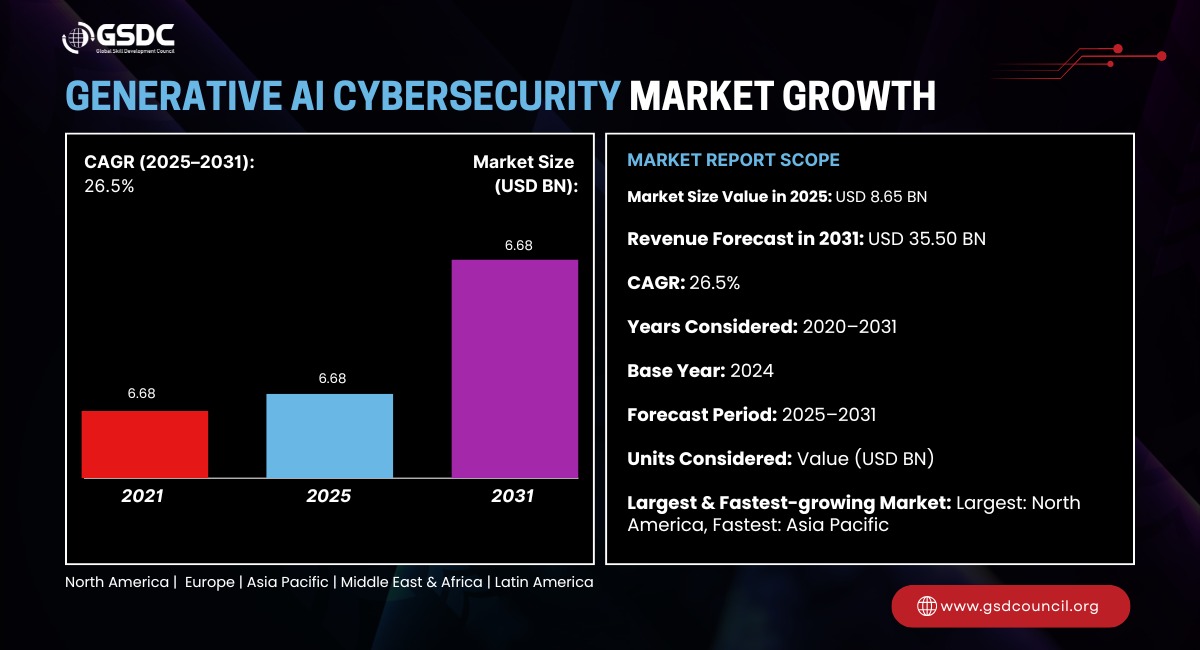
The generative AI cybersecurity market is expected to rise to USD 35.50 billion by 2031 from USD 8.65 billion in 2025, indicating increasing investment in AI-based cybersecurity solutions by organizations.
What Is Generative AI Cybersecurity?
Generative AI cybersecurity means using generative AI to support cyber defense. It helps organizations detect threats, analyze security data, improve incident response, and make security operations faster. It also includes understanding how attackers may use the same technology to make cyber attacks more effective.
This is why the use of AI in cyber security is growing. At the same time, it is also creating new generative AI security risks that organizations need to manage carefully.
How AI Is Used in Cybersecurity Today
Organizations today still wonder how AI is used in cybersecurity. The use of AI in cyber security today is not just about automation. AI in cybersecurity today is used to help security teams act faster, discover threats sooner, and respond better.
1. Threat Detection
AI is used to help detect anomalies in systems, networks, and the cloud. This allows security teams to discover threats sooner and prioritize the most critical threats.
2. Incident Investigation
Generative AI is used to help summarize security alerts, security findings, and large amounts of data. This allows security teams to understand incidents sooner and enhance the use of AI in cyber security during incident investigations.
3. Faster Response
AI can be used to help respond to incidents by suggesting actions, assisting in the creation of reports, and guiding security teams during security incidents. This can help security teams save time and improve consistency.
4. Identity, Data, and Cloud Security
AI is also used to help monitor sign-in activities, safeguard sensitive data, and enhance visibility in cloud environments. This allows organizations to reduce risks in different parts of their business.
5. Risk and Vulnerability Analysis
AI assists in analyzing patterns and risks that require attention, making security operations more efficient and proactive.
Professionals building these analytical systems use tools like VAE behaviour analytics engines and GAN anomaly detectors two of the 12 production-grade ai cybersecurity tools built in the GSDC CGAIC certification programme, giving learners hands-on experience that maps directly to real SOC and security engineering workflows.
With this trend set to continue, professionals must have the skills to not only see the opportunities but also the risks associated with AI in the security industry, and this is where the Global Skill Development Council (GSDC) can assist.
The Impact of AI on Cybersecurity Is Growing Fast
The impact of AI on cybersecurity is clear on both sides. Security teams are using AI to work faster and improve analysis, while attackers are using it to make threats more effective.
One 2025 report noted a 1,265% increase in phishing attacks linked to the growth of generative AI tools. This shows how quickly ai cybersecurity threats are rising.
That is why leaders need to look at generative AI and cybersecurity in a balanced way. AI is improving defense, but it is also making attacks easier to scale.
7 Generative AI Cybersecurity Risks Leaders Must Understand
The fast growth of AI is creating new opportunities, but it is also bringing real generative AI cybersecurity risks. These risks are already showing up in real business environments. Studies note that 13% of surveyed global organizations reported breaches involving AI models or applications, and 60% of those incidents led to compromised data. That shows the risks of generative AI in cybersecurity are no longer just future concerns.
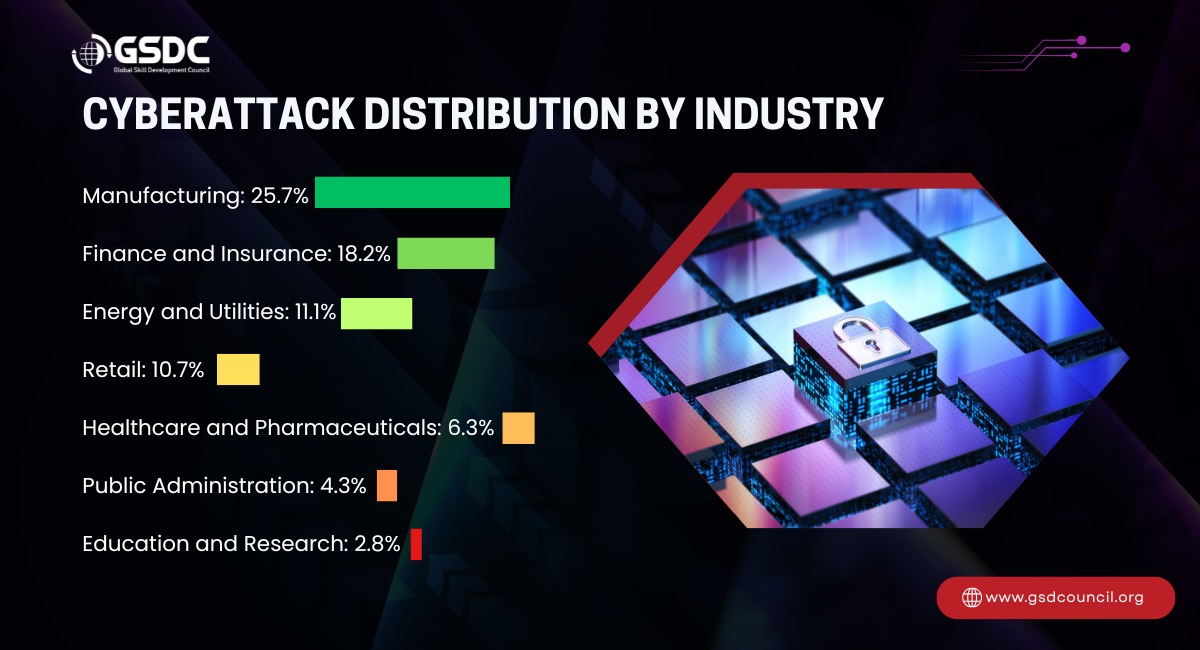
Recent industry figures show that AI-related breaches and phishing attacks are rising as generative AI adoption expands across organizations.
1. Data Leakage
When using AI tools, data such as prompts, internal documents, and source code may leak out. This is one of the most critical security risks with generative AI in businesses.
2. Inaccurate Output
Generative AI sometimes gives partial or wrong answers. In cybersecurity, that might result in flawed choices, overlooked threats, or bad response steps.
3. Over-Reliance on Automation
AI can make security staff more efficient, but it shouldn't take over human judgment. Too much trust in AI responses can leave gaps when examining events or reacting to attacks.
4. Adversarial Manipulation
Attackers might trick AI models into making errors or missing suspicious behavior. This could damage confidence in AI-powered security solutions.
5. Governance and Compliance Gaps
When organizations adopt AI without clear rules, oversight, or approved tools, they can create privacy, compliance, and audit risks.
6. AI-Powered Phishing and Social Engineering
Generative AI may help attackers launch phishing and social engineering attacks that are difficult for users to recognize and distinguish from legitimate ones.
7. Faster Malware Adaptation
Threat actors may exploit AI tools to develop and adapt malware quickly, which may pose one of the fastest-evolving AI-based cybersecurity risks in modern times.
As these risks become more visible, professionals need more than awareness. They need practical knowledge, which is why a Certification in Generative AI in Cybersecurity can help build a stronger understanding of both AI-driven defense and emerging cyber risk.
What Are the Risks of Generative AI in Cybersecurity?
The main risks of generative AI in cybersecurity include data leakage, inaccurate output, model manipulation, unsafe employee use, compliance gaps, AI-powered phishing, faster malware adaptation, and scalable deception.
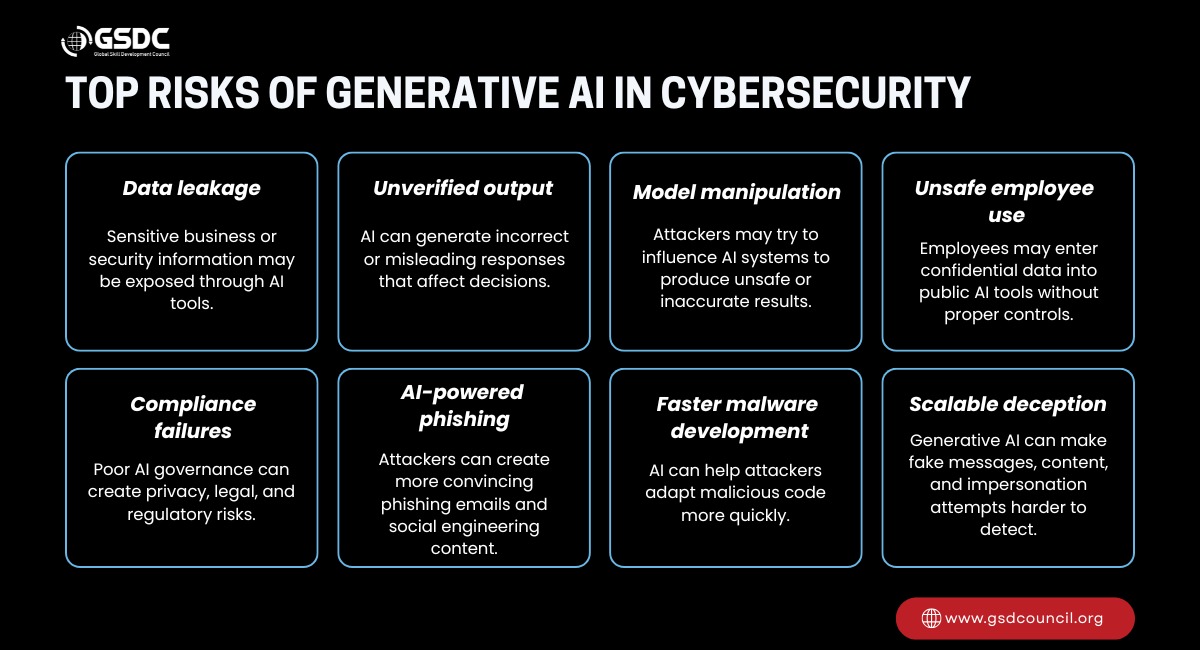
These risks become more serious when AI adoption moves faster than governance, oversight, and workforce readiness.
Why Skills and Certification Matter More Now
As AI becomes a bigger part of security, organizations need professionals who understand both cyber defense and AI-driven risk. This is also shaping demand around AI cybersecurity jobs.
Teams need people who understand the use of AI in cyber security, know how AI is used in cybersecurity responsibly, and can manage the impact of AI on cybersecurity in real-world settings.
That is why more professionals are exploring structured ai cybersecurity frameworks training and the certification programmes built around them covering governance standards like NIST AI RMF, adversarial modelling via MITRE ATLAS, and application security testing through OWASP LLM Top 10. Today, strong learning paths go beyond technical defense and also cover governance, risk awareness, and modern AI-enabled threats.
The GSDC best ai cybersecurity certification pathway covers exactly this technical defense (AI SOC Analyst, AI Security Engineer), offensive testing (GenAI Red Teamer), and governance (AI Governance Lead) as four distinct career tracks starting from a single CGAIC foundation credential.
Development of Skills for the Future of AI-Based Security
In the emerging landscape of generative AI in cybersecurity, organizations are interested in professionals who understand the threats and practical applications of AI in security. Knowledge of AI is no longer just about technical skills. Today, professionals in this space must also know about AI in terms of governance, risk, and responsible use.
This is where the Global Skill Development Council (GSDC) adds value. For professionals looking to build practical knowledge in this fast-changing space, the Certification In Generative AI In Cybersecurity offers a focused way to understand AI-driven defense, emerging threats, and the broader impact of AI on cybersecurity.

Conclusion
The future of generative AI cybersecurity will not be defined by tools alone. It will be shaped by how responsibly organizations use them, how clearly leaders understand the risks, and how effectively professionals are prepared to respond.
The use of AI in cyber security will continue to grow. So will AI cybersecurity threats, generative AI cybersecurity risks, and the broader challenges linked to governance, trust, and human oversight.
For leaders, the opportunity is not simply to adopt AI. It is to adopt it wisely. Organizations that understand both the value and the generative AI security risks of AI will be better positioned to strengthen defense, reduce exposure, and build future-ready teams.

Related Certifications
Frequently Asked Questions
Stay up-to-date with the latest news, trends, and resources in GSDC
If you like this read then make sure to check out our previous blogs: Cracking Onboarding Challenges: Fresher Success Unveiled
Not sure which certification to pursue? Our advisors will help you decide!