How AEO / GEO / AI SEO Actually Works?
Written by Bernard Huang
- From “Search Results” to “AI Answers”
- Why AEO and SEO Still Overlap
- How AI Actually Constructs an Answer
- Why Fresh Content Matters More Than Ever
- The New Optimization Battlefield: The Validation Layer
- The AEO Playbook: A Practical Framework
- Off-Page AEO: Why Brand Mentions Matter More Than Links
- The Future: From Keyword Strategy to Knowledge Strategy
- Conclusion
Search is undergoing its biggest transformation since the birth of Google. For decades, digital marketers focused on ranking web pages, optimizing keywords, and driving traffic through search engine results pages (SERPs). Today, however, users are no longer just searching they are asking AI systems for direct answers, making AI search optimization increasingly important.
This shift has introduced new concepts like Answer Engine Optimization (AEO) and Generative Engine Optimization (GEO), redefining how brands achieve online visibility. Instead of competing for rankings, organizations must now compete to be included in AI-generated answers through effective AEO optimization strategies.
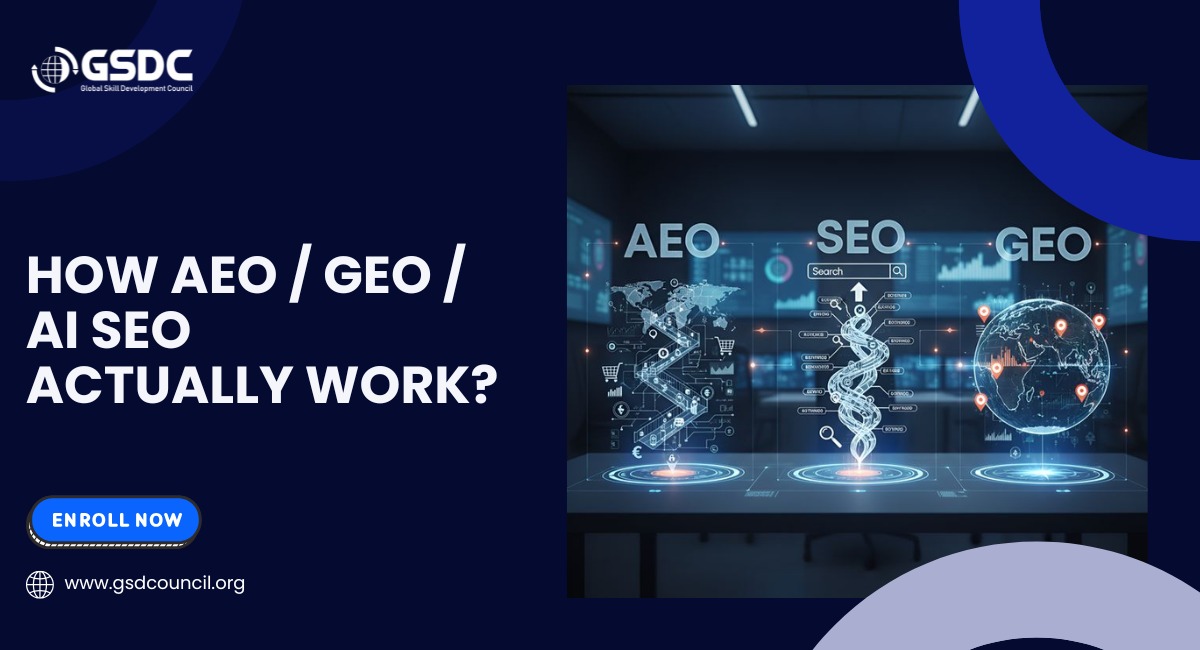
Understanding AEO vs SEO vs GEO has become essential for modern marketers adapting to AI-driven discovery platforms. Let’s explore how AEO, GEO, and AI SEO actually work in this generative engine optimization guide and what marketers must do to stay relevant in this AI-driven discovery era.
From “Search Results” to “AI Answers”
Traditional SEO focused on winning one of the “10 blue links” on a search results page using various SEO optimization tools. Success meant:
- Higher rankings
- More clicks
- Increased traffic
AI-powered search engines, however, deliver summarized answers instead of lists of links. Users interact conversationally, asking detailed, context-rich questions such as:
“Plan a three-day family-friendly trip with indoor activities.”
These natural-language queries rarely existed in keyword research tools, but they are now the norm.
Key Shift:
SEO optimizes for rankings.
Answer engine optimization and GEO optimization focus on influencing AI-generated answers.
The reward is no longer just traffic; it is:
- Brand mentions
- Citations in AI responses
- Increased branded searches
- Topic authority recognition
Why AEO and SEO Still Overlap
Despite the buzz, AEO is not replacing SEO it builds on it.
AI systems rely heavily on:
- Existing web content
- Search engine indexes
- Topic authority signals
- Structured knowledge from across the internet
This means good SEO is still foundational to good GEO. The difference lies in the goal:
Traditional SEO | AEO / GEO |
Rank web pages | Influence AI-generated answers |
Drive clicks | Earn citations & mentions |
Keyword-focused | Topic & entity-focused |
Deterministic | Probabilistic |
SEO remains the infrastructure. AEO is the new strategy layer.
How AI Actually Constructs an Answer
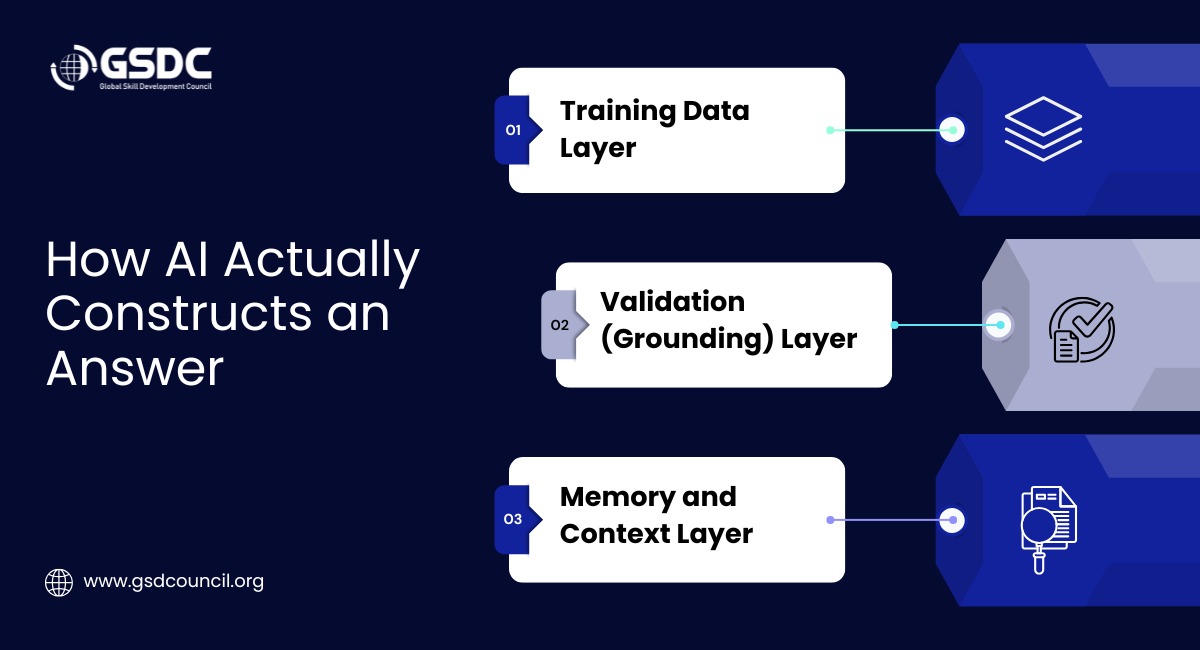
To influence AI, we must understand how it builds responses. AI-generated answers are created through three major layers:
1. Training Data Layer
AI models are trained on massive datasets such as:
- Public web content
- Knowledge repositories
- Forums and discussions
- Educational material
This data forms the model’s foundational understanding of topics and brands.
However, training data has knowledge cutoffs, meaning it may not include recent developments.
2. Validation (Grounding) Layer
When AI lacks up-to-date information, it performs real-time searches to verify facts before answering.
This is crucial:
AI systems still depend on search-like processes behind the scenes.
This validation layer is where brands have the biggest opportunity to influence AI responses because it relies on fresh, optimized content.
3. Memory and Context Layer
AI personalizes responses based on:
- User behavior
- Previous interactions
- Location or preferences
This layer is largely invisible and cannot be directly optimized, but it reinforces why contextual, authoritative content matters.
Why Fresh Content Matters More Than Ever
Because AI models must validate information, they prioritize:
- Recently updated pages
- Trusted sources
- Clear topical expertise
This explains why content freshness has become a dominant signal in AI-driven discovery.
In short: AI doesn’t just want good content, it wants current, verifiable content.
The New Optimization Battlefield: The Validation Layer
Influencing training data takes years.
Influencing validation searches can happen immediately.
That’s why modern AEO strategies focus on intersecting AI during its research phase, ensuring your content appears when AI looks for supporting evidence.
The AEO Playbook: A Practical Framework
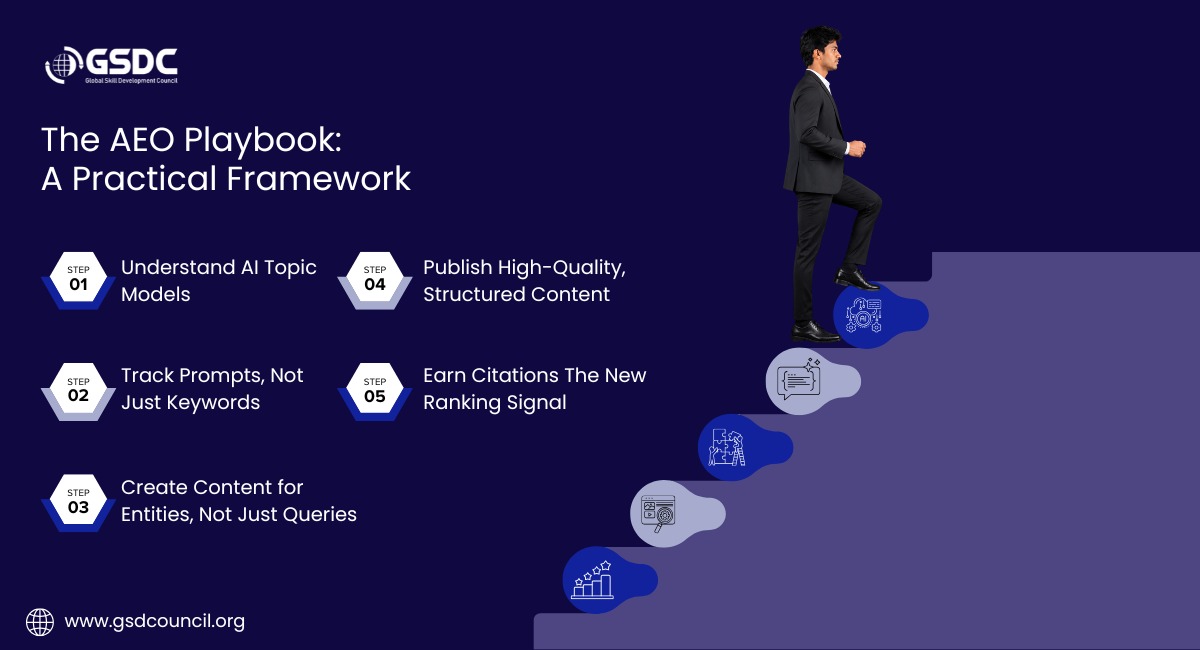
Step 1: Understand AI Topic Models
Instead of asking:
“What keywords should we target?”
Ask:
“What topics does AI associate with our brand?”
You must:
- Identify core topics AI already links to your organization
- Find content gaps within those topics
- Expand into new topic territories strategically
AI visibility depends on topic authority, not isolated keywords.
Step 2: Track Prompts, Not Just Keywords
AI doesn’t think in keywords; it thinks in questions and reasoning chains.
AI may expand a single query into multiple internal searches, such as:
- Definitions
- Comparisons
- Use cases
- Supporting explanations
This creates what experts call the “long-long tail” queries that may have zero traditional search volume but still influence AI responses.
Step 3: Create Content for Entities, Not Just Queries
AI evaluates relationships between:
- Concepts
- Brands
- Use cases
- Industries
Rather than optimizing for “best SEO tool,” you must build content ecosystems covering:
- Why tools are needed
- Who uses them
- How they solve problems
- Related methodologies
This strengthens your entity relevance.
Step 4: Publish High-Quality, Structured Content
Content must now serve two audiences:
For Humans | For AI Agents |
Readable & engaging | Structured & factual |
Trust signals | Entity clarity |
Narrative value | Context relevance |
AI evaluates whether your content helps construct an accurate answer—not whether it generates clicks.
Step 5: Earn Citations: The New Ranking Signal
Citations are the clearest indicator of AEO success.
When AI references your content:
- You influence the response
- Your authority increases
- You may be included in future model training
Citations are to AI what backlinks were to SEO.
Off-Page AEO: Why Brand Mentions Matter More Than Links
Large language models interpret the web as relationships between concepts not just hyperlinks.
That means:
Brand mentions can be more powerful than backlinks.
AI evaluates:
- How often your brand appears in context
- The sentiment of those mentions
- Your association with specific topics
Online reputation management is now directly tied to AI visibility.
Measuring Success in an AI-First World
Tracking AEO performance is harder because AI responses are probabilistic—they vary by context.
However, leading indicators include:
- AI citations
- Brand impressions
- Inclusion in AI-generated answers
- Growth in branded searches
Lagging indicators:
- Market recognition
- Authority within AI ecosystems
- Sustained visibility across prompts
Traffic alone is no longer the ultimate metric.
The Reality Marketers Must Accept
Search traffic is declining as AI answers reduce the need to click.
Visibility is shifting from:
“Who ranks highest?” → “Who shapes the answer?”
Organizations that fail to adapt risk becoming invisible even if they still rank well in traditional search.
The Future: From Keyword Strategy to Knowledge Strategy
The future of digital marketing is not about optimizing pages; it’s about building machine-understandable expertise.
Winning brands will:
- Own topics, not just keywords
- Produce authoritative ecosystems of knowledge
- Monitor AI behavior as closely as analytics
- Optimize for discoverability within AI reasoning
AEO and GEO are not trends; they are the evolution of how information is found.
Build AI Search Expertise with GSDC’s Generative Engine Optimization (GEO) Certification

As AI-powered search continues to reshape digital visibility, professionals need more than traditional SEO knowledge to stay competitive. GSDC’s Generative Engine Optimization (GEO) Certification is designed to help marketers, SEO specialists, content strategists, and digital professionals understand how AI-driven discovery systems actually work and how brands can optimize for them.
The Generative Engine Optimization (GEO) Certification provides practical knowledge on AI search behavior, Answer Engine Optimization (AEO), entity-based optimization, AI content visibility, prompt-driven discovery, structured content strategies, and citation-focused optimization techniques. Learners gain insights into how generative AI models validate information, evaluate authority, and construct responses across modern AI platforms.
With organizations increasingly shifting from keyword-focused SEO to AI visibility strategies, this certification helps professionals build future-ready expertise aligned with the evolving search ecosystem. It enables learners to develop content and optimization strategies that improve discoverability, strengthen topical authority, and position brands for success in the era of AI-generated answers.
Conclusion
AI-powered search is transforming digital visibility from a ranking-based competition into an influence-based ecosystem. Understanding what is AEO in SEO and how AEO works has become essential for brands adapting to AI-driven discovery. AEO and GEO require organizations to focus on topic authority, contextual relevance, and AI-readable content rather than traditional keyword tactics.
While understanding what is AEO is important, businesses must also continue learning how SEO works and how does SEO work on Google to build strong digital foundations. Organizations that align SEO foundations with AI optimization strategies will shape answers, earn trust, and remain discoverable in the rapidly evolving search landscape.

Frequently Asked Questions
Stay up-to-date with the latest news, trends, and resources in GSDC
If you like this read then make sure to check out our previous blogs: Cracking Onboarding Challenges: Fresher Success Unveiled
Not sure which certification to pursue? Our advisors will help you decide!