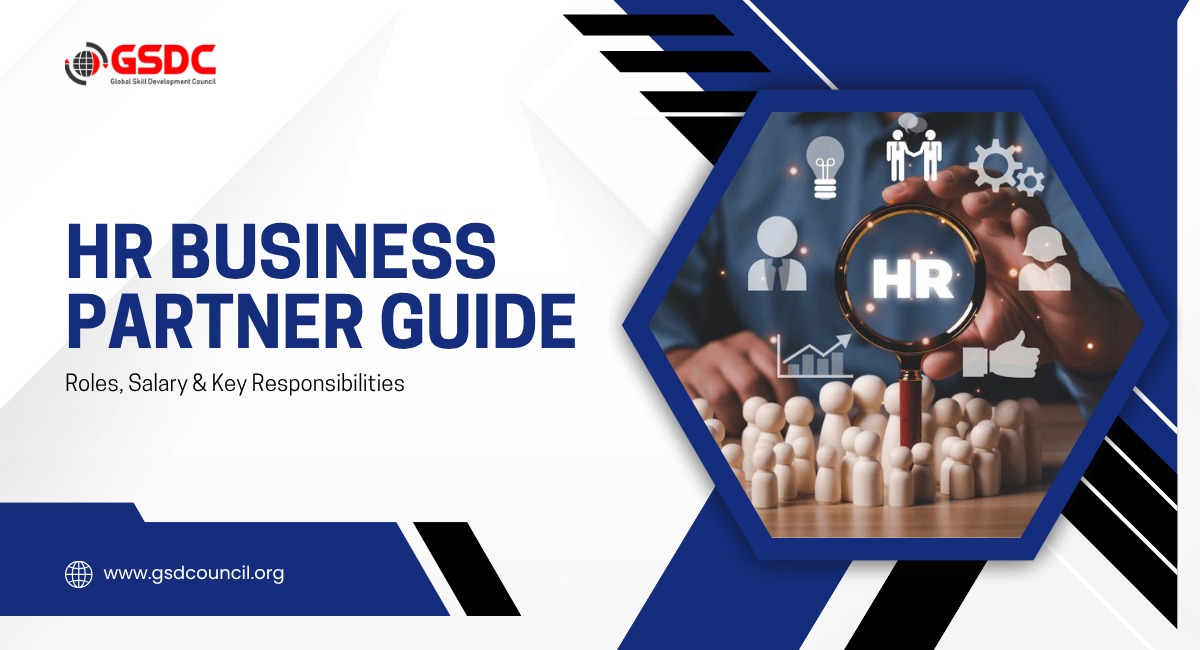
HR Business Partner Guide: Roles, Salary & Key Responsibilities
Written by Matthew Hale
- What Does HRBP Stand For?
- What Is an HR Business Partner?
- How the HRBP Role Has Evolved
- HR Business Partner Role and Responsibilities
- Skills Required for an HR Business Partner
- HR Business Partner Salary Insights
- Challenges HR Business Partners Face
- Why HR as a Strategic Business Partner Matters
- Strengthening HR Business Partner Capability
- Conclusion
With increasing disruption in business organizations, the role of human resource management has been transformed completely.
No longer confined to recruitment and compliance issues, human resources are now required to have an impact on organizational performance.
For this reason, the HR business partner model has emerged as a central element for organizational success.
In fact, companies with efficient HRBP see their employees' performance improve by 22%, revenues grow by 7%, and profits by 9%. In light of such statistics, it is clear that HRBPs are more important than ever before.
But what exactly is HRBP?
What Does HRBP Stand For?
HRBP stands for Human Resources Business Partner.
However, when organizations question what does HRBP mean, they refer not only to a job title but also to a function that bridges people strategy and business performance.
HRBPs collaborate with managers to align employee-related decisions with the organizational vision and strategic direction.
What Is an HR Business Partner?
A human resources business partner (HRBP) is an HR expert who works together with the leadership team to achieve the goals of the organization with effective management of the human resources of the organization.
The question what is a human resource business partner and what is a human resource business partner will be answered when we see that they are very influential individuals.
This is why HR as a strategic business partner has become central to modern organizations.
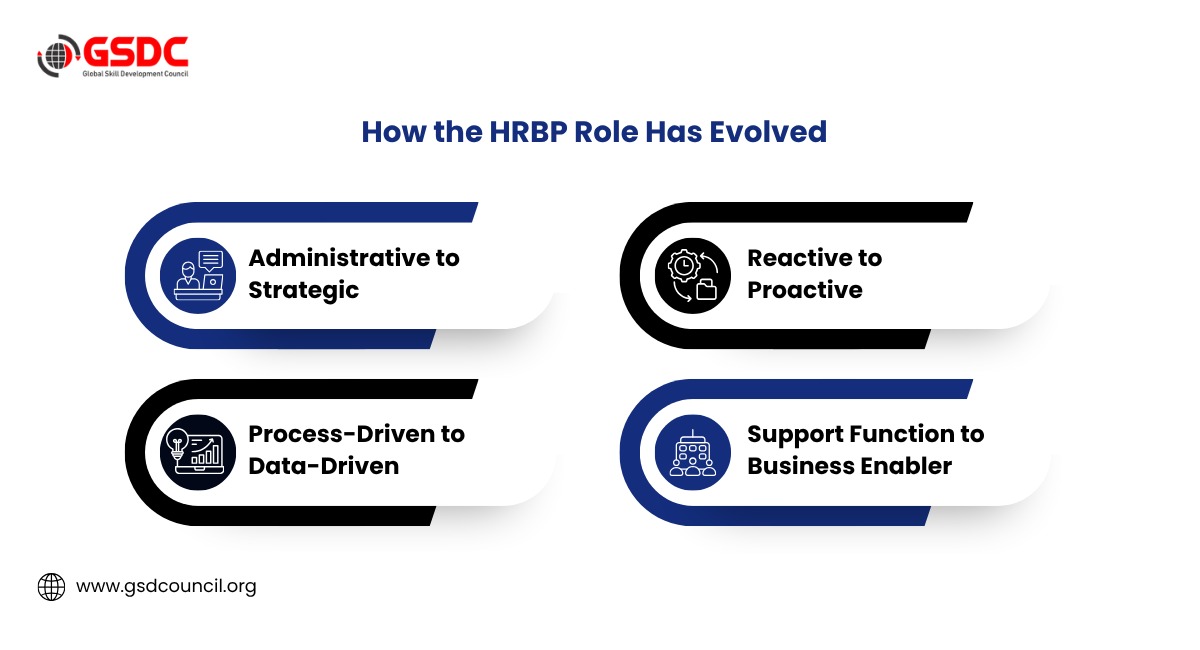
How the HRBP Role Has Evolved
There have been many changes in terms of the requirements of the Human Resource Department over time.
- Administrative to Strategic:
The function of HR has evolved from administrative tasks and policies implementation to actively contributing to business strategies and talent management plans, reshaping the significance of the HR Business Partner position.
- Reactive to Proactive:
From solving problems as they arise to identifying future talent shortages, bringing about organizational transformation, and fostering sustainable growth.
- Process-Driven to Data-Driven:
Modern HRBPs base their decisions and performance improvements on data and insights, ensuring alignment between people initiatives and the organization’s objectives.
- Support Function to Business Enabler:
HR has transcended its role as a mere support function within an organization. Instead, HR plays an indispensable role in developing organizational capabilities and providing a competitive edge, which makes the certified HR business partner highly beneficial for those professionals who seek to work at the strategic level.
Organizations that prioritize employee experience through HR are 1.3× more likely to outperform competitors, reinforcing the impact of strategic HR.
This evolution explains why more professionals are exploring hr business partner jobs as strategic career paths rather than operational roles.
HR Business Partner Role and Responsibilities
Understanding the HR business partner role requires looking at how it combines strategic influence with operational impact.
1. Linking Human Resources Strategies to Organizational Goals:
In the HRBPs’ work, strategies for recruitment, performance management, and professional development should be connected to the organization’s goals to ensure that the people strategy becomes instrumental in achieving them.
2. Providing Guidance to the Management:
Among the responsibilities included in the human resource business partner function definition is advising senior managers regarding staffing issues.
3. Driving Talent Management:
The HR business partners' role is crucial in talent management, which includes employee recruitment, engagement, and development. Many experts enhance their skills in such areas with professional courses, offered by the GSDC and other organizations.
4. Facilitating Organizational Change:
Whether your company faces digital transformation or reorganization, an HR business partner will facilitate changes while keeping the organization stable and productive.
5. Analyzing Information for Business Decisions:
Modern HR business partners use analytics to assess trends in the company's workforce, increase performance, and estimate the talent that the organization will need in the future.
To summarize, an HR business partner role cannot be confined to mere assistance; now it involves affecting decisions and performance.
Skills Required for an HR Business Partner
To be successful in this role, individuals need to have both HR knowledge and business understanding:
- Strong business acumen
- Strategic thinking
- Communication and stakeholder management
- Data and analytics skills
- Change management capabilities
These skills are increasingly emphasized across hr business partner jobs globally.
HR Business Partner Salary Insights
One of the most searched topics is HR business partner salary, and for good reason.
It depends on various factors, including experience level, industry, and location. Nevertheless, an HRBP usually earns more than other HR-related positions because of their crucial influence and proximity to the business leaders.
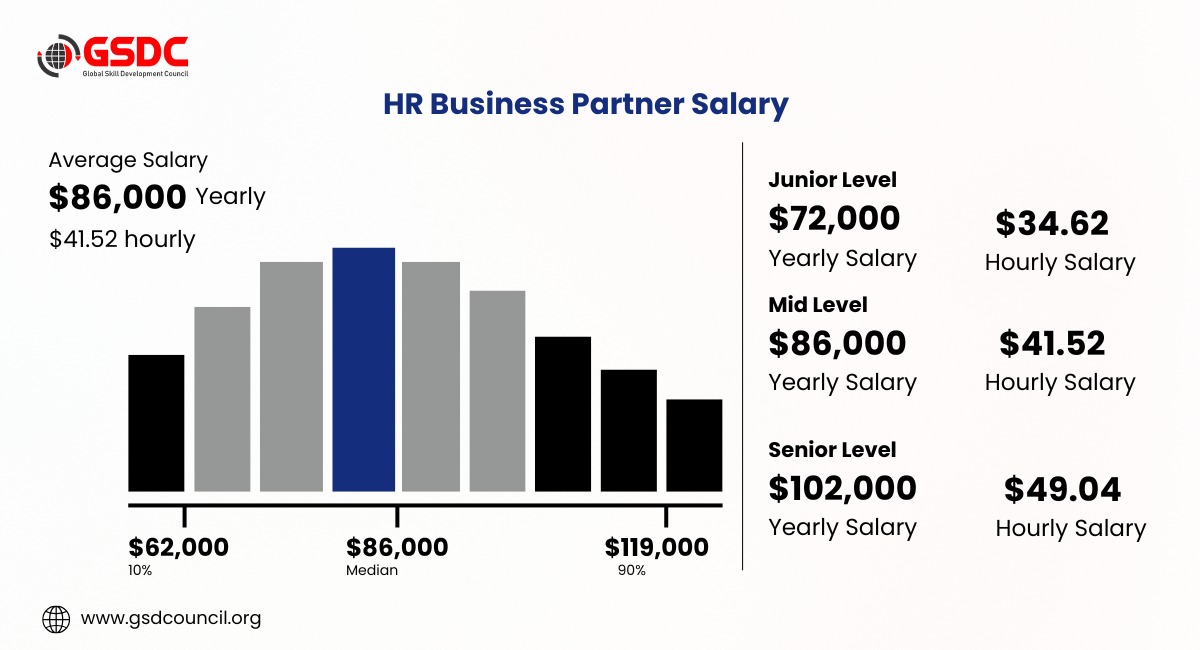
As illustrated by the statistics, the higher the experience level, the higher the salary. This only proves that this job remains valuable and rewarding in the long run.
With the increasing strategic importance of HR, this career path can be considered one of the most promising nowadays.
To gain further insight into this issue, check out our full guide on the topic of HR business partner salary.
Challenges HR Business Partners Face
While this HR business partner role is increasingly popular among companies, it also entails certain challenges.
- Challenge in Balancing the Interests of Various Stakeholders:
Since an HRBP has to balance the interest of both the employer and employees, this makes it very difficult for him to solve the issue.
- Persuasion of Important Individuals Within the Team:
The ability of getting recognized and convincing the influential people to agree with oneself is certainly a big challenge.
- Shift From Functional to Strategic Activities:
Another challenge includes moving out of being an HR generalist and into strategic activities within the organization.
- Keeping Up with New Technologies:
Considering new developments, especially related to artificial intelligence and analytics, it has become imperative for HRBPs to upgrade their skill set regularly.
Many organizations are still evolving in how they define, enable, and fully leverage the HR business partner role.
Why HR as a Strategic Business Partner Matters
The idea of HR as a strategic business partner is no longer optional—it’s essential.
- Improving Organizational Agility:
HRBP facilitates agility in organizations by matching their people strategies with their changing needs.
- Enhancing Leadership Capacity:
Through collaboration with leaders, HRBPs help create robust leadership capabilities within an organization and make better decisions across organizational levels.
- Developing Competent and Motivated Workforces:
With emphasis on developing organizational capabilities, HRBPs facilitate organizations to develop skilled and motivated workforces.
HRBP is vital for delivering all these outcomes through alignment between the organization's people strategy and its objectives.
Strengthening HR Business Partner Capability
With the development of the HR business partner profession, organizations have begun to emphasize developing competency instead of merely staffing these roles.
Competency cannot be gained through only practical experience, but also needs proper training and accreditation by a certified body such as the Global Skill Development Council (GSDC). Having a Certified HR Business Partner designation can help improve your strategic business competency.

Conclusion
What is HRBP? This question marks the beginning of the journey to learn more about the subject.
The modern HR business partner not only performs their usual duties related to HR, but also contributes significantly to the business results achieved through influencing decision-making and implementing strategies.
The role of the HRBP will be crucial for forming a flexible, highly efficient business entity as the requirements for it continue to change.

Related Certifications
Frequently Asked Questions
Stay up-to-date with the latest news, trends, and resources in GSDC
If you like this read then make sure to check out our previous blogs: Cracking Onboarding Challenges: Fresher Success Unveiled
Not sure which certification to pursue? Our advisors will help you decide!