From Keywords to Context: Understanding GEO Optimization
Written by Dean Whitby
- Why Search Has Fundamentally Changed?
- What Is GEO and How Is It Different from SEO?
- How AI Engines “Read” Content
- Content Types That AI Prefers to Cite
- Entities, Authority, and Trust Signals
- Freshness Is a Ranking Signal in GEO
- Structuring Content for an AI-First Lens
- Measuring GEO Performance
- Why GEO Certification Matters in the Digital-First Era?
- Conclusion
- FAQs
Digital visibility had established its basic structure through SEO methods and the use of keywords for many years. Marketers worked to establish the what is keyword in SEO while developing their SEO keyword strategy and creating web pages to fulfill search requirements. The organization achieved its goals through three measurement methods, which included tracking website rankings and obtaining user impressions and click-throughs.
The emergence of AI-powered search systems and advanced language processing technologies has changed the process of information discovery from its previous state, which relied on matching words, to its current form, which requires comprehension of actual meaning. The new GEO optimization approach developed through this transformation works with AI search optimization by evaluating content through its contextual information, user intention, and its credibility and relevant content.
GEO drives AI systems to understand your skills by linking your content with user goals through its ability to increase trust in your information. The organizations need to use generative engine optimization services, which help them maintain their visibility and authority in the AI-driven search environment.
Why Search Has Fundamentally Changed?
The emergence of AI-based search systems transforms how users find information. Users today mainly use an AI-driven search engine, which gives them direct answers that result from processed information instead of requiring them to visit various links.
People now conduct searches that do not result in clicks because AI systems show all the information needed to answer their questions.
- Digital teams face a new operational environment.
- People can discover information about a company without needing to visit its website.
- Success now depends on multiple metrics, which go beyond measuring website traffic.
- The goal of organizations now centers on gaining citations from AI-generated content, which uses their work as a source.
Organizations need to develop new approaches for seo and content strategy. SEO success now requires more than traditional methods, which depended solely on keyword usage. Brands need experts, such as a modern seo content strategist who understands how to use AI for SEO by structuring content for meaning, authority, and contextual relevance.
The companies that use generative engine optimization services to how to improve search engine optimization capabilities will maintain their online presence, while businesses that depend only on traditional keyword methods will lose their online visibility, even though they still appear in standard search results.
What Is GEO and How Is It Different from SEO?
Generative Engine Optimization focuses on optimizing content so AI systems can:
- Understand the question
- Identify credible sources
- Synthesize a clear answer
- Select and cite trusted entities
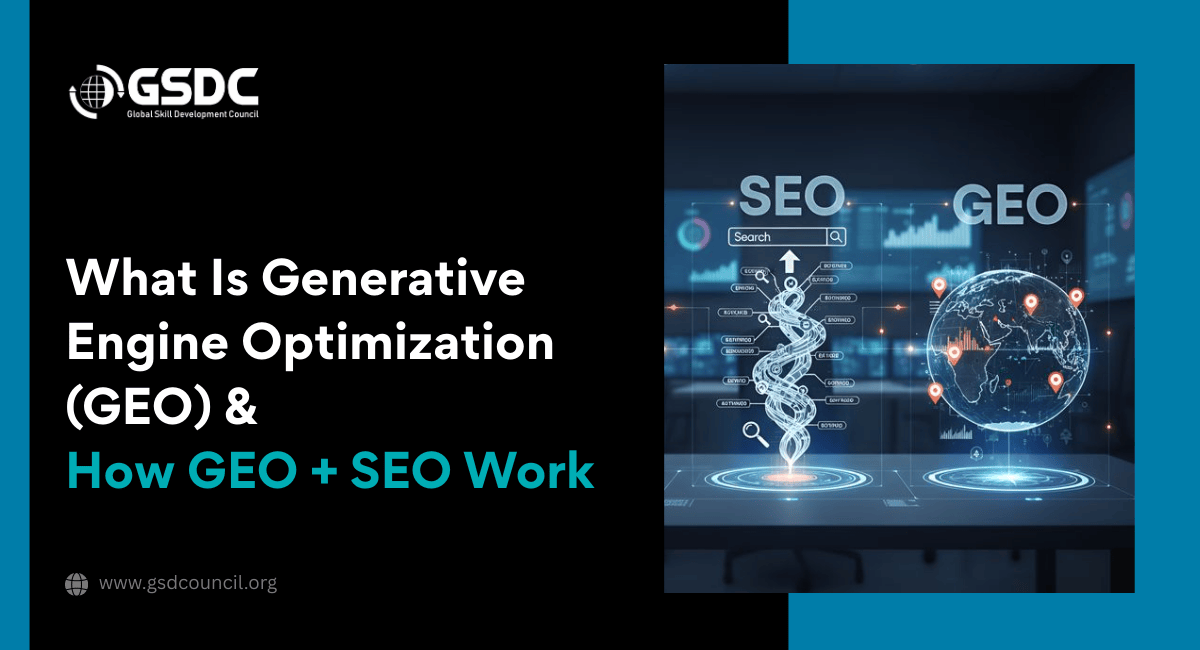
SEO and content strategy help search engines rank pages. GEO optimization helps AI engines choose answers.
The biggest shift is moving from keywords to context:
- Keywords describe what people type
- Context explains what people mean
AI engines prioritize intent, clarity, structure, and credibility over exact phrasing.
How AI Engines “Read” Content
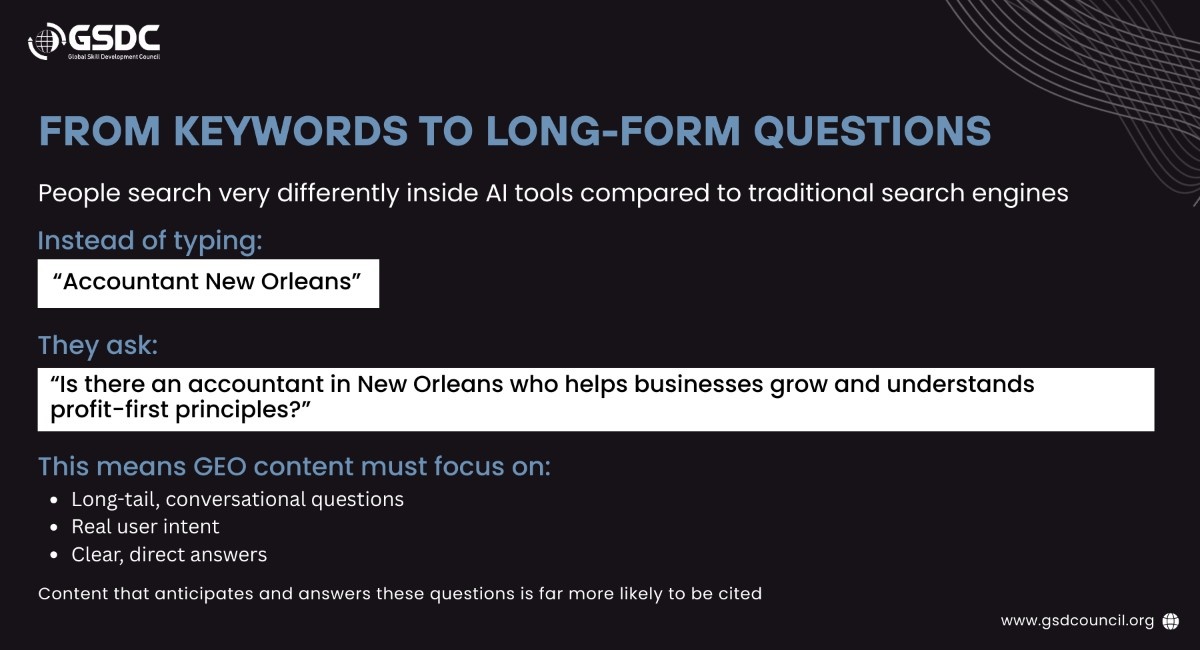
AI engines do not browse content the same way humans do. They are not reading your website line by line. Instead, they are looking for:
- Clear answers to questions
- Structured information that they can extract
- Signals that confirm trust and authority
This is where schema becomes essential.
The Role of Schema as Digital Labels
A schema is structured code that explains your content to machines. Think of it like library labels. Without labels, even the best books are hard to find.
For GEO optimization, the schema should communicate:
- Who you are (person and organization)
- What you offer (services or products)
- What your content answers
- Your credibility (awards, reviews, case studies)
- FAQs and definitions
Without a proper schema, AI engines may not “see” your content at all, no matter how well written it is.
Content Types That AI Prefers to Cite
Certain content formats perform especially well in GEO because they are easy for AI engines to extract and reuse:
- Definitions
- Step-by-step guides
- Comparisons (X vs Y)
- Checklists and frameworks
- Use cases and examples
- Pricing explanations
- “How to choose” guides
Listicles and neutral comparisons are particularly powerful. AI engines often treat these as trustworthy summaries of an industry, even allowing smaller brands to appear alongside or above larger competitors.
Entities, Authority, and Trust Signals
AI engines do not just evaluate individual pages. They evaluate entities. Organizations building strong entity signals often work with specialized GEO consultancies such as https://www.tenaciousmarketing.co.uk/, which focus on aligning brand authority, structured data, and AI discoverability.
Entities include:
- People
- Brands
- Products
- Categories
- Locations
To build authority, entities must be consistent across the web. This includes:
- Website content
- Business listings
- Social profiles
- Reviews and case studies
- Press mentions
If your brand is described differently across platforms, AI engines struggle to trust and identify you.
Uniformity matters.
Freshness Is a Ranking Signal in GEO
Unlike traditional SEO, GEO strongly rewards fresh and updated content. AI engines favor:
- Recently updated articles
- Current dates (e.g., 2026 content)
- Ongoing publishing activity
Content that is not refreshed regularly may lose citations over time, even if it once performed well.
Updating existing assets is often more effective than creating new ones from scratch.
Structuring Content for an AI-First Lens
Content still needs to be engaging for people, but it must also be optimized for AI extraction.
Best practices include:
- Turning headings (H1s, H2s) into questions
- Using bullet points and tables
- Adding a “key takeaways” section
- Writing concise, direct answers
- Including an FAQ section at the end
A strong test is this:
If someone only reads the bullet points, would they still get the full answer?
If yes, the content is GEO-ready.
Measuring GEO Performance
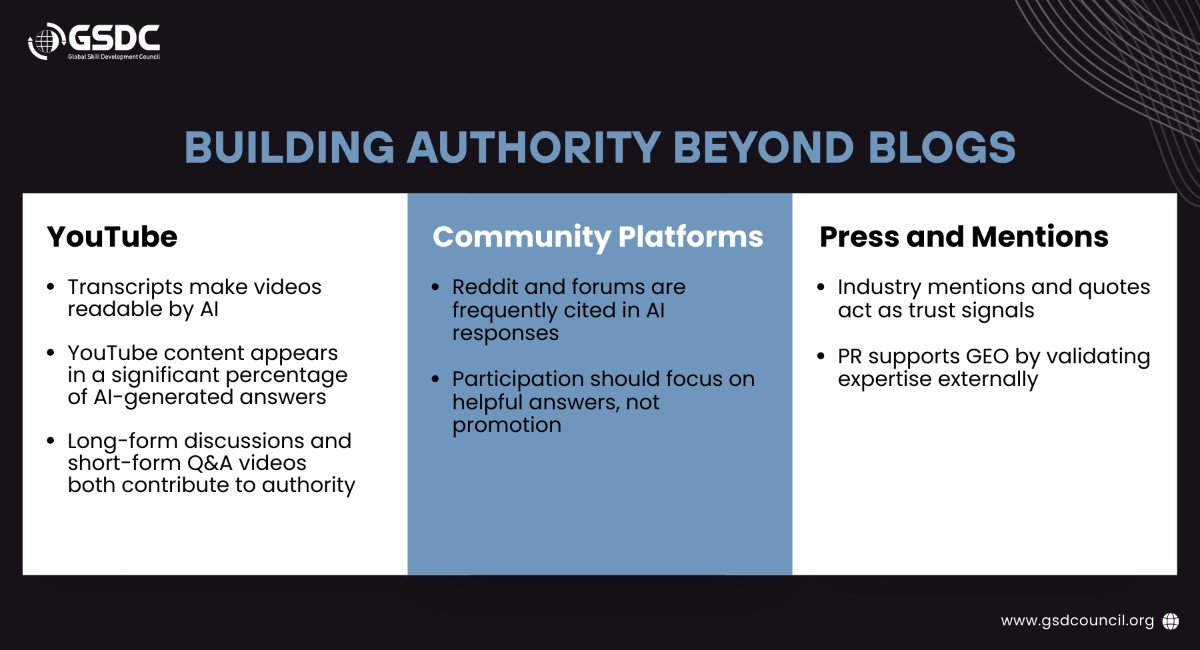
Traditional metrics like traffic and rankings are no longer enough. GEO success is measured by:
- Citation presence in AI answers
- Brand mentions in LLM outputs
- Consistency across entities
- Visibility across multiple AI platforms
Manual testing searching for your target questions inside AI tools is currently one of the most practical ways to measure progress.
Why GEO Certification Matters in the Digital-First Era?
Organizations need to adopt digital transformation practices while maintaining their focus on innovation, governance, risk management, and ethical compliance. The Certified Generative Engine Optimization Professional from GSDC provides professionals with the skills needed to handle changing technology environments through its structured compliance requirements, responsible AI implementation standards, and sustainable operational methods.
Organizations that implement clear governance frameworks can drive their innovation efforts forward while maintaining transparency and building trust with stakeholders and ensuring their readiness to meet evolving global regulatory requirements.

Conclusion
The process of Generative Engine Optimization has created a complete transformation of digital visibility methods. The process has shifted from ranking systems to selecting and trusting sources that AI systems use to create their responses. When organizations use generative AI optimization services, they need to move away from their conventional methods. They should create their seo and content strategy methods according to AI systems' understanding of what defines relevance and authority.
The combination of context, intent, and structure and credibility enables brands to enhance their visibility in ai driven search engines while they develop new methods for search engine optimization, which will define the next generation. The team needs to change its keyword research method because it should use keywords as elements that support an AI-based system that the organization needs to follow, which their SEO content strategist will manage, who possesses expertise in applying AI for SEO.
FAQs
1. How is GEO different from traditional SEO?
SEO focuses on rankings and keywords, while GEO focuses on context, intent, and being cited as an answer inside AI-generated responses.
2. Is a schema really necessary for GEO?
Yes. Schema helps AI engines understand who you are, what your content covers, and why it should trust and cite you.
3. Do I need to rewrite all existing content for GEO?
Not necessarily. Updating titles, headings, structure, schema, and adding FAQs can significantly improve existing content without full rewrites.
4. Can small brands compete with large enterprises using GEO?
Yes. GEO rewards clarity, consistency, and freshness, areas where smaller brands can often move faster than large organizations.
5. What should I track to measure GEO success?
Track citation presence, brand mentions in AI tools, entity consistency across platforms, and visibility in AI-generated answers rather than just traffic.

Related Certifications
Stay up-to-date with the latest news, trends, and resources in GSDC
If you like this read then make sure to check out our previous blogs: Cracking Onboarding Challenges: Fresher Success Unveiled
Not sure which certification to pursue? Our advisors will help you decide!