5 Generative AI Cybersecurity Risks Every Professional Should Know
Written by Matthew Hale
- The Rise of Generative AI in Cybersecurity
- Understanding AI Cybersecurity Threats
- Generative AI Cybersecurity Risks You Should Know
- The Dual Impact of AI on Cybersecurity
- How Organizations Can Manage Generative AI Security Risks
- The Growing Demand for AI Cyber Security Jobs
- Why Certification Matters in This Space
- Conclusion: The Future of Generative AI Cybersecurity
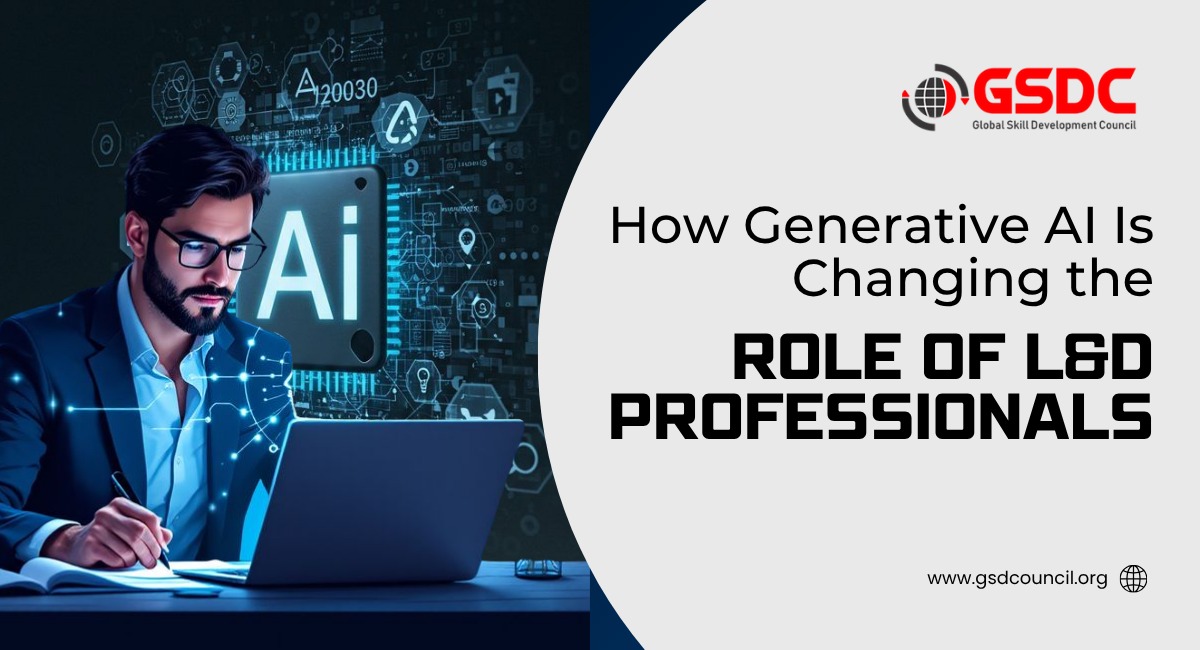
Generative AI is changing how organizations handle security. The use of AI in cyber security helps detect threats faster and automate responses. But it also brings new challenges.
Recent reports show that 87% of organizations have faced AI-driven cyberattacks, highlighting the rise of AI cybersecurity threats.
Today, generative AI cybersecurity works both ways. It strengthens defenses but also helps attackers create smarter attacks.
This is why understanding generative AI cybersecurity risks is critical. From phishing to malware, these generative AI security risks are harder to detect. Many professionals still don’t fully understand the risks of generative AI in cybersecurity.
So, what are the risks of generative AI in cybersecurity? Let’s break them down simply.
The Rise of Generative AI in Cybersecurity
The impact of AI on cybersecurity is growing rapidly. Organizations are increasingly adopting the use of AI in cyber security to improve speed and accuracy.
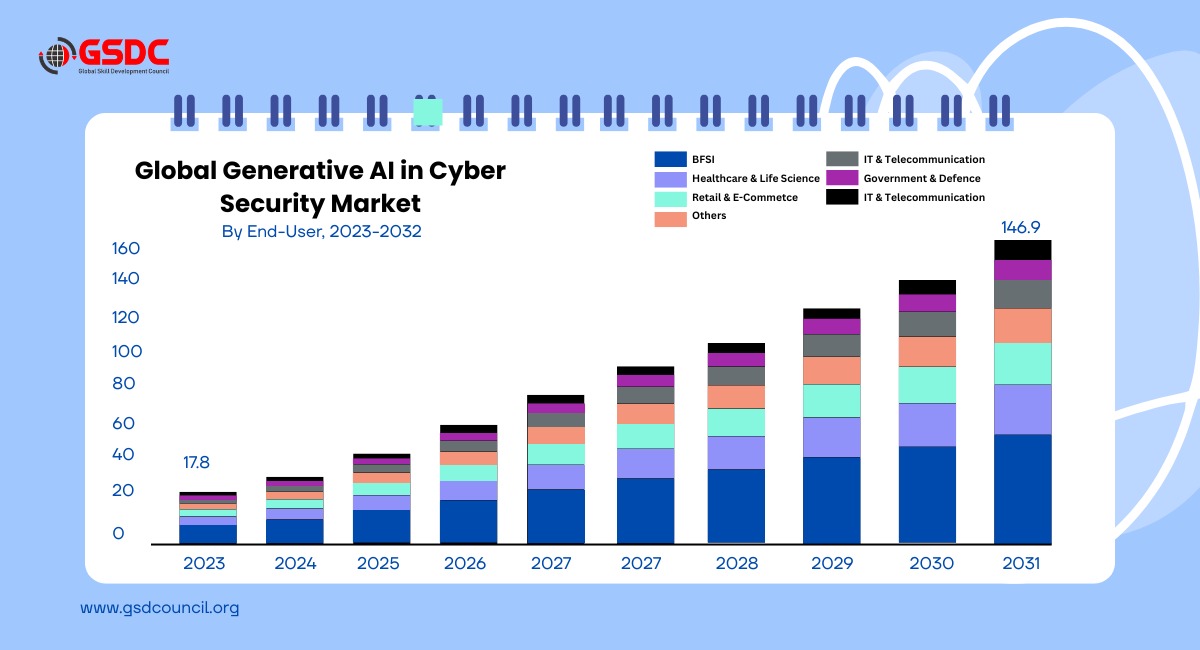
Recent data shows that the generative AI cybersecurity market is expected to grow from $17.8 billion in 2023 to $146.9 billion by 2032, highlighting how fast adoption is accelerating.
Today, AI helps teams:
- Identify threats in real-time
- Automate responses
- Analyze large amounts of data
- Predict cyberattacks
This is where generative AI and cybersecurity come together.
If you’re wondering how AI is used in cybersecurity, it goes beyond automation. Generative AI can simulate attacks and improve response.
This rapid growth has also led to an increase in AI cybersecurity threats and generative AI security risks as attackers leverage AI for their attacks.
Understanding AI Cybersecurity Threats
The emergence of AI cybersecurity threats can be traced back to the ease of use of generative AI tools in the current world.
With AI, attackers can:
- Create convincing phishing emails
- Develop malware quickly
- Carry out social engineering attacks
- Conduct targeted cyber attacks
This indicates the extent of AI’s influence on cybersecurity.
What was once labor-intensive and required expertise can now be achieved in no time with AI’s assistance. This has contributed to the rise of generative AI security risks, which are becoming difficult to trace.
The Global Skill Development Council is helping professionals grasp the risks and cultivate the right skills to deal with the latest cybersecurity challenges.
Generative AI Cybersecurity Risks You Should Know
Let’s break down the most critical generative AI cybersecurity risks organizations face today:
1. AI-Powered Phishing Attacks
Generative AI allows attackers to create messages that are perceived to be real and highly personalized.
Attackers are now using AI tools to impersonate the writing styles of company executives. Research from IBM Security reveals that AI-powered phishing attacks are becoming successful. Therefore, the overall AI cybersecurity threats are rising.
2. Automated Malware Generation
One of the biggest generative AI security risks is how easily malware can now be created.
Security researchers, including teams at Check Point Research, have shown that AI tools can generate malicious code quickly, making it easier for attackers to launch attacks at scale.
3. Deepfake-Based Social Engineering
This is one of the most dangerous real-world risks.
In 2024, a Hong Kong-based company lost $25 million after employees were tricked by a deepfake video call impersonating their CFO.
This shows how generative AI and cybersecurity are enabling highly convincing attacks.
4. Data Leakage Through AI Tools
Many companies have already faced this issue.
In 2023, Samsung restricted the use of generative AI tools after employees accidentally shared confidential source code with ChatGPT.
This shows how the everyday use of AI tools can increase generative AI cybersecurity risks, especially when employees unknowingly expose sensitive data. It is one of the most common risks of generative AI in cybersecurity today.
5. Model Manipulation and Prompt Injection
AI systems are also vulnerable to attacks.
Organizations like OWASP have pointed out the rising threat of prompt injection attacks, which are catalogued in detail under the OWASP LLM Top 10 framework. For structured prompt injection security training covering detection, mitigation, and red-team simulation using the six leading AI security frameworks the GSDC CGAIC certification provides the most comprehensive industry-aligned pathway available.
Understanding these risks is essential. The Certification in Generative AI In Cybersecurity helps professionals manage generative ai security risks and understand the impact of AI on cybersecurity.
These examples clearly show what are the risks of generative AI in cybersecurity are; they are real and evolving.
The Dual Impact of AI on Cybersecurity
The impact of AI on cybersecurity is not just positive; it works both ways.
AI helps organizations improve security by detecting threats faster and reducing manual work. At the same time, it also increases AI cybersecurity threats and introduces new generative AI security risks.
This balance between benefit and risk defines modern generative AI cybersecurity.
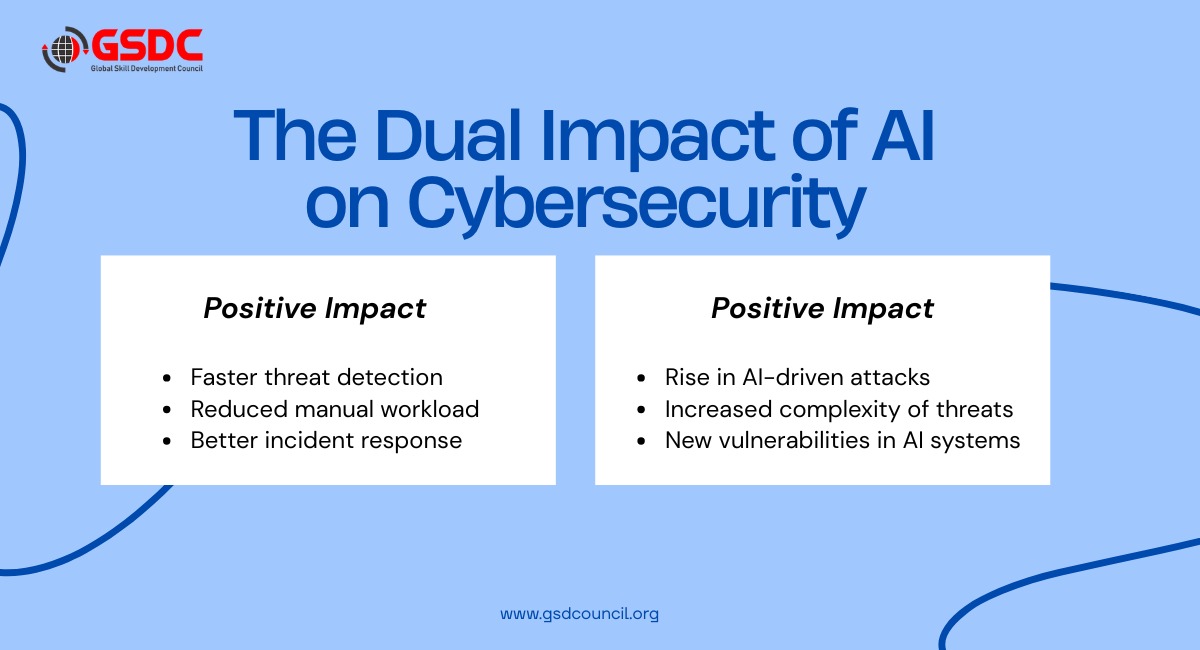
Understanding this dual nature is important for managing generative AI cybersecurity risks and adapting to the changing use of AI in cyber security.
How Organizations Can Manage Generative AI Security Risks
To reduce generative AI security risks, organizations need a clear and practical approach.
Today, managing AI cybersecurity threats is not just about tools - it also depends on how people use AI.
Organizations should:
Implement clear AI usage policies
Define what data can and cannot be shared with AI tools
Train employees on AI-related risks
Help teams understand common generative AI cybersecurity risks and avoid mistakes
Monitor AI-generated outputs
Review content, code, and responses to prevent errors or security gaps
Secure AI models and data pipelines
Protect training data and systems from unauthorized access
Use AI responsibly in cybersecurity operations
Balance automation with human oversight
A strong strategy combines technology, awareness, and continuous monitoring to effectively manage the impact of AI on cybersecurity.
The Growing Demand for AI Cyber Security Jobs
The rise of AI cyber security jobs shows the need for professionals who understand both AI and security. There is a global shortage of nearly 4.8 million cybersecurity professionals, highlighting the urgent demand.
At the same time, many roles now require AI skills, showing the growing link between generative AI and cybersecurity.
In-demand roles include:
- AI Security Analyst
- Cybersecurity AI Specialist
- Threat Intelligence Engineer
- AI Risk and Governance Expert
Understanding generative AI and cybersecurity is quickly becoming a key career advantage.
Why Certification Matters in This Space
With evolving threats, professionals are looking for the best certification for cyber security that also covers AI.
The Certification in Generative AI in Cybersecurity by the Global Skill Development Council (GSDC) helps professionals understand generative AI cybersecurity risks and stay prepared for modern challenges.
It builds practical knowledge of how AI is used in cybersecurity, helps manage AI-driven threats, and keeps professionals relevant as the impact of AI on cybersecurity continues to grow.
Conclusion: The Future of Generative AI Cybersecurity
Generative AI is not just a trend - it is a turning point.
The future of generative AI cybersecurity depends on how well organizations balance innovation with risk. While AI strengthens defense, it also increases AI cybersecurity threats and introduces new generative AI security risks.
Understanding this balance and adapting to the impact of AI on cybersecurity is essential today.
The organizations and professionals who manage this shift effectively will lead the next era of cybersecurity.

Related Certifications
Frequently Asked Questions
Stay up-to-date with the latest news, trends, and resources in GSDC
If you like this read then make sure to check out our previous blogs: Cracking Onboarding Challenges: Fresher Success Unveiled
Not sure which certification to pursue? Our advisors will help you decide!