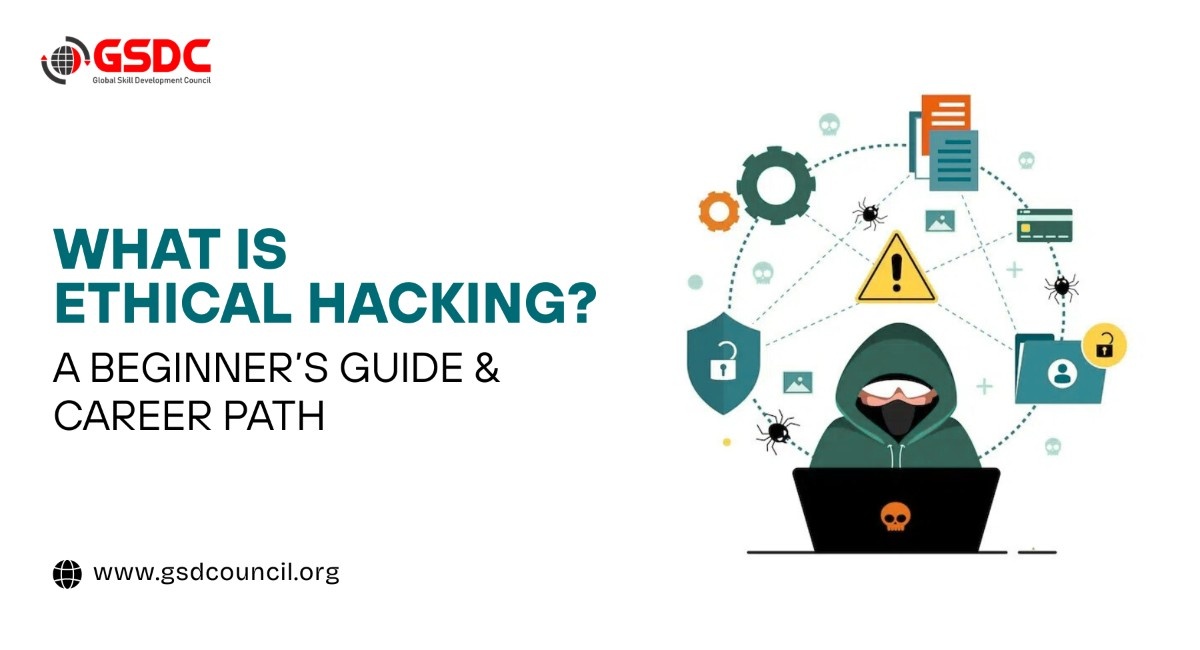
What Is Ethical Hacking? A Beginner’s Guide & Career Path
Written by Matthew Hale
- What Is Ethical Hacking?
- Why Is Ethical Hacking Important?
- How Ethical Hacking Works
- Ethical Hacking Guidelines
- Is Ethical Hacking Hard to Learn?
- What Is Certified Ethical Hacking?
- Ethical Hacking Certification: Why It Matters
- Ethical Hacker Career Path
- Professional Recognition and Industry Alignment
- Conclusion
- FAQs
In 2025, a massive cyberattack was the top story when hackers released personal information of millions of users of a famous company. Events like this demonstrate how vulnerable digital systems really are, and how fast people's trust can be lost if security fails.
Nowadays, cyber risks like data breaches, ransomware attacks, and vulnerabilities in systems are issues that affect businesses of all sizes. Hence, ethical hackers are indispensable in identifying and fixing system weaknesses before the real attackers take advantage of them.
This blog provides a comprehensive description of ethical hacking in practice and the significance of ethical hacking in today's cybersecurity. You will also discover the code of ethics that ethical hackers adhere to, where they are employed, and what an ethical hackers long, term career path can be, besides the function of ethical hacking certification in a professional journey.
What Is Ethical Hacking?
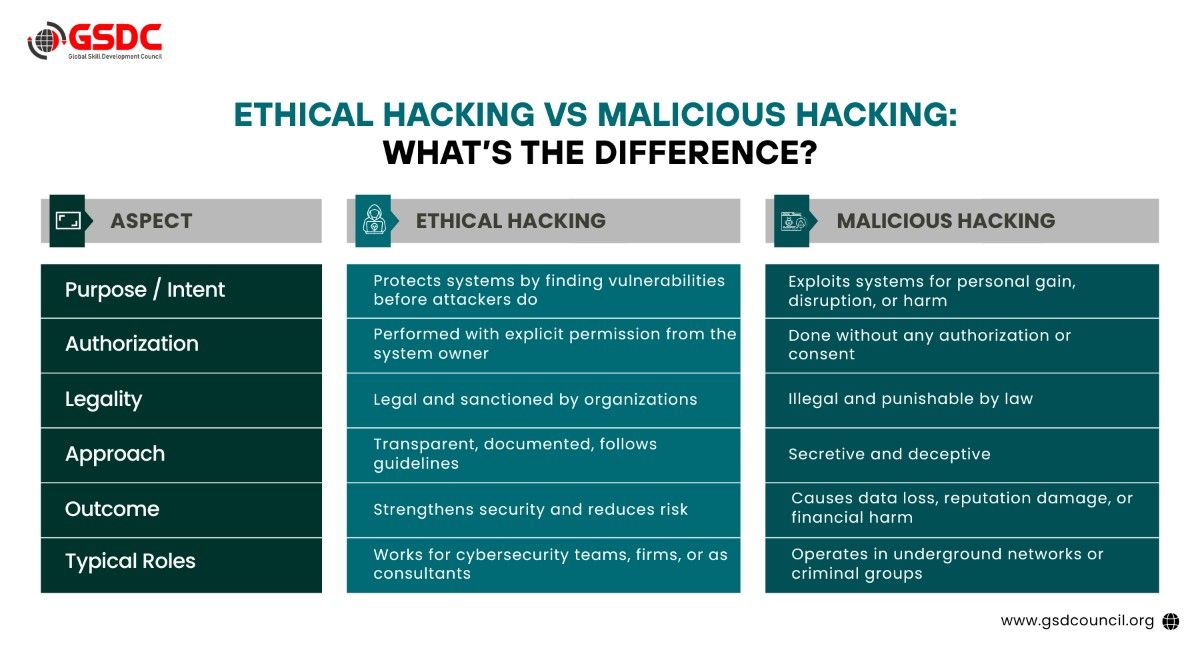
Ethical hacking is the practice of testing systems, networks, and applications with the permission of their owners, to find security vulnerabilities before hackers can exploit them. The methods used are often criminals' ones, but the main difference is that the ethical hacker has the right purpose and the owner's consent.
Most companies are still waiting to respond to a breach, while ethical hacking allows them to test their security defenses by simulating the hacker's attack scenarios. Thus, the company can reveal the risks that are not visible at first glance, verify the effectiveness of security measures, and increase overall security.
Simply put, ethical hacking is a way of discovering problems so that they can be solved before they cause serious harm.
Why Is Ethical Hacking Important?
Security failures do not typically occur because organizations do not pay any attention to cybersecurity at all. Most of the time, the problem is that there are hidden vulnerabilities that remain undiscovered until they are used by attackers.
In 2025, the global average cost of a data breach exceeded $4 million, illustrating how costly a single incident can be for businesses. As the frequency of the attacks increases and their damage intensifies, it is no longer sufficient to rely solely on basic security controls.
Ethical hacking is essential as it allows companies to:
- Identify security issues before hackers do
- Minimize the chance of a data breach, loss of service, and financial loss
- Facilitate compliance and security audits
- Gain the trust of customers and partners
Nowadays, when the potential for an attack is high, it is often much cheaper and safer to prevent it than to recover after a breach. Ethical hacking enables an organization to find its vulnerabilities at an early stage and get them rectified before they cause any real damage to the world outside.
How Ethical Hacking Works
One way to figure out security testing is to see how ethical hacking is done in real-life situations. Ethical hacking usually is not a set of trials and errors; it is a disciplined security practice that uses a well-defined and structured process to make sure that testing is effective, safe, and authorized.
Most ethical hacking activities consist of a series of basic steps:
-
Authorization and scope definition
Basically, formal permission must be granted by the organization to the testers before the start of the tests. Also, the organization should clearly specify what systems, applications, and networks may be tested.
-
Reconnaissance
Typically, ethical hackers try to collect as much information about the targeted environment as possible so they can figure out how the systems are arranged and where entry points might be.
-
Vulnerability discovery
A thorough security assessment is conducted to reveal security flaws such as misconfigured settings, old software, or insecure logic.
-
Controlled exploitation
Vulnerabilities can be exploited to understand the impact of the defect in a real-world test without harming the system or interrupting the users.
-
Reporting and remediation
The findings are elaborated in simple reports that also include recommendations for the repair of the security gaps and the reinforcement of the defenses.
This well-ordered ethical hacking process is indicative of a disciplined security practice that aims at the strengthening of defenses as opposed to being a set of haphazard hacking attempts. Starter-level certification programs, such as the Ethical Hacking Foundation Certification, aim at introducing core principles and methodologies of this and other fields to newcomers.
Ethical Hacking Guidelines
Guidelines ensure that authorized security testing is not confused with unauthorized or illegal access. Because ethical hackers work with sensitive systems and data, it is important to adhere to sound guidelines to ensure that security testing remains legal, secure, and beneficial.
Key ethical hacking guidelines include:
-
Written authorization before testing
This ensures that the organization and the ethical hacker remain on the right side of the law and define what can be done.
-
Clearly defined scope and boundaries
Having a predetermined scope maintains the focus of the tests and avoids the risk of an unintended disruption.
-
Limited access to sensitive data
Ethical hackers only gain access to the security risk areas in which they need to work, thus reducing privacy and compliance issues.
-
Responsible and confidential reporting
The results are only disclosed to the necessary teams, and they contain suggestions for the remediation of the issues.
-
No system disruption or data loss
The purpose of the tests is to evaluate the level of risk without the business operations being affected or the data being damaged.
Adhering to the strict ethical hacking guidelines ensures that the security measures are still effective, compliant, and reliable. Several organizations and certification bodies, including the Global Skill Development Council (GSDC), recognize these principles as a part of professional standards for ethical hacking and cybersecurity practices.
Is Ethical Hacking Hard to Learn?
Ethical hacking does require technical thinking, but it isn’t limited to a small group of experts. It builds on practical fundamentals such as:
- How networks communicate
- How operating systems manage processes
- How applications handle user input
- How attackers look for and exploit weaknesses
For beginners, there is a learning curve. However, with a step-by-step approach and regular hands-on practice, these skills become more manageable over time. The key is to build a strong foundation and improve steadily rather than trying to learn everything at once.
What Is Certified Ethical Hacking?
In cybersecurity, “Certified Ethical Hacking” usually refers to a professional credential that validates knowledge of security testing techniques, common tools, and the ethical standards used in penetration testing and vulnerability assessments.
This type of credential shows that a professional understands how security weaknesses are identified and assessed in a controlled and lawful way. It also reflects familiarity with common attack methods, reporting practices, and responsible disclosure.
Certifications are not a replacement for real-world experience, but they do indicate a structured level of knowledge and professionalism in cybersecurity - especially for those looking to strengthen their position or credibility in the industry.
Ethical Hacking Certification: Why It Matters
Ethical hacking certification is a formal recognition of skills and an indication that the certified individual follows security standards that are broadly accepted. To employers and organizations, a certification is generally a sign that the professional not only is capable of technical security testing but also is aware of their ethical obligations.
Here are a few reasons why an ethical hacking certification is essential:
-
Confirms technical skills
Certification is proof that a professional understands, in an organized way, various security testing procedures, tools, and typical hacking methods.
-
Enhances professional reputation
Obtaining recognized credentials is an effective way to gain the confidence of employers, clients, and fellow security team members, especially when the role requires handling sensitive systems.
-
Improves employment opportunities
It is a common practice among companies to include certifications in the security roles hiring or screening criteria.
-
Brings skills in line with industry frameworks
Many certification schemes follow industry best practices and security standards, so certified individuals can keep their skills in tune with the way security work is conducted in real-life environments.
Certifications are not a substitute for practical experience but rather a complement to it. Eventually, they form a supportive layer in establishing a trustworthy and long-lasting ethical hacker career, besides hands-on work and ongoing learning.
Ethical Hacker Career Path
Different ethical hacking career levels can be associated with a diversity of salaries, which continuously increase as the hacker gains experience and becomes more specialized. Here is a rough idea of the typical salary range:
|
Role / Experience Level |
Approx. Annual Salary (USD) |
|
Entry-Level Security Analyst / Vulnerability Analyst |
$60,000 – $80,000 |
|
Ethical Hacker / Penetration Tester |
$80,000 – $110,000 |
|
Senior Security Consultant / Red Team Specialist |
$110,000 – $140,000 |
|
Security Architect / Threat Intelligence Lead |
$130,000 – $170,000 |
|
Chief Information Security Officer (CISO) |
$170,000 – $250,000+ |
Note: The figures given here are only indicative and may change with factors such as region, experience, industry, and company size.These salary rangeshave been derived from the general industry trends and publicly available market insights.
The career path of an ethical hacker isn't rigidsome experts remain highly technical in red teaming and penetration testing, whereas others gradually proceed to architecture, leadership, or governance roles.
Professional Recognition and Industry Alignment
With the ethical hacker career path gaining more and more structure, the employer is likely to value professionals who subscribe to the industry's recognised standards. Organizations such as the Global Skill Development Council (GSDC), amongst others, are instrumental in establishing competency frameworks for cybersecurity and other related domains.
Certifications like the Ethical Hacking Foundation Certification serve to cement not only the core skills but also the ethical standards of the candidate. Although they cannot substitute experience, in fact, they should complement it and facilitate sustainable career development in ethical hacking.

Conclusion
In a world full of ever-changing and continuous cyber threats, we must understand the role of ethical hacking. Not only do these ethical hackers test the security measures in place, but they also strictly adhere to clear ethical guidelines. Organizations rely on ethical hackers to find security loopholes before the malicious ones do.
As the pace of digital transformation increases, so will the need for qualified security professionals who understand the responsibility of protecting systems. It makes no difference if you are analyzing the significance of ethical hacking, thinking about getting professionally certified, or even if you are finally setting your eyes on a career in this field; ethical hacking comes out as one of the most significant and secure jobs in the ever-changing world of cybersecurity.
FAQs
1. What is ethical hacking?
Ethical hacking means the approved way of checking systems, networks, and applications for security loopholes that bad hackers might use. It is a way for companies to find and fix security issues from the inside before they get hacked.
2. Why is ethical hacking important for organizations?
Ethical hacking is essential because it enables companies to find hidden security holes, minimize the chance of data leaks, fulfill compliance requirements, and safeguard their confidential information. When weaknesses are detected in the early phase, companies can avoid the expenses of security breaches and, at the same time, maintain the trust of their customers.
3. How does ethical hacking work in real-world environments?
The essence of ethical hacking in the real world is a well-defined sequence of steps: first, obtaining the necessary permission, then conducting a thorough system audit, locating security loopholes, risk assessment through controlled experiments, and finally, a comprehensive report along with suggestions for fixing the vulnerabilities. Hence, this method helps an organization to reinforce security measures while continuing its normal business activities.
4. Where do ethical hackers work?
Ethical hackers operate in a wide range of sectors, including technology, banking and financial services, healthcare, government, cloud service providers, and cybersecurity consulting firms. In fact, wherever there is a digital system, there is a need for an ethical hacker to help safeguard it against the next wave of threats.
5. Is ethical hacking difficult for beginners to learn?
Step-by-step learning makes ethical hacking less difficult. On the contrary, it requires a mind that thinks technically and a good grasp of the working of the system and network, which beginners can gradually learn through regular practice and real-life exposure.

Related Certifications
Stay up-to-date with the latest news, trends, and resources in GSDC
If you like this read then make sure to check out our previous blogs: Cracking Onboarding Challenges: Fresher Success Unveiled
Not sure which certification to pursue? Our advisors will help you decide!