8 Steps to Effective Competence Development in the Workplace

Written by Matthew Hale
- What Does Competence Mean?
- Why Competencies Are Important in the Workplace
- AI Capability Across Workplace Skills
- 8 Steps to Effective Competence Development in the Workplace
- Competency Development Examples
- How to Develop a Competency Framework
- Global Job Growth and Workforce Transformation
- Role of Certification in Competence Development
- Strengthening Competence Development Through Professional Certification
- Conclusion
The skills that defined success in the workplace a decade ago are no longer enough today. As technologies evolve and industries transform, organisations must continuously upgrade the capabilities of their workforce. This growing need has made competence development a strategic priority for modern organisations.
Understanding what competence means and how to develop it systematically allows companies to strengthen employee performance, address skill gaps, and build a future-ready workforce. Organisations that invest in structured competence development initiatives are better equipped to adapt to rapid change.
In this competency development guide, we explore what competence development is, why competencies are important, and the eight practical steps organizations can take to develop competencies in the workplace effectively.
What Does Competence Mean?
Before we get into how we can develop competence, it's helpful to understand what competence means. It's more than just having knowledge or skills listed on a resume.
Competence is a mix of knowledge, skills, talents, and behaviours that enable a person to perform his or her job effectively. It's a matter of moving from theory to practice, or being able to apply what you already know to a work situation.
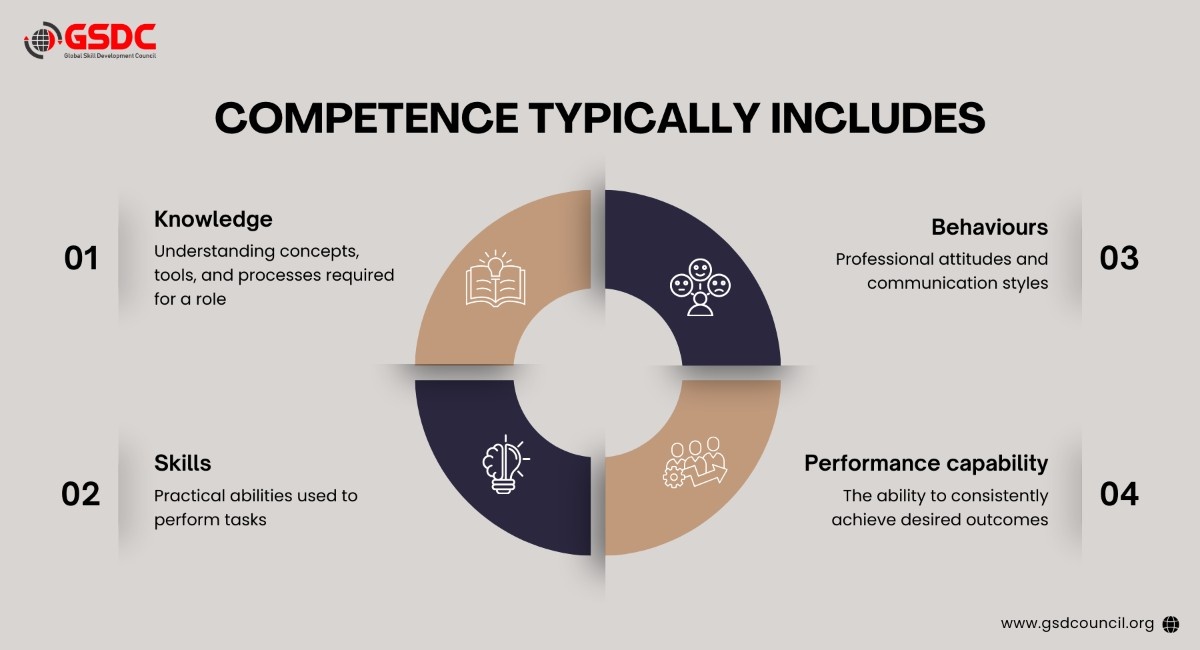
When organisations clearly define competence, they can design structured development programs that align employee capabilities with business goals.
Why Competencies Are Important in the Workplace
Understanding why competencies are important can help you create more informed employee and learning strategies. Competencies provide a framework for measuring performance, identifying skills, and guiding employee development.
Here are some key reasons why competencies matter:
Improved employee performance
Clearly defined competencies help employees understand expectations and perform their roles more effectively.
Better talent development
Competency frameworks guide training programs by identifying the skills employees need to develop.
Consistent performance standards
Organisations can evaluate employees using standardized criteria across teams and departments.
Stronger leadership development
Competency-based development helps organisations build leadership pipelines for future growth.
Strategic workforce planning
Competencies allow companies to align employee capabilities with long-term business strategies.
By investing in competence development, organisations create a workforce that is adaptable, skilled, and aligned with business goals.
AI Capability Across Workplace Skills
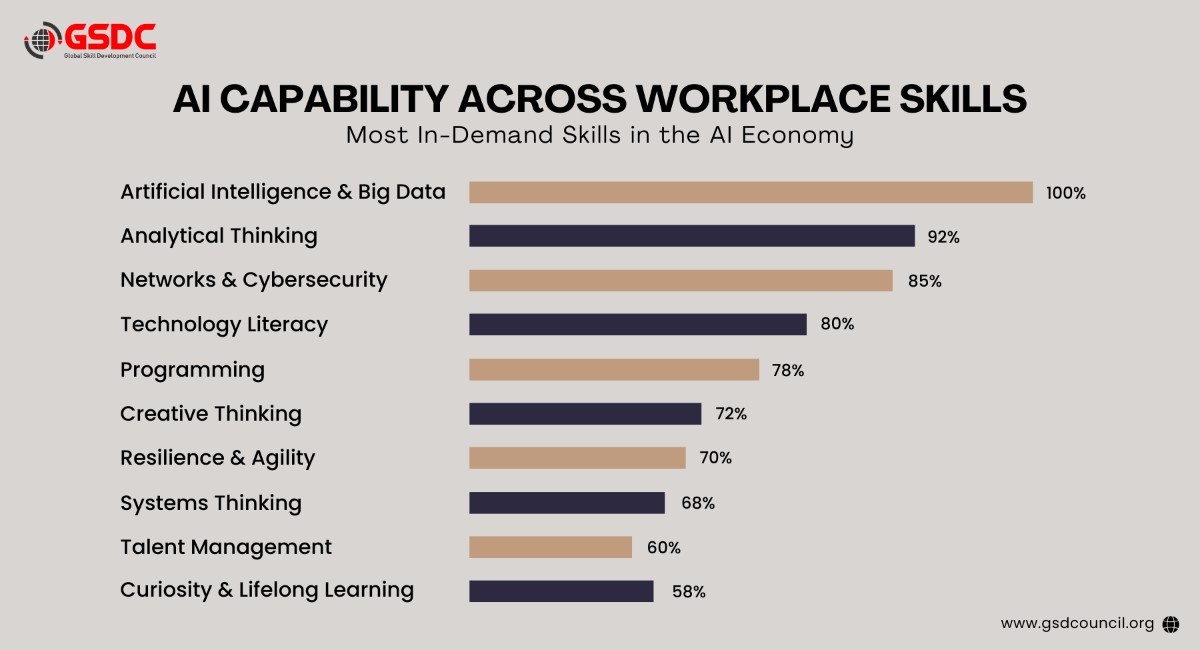
According to research carried out by the World Economic Forum, human skills such as empathy, leadership, and creative thinking are difficult to replicate by AI, while data-driven and analytical skills are easily automated. This further emphasises the need for skills that enhance human skills in the workplace
8 Steps to Effective Competence Development in the Workplace
While many organisations may recognise the importance of competencies, developing such recognition into actual competence development requires a framework and constant, consistent action. The following are eight practical steps organizations can follow to implement effective competence development strategies.
Step 1: Identify Key Competencies for Each Role
The first step is to understand the key competencies that are essential for every role in an organisation. Competences can include skill sets, communication abilities, leadership qualities, and problem-solving skills.
Job analysis and consultations with team leaders can help you understand which competencies can have the greatest impact on an employee's performance in a particular role.
Step 2: Develop a Competency Framework
By building a competency framework development, you can have a clear and organised picture of all the skills and competencies you are looking for in different roles within an organisation. Most competency frameworks include:
- Core competencies shared across the organisation
- Functional competencies specific to departments
- Leadership competencies for management roles
- Behavioural competencies such as collaboration and adaptability
Developing such frameworks ensures consistency in hiring, training, and performance evaluation.
Step 3: Assess Current Employee Competencies
Organisations also need to understand their current competencies before undertaking employee development programs. The common ways of assessing current competencies include:
- performance evaluations
- skill assessments
- manager feedback
- employee self-assessments
These help organisations design programs for developing employee competencies.
Step 4: Create Structured Learning Programs
Training and development programs play an integral role in the development of competencies. Organisations can promote employee development by providing:
- professional training programs
- workshops and seminars
- online learning platforms
- industry certifications
Organisations can design a learning path that enables employees to acquire knowledge and skills pertinent to their roles.
Step 5: Encourage On-the-Job Learning
There are some skills that develop best through learning on the job rather than through lectures or classes. To encourage learning through job experience, organisations can offer:
- project-based assignments
- opportunities to work with people in other departments
- opportunities to switch roles
- challenging problem-solving activities
These activities allow employees to apply what they have learned and build upon what they know in real-life job settings.
Step 6: Provide Mentorship and Coaching
Mentorship and coaching are important in building competence. Trained professionals can be used to coach employees and transfer knowledge to improve their professional growth.
In mentorship, knowledge transfer occurs in a natural manner, while coaching improves leadership and communication skills in employees.
Step 7: Measure Competency Progress
It is important to monitor how employees’ competencies are advancing in order to know whether all learning efforts are bearing fruit. This can be achieved through different measures, including
- performance statistics
- competency evaluations
- learning completion rates
- manager feedback
All these measures can be used to monitor employees’ growth in order to improve how learning strategies are implemented in the organization.
Step 8: Encourage Continuous Learning
Skill development is not an event on the calendar; it is the creation of an organization that sustains learning. This includes:
- on-going upskilling
- access to learning materials
- development of leadership skills
- the opportunity for certification
If learning is an ongoing process, people are better equipped to handle the changes that the industry will inevitably bring.
Competency Development Examples
Organisations apply competence development in different ways depending on their goals and industry needs. Real-world initiatives show how companies strengthen employee capabilities through structured learning programs.
Some common competency development examples include:
Leadership competency development
Companies like General Electric are well known for leadership programs at the Crotonville Leadership Institute, where employees develop strategic thinking, decision-making, and leadership capabilities.
Communication competency development
Many businesses, including Google, have taken it upon themselves to offer training on how to effectively communicate and collaborate with one another to ultimately enhance workers’ abilities when collaborating as members of global teams.
Technical competency development
Companies like IBM run large-scale upskilling programs that provide certifications and hands-on training in areas such as cloud computing, artificial intelligence, and data science.
These competency development examples demonstrate how organizations combine structured learning and practical experience to build stronger workforce capabilities.
How to Develop a Competency Framework
Many organizations wonder how to develop a competency framework that can effectively contribute to the development of talent within the organization.
The answer to that lies in the following steps:
The process typically involves the following steps:
- Identify the organisation’s overall goals and strategic direction
- Define the key roles/responsibilities within the various departments
- Determine the competency necessary for each assigned role
- Establish the level of proficiency for each competency
- Align competencies with training and development initiatives
An effective competency framework serves as a clear guide to develop employee competencies throughout the company.
Global Job Growth and Workforce Transformation
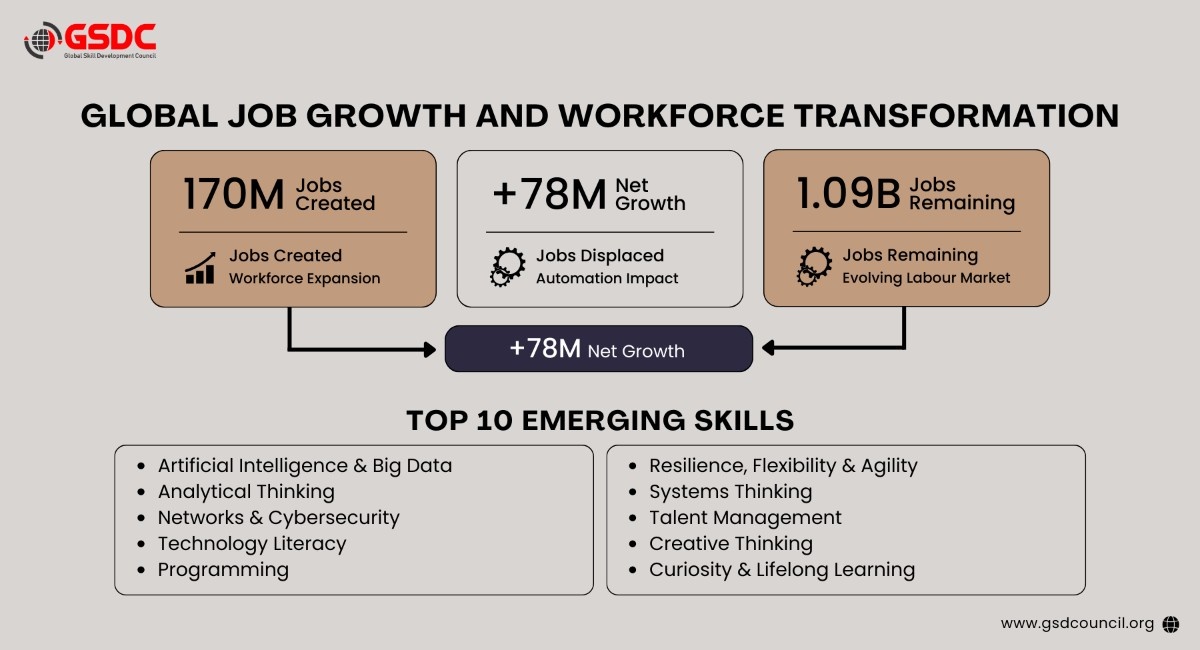
This report indicates that there is a potential for creating up to 170 million jobs, and at the same time, there is a possibility that around 92 million jobs might be phased out because of changes in technology and the economy
Role of Certification in Competence Development
Professional certifications can assist in the development of learning as well as in the development of credentials that can be understood by others in the field.
Those interested in the development of capability frameworks and performance systems can consider obtaining the Performance and Competency Developer Certification certifications to enhance their understanding of the development of competency frameworks as well as strategies in the development of the workforce.
Strengthening Competence Development Through Professional Certification
As businesses increasingly focus on formal competence development, there is an emerging requirement for professionals skilled in delivering competency frameworks. Research indicates that a whopping 87% of businesses already face a notable skills gap or are expecting one. Hence, there is an increased need for formal strategies in workforce competency development.
To address this issue, businesses are seeking globally recognised certifications from bodies such as the Global Skill Development Council. The Certified Performance & Competency Developer certification is designed to empower professionals with skills in delivering competency frameworks.

Conclusion
An organisation may enhance its workforce competencies by taking a systematic approach to competency framework development and then developing continual learning opportunities by following the steps to competency development.
Organisations that have put greater emphasis on developing competencies will be more capable of successfully meeting the challenges of our changing world and establishing long-term competitive advantage.

Related Certifications
Frequently Asked Questions
Stay up-to-date with the latest news, trends, and resources in GSDC
If you like this read then make sure to check out our previous blogs: Cracking Onboarding Challenges: Fresher Success Unveiled
Not sure which certification to pursue? Our advisors will help you decide!