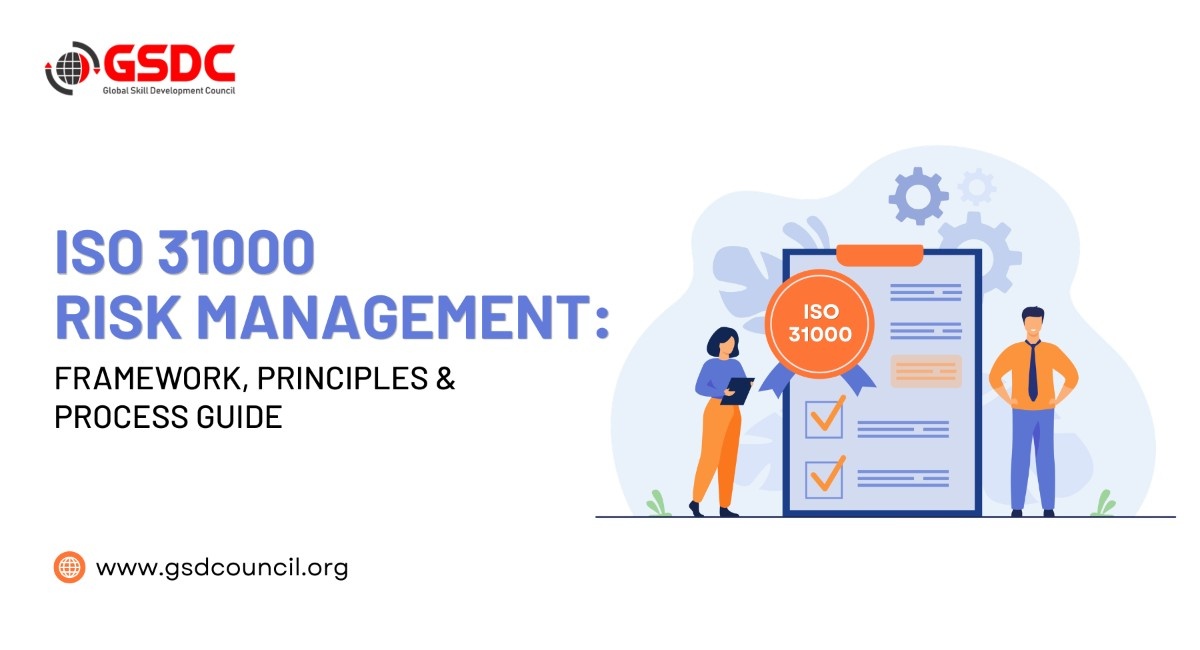
ISO 31000 Risk Management: Framework, Principles & Process Guide
Written by Matthew Hale
- What is ISO 31000 Risk Management?
- What is the ISO 31000 Risk Management Framework?
- ISO 31000 Risk Management Principles
- ISO 31000 Risk Management Process Steps
- ISO 31000:2018 Risk Management Guidelines Explained
- ISO 31000 Compared to Other Risk Standards
- Understanding ISO 31000 Certification
- ISO 31000 Practical Guide: How to Implement It
- Advance Your Career with the Certified ISO 31000:2018 Risk Manager
- Conclusion
- FAQ’s
Every organization faces risks in its operations. For instance, alterations in regulations, new cyber-attack methods, and unexpected market upheavals may be some of the risks that organizations encounter. So, risk is inevitable in business.
However, management of risk is the key factor that distinguishes successful organizations from those that fail.
ISO 31000 risk management policy ensures that the company follows a well-organized process for pinpointing, evaluating, and handling risks throughout the company. The ISO 31000:2018 risk management guidelines enable companies to develop a consistently efficient and effective risk management framework that serves as a foundation for making good risk decisions.
In this blog, we explore how the ISO 31000 framework works and how organizations can apply it in practice.
What is ISO 31000 Risk Management?
ISO 31000 risk management is an international standard developed by the International Organization for Standardization that guides managing risk in a structured way.
It assists companies in spotting the risks that might occur, evaluating the severity of these risks, and then deciding on measures to prevent the situation from worsening. The ISO 31000 risk management system can be utilized for risk types including strategic, operational, financial, compliance, and technology, and it has the versatility to accommodate organizations regardless of their size or industry.
What is the ISO 31000 Risk Management Framework?
The ISO 31000 risk management framework describes how organizations can incorporate risk management into their daily business activities. It makes sure that risk management is not seen as a one-off event, but rather as a continuous and well-structured process that is in line with strategy, governance, and performance.
The components of the risk management framework are as follows:
-
Leadership and commitment
Top management sets the directions for risk management and takes an active role in supporting its implementation throughout the organization. With the help of strong leadership, the embedding of risk management in the organization's culture and strategic priorities is ensured.
-
Integration into organizational processes
Risk management becomes a natural part of planning, project management, operations, and decision-making. The inclusion of risk elements in routine work is thus guaranteed.
-
Design of the framework
Organizations clearly define roles, responsibilities, risk criteria, communication channels, and reporting structures. This provides clarity and accountability for managing risks effectively.
-
Implementation
The organization puts the defined risk management policies, procedures, and controls into practice. This stage focuses on applying risk management activities consistently across departments and functions.
-
Monitoring and review
Risk performance and the effectiveness of control measures are regularly evaluated. Continuous monitoring helps identify new risks, measure outcomes, and ensure the framework remains relevant.
-
Continuous improvement
The framework is regularly updated and refined based on feedback, lessons learned, and changes in the internal or external environment. This helps organizations adapt to evolving risks and maintain strong governance.
At Global Skill Development Council (GSDC), we underline that a proper framework, with the support of capable and certified professionals, is key to establishing a robust and sustainable risk management practice.
ISO 31000 Risk Management Principles
The ISO 31000 risk management principles provide a framework for how risk management should be done in an organization. These principles emphasize that risk management should help in creating value rather than bother with procedural complexities.
According to the ISO 31000:2018 risk management guidelines, risk management should be:
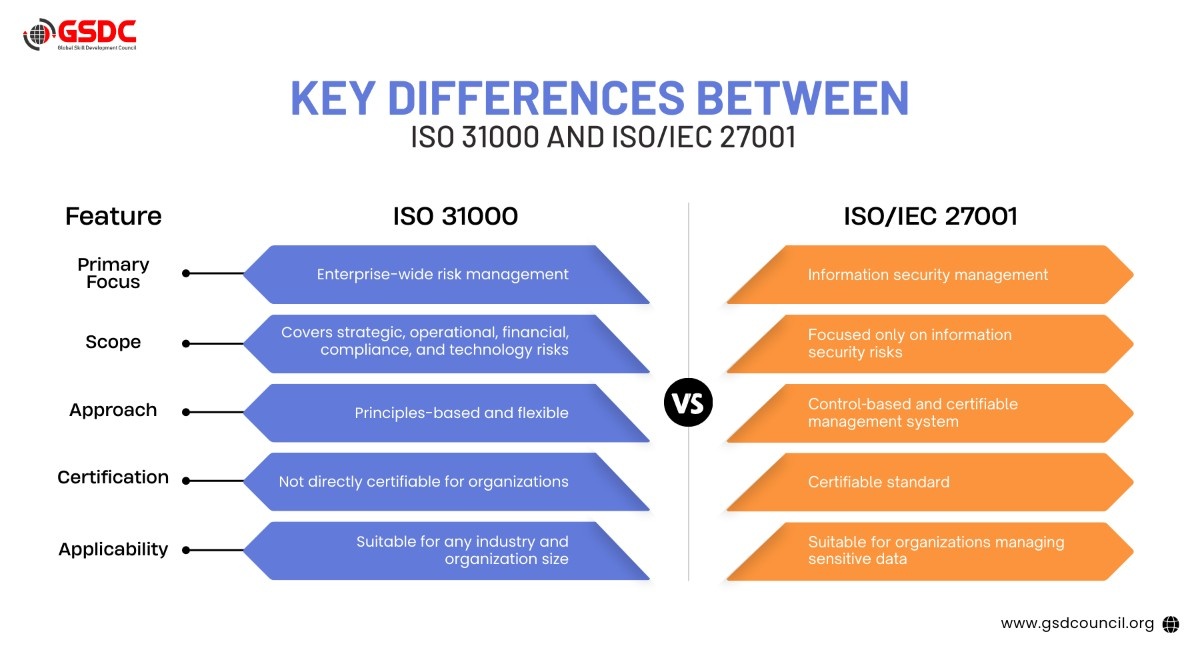
An in-depth comprehension of these principles is a must-have for those who are going to get ISO 31000 Risk Manager Certification, as the principles govern risk in an effective way and also dictate the practical application.
ISO 31000 Risk Management Process Steps
There are a lot of experts who look for ISO 31000 risk management process steps to get an idea of how the framework could be implemented in practical situations. The process is systematic, rational, and intended to be used in a consistent manner throughout the enterprise.
The ISO 31000 risk management process steps are:
1. Communication and Consultation
At each phase, stakeholders should be consulted so that transparency, clarity, and a common understanding of risks can be achieved.
2. Establish Scope, Context, and Criteria
Before assessing risks, identify the internal and external environment, organizational objectives, and risk criteria.
3. Risk Assessment
This stage consists of three key activities:
- Risk identification – Recognizing potential events that could affect objectives.
- Risk analysis – Determining the probability and consequences of the identified risks.
- Risk evaluation – Measuring the risk levels against the predefined criteria for risk prioritization.
4. Risk Treatment
Select and implement appropriate actions, such as reducing, avoiding, transferring, or accepting risk.
5. Monitoring and Review
Keep evaluating risks and controls to make sure they are and continue to be relevant and effective.
6. Recording and Reporting
Make a record of the steps, decisions, and results, and present them to management for their supervision and accountability.
Altogether, these steps from the ISO 31000 risk management process give a straightforward, reusable, and work-oriented framework for risk management throughout the organization.
ISO 31000:2018 Risk Management Guidelines Explained
The International Organization for Standardization released the ISO 31000:2018 risk management guidelines that set out the methods, principles, and framework of an effective risk management system within an organization. The 2018 revision has made the standard more accessible, strategic, and flexible.
The guidelines highlight:
- Leadership is taking strong actions
- The organization of aims as per the set objectives
- The provision of Understanding and simplicity
- Continuous improvement
When risk management is utilized as a tool for strategy and governance, the benefits that come include improved decisions, higher levels of organizational resilience, and increased confidence from stakeholders.
ISO 31000 Compared to Other Risk Standards
Getting to know the differences between ISO 31000 risk management and other standards can help you better understand the extensive benefits of the former.
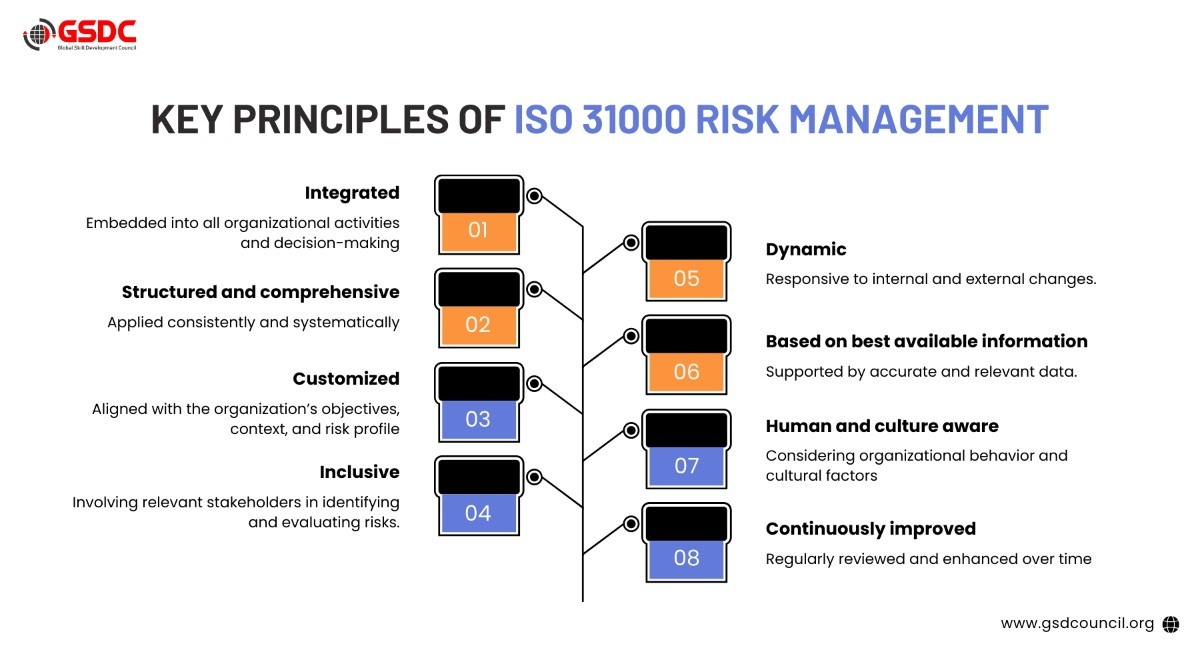
Key Takeaway
- ISO 31000 risk management gives a universal and adaptable risk management framework that can be used throughout the organization.
- ISO/IEC 27001 concentrates especially on the control of information security risks.
Companies that want a broad and flexible method to manage uncertainty should consider ISO 31000 as a wider base that goes beyond the sector, specific standards.
Understanding ISO 31000 Certification
There is often confusion around ISO 31000 certification.
ISO 31000 is a guidance standard that provides principles and generic guidelines on risk management. It cannot be directly certified for organizations by ISO. However, an organization may align its risk management framework with the standard to improve governance practices.
ISO 31000 Practical Guide: How to Implement It
If you are looking for an actionable ISO 31000 practical guide, implementation should be structured and leadership-driven.
Step 1: Secure Leadership Commitment
Top management is the starting point for risk management, with their clear support and direction stating the importance of risk management.
Step 2: Define Risk Appetite
A clear decision must be made on how much risk the company has the capacity to take in achieving its objectives.
Step 3: Conduct Risk Assessments
Using the same ISO 31000 risk management process steps over and over, one should find, study, and measure the risk.
Step 4: Integrate into Business Planning
Include risk factors in your business plan and make them your operational decision-making.
Step 5: Monitor and Improve
Constantly evaluate the framework and make changes to it as per performance and new situations.
This practical approach helps organizations move from understanding ISO 31000 to applying it effectively in real-world environments.
Advance Your Career with the Certified ISO 31000:2018 Risk Manager
The Global Skill Development Council (GSDC) helps professionals acquire a deep, structured, and practical level of expertise in ISO 31000 risk management.
The ISO 31000 Cerification is a qualification that enables a professional to have a thorough understanding of the ISO 31000 risk management framework, to be able to apply its principles in practical situations, and to confidently carry out the steps of the risk management process in their organizations.
In a world full of uncertainties, having a well-known certification in systematic risk management puts your professional credibility a notch higher and gives you a clear strategic advantage see how professionals achieve exactly this through an iso 31000 risk manager career path with GSDC's program.
Conclusion
Implementing ISO 31000 risk management doesn't indicate removing the risk. Instead, it shows that risk can be managed in a structured as well as judicious manner.
ISO 31000:2018 risk management guidelines offer a world-recognized risk management framework that helps in making better decisions, governance more robust, and the organization becomes more resilient.
Both professionals and organizations must study the principles and process stages of ISO 31000 if they are to develop uniform, transparent, and efficient risk management methodologies.
FAQ’s
1. What is ISO 31000 risk management?
ISO 31000 risk management is an international standard that provides structured guidance for identifying, assessing, and managing risks across an organization. The ISO 31000:2018 risk management guidelines support a consistent and strategic approach to risk.
2. What is the ISO 31000 risk management framework?
The ISO 31000 risk management framework integrates risk management into governance, strategy, and daily operations, ensuring risks are managed systematically rather than reactively.
3. What are the ISO 31000 risk management process steps?
The ISO 31000 risk management process steps include communication, establishing context, risk assessment, risk treatment, monitoring and review, and reporting. These steps create a structured approach to managing risk.
4. Is ISO 31000 certification available?
Although ISO 31000 cannot be certified for organizations, individuals can join ISO 31000 certification courses to demonstrate their knowledge of ISO 31000 and its process steps.
5. How does ISO 31000:2018 improve risk management?
The ISO 31000:2018 risk management guidelines align risk management with strategy and governance, helping organizations improve resilience and decision-making.

Related Certifications
Stay up-to-date with the latest news, trends, and resources in GSDC
If you like this read then make sure to check out our previous blogs: Cracking Onboarding Challenges: Fresher Success Unveiled
Not sure which certification to pursue? Our advisors will help you decide!