Understanding ISO 42001: A Guide to Responsible AI Governance
Written by Matthew Hale
Industry-wide, the call for responsible artificial intelligence (AI) governance is becoming more and more evident. For instance, Pleneo, an AI governance and compliance company, just got certified for ISO/IEC 42001. The achievement indicates that there is a trend towards AI governance being more structured and in line with the global standards for artificial intelligence that are emerging.
Organizations these days leverage AI, not just for decision-making but also for automation and analytics. So, the demand for a clear governance framework has escalated to a point that it is even more critical than before. In the case of no structured oversight, AI systems can bring about issues like a lack of transparency, bias, and accountability.
Simply put, ISO 42001 is the key here. ISO/IEC 42001 is the first international standard for a management system that is solely on Artificial Intelligence Management Systems.
This blog provides a detailed ISO 42001 overview, explains what is ISO 42001, and explores the ISO 42001 framework, ISO 42001 requirements, ISO 42001 checklist, and how to get ISO 42001 certification when implementing responsible AI governance.
What Is ISO 42001?
ISO/IEC 42001 is an international standard for management systems that can assist organizations in setting up, implementing, running, and continuously improving an Artificial Intelligence Management System (AIMS).
The International Organization for Standardization, together with the International Electrotechnical Commission, developed this standard to help organizations adopt a structured way of managing artificial intelligence technologies.
Knowing what ISO 42001 is about is a crucial step for any company that is involved in developing, deploying, or managing AI systems. This standard offers a mechanism to handle AI risks and obligations while at the same time it encourages ethical, transparent, and accountable behaviors.
Since organizations are progressively using AI-based systems for making their decisions, being conversant with ISO 42001 means that you are facilitating the appropriate governance that is in line with the up, and, coming global standards for artificial intelligence.
The ISO 42001 Framework Explained
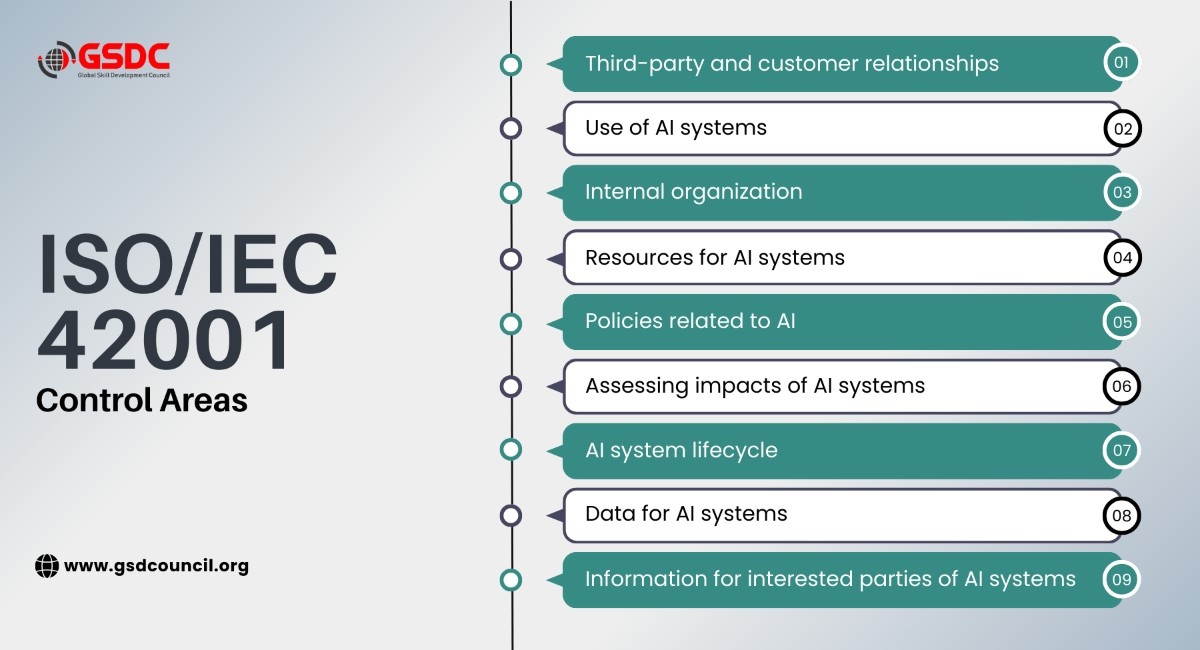
The main structure of ISO 42001 framework is largely consistent with that of many other ISO management system standards, thereby enabling an organization to easily incorporate information security or quality management systems that are already in place.
This framework proffers responsible AI governance of the whole lifecycle of AI system implementations as the main idea.
Some of the essential constituents of the ISO 42001 framework are as follows:
AI Governance and Leadership
Top management in the organization should set up definite policies, assign responsibilities, and define accountability structures for AI creation and usage that are clearly understood by all within the institution.
AI Risk Management
The range of AI-based problems, including ethical issues, algorithmic bias, safety concerns, and operational impacts, that business operations are exposed to should be identified and evaluated by the organization.
Lifecycle Management of AI Systems
Governance of AI development to decommission and in every phase of the AI lifecycle is what the standard emphasizes, including:
- design and development
- testing and validation
- deployment and operation
- monitoring and improvement
Transparency and Accountability
Organizations should have records and methods that make it possible for transparency to be verified regarding how AI systems function and make decisions.
Executing the ISO 42001 framework allows an organization to move its AI governance practice from being a loose set of activities to being a fully managed set of processes and procedures. Those organizations that are interested in growing their expertise on responsible AI governance and standards may also consider the resources and learning programs provided by the Global Skill Development Council , including its ai compliance certification program.
ISO 42001 Requirements Organizations Must Meet
To integrate an Artificial Intelligence Management System, Companies are expected to comply with various ISO 42001 requirements that are purposely aimed at making sure that technology partners in Artificial Intelligence development and usage practice normal ethical standards.
Some of the key ISO 42001 requirements to be followed include:
- Setting up an AI Management System.
It is required of a company to create a framework, a set of rules, and procedures for an AI system management that cuts across the entire organization, and at the same time department and teams.
- Risk and Impact Assessments
A company must identify and characterize the potential risks and impacts of an AI system, with special attention given to ethical, societal, and operational issues.
- Data Governance and Quality
Since AI systems are data-driven, it is paramount for a company to guarantee data integrity, accuracy, and usage of data in a responsible manner.
- Monitoring AI Systems
Companies should keep assessing the functioning of AI systems to make sure they are working as intended and not bringing about any harmful or other unwanted results.
- Documentation and Accountability
It is necessary to keep the requisite documentation in order to be able to illustrate and confirm conformity to the ISO 42001 requirements, as well as to facilitate openness in AI operations, among other things.
Through fulfilling these ISO 42001 requirements, an organization ensures its AI systems can be trusted; meanwhile, governance practices are also enhanced. Those professionals who wish to broaden their knowledge about such requirements and auditing procedures typically get a certified credential, such as the Certified ISO 42001:2023 Lead Auditor, for instance.
ISO 42001 Checklist for Implementation
As an organisation seeks to design a governance process for AI systems, many seek an ISO 42001 checklist to aid in the process.
The process of an ISO 42001 checklist for an organization is as follows:
- Develop a responsible AI policy that directs the ethical development and deployment of AI systems.
- Develop an understanding of AI systems across the organization, both homegrown and third-party tools.
- Perform a risk assessment process to evaluate bias, fairness, transparency, and reliability in business operations.
- Develop a governance process for AI systems, which includes a human oversight process.
- Develop a process for training employees to understand responsible AI systems and governance.
- Develop a process for ongoing monitoring and improvement of AI systems based on reviews of performance, risk assessment, and regulatory changes.
The ISO 42001 checklist is a valuable tool for an organization to develop a governance process that meets the ISO 42001 standard.
ISO 42001 Certification: Why It Matters
Getting ISO 42001 certified means that a company has put in place a strong Artificial Intelligence Management System that is in line with the best practices worldwide.
Quite a few businesses seek certification to ISO 42001 to build stronger confidence in their AI technologies and governance standpoints, besides making sure that their AI is developed and used in a way that is socially responsible.
Furthermore, there have been announcements by different organizations that they are going to adopt this standard. Companies such as Perforce, Greenhouse, and Clario have publicly disclosed that they have been ISO/IEC 42001 certified, illustrating the trend of companies from different industries starting to formalize their AI governance and, at the same time, align with the global standards of artificial intelligence.
Some of the main advantages of being ISO 42001 certified are:
- Proof of a company's dedication to ethical use of AI
- Making things clearer and heightening the level of accountability
- Enhancing risk management measures
- Raising confidence among stakeholders
- Helping with regulatory compliance
Moreover, the certification is a clear indication that an organization's AI governance activities are basically in line with the global standards that are being established for artificial intelligence.
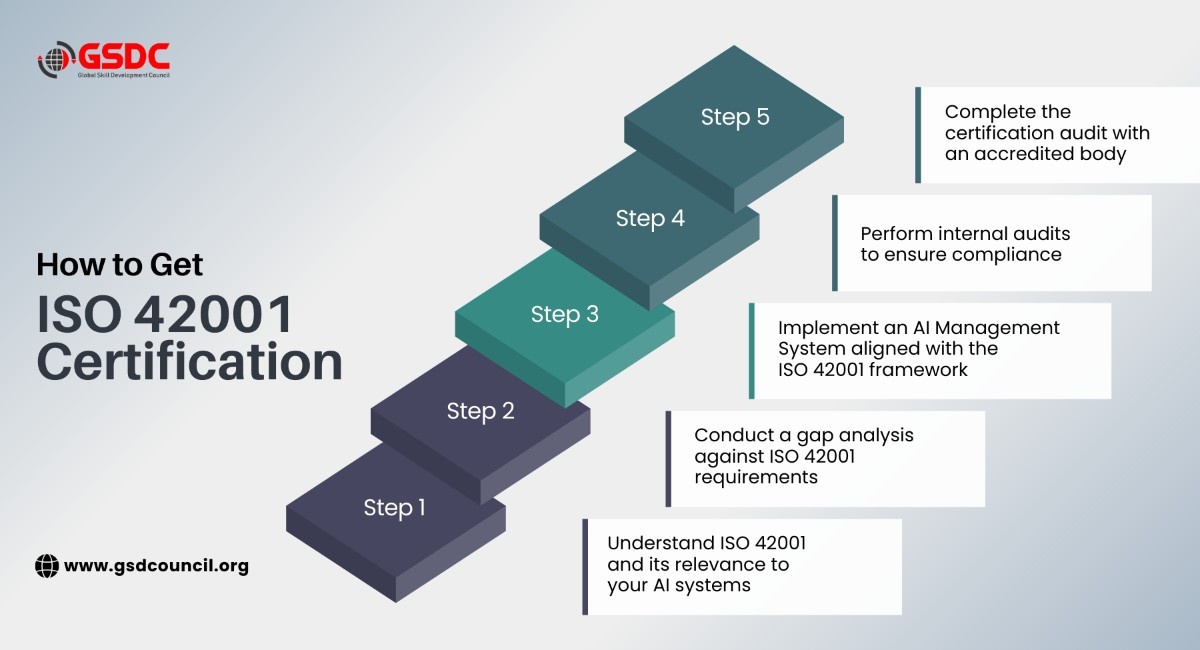
Understanding how to get ISO 42001 certification early helps organizations prepare for responsible AI governance at scale.
Why Understanding ISO 42001 Is Becoming Essential
Artificial intelligence keeps progressing at an astounding pace and is nowadays the main influencer of decision-making in different fields. With the growing use of AI, organizations must make sure their AI systems are responsibly and transparently governed.
Hence, it is becoming very necessary for organizations developing or using AI technologies to be familiar with ISO 42001. The standard gives a well-structured AI governance framework enabling organizations to strike a balance between innovative efforts and responsible AI management, thus also taking care of the issues raised by AI systems.
It provides a framework that helps organizations to:
- Control risks related to AI
- Develop ethical AI use
- Be transparent and accountable
- Comply with global AI standards
Organizations that set up an Artificial Intelligence Management System will be able to integrate AI ethical practices at a deep level in their business and also guarantee that AI systems are continuously being tracked and improved.
Establishing a Knowledge Base for AI Governance
Organisations that have successfully implemented AI governance have developed guidelines on how the technology should function. Not only have they helped their employees understand the new technology better, but they have also encouraged the need for professionals who are aware of standards such as ISO/IEC 42001. “Needless to say, such professionals are in great demand.”
The Global Skill Development Council is fulfilling this requirement through certification programs for new technology and governance. The Certified ISO 42001:2023 Lead Auditor helps professionals develop the skills required for auditing and evaluating Artificial Intelligence Management Systems that comply with the requirements of ISO 42001 standards and the ISO 42001 framework.
If one wants to get into the knowledge of how the use of AI can be made ethical in different sectors of the industry, one should delve deep into standards such as ISO 42001.
Conclusion
Going forward, efficient governance is going to be the differentiator between AI technologies that continue to create long-term value and those that unexpectedly bring new risks if artificial intelligence is thoroughly embedded in business operations of the future.
ISO/IEC 42001 helps organizations unravel the complexity of these challenges to ensure a responsible management of risks. Organizations that adopt the ISO 42001 framework and conform to the provisions of ISO 42001 will be able to enhance the level of transparency, accountability, and trust in their AI systems.
Those organizations that make a commitment towards a thorough understanding of ISO 42001 today will be the ones who can easily establish trustworthy AI systems, facilitate responsible innovation, and be ready for the changes in the global standards of artificial intelligence.

Related Certifications
Frequently Asked Questions
Stay up-to-date with the latest news, trends, and resources in GSDC
If you like this read then make sure to check out our previous blogs: Cracking Onboarding Challenges: Fresher Success Unveiled
Not sure which certification to pursue? Our advisors will help you decide!