How to Build a Career in Instructional Design: Skills & Salary Guide
Written by Matthew Hale
Learning has transformed dramatically in the past few years. After COVID, we all experienced how quickly education and training shifted online, and that shift hasn't slowed down. Teams are now global, roles change faster, and employees need accessible skills to stay confident and future-ready. This evolution has placed instructional design at the center of modern workplace learning.
From onboarding programs and digital courses to performance support tools, instructional designers shape how people learn and grow at work. And as organisations continue investing in mobile learning, microlearning, and AI-Powered training, the demand for skilled designers keeps rising.
If you're exploring how to become an instructional designer, this field offers meaningful work, strong career growth, and opportunities across industries. No matter your background- teaching, HR, Communication, design, or something entirely different - you can build a successful instructional design career with the right skills and practical experience.
What Does an Instructional Designer Do?
If you are new to the field, you may wonder: What does an instructional designer do?
In simple terms, an instructional designer helps people learn better. They design training experiences that are clear, engaging, and relevant to real workplace challenges.
Here’s what instructional design work typically includes:
Core Responsibilities
- Understanding the Learning Need: Everything starts with a learning need analysis, which is instrumental in locating skill gaps and identifying performance issues.
This reflects the importance of training needs analysis, ensuring training is built for a real purpose- not just created as a “nice to have.”
- Planning the Learning Experience: Instruction designers decide learning goals, plan the content, and select the suitable delivery method:eLearning, videos, simulations, workshops, or blended learning.
- Designing and building Training: In conjunction, they produce learning modules, activities, assessments, and storyboards that not only contain but also demonstrate the content.
- Partnering With Subject Matter Experts (SMEs): They work closely with the experts to turn complex topics into simple, practical content that employees can use at work.
- Measuring Impact: Instructional designers analyse the effectiveness of the training and the areas that need changing. This is an ongoing process that ensures learning delivers measurable results.
Where Instructional Designers Work
You’ll find instructional designers in a wide range of environments, including:
- Corporates & MNCs
- EdTech companies
- Training and consulting firms
- Government and public sector
- Universities and online learning platforms
Why the Role Matters Today
Recent industry insights show that 64% of learning leaders prioritize reskilling, and 65% report a rising urgency to launch learning programs.
This clearly reflects how organizations are investing heavily in training-and why skilled instructional designers are essential to making that training effective.
Key Skills Required to Succeed in Instructional Design
To succeed in this field, you need a mix of creativity, analysis, and a good understanding of how adults learn. These instructional designer skills help you create training that is both engaging and effective.
Core Skills Every Instructional Designer Needs
1. Content Structuring & Writing: You should be able to simplify complex ideas and turn them into clear, learner-friendly content. Many professionals begin developing this skill through short instructional design courses.
2. Understanding How Adults Learn: Knowing adult learning principles helps you design training that people actually remember and use.
Over 60% of L&D leaders say that making content concise, interactive, and aligned with how adults learn is the key to effective digital learning.
3. Storyboarding & Planning: Creating structured outlines, learning flows, and visual storyboards is a big part of the job.
4. Tool Skills: Familiarity with tools like Articulate Storyline, Rise, Captivate, or similar authoring tools is essential for building digital learning. These skills often improve faster through guided programs or an instructional design certificate online.
5. Basic Visual & UX Sense: You don’t need to be a designer, but you should know what looks good and what makes learning easy to navigate.
6. Evaluation & Feedback Skills: Instructional designers must measure whether the learning worked and improve it based on data.
A structured instructional design certificate or industry-recognised program gives shape to these skills, helping you build them step-by-step while creating a portfolio that proves your capability.
Staying Updated With Trends
The field is growing fast, so keeping up with instructional design trends is important. This includes:
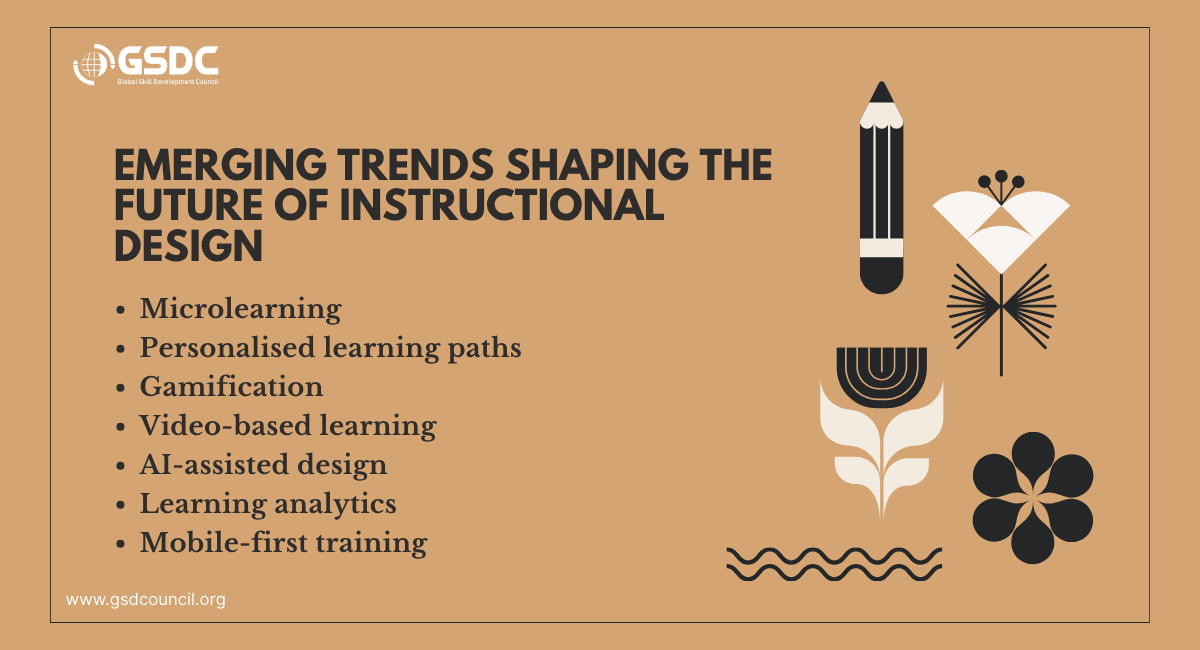
- Microlearning – Very brief, highly targeted lessons that enhance retention and are adaptable to a packed schedule.
- Personalised learning paths – Personalised learning journeys that are based on individual roles, skills, or performance needs.
- Gamification – The use of game features such as badges, points, and challenges to attract motivation and engagement in users.
- Video-based learning – Short videos or friendly animations that help to clarify difficult topics.
- AI-assisted design – Using AI tools to make course creation faster and to personalise learning.
- Learning analytics – The practice of data usage that helps track learner progress and make training decisions more accurate.
- Mobile-first training – The creation of learning that is easily accessible through smartphones for learners who are always on the go.
By staying updated, you can create learning experiences that are perceived as being contemporary, attractive, and are in line with the expectations of the workplace.
Popular Job Roles & Salary Overview
A career in instructional design offers various paths depending on your strengths-content creation, development, learning strategy, or leadership.
Common Instructional Design Job Titles
You’ll often see these roles in job listings for instructional design jobs:
- Instructional Designer – Creates learning experiences, content, and assessments for different training needs.
- Learning Experience Designer (LXD) – Is primarily involved in designing appealing, user-centered learning journeys by employing good UX principles.
- eLearning Developer – Implements interactive online courses through the use of authoring tools and different media elements.
- Curriculum Designer – Designs organized educational programs, courses, and long-term training plans.
- Learning Strategist – Aligns learning solutions with business goals and drives high-level training strategy.
- Training Content Developer – Produces a variety of training materials and job aids in written, visual, and interactive formats.
- LMS Specialist / Administrator – Is responsible for the management of the learning management system, uploading courses, tracking data, and providing support to learners.
- Learning Consultant – Provides advice to organizations regarding their training needs, learning solutions, and the implementation of learning strategies.
Most professionals grow through stages like:
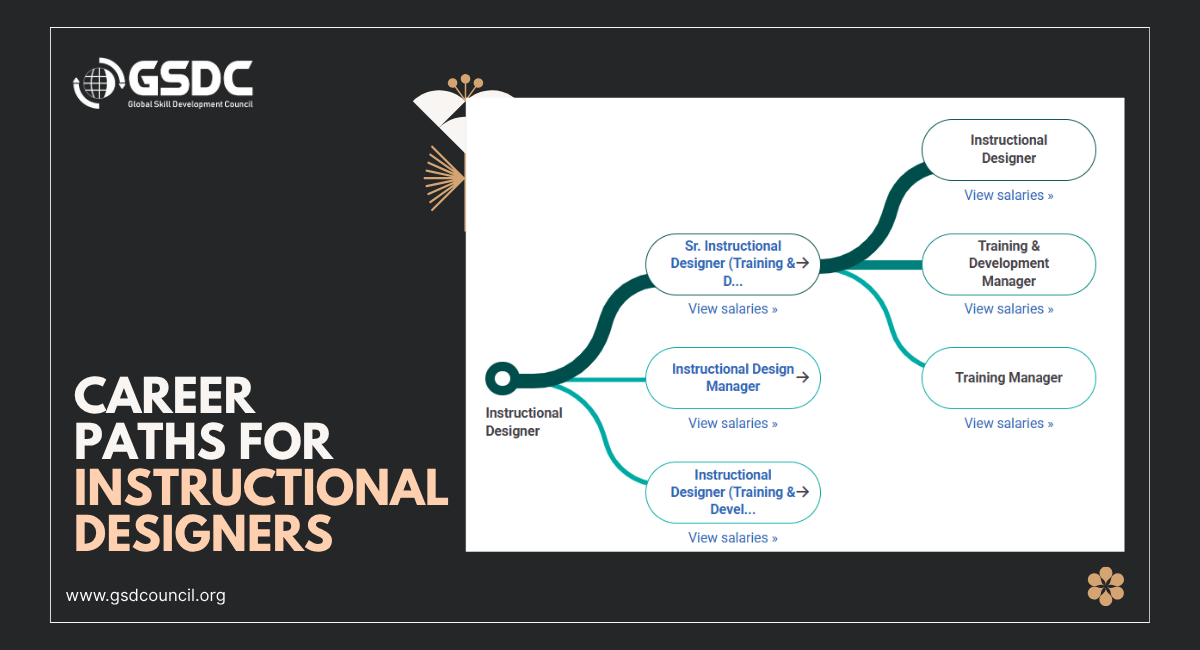
- Junior / Entry Level Instructional Designer
- Mid-Level Instructional Designer / LXD
- Senior Learning Designer or a Learning Strategist
- Learning Manager or Team Lead
- Director / Head of L&D
There are also many entry-level instructional design jobs for newcomers building their first portfolio.
And with digital learning expanding, companies increasingly offer instructional designer jobs remote with over 40% of current ID roles now listed as fully or partially remote across major job platforms..
A recent report also shows that 91% of L&D professionals believe soft skills are increasingly important, making communication, storytelling, and collaboration vital as you advance.
A strong portfolio and an industry-recognised credential from the Global Skill Development Council (GSDC) can also help you transition faster into mid-level or specialised roles.
Salary Trends in Instructional Design
Here’s a clear breakdown of what salary levels typically look like in the instructional design field (based on U.S. averages for illustration):
|
Experience Level / Role Type |
Approximate Annual Salary* |
Notes |
|
~$60,000 or below |
Early-career roles focusing on basic design and tool skills. |
|
|
~$70,000–$90,000 |
The common salary range is once you have solid design, writing, and tool experience. |
|
|
~$90,000–$110,000+ |
Often includes leading projects, advanced design, and strategy. |
|
|
$110,000–$120,000+ or more |
Higher responsibility, leadership, strategy, and cross-functional work. |
* Salaries vary based on location, industry, company size, and responsibilities.
Download the checklist for the following benefits:
✨ Get the exact tools beginners use to turn uncertainty into confidence- skill maps, project ideas, and planning guides.
🚀 Start your instructional design journey with clarity, structure, and a real edge.
How a Professional Credential Strengthens Your Career
Instructional design requires multiple skills-analysis, writing, visual planning, instructional design tools expertise, and evaluation. A strong credential helps bring all these together and gives you confidence when applying for roles.
Becoming a certified instructional designer not only validates your skills but also shows employers that you understand the complete instructional design process.
Many professionals choose to earn an industry-recognised instructional designer certification to strengthen their profiles. The Certified Instructional Designer program offered by the GSDC is one such option that supports skill development through structured learning and practical assignments.
- Strengthen practical, real-world skills
- Build a professional portfolio
- Understand modern ID tools and methods
- Position yourself for better job opportunities
It’s a practical, structured way to advance your career and stand out in a competitive market.
Conclusion: Start Building Your Instructional Design Career Today
Instructional design continues to grow as organizations invest in digital learning, reskilling, and employee development. If you're ready to build your instructional design career, this is the ideal moment to start and GSDC's guide on how to be an instructional designer lays out the exact AI-augmented certification pathway that gets professionals hired at enterprise companies within 90 days.
A strong portfolio and an industry-recognised credential can help you transition faster into mid-level roles. If you're wondering how to build a portfolio for instructional design, GSDC's certification programmed includes 41 real project-based tasks that become your ready-to-share work samples.
The industry is moving fast, and starting now means you’ll be ahead of where learning and development are heading tomorrow.

Related Certifications
Stay up-to-date with the latest news, trends, and resources in GSDC
If you like this read then make sure to check out our previous blogs: Cracking Onboarding Challenges: Fresher Success Unveiled
Not sure which certification to pursue? Our advisors will help you decide!