Designing Next-Gen Learning Experiences with Instructional Design Expertise

Written by Matthew Hale
- What Is Instructional Design and Why Does It Matter
- The Levels of Expertise and Instructional Design
- Core Instructional Design Principles
- Instructional Designer Skills: The Modern Toolkit
- Instructional Design and Learning Technology: A Powerful Partnership
- Where Do Instructional Designers Work?
- Instructional Design Salary and Career Outlook
- Instructional Design Models and Frameworks
- Instructional Design Tools: Building Better Experiences
- Emerging Trends in Learning Experience Design (LxD)
- The Future of Instructional Design and Learning
- Designing for the Learner, Building for the Future
- FAQs:
In a world where technology is changing at a faster rate than the curriculum, the instructional design expertise has never been higher.
In higher education, corporate training, or on digital learning platforms, instructional design lies at the crossroads of pedagogy, ingenuity, and technology, where it creates experiences that not only inform but also reconfigure learners.
The future of education and workforce training lies in the effectiveness with which we are able to design next-generation learning experiences that are adaptable, harness technology, and produce meaningful outcomes.
To do so, we have to learn what instructional design is, what the degrees of expertise and instructional design are, and how the modern professional integrates learning science and innovation.
What Is Instructional Design and Why Does It Matter
So, what is instructional design?
Instructional design (ID) is the systematic process of analyzing learning needs, designing engaging educational experiences, developing materials, and evaluating outcomes to improve performance and knowledge retention. It’s about applying structure and creativity to help people learn better in classrooms, online, or on the job.
When we talk about what instructional design is in education, the focus extends beyond lesson plans or e-learning modules. It’s about creating scalable, inclusive, and data-driven environments that foster curiosity and critical thinking.
According to research from the University of Iowa, instructional design expertise integrates learning theory, instructional methods, and technology to produce measurable results.
This integration of pedagogy and digital fluency defines instructional design and learning technology today, the backbone of next-gen learning experiences.
The Levels of Expertise and Instructional Design
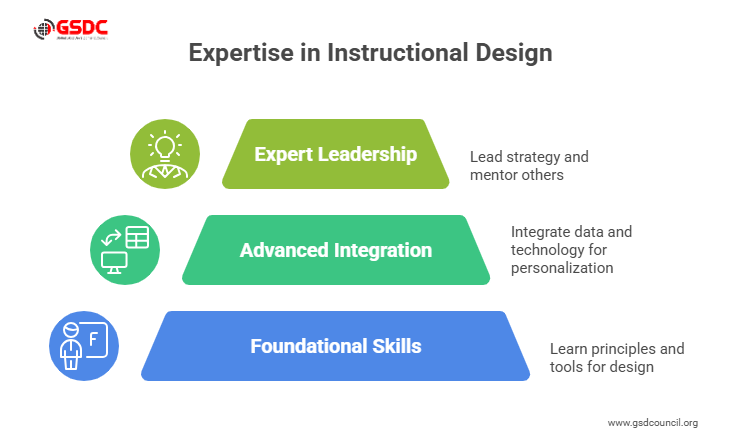
Developing expertise in instructional design happens progressively. There are generally three levels of expertise in instructional design: foundational, advanced, and expert.
- Foundational Level: Designers learn instructional design principles and models such as ADDIE or SAM. They gain hands-on experience with authoring tools, content creation, and learning assessments.
- Advanced Level: Professionals begin to integrate data analytics, learner psychology, and learning technology platforms to personalize education.
- Expert Level: At this stage, designers lead strategy, apply learning science research, and experiment with AI, VR, and adaptive systems. They also mentor others and set quality standards.
This is the stage where an instructional designer evolves into a learning architect someone who designs not just courses, but entire performance ecosystems aligned to business outcomes.
Each level emphasizes not only technical proficiency but also empathy, understanding the learner’s experience. As the field advances, this empathy-driven approach defines what it means to design “next-gen” learning.
Core Instructional Design Principles
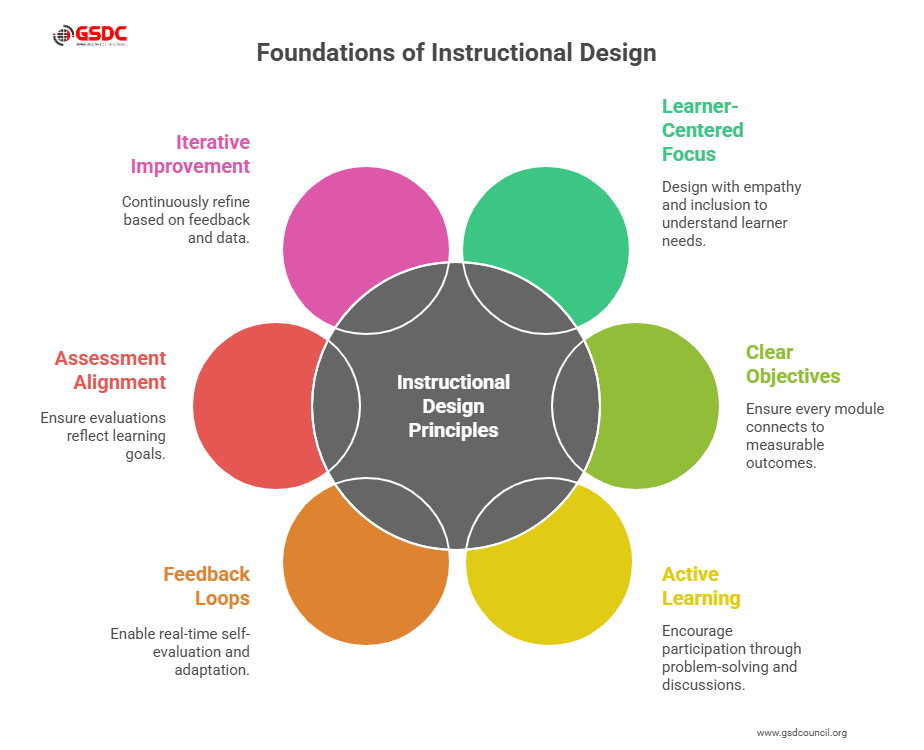
Modern learning experiences rely on a set of timeless instructional design principles that guide the creative process:
- Learner-Centered Focus: Design with empathy and inclusion. Understand who the learners are, what they know, and what they need.
- Clear Objectives: Every module, video, or course should connect to measurable outcomes.
- Active Learning: Encourage participation through problem-solving, discussions, and reflection.
- Feedback Loops: Enable learners to self-evaluate and instructors to adapt in real time.
- Assessment Alignment: Ensure evaluations reflect learning goals.
- Iterative Improvement: Collect feedback, analyze data, and refine continuously.
These principles align with established instructional design frameworks such as ADDIE, SAM, and Gagné's Nine Events, which provide structured workflows for applying them in practice.
Instructional Designer Skills: The Modern Toolkit
Successful instructional designers possess a unique blend of technical, analytical, and creative skills. Core instructional designer skills include:
- Curriculum development and content strategy
- Proficiency in instructional design tools like Articulate 360, Adobe Captivate, Camtasia, and Canva
- Understanding of UX and learning technology
- Data literacy for evaluating learner outcomes
- Knowledge of accessibility and universal design principles
- Communication and stakeholder management
These competencies empower designers to create immersive, inclusive, and adaptive experiences that align with business and educational goals. As research from Walden University notes, reflective practice and project-based learning are critical to building this expertise.
Download this guide to streamline your eLearning design process and start building next-generation learning experiences that inspire and engage:
Instructional Design and Learning Technology: A Powerful Partnership
The synergy between instructional design and learning technology drives next-gen learning forward. Learning technologies such as LMS platforms, adaptive learning engines, and AI chatbots make instruction dynamic and scalable.
According to Southern Methodist University’s Learning Sciences Institute, instructional design expertise combined with technology “creates personalized, engaging, and effective learning ecosystems”.
These ecosystems support multimodal learning, video, simulation, gamification, and augmented reality, allowing designers to reach learners wherever they are.
For example, an Instructional Designer Mock-Up Questions repository within an LMS helps trainers assess comprehension in real time, while AI algorithms adjust content difficulty based on learner performance. This merging of design and technology exemplifies the future of education.Where Do Instructional Designers Work?
A common question for newcomers is: Where do instructional designers work?
The short answer: almost everywhere. Instructional designers contribute across sectors such as:
- Higher Education: Developing online programs, MOOCs, and digital courseware.
- Corporate Training: Creating leadership and compliance learning paths.
- Healthcare: Designing continuing education for medical professionals.
- Government and Nonprofits: Building public education and community programs.
- Technology Companies: Crafting customer education and software training.
Instructional Design Salary and Career Outlook
The field offers competitive pay and career stability.
According to the U.S. Bureau of Labor Statistics and Glassdoor, the instructional design salary ranges between $75,000 and $115,000 annually, depending on industry and experience.
Professionals with a master’s in learning design and technology often earn higher, with the master's in learning design and technology salary averaging around $98,000 per year.
Coupled with remote work opportunities and global demand, it’s no wonder so many professionals are exploring an instructional designer as a rewarding career path that blends creativity, research, and impact.
Learning and Development: Expanding Beyond Design
Instructional design is increasingly part of a broader Learning and Development (L&D) strategy.
While instructional designers build courses, L&D professionals manage performance outcomes across the organization.
To understand this collaboration, it helps to ask: What is a Learning and Development Manager?
An L&D Manager aligns business goals with employee growth. They identify skill gaps, deploy learning initiatives, and evaluate ROI. Together with instructional designers, they ensure learning meets strategic needs.
So, what does a Learning and Development Specialist Actually Do?
They analyze job roles, curate content, facilitate learning, and use analytics to measure success. In today’s Age of Learning and Development, these roles merge seamlessly; designers create the experiences, while L&D teams operationalize them.
Platforms now play a crucial role. Learning and Development Platforms Drive Personalized education by using AI to deliver individualized paths, track engagement, and recommend next steps. It’s a data-driven approach that ensures learners get what they need when they need it.
Instructional Design Models and Frameworks
Effective instructional design is grounded in research-based frameworks. Popular Instructional Design Models include:
- ADDIE (Analyze, Design, Develop, Implement, Evaluate): A structured, iterative approach that supports continuous improvement.
- SAM (Successive Approximation Model): Encourages rapid prototyping and agile collaboration.
- Merrill’s Principles of Instruction: Focuses on problem-centered learning.
- Gagné’s Nine Events: Aligns cognitive learning stages with instructional sequencing.
Each model supports a different stage of development, from defining objectives to refining user experiences. Together, they form the core structure for creating scalable, engaging content in both academic and professional settings.
Instructional Design Tools: Building Better Experiences
Modern designers have access to a suite of instructional design tools that simplify content creation and analytics. These include:
- Authoring Tools: Articulate Storyline, Rise 360, Lectora, and Adobe Captivate.
- Learning Management Systems: Moodle, Canvas, and Blackboard.
- Collaboration & Visualization: Miro, Figma, and Notion.
- Analytics Tools: Google Data Studio and Power BI for tracking learning effectiveness.
These tools allow designers to create visually appealing, interactive, and measurable learning experiences that engage diverse audiences.
Selecting the right tools starts with choosing the right instructional design standards and process model for your project.
Instructional Design Expertise: Driving Measurable Impact
According to a review in the Journal of Educational Technology and Development, combining instructional design expertise with emerging technologies significantly enhances learning outcomes.
For example:
- Learners in AI-supported environments demonstrated higher engagement and adaptability.
- Instructional design frameworks improved assessment alignment and accessibility.
- Corporations implementing design-driven training achieved better performance and lower turnover.
As over 220 million learners enrolled in MOOCs between 2011–2021, the global appetite for professionally designed digital experiences has skyrocketed.
Emerging Trends in Learning Experience Design (LxD)
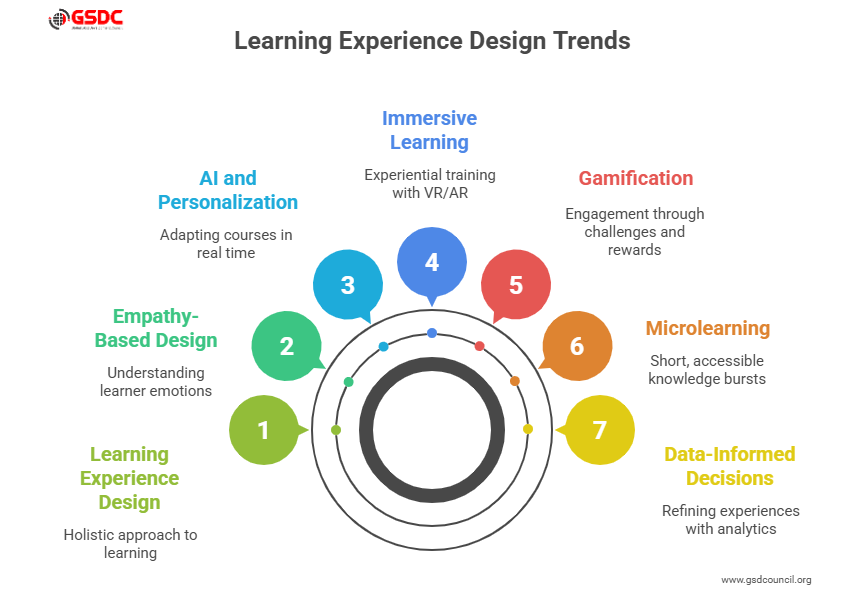
The field is evolving into what experts call Learning Experience Design (LxD), a holistic approach combining empathy, creativity, and data to shape how people learn.
Key trends include:
- Empathy-Based Design: Understanding learner motivation and emotion as much as cognition.
- AI and Personalization: Using predictive algorithms to adapt courses in real time.
- Immersive Learning: Leveraging VR, AR, and simulation for experiential training.
- Gamification: Encouraging engagement through challenges and rewards.
- Microlearning: Delivering knowledge in short, accessible bursts.
- Data-Informed Decisions: Using analytics to refine learning experiences continuously.
The Future of Instructional Design and Learning
Instructional design isn’t just evolving, it’s expanding. The line between education, design, and technology continues to blur.
The next decade will see designers acting as strategists, data analysts, and AI integrators.
Future instructional designers will:
- Use AI tools to generate adaptive content.
- Apply neuroscience insights to personalize learning.
- Collaborate globally using cloud-based ecosystems.
- Focus on sustainability and ethical design.
To stay relevant, professionals should pursue ongoing education and those ready to make the leap can follow GSDC's structured path to how to become a certified instructional designer with an AI-augmented, globally recognized credential that includes 41 hands-on activities and 100+ live monthly sessions. This not only builds expertise but also connects them with a community, driving the evolution of instructional design and learning.
If you’re ready to take your expertise further, the GSDC Instructional Designer Certification helps you master the art and science of creating impactful learning experiences.

Designing for the Learner, Building for the Future
Instructional design is no longer confined to classrooms or corporate LMS platforms; it’s a global movement shaping how people learn, reskill, and grow.
The power of instructional design expertise lies in merging creativity with research, technology with empathy, and innovation with purpose.
As we continue exploring the Age of Learning and Development, one thing is clear: learning that’s well-designed transforms lives.
With the right skills, tools, and principles, today’s instructional designers are not just educators; they are architects of the future of learning.
FAQs:
1. What is instructional design, and why is it important in modern learning?
Instructional design is the structured process of analyzing learner needs, developing engaging content, and evaluating learning effectiveness. It’s vital in today’s world because it combines instructional design and learning technology to create interactive, adaptive, and personalized education from classrooms to corporate eLearning programs.
2. What are the key levels of expertise in instructional design?
The levels of expertise in instructional design generally include beginner, advanced, and expert stages. Beginners focus on foundational instructional design principles and tools, while experts integrate learning technology, data analytics, and AI to design personalized learning systems that drive measurable outcomes.
3. What is instructional design in education, and how is it different from corporate learning?
Instructional design in education refers to creating structured learning experiences that enhance knowledge and skill acquisition in academic settings. Unlike corporate learning, educational instructional design emphasizes pedagogy, student motivation, and assessment design, though both rely heavily on instructional design expertise and learning technology.
4. Which instructional design tools are most useful for next-gen learning experiences?
Popular instructional design tools include Articulate 360, Adobe Captivate, Camtasia, Rise, and Canva. These tools help instructional designers build multimedia courses, simulations, and microlearning modules. Advanced designers also leverage AI-driven analytics platforms to evaluate learner engagement and outcomes.
5. What are the essential instructional designer skills?
Top instructional designer skills include curriculum design, content writing, visual communication, and assessment creation. Designers must also master instructional design principles, learning analytics, and emerging technologies like AR, VR, and AI to create next-gen experiences that connect with diverse learners.
6. Where do instructional designers work, and what career opportunities exist?
Many wonder where instructional designers work, and the answer is nearly everywhere in higher education, corporate training, healthcare, government, and technology sectors. Roles include eLearning developer, curriculum strategist, or Learning and Development Specialist, making instructional design one of the most versatile career paths today.
7. What is the average instructional design salary and career outlook?
The instructional design salary ranges from $75,000 to $115,000 annually in the U.S., depending on industry and experience. Those with a master’s degree or an instructional design certificate often earn more. As organizations expand digital learning, the demand for skilled designers continues to grow rapidly.
8. How does instructional design expertise improve learning outcomes?
Strong instructional design expertise ensures that courses are data-driven, learner-centered, and outcome-focused. Research shows that well-designed learning experiences improve engagement, retention, and performance, whether in academia or professional training, by aligning instructional design and learning with technology and behavioral science.
9. How do learning and development platforms drive personalized instruction?
Learning and Development Platforms Drive Personalized learning through AI-powered analytics and adaptive pathways. They analyze learner behavior to recommend targeted modules, making education more engaging and efficient. When integrated with instructional design, these platforms revolutionize both how we learn and how we teach.

Related Certifications
Stay up-to-date with the latest news, trends, and resources in GSDC
If you like this read then make sure to check out our previous blogs: Cracking Onboarding Challenges: Fresher Success Unveiled
Not sure which certification to pursue? Our advisors will help you decide!