Top Learning and Development Careers to Watch in 2025 Omkar
Written by Matthew Hale
The workplace is in the middle of a revolution that is sparked by giant changes in technology, employee expectations, and the market forces that dictate corporate success. Liberated at the epicenter of this transition is the field of learning and development (L&D), a vibrant and fast-growing profession overseeing the means that organizations and their staff must possess.
Regardless of the stage you are at in your professional journey whether you are a young graduate or an experienced professional looking at enhancing the value that you bring to practice, Careers in learning and development present an opportunity to create value, shape practice, and advance professionally.
As organizations modernize learning and development, reskilling and well-being of workers, job demand for learning and development specialists has never been greater.
From creating AI-based training models to creating 360-degree employee engagement frameworks, learning and development careers are wide-ranging and fulfilling. In this article, let’s discuss new roles, major trends, and the strategies to succeed in this rapidly growing sector in 2025.
Scenarios To Follow
Natalie Smith, L&D Consultant: "The CLDP certification gave me the confidence and skills I needed to launch my own L&D consulting business. It's been a game-changer for me."
Download the checklist for the following benefits:
Why Learning and Development Jobs Matter
hi om kar

Key Trends Shaping Careers in Learning and Development for 2025

- Upskilling and Reskilling:
The workforce is under constant pressure to keep up with technological changes. Roles that didn’t exist five years ago are now commonplace, and employees must learn new skills to remain relevant. With 66% of workers acknowledging the need to acquire new skills, organizations are investing heavily in upskilling and reskilling programs.
Professionals focusing on learning and development jobs will play a pivotal role in designing and implementing these programs. Reskilling initiatives cater to employees transitioning into new roles within the same company while upskilling efforts help individuals master advanced skills for their current positions. This dual focus ensures that businesses remain competitive while fostering a culture of continuous learning.
- Personalized Learning Experiences:
Traditional training programs are increasingly being replaced by personalized learning pathways. Studies show that 80% of employees prefer tailored training that considers their specific roles, career goals, and learning preferences.
Roles like Personal Learning Experience Designers are central to this shift as GSDC’s L&D certification contributes to the overall learning of employees. These professionals design bespoke learning experiences that adapt to the individual strengths, weaknesses, and aspirations of each employee.
Whether it's through tailored online courses, on-the-job training, or mentorship programs, personalization has become a cornerstone of modern L&D strategies.
Moreover, personalized learning enhances engagement and effectiveness, leading to better retention of skills and knowledge. This trend is especially important as businesses strive to address diverse learning styles and preferences in their workforce.
- Integration of AI and Technology:
AI is revolutionizing L&D by automating routine tasks, personalizing training content, and analyzing vast amounts of data to improve decision-making. Roles like Learning AI Specialists are emerging as key players in harnessing this technology to enhance employee training programs.
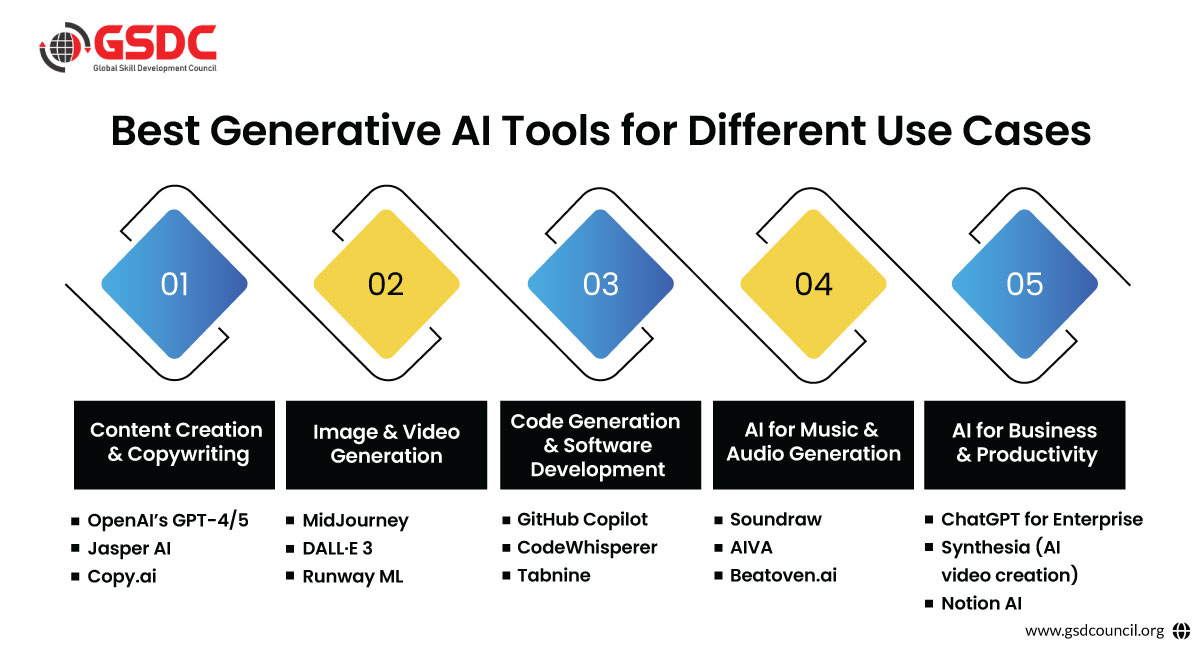
Generative AI tools are also becoming indispensable for content creation. They enable L&D professionals to design interactive modules, video tutorials, and assessments quickly and efficiently, saving time and resources while maintaining high-quality outputs. The use of AI doesn’t just streamline processes; it also creates opportunities for innovation in how learning is delivered.
For example, AI-driven platforms can analyze employee performance data and recommend specific learning materials tailored to their needs. This ensures that every training program is both relevant and impactful.
- Focus on Employee Wellbeing:
The definition of professional development is expanding to include emotional intelligence, mental health, and overall well-being. Organizations now recognize that training programs must address these aspects to ensure a well-rounded approach to employee growth.
With 68% of employees valuing training that supports their personal growth and well-being, careers in learning and development are evolving to include designing programs that emphasize work-life balance, stress management, and emotional resilience. This holistic approach not only boosts employee satisfaction but also improves productivity and retention.
- The Rise of Data-Driven Decision Making:
Due to the prominence of data, there’s a need for occupations such as L&D Data Analysts.
These professionals employ the use of statistics in assessing the impact of training interventions with a view to the need to enhance such programs. L&D professionals need not only to include a range of activities in adequately equipped development programs but also focus on metrics to improve their effectiveness.
Information also assists in prognostic information, which assists organizations in estimating future skills deficiencies and rectifying them in advance. Such a progressive management style makes businesses adapt to the new trends in industries while creating a pool of human capital.

Emerging Careers in Learning and Development
- Personal Learning Experience Designer:
- Focus: Designing bespoke learning pathways aligned with employee goals and strengths.
- Why: The shift toward personalization makes this one of the most sought-after roles in learning and development jobs. These designers create dynamic learning environments that adapt to the unique needs of individuals, ensuring a more engaging and impactful experience.
- Learning AI Specialist:
- Focus: Integrating AI tools to personalize learning experiences and automate content creation.
- Why: AI is expected to dominate L&D strategies in 2025. Specialists in this role ensure that technology enhances, rather than replaces, the human touch in training and development.
- L&D Data Analyst:
- Focus: Using analytics to measure training impact and optimize L&D strategies.
- Why: The growing emphasis on data-informed decision-making is driving demand for skilled analysts who can turn numbers into actionable insights.
This problem has been solved!
You'll get a detailed solution from a subject-matter expert that helps you learn core concepts.
Questions for Aspiring L&D Professionals
- What skills are essential?
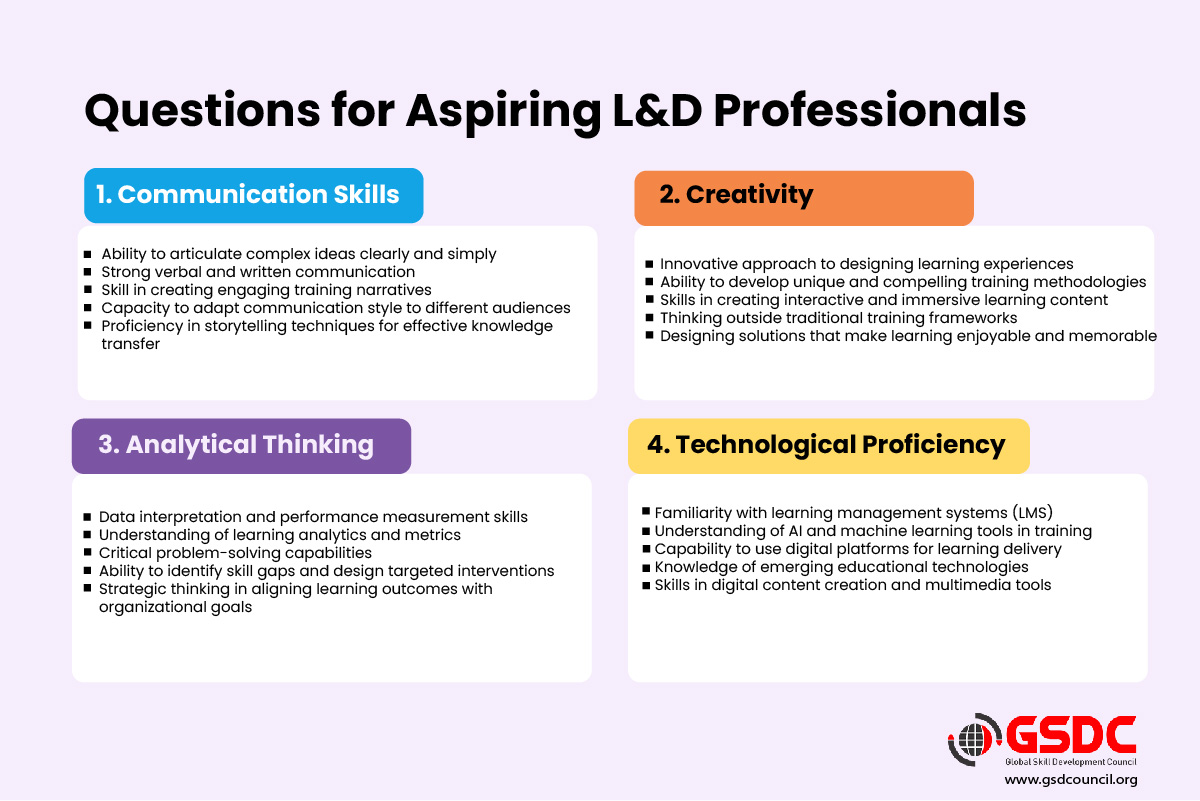
Below are the must-have skills for success in this field:
- Communication Skills
Being able to explain complex ideas in simple terms, craft engaging narratives, and tailor your communication style to different audiences is crucial.
- Ability to articulate complex ideas clearly and simply
- Strong verbal and written communication
- Skill in creating engaging training narratives
- Capacity to adapt communication style to different audiences
- Proficiency in storytelling techniques for effective knowledge transfer
- Creativity
Designing innovative and interactive learning experiences requires out-of-the-box thinking and the ability to make training enjoyable and memorable.
- Innovative approach to designing learning experiences
- Ability to develop unique and compelling training methodologies
- Skills in creating interactive and immersive learning content
- Thinking outside traditional training frameworks
- Designing solutions that make learning enjoyable and memorable
- Analytical Thinking
Using data to identify skill gaps, measure training outcomes, and align strategies with organizational goals is a must-have competency.
- Data interpretation and performance measurement skills
- Understanding of learning analytics and metrics
- Critical problem-solving capabilities
- Ability to identify skill gaps and design targeted interventions
- Strategic thinking in aligning learning outcomes with organizational goals
- Technological Proficiency
Learning tools like LMSs, AI platforms, and digital content creation software are essential in today's technologically driven learning environment.
- Familiarity with learning management systems (LMS)
- Understanding of AI and machine learning tools in training
- Capability to use digital platforms for learning delivery
- Knowledge of emerging educational technologies
- Skills in digital content creation and multimedia tools
A clean integration of these skills can help you blend in your knowledge with the right articulation and technical approach.
- What industries are hiring?
Tech, healthcare, education, and retail are leading the charge in L&D recruitment.
- How can I enter the field?
Start by earning certifications (e.g., in instructional design or AI in L&D), networking, and building a portfolio showcasing your projects.
Holistic Development in L&D
Many discussions focus solely on skill development. However, careers in learning and development are increasingly emphasizing mental health, emotional intelligence, and resilience.
As organizations recognize the value of holistic employee growth, L&D professionals will spearhead initiatives that combine skill-building with personal development.

Related Certifications
Stay up-to-date with the latest news, trends, and resources in GSDC
If you like this read then make sure to check out our previous blogs: Cracking Onboarding Challenges: Fresher Success Unveiled
Not sure which certification to pursue? Our advisors will help you decide!