How AI & AI Agents Transform Rare Earth, E&U & Critical Industries
Written by Susmit Sen
- The Growing Pressure on Critical Industries
- AI as a Decision Engine, Not Just Automation
- AI in Critical Minerals and Rare Earth Industries
- AI in Energy & Utilities: Building the Intelligent Grid
- Unlocking Hidden Data with NLP and Generative AI
- Federated Industries and the Role of Federated Learning
- Why Choose the GSDC Agentic AI Professional Certification
- Conclusion
Artificial Intelligence (AI) is no longer a futuristic concept; it is rapidly becoming the backbone of industries that power the modern world. From rare earth minerals to energy and utilities (E&U), enterprise AI and enterprise AI agents are reshaping how organizations operate, make decisions, and ensure resilience in highly complex, decentralized environments through AI automation and AI workflow automation.
This webinar, “How can AI & AI agents help in Rare earth, E&U and most federated yet critical industries”, explored how AI is driving innovation across these sectors while highlighting the importance of governance, data quality, and strategic implementation.
The Growing Pressure on Critical Industries
Industries such as mining, rare earth processing, and energy utilities are facing unprecedented pressure. Demand for critical minerals is expected to grow nearly six-fold by 2040, driven by clean energy technologies like electric vehicles, wind turbines, and advanced electronics, making AI for enterprise and AI enterprise strategies increasingly essential, along with understanding types of AI agents and the role of autonomous AI agents.
However, these industries share a common challenge:
- They are data-rich but insight-poor
- Operations are highly decentralized (federated)
- Systems are often siloed and legacy-driven
Unlike sectors like finance or retail, IT penetration in these industries has historically been limited. This has created a massive opportunity for AI to unlock hidden value.
AI as a Decision Engine, Not Just Automation
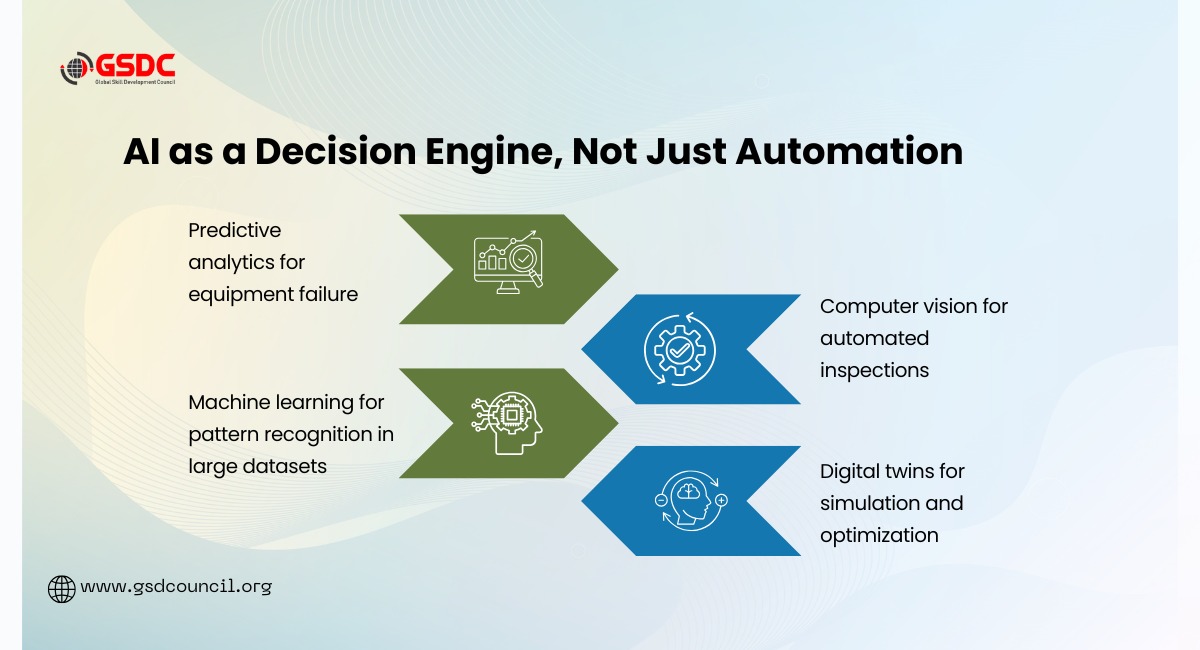
One of the key takeaways from the session is that AI should not be viewed merely as a chatbot or automation tool. Instead, it acts as a decision engine leveraging advanced analytics, machine learning, and predictive modeling to optimize real-world operations.
AI in Critical Minerals and Rare Earth Industries
Rare earth elements and critical minerals are essential for modern technology. However, their supply chains are highly concentrated and vulnerable to geopolitical risks.
AI is transforming this sector in multiple ways:
1. Intelligent Exploration
AI combines satellite imagery, geospatial data, and historical drilling records to identify mineral deposits with higher accuracy.
- Discovery success rates have improved significantly
- Exploration costs can be reduced by up to 50%
- Drilling decisions are now data-driven rather than experience-based
2. Computer Vision in Mining
Using drones and satellite imagery, AI can:
- Analyze terrain and geological patterns
- Detect mineral signatures
- Generate precise drilling coordinates
This minimizes waste and increases efficiency in mining operations.
3. AI-Driven Supply Chain Optimization
AI helps:
- Predict geopolitical risks
- Optimize refining processes
- Identify alternative sourcing strategies
This ensures resilience in global supply chains for critical materials.
AI in Energy & Utilities: Building the Intelligent Grid
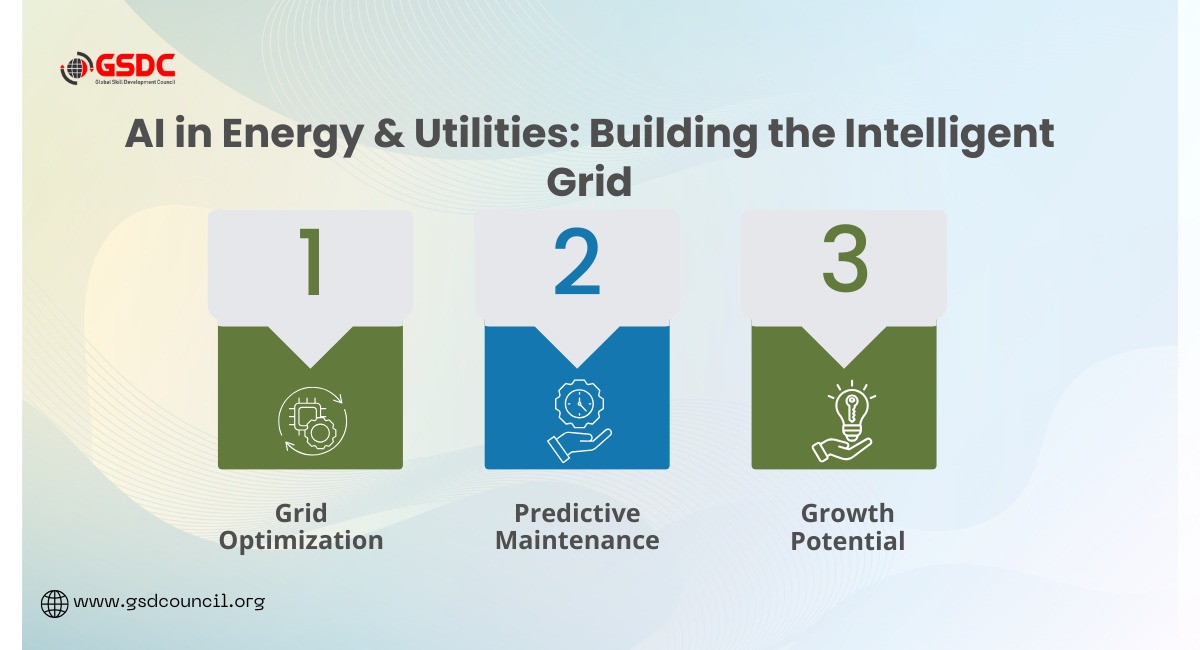
The energy sector is undergoing a major transformation with increasing demand and the rise of renewable energy sources.
AI is enabling the creation of intelligent, adaptive power grids through:
Grid Optimization
- Balancing energy loads dynamically
- Reducing transmission losses
- Managing renewable energy variability
Predictive Maintenance
AI models analyze sensor data to predict equipment failures before they occur:
- Reduces repair costs by 3–5x
- Decreases downtime by up to 30%
- Extends asset life by over 20%
Cybersecurity Enhancement
AI strengthens defense mechanisms by:
- Detecting threats faster
- Automating response systems
- Securing critical infrastructure
Digital Twins: Simulating Before Building
A powerful concept discussed in the webinar is the use of digital twins, virtual replicas of physical assets such as mines, refineries, or power grids.
These models:
- Continuously receive real-time data from IoT sensors
- Simulate different operational scenarios
- Help optimize performance without risking physical assets
For example:
- Testing increased production capacity
- Simulating grid load changes
- Evaluating cybersecurity risks
Unlocking Hidden Data with NLP and Generative AI
Many organizations in these industries possess decades of unstructured data, PDFs, reports, handwritten logs, and more.
AI technologies like NLP (Natural Language Processing) and RAG (Retrieval-Augmented Generation) help:
- Convert unstructured data into searchable knowledge
- Extract insights from historical records
- Support better decision-making
This transforms “dead data” into a valuable strategic asset.
Federated Industries and the Role of Federated Learning
Critical industries such as mining, water, transport, and utilities are inherently federated data is distributed across multiple locations and organizations.
Traditional centralized AI models often fail in such environments.
Federated Learning solves this by:
- Training models locally at each site
- Sharing only model updates, not raw data
- Ensuring data privacy and compliance
This enables collaboration while maintaining the confidentiality of sensitive information.
The Biggest Barrier: Data Governance
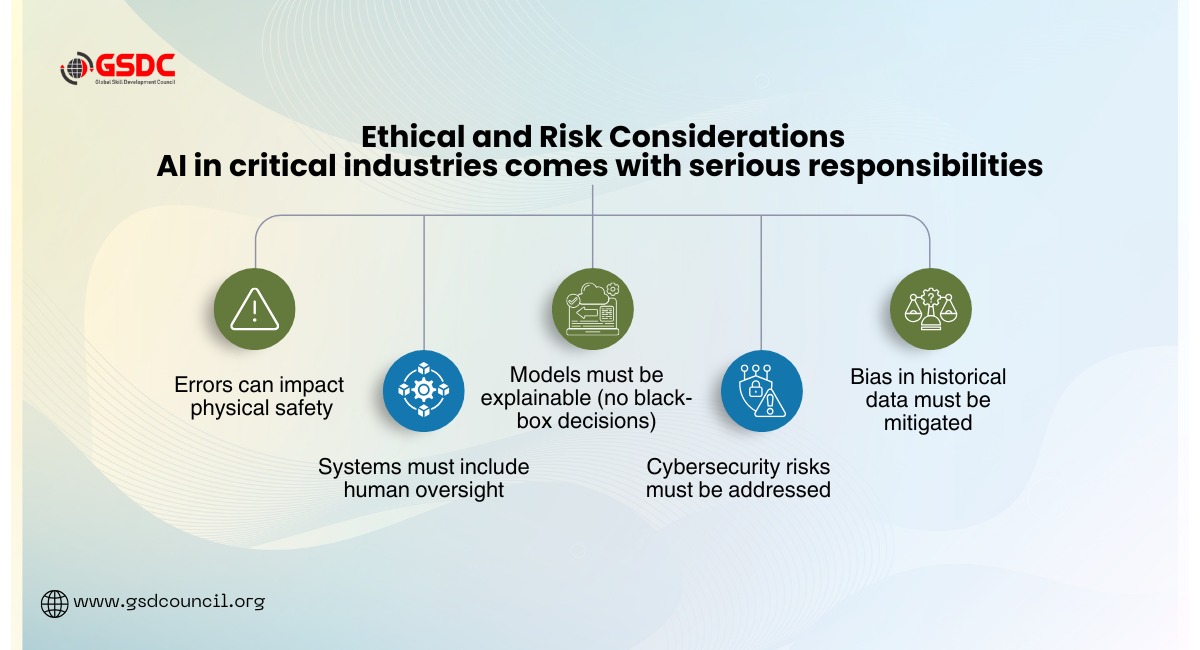
Despite all the technological advancements, the biggest challenge remains data quality and governance.
Common issues include:
- Data silos across systems
- Lack of a single source of truth
- Poor data ownership and accountability
AI cannot fix bad data it can only amplify existing problems.
Key prerequisites for AI success:
- Master Data Management (MDM)
- Data quality frameworks
- Data catalogs and lineage tracking
- Clear data ownership
Without these, AI initiatives are likely to fail.
A Practical Roadmap to AI Adoption
The webinar emphasized a phased, practical approach:
1. Govern the Data
- Establish ownership and quality standards
- Create a unified data framework
2. Build the Foundation
- Implement lakehouse architecture
- Deploy data catalogs and governance tools
3. Start Small
- Focus on a single use case (e.g., predictive maintenance)
- Demonstrate ROI
4. Scale Gradually
Expand successful implementations across the enterprise
Why Choose the GSDC Agentic AI Professional Certification
GSDC’s Agentic AI Professional certification is designed for individuals looking to build expertise in the next evolution of artificial intelligence, agentic AI systems that can act, adapt, and make decisions autonomously.
Agentic AI Professional certification equips professionals with practical knowledge of AI agents, their architectures, and real-world enterprise applications. It focuses on implementing AI-driven automation, optimizing workflows, and enhancing decision-making across industries.
With a strong emphasis on governance, ethics, and scalability, the program prepares candidates to deploy AI responsibly. Earning this credential demonstrates your ability to lead AI initiatives and stay competitive in a rapidly evolving, AI-driven business landscape.
Conclusion
AI and AI agents are transforming critical industries by enabling smarter exploration, resilient supply chains, and intelligent energy systems through industrial AI, generative AI in business, and generative AI industry applications.
However, success depends not just on technology but on strong data foundations, governance, and strategic implementation across critical industries.
Organizations that invest in data quality and adopt a phased approach to AI today will emerge as leaders in the AI-driven future.

Frequently Asked Questions
Stay up-to-date with the latest news, trends, and resources in GSDC
If you like this read then make sure to check out our previous blogs: Cracking Onboarding Challenges: Fresher Success Unveiled
Not sure which certification to pursue? Our advisors will help you decide!