Data Governance as the bedrock for AI & AI Governance : Practical way
Written by Susmit Sen
- Enterprise Perspective: Governance as a Strategic Imperative
- Core Components of a Governance Framework
- Why AI Governance Cannot Be an Afterthought
- The “Chicken and Egg” Challenge
- Career Insights: Getting Started in AI Governance
- Build Practical Expertise in Agentic AI for Stronger Data Governance
- Final Thoughts
As digital transformation continues to reshape industries, organizations are rapidly adopting artificial intelligence to enhance efficiency, automate decision-making processes, and drive innovation.
However, as emphasized in a recent webinar on “Data Governance as the Bedrock for AI & AI Governance: Practical Way,” successful AI implementation goes beyond deploying advanced algorithms; it fundamentally depends on strong AI data governance practices and a structured approach to data governance for AI.
The session explored how enterprises can establish a robust governance framework to ensure their AI systems remain reliable, ethical, and scalable in the long run through stronger AI and data governance strategies.
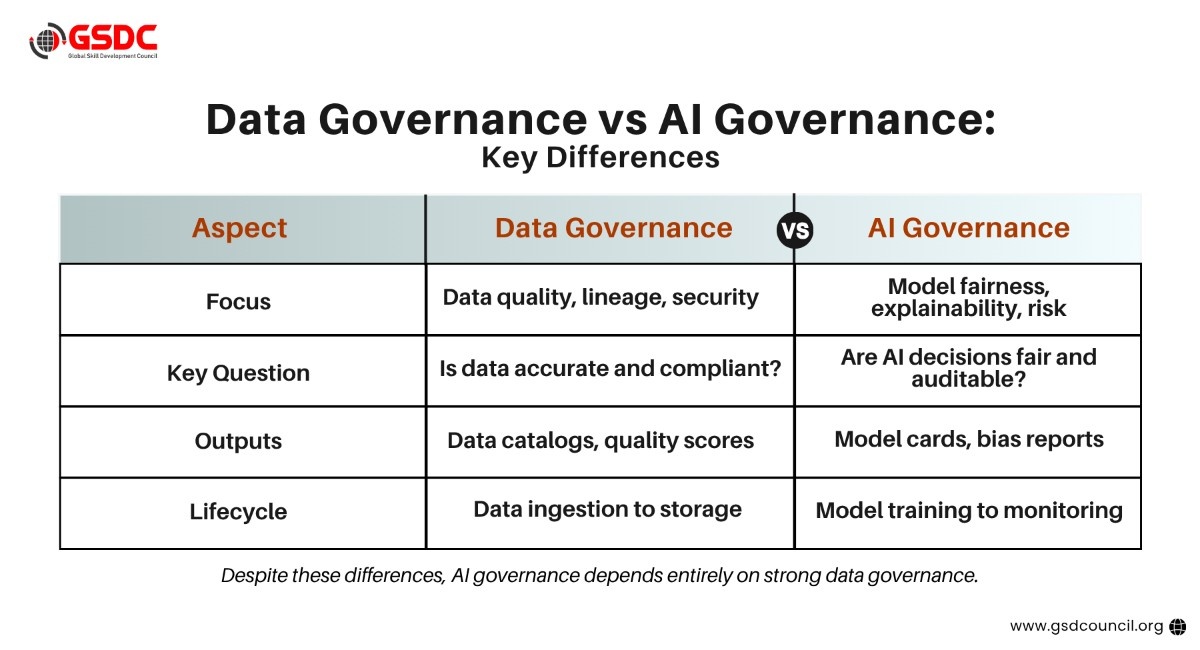
At its core, data governance is the framework of policies, processes, roles, and standards that ensure data is accurate, secure, and usable. AI governance, on the other hand, extends these principles to AI systems, ensuring that algorithms are fair, transparent, and accountable, making AI data governance, data governance for AI, and AI and data governance essential for sustainable AI adoption.
The key distinction lies in their focus:
- Data Governance: Ensures data quality, integrity, and compliance
- AI Governance: Ensures ethical, explainable, and risk-aware AI decisions
However, these are not separate disciplines; they are deeply interconnected. Poor data quality directly leads to biased or unreliable AI outcomes. As emphasized in the webinar, many AI initiatives fail not because of weak models, but because of poor data foundations.
“You cannot build reliable AI on unreliable data.”
Enterprise Perspective: Governance as a Strategic Imperative
A recurring theme throughout the session was the importance of viewing governance through an enterprise lens. Governance is not a technical side project; it must align with business goals and demonstrate measurable value.
Organizations often face pressure to rapidly deploy AI solutions. However, skipping foundational steps like data quality and governance leads to:
- Inaccurate predictions
- Compliance risks
- Failed AI deployments are stuck in “pilot mode.”
To avoid this, enterprises must invest in governance frameworks that connect data, AI, and business outcomes.
Core Components of a Governance Framework
The webinar outlined a comprehensive governance architecture consisting of multiple interconnected layers:
1. Data Quality Framework
Data quality is the backbone of governance. Organizations must define clear quality dimensions such as:
- Accuracy
- Completeness
- Consistency
- Timeliness
- Uniqueness
By implementing automated data quality checks and scorecards, organizations can continuously monitor and improve data reliability.
A practical approach involves:
- Defining data quality rules
- Automating validation processes
- Generating scorecards for visibility
- Enabling remediation workflows
This ensures that data remains “fit for purpose” across its lifecycle.
2. Metadata Management and Data Cataloging
Metadata management enables organizations to understand and trust their data. A well-implemented data catalog acts as a single source of truth, allowing users to:
- Discover data easily
- Understand its context
- Access quality metrics
- Trace data lineage
Modern tools empower even non-technical users to query data using simple language, improving adoption across business teams.
A key takeaway:
Governance succeeds only when it is business-friendly and widely adopted.
3. Automated Data Discovery
In large enterprises, manually identifying sensitive data is nearly impossible. Automated data discovery tools help:
- Identify sensitive data (PII, PHI, PCI)
- Classify and tag data assets
- Ensure regulatory compliance
- Reduce security risks
This capability is essential for maintaining privacy and meeting global regulations.
4. Data Tokenization and Privacy Protection
Data protection is a critical pillar of governance. Tokenization replaces sensitive data with non-sensitive equivalents, ensuring security while maintaining usability.
Key benefits include:
- Protection of sensitive data
- Support for analytics and AI training
- Compliance with privacy regulations
The webinar also highlighted the importance of controlled access and audit trails, ensuring that sensitive data is only accessible to authorized users.
5. Cookie Consent and Regulatory Compliance
With increasing global regulations such as GDPR and CCPA, managing user consent has become essential. Organizations must:
- Provide transparent consent mechanisms
- Enable opt-in and opt-out options
- Maintain audit trails for compliance
Automated workflows, often integrated with IT service management systems, ensure that consent requests are processed efficiently and within regulatory timelines.
Why AI Governance Cannot Be an Afterthought
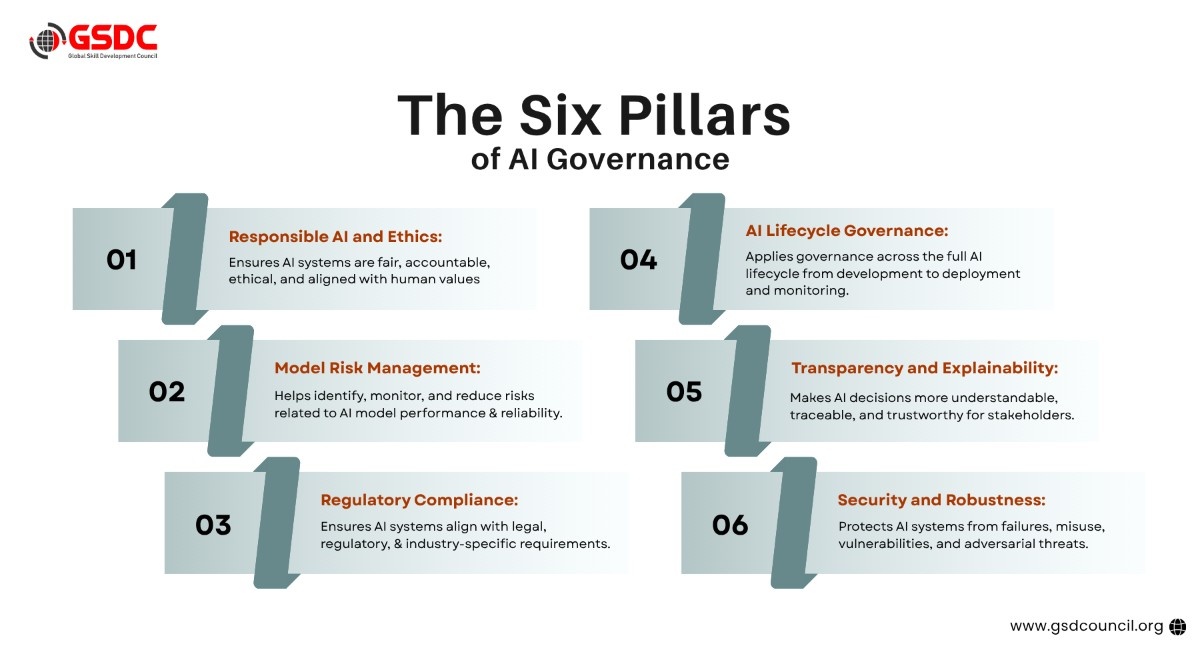
One of the most critical insights from the webinar was that AI governance must be built from the start, not added later.
Without governance, organizations face serious risks including bias, regulatory violations, and reputational damage which is precisely why professionals following a structured ai governance learning path are in such high demand: they arrive equipped to build governance from the ground up, not retrofit it after a failure.
- Bias and discrimination in AI decisions
- Lack of explainability, leading to regulatory violations
- Security vulnerabilities and data breaches
- Financial penalties due to non-compliance
- Reputational damage
"Mitigating these risks at scale requires a dedicated AI governance and risk management platform that operationalizes oversight, monitoring, and accountability across AI systems."
For example, an AI system used in hiring or credit decisions can unintentionally introduce bias if trained on flawed data. This can result in legal consequences and loss of trust.
The “Chicken and Egg” Challenge
A powerful analogy used in the session was the “chicken and egg problem”:
- AI needs high-quality data to function effectively
- But improving data quality often requires AI-driven insights
The solution lies in starting with data governance fundamentals, ensuring clean, well-structured data before scaling AI initiatives.
Building a Data-Driven Culture
Beyond tools and frameworks, governance requires a cultural shift. Organizations must:
- Promote data ownership and accountability
- Encourage collaboration between business and technical teams
- Invest in continuous learning and upskilling
Adoption is the key success factor. Without business buy-in, even the most advanced governance frameworks will fail.
Career Insights: Getting Started in AI Governance
During the Q&A session, attendees asked about building a career in AI governance. The speaker emphasized a clear roadmap:
- Start with data fundamentals
- Learn data governance frameworks
- Explore AI ethics and responsible AI
- Gain hands-on experience
- Pursue relevant certifications
AI governance is an emerging field with growing demand, but it requires a strong foundation in data.
Build Practical Expertise in Agentic AI for Stronger Data Governance
The GSDC Certified Agentic AI Professional certification helps professionals understand how AI agents can be applied to address real business challenges such as data governance, AI governance, automation, compliance, and responsible decision-making.
Certified Agentic AI Professional certification equips learners with practical knowledge of agentic AI concepts, intelligent workflows, responsible AI practices, and enterprise use cases, helping organizations build secure, scalable, and governance-driven AI systems on a strong data foundation.
Final Thoughts
As organizations accelerate their AI journeys, the importance of governance cannot be overstated. Data governance is not just a technical necessity; it is the bedrock of trustworthy AI and a critical response to the growing challenges of AI governance.
Enterprises that invest in ai in compliance governance frameworks today will be better positioned to scale AI responsibly and meet evolving regulatory requirements.
- Scale AI initiatives successfully
- Ensure compliance and security
- Build trust with customers and stakeholders
- Drive long-term business value
This also highlights why data governance is essential for enabling responsible AI, strengthening AI data management, and improving metadata governance across enterprise systems.
The webinar concluded with a powerful reminder:
Passion, continuous learning, and a strong foundation in data are the keys to thriving in the AI-driven future.

Related Certifications
Frequently Asked Questions
Stay up-to-date with the latest news, trends, and resources in GSDC
If you like this read then make sure to check out our previous blogs: Cracking Onboarding Challenges: Fresher Success Unveiled
Not sure which certification to pursue? Our advisors will help you decide!