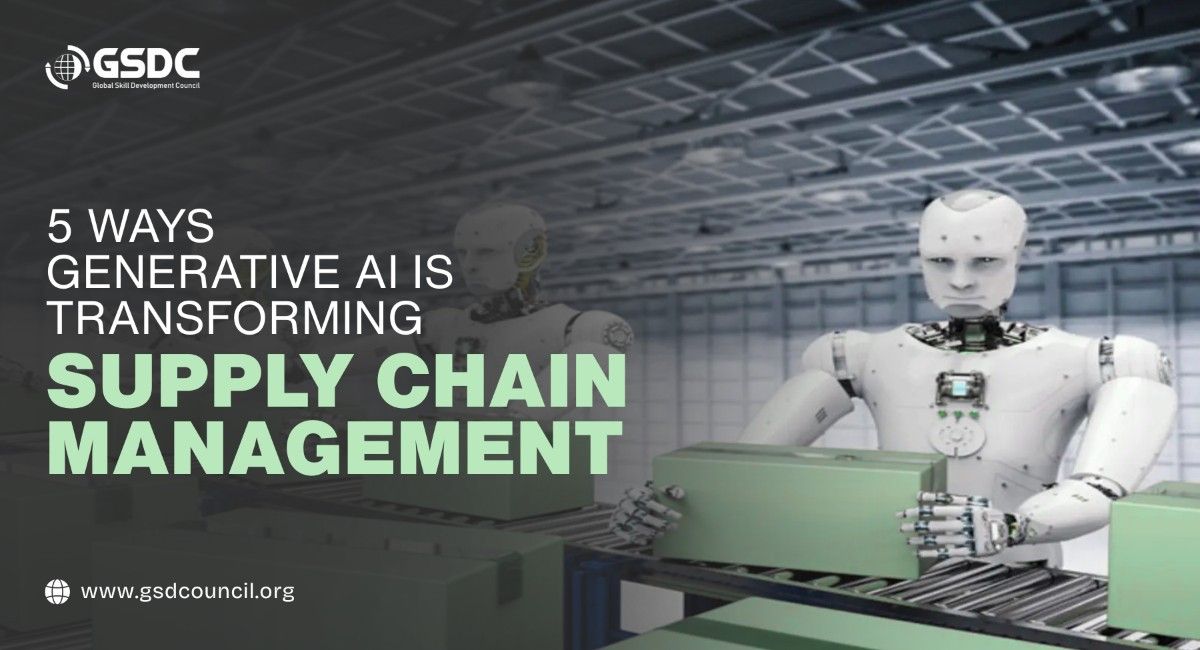
How Generative AI for Supply Chain Reduces Costs and Improves Planning
Written by Matthew Hale
- What Is Generative AI for Supply Chain?
- Top Generative AI Use Cases in Supply Chain
- Benefits of AI in Supply Chain
- How Generative AI Can Improve Supply Chain Efficiency
- Challenges of AI in Supply Chain
- Will AI Replace Supply Chain Management?
- The Future of AI-Driven Supply Chains
- Preparing Professionals for AI-Driven Supply Chains
- Conclusion
The global supply chain is becoming increasingly difficult to manage. Customer demands, global events, delays, and logistics costs are making it increasingly difficult. In this environment, generative AI in the supply chain has been recognized as a potential solution to enhance supply chain planning and reduce costs.
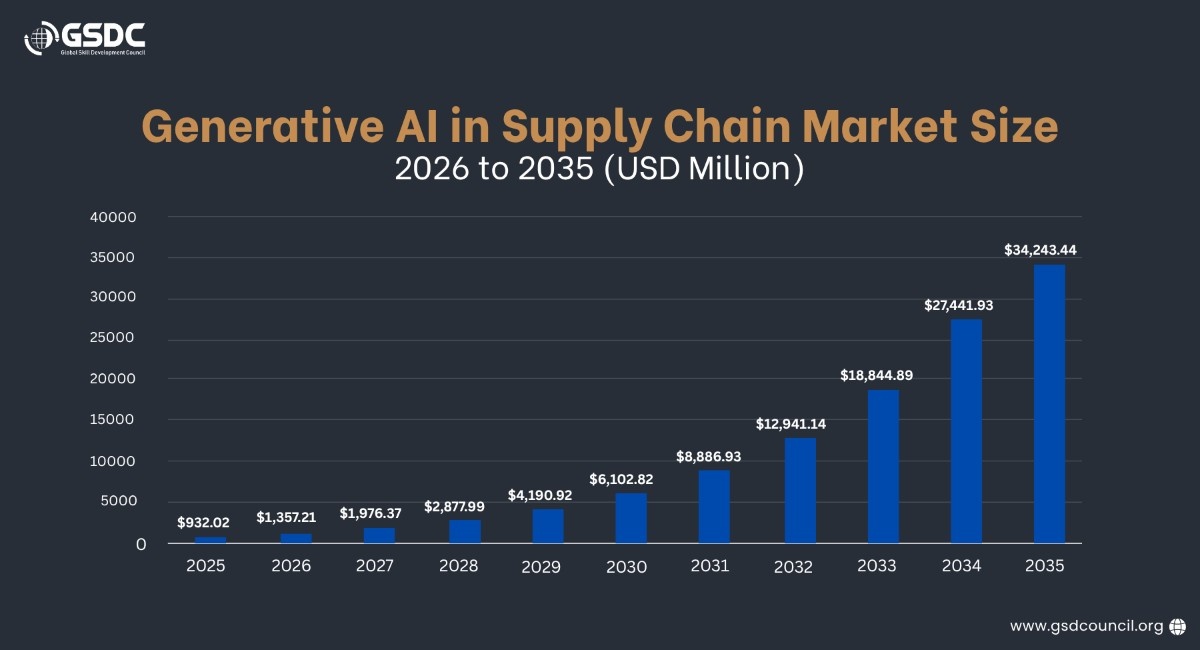
The use of generative AI in the supply chain has been recognized as a potential solution to enhance supply chain resilience, speed up decision-making, and automate supply chain processes. This is not just limited to perceived potential, as the global generative AI in supply chain market was valued at USD 932.02 million in 2025 and is expected to reach USD 34,244 million by 2035, growing at a compound annual growth rate of 43.39% from 2026 to 2035.
From better forecasting to lower excess inventory, the application of AI in supply chain is helping companies work more efficiently. For leaders looking at how is AI used in supply chain and how to improve supply chain efficiency, generative AI is becoming an important part of the answer.
This blog explores generative AI use cases in supply chain, the benefits of AI in supply chain, key challenges, and whether AI could change the future of supply chain roles.
What Is Generative AI for Supply Chain?
Generative AI in the supply chain is about using AI systems that have the capacity to dig through vast amounts of data, filter out valuable information, and even simulate different scenarios and actions. This is different from traditional tools that operate with strict algorithms and merely regurgitate previous reports and documents.
In real-life operations, it can process demand patterns, supplier and logistics information, market trends, and inventory levels to help a business move from a reactive process to a smarter and more predictive process. This is just one example of how AI is increasingly being used in the supply chain and how it can make a team more efficient, and how generative AI can help in supply chain management in real-life ways.
Top Generative AI Use Cases in Supply Chain
Businesses are showing strong interest in generative AI use cases in supply chain because they want practical value, not just new technology.
Demand Forecasting
Generative AI helps businesses predict demand more accurately using past sales, current market conditions, and trends.
Inventory Optimization
One of the most important uses of AI in the supply chain is inventory management. Generative AI helps businesses maintain optimum levels, reducing waste and saving costs.
Logistics and Transportation Planning
Many businesses ask how is AI used in supply chain logistics. AI can improve route planning, reduce delays, and support more efficient deliveries.
Supplier Evaluation and Risk Management
Generative AI helps businesses evaluate their suppliers, identify potential risks, and improve supplier management.
Scenario Planning
Generative AI helps businesses simulate various possible supply chain scenarios, compare, and learn. This shows generative AI and its impact on supply chains in a practical way.
Manufacturing and Operations Support
With the emergence of generative AI in manufacturing, supply chain operations have become much more efficient. AI helps businesses improve their operations using generative AI technology.
As generative AI changes the supply chain, the Global Skill Development Council helps you develop the skills required for success in the new supply chain.
Benefits of AI in Supply Chain
As businesses seek smarter technology, the benefits of AI in the supply chain become clear. AI helps to improve forecasting, reduce costs, make faster decisions, provide more visibility, and increase efficiency.

How Generative AI Can Improve Supply Chain Efficiency
Businesses are trying to find methods to enhance the supply chain while avoiding additional complexity. The solution to smoother supply chains, fewer delays, and faster decision-making lies in generative AI. The trick lies in using the appropriate technique to attain actual value.
1. Start with One High-Value Use Case
Rather than attempting to use AI in every domain simultaneously, companies should focus on one domain where improvement is obviously required.
2. Use Reliable and Connected Data
For generative AI to perform optimally, companies must ensure they have reliable data. This means companies must have connected systems and good data quality.
3. Set Clear Business Goals
Implementing AI must be aligned with business objectives such as cost reduction, improved forecast accuracy, or better delivery performance.
4. Build Cross-Functional Collaboration
By bringing the operation, technology, and business teams together, the supply chain will operate more smoothly. This will make the use of AI technology more practical and applicable.
5. Invest in the Right Skills
As the use of AI technology continues to grow in the supply chain industry, professionals need to have the right knowledge. For example, the Certified Generative AI for Supply Chain Management program can help people understand how to use AI technology, how to apply it in real-world scenarios, and how to apply it in real-world business situations.
6. Use AI to Support Better Decisions
Automation is not the key objective. It’s about improving the way we plan, react, and act.
This is where generative AI really brings supply chain management into practice. It brings together better data, faster insights, and better decision-making to help businesses operate more effectively.
Challenges of AI in Supply Chain
Despite the opportunities, businesses must also understand the challenges of AI in supply chain.
Some common challenges of AI in supply chain include:
- poor data quality
- fragmented systems
- integration with legacy technology
- lack of internal AI skills
- governance and transparency concerns
These challenges do not remove the value of AI, but they do show that implementation needs planning and strong data foundations. Market research also points to data quality as a key barrier to adoption.
Will AI Replace Supply Chain Management?
A common concern is will AI replace supply chain management.
The realistic answer is no. AI will change supply chain roles, but it will not replace supply chain management completely. AI can analyze data, model scenarios, and recommend actions, but human teams are still needed to make strategic decisions, manage supplier relationships, handle exceptions, and apply business judgment.
Rather than focusing on whether AI has the potential to replace supply chain management, it is important for organizations to focus on how AI can assist professionals.
The Future of AI-Driven Supply Chains
The future of supply chains will be shaped by smarter planning, faster decisions, and stronger resilience. As the application of AI in supply chain grows, businesses will move toward better forecasting, connected operations, and improved disruption management.
This also shows how generative AI will change the world through more efficient and responsive supply chains. From generative AI manufacturing to predictive planning, the impact is becoming more practical every year. As adoption grows, professionals may also explore generative AI in supply chain management certification to build the skills needed for this shift.
Preparing Professionals for AI-Driven Supply Chains
As generative AI continues to become more integral to supply chain operations, professionals need to have some form of knowledge about AI use cases, data-driven decision-making, and AI implementation. Global Skill Development Council assists in this aspect by helping professionals prepare for future requirements through learning.
For instance, the Certified Generative AI for Supply Chain Management learning program helps professionals understand the use of AI in supply chain operations, including forecasting, inventory, and supplier analysis. They can confidently apply this to actual business.

Conclusion
Generative AI for supply chain is helping businesses reduce costs, improve planning, and build more resilient operations. From demand forecasting to logistics optimization, the growing application of AI in supply chain is creating real business value.
The rise of generative AI use cases in supply chain, the clear benefits of AI in supply chain, and the growing focus on how to improve supply chain efficiency all show that this technology is becoming an important part of modern supply chain strategy.
For businesses still asking how does AI help supply chain teams, the answer is increasingly clear: it helps them make faster, smarter, and more effective decisions in a complex operating environment.

Related Certifications
Frequently Asked Questions
Stay up-to-date with the latest news, trends, and resources in GSDC
If you like this read then make sure to check out our previous blogs: Cracking Onboarding Challenges: Fresher Success Unveiled
Not sure which certification to pursue? Our advisors will help you decide!