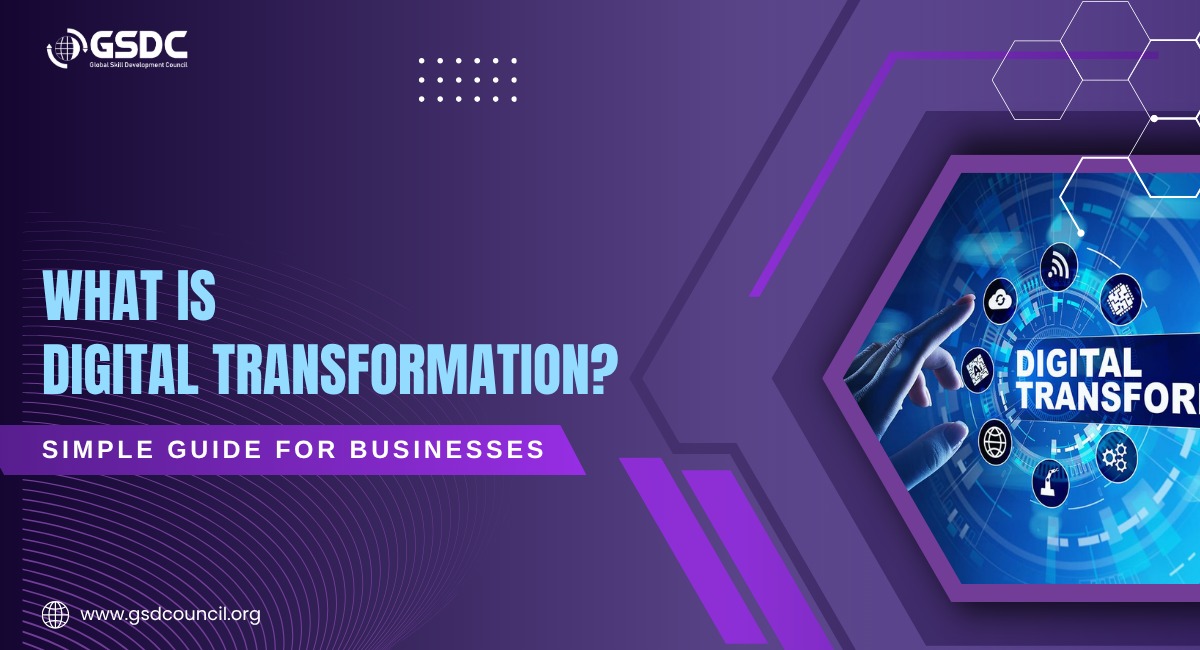
What is Digital Transformation? A Complete Guide
Written by Matthew Hale
- What is Digital Transformation?
- Why Digital Transformation Matters
- Key Areas of Digital Transformation
- What is Digital Transformation Strategy?
- Digital Transformation Examples
- Benefits of Digital Transformation
- Common Challenges
- What Businesses Should Focus On
- Developing Digital Transformation Skills
- Conclusion
Digital transformation is one of the most talked-about topics in business today, but it often means different things to different people.
This confusion can be a problem. If businesses don’t clearly understand what digital transformation is, it becomes difficult to plan, execute, or see real results.
At its core, digital transformation is about changing how a business works by using technology to improve processes, reduce costs, and deliver better customer experiences. It’s not just about tools, it’s about how the entire organization operates.
This shift is happening at a massive scale. The global digital transformation market was worth over $1 trillion in 2024 and is expected to reach $4.6 trillion by 2030, showing how quickly businesses are moving in this direction.
In this digital transformation blog, you’ll learn what digital transformation really means, why it matters, and how businesses can approach it in a practical way.
What is Digital Transformation?
Digital transformation means using digital technologies to improve how a business works, serves customers, and delivers value.
In simple terms, the digital transformation meaning is using technology to work smarter, faster, and more efficiently.
In a business context, what is digital transformation in business includes improving processes, enhancing customer experience, and using data to make better decisions.
It is not just about tools. It is about changing how the entire business operates.
Why Digital Transformation Matters
The modern business environment is constantly evolving. The needs of customers are rising, and so are the technological and competitive challenges.

The changing environment is also seen in the growing market for digital transformation. As shown in the figure above, the market for digital transformation is growing steadily and is expected to reach over $5 trillion by 2030, growing at a high rate of 18.5%.
The benefits of digital transformation are also important for keeping businesses competitive and evolving.
Businesses that do not adapt risk falling behind.
Key Areas of Digital Transformation
If a digital transformation is to be a success, it is not limited to a particular area but involves the entire organization.
Area | Explanation |
Processes | Use of digital tools and automation to improve workflows, reduce manual work, and increase efficiency. |
Customer Experience | Providing a better and quicker customer experience by being personalized and seamless. |
Business Models | Inventing new products and services that are delivered digitally. |
Data and Decision-Making | Making use of data to take better and quicker decisions for better performance. |
Culture and Mindset | Establishing a culture that supports and helps in changing the mindset of an organization for better performance. |
Organizations also need to work on acquiring the right kind of skills for a better digital transformation. The Global Skill Development Council is an organization that helps professionals acquire the right kind of knowledge for better digital transformation.
Digital transformation is not just about technology but about transforming the entire organization for better performance.
What is Digital Transformation Strategy?
A digital transformation strategy definition is a clear plan that helps organizations use technology to improve operations, solve problems, and create value.
A digital transformation strategy includes:
- Aligning technology with business goals
- Focusing on customer needs
- Investing in the right tools
- Building digital capabilities within teams
Modern digital transformation strategies are evolving quickly, with regions like Asia-Pacific seeing growth rates above 30%, showing how fast businesses are adopting digital change.
Without a clear strategy, digital transformation efforts often fail to deliver results.
Digital Transformation Examples
Understanding what is digital transformation examples helps make the concept clearer.
Some examples of digital transformation include:
- Using digital platforms to replace traditional paper-based systems to enhance speed and accuracy
- Using cloud-based tools to enable remote work, increase collaboration, and provide real-time data access
- Using technology to automate processes and increase efficiency by reducing the time spent on repetitive tasks
- Using data analytics to enable faster and more accurate business decision-making
- Using artificial intelligence and digital technologies to enhance personalization in customer experiences and improve service delivery
With increased data usage in businesses, there are new roles in data protection, and a Digital Transformation Officer Certificate is available to help handle this in a digital setup.
These examples show how businesses use technology to become more efficient, flexible, and better prepared for change.
Benefits of Digital Transformation
The benefits of digital transformation to business can be considered to be substantial, and they include:
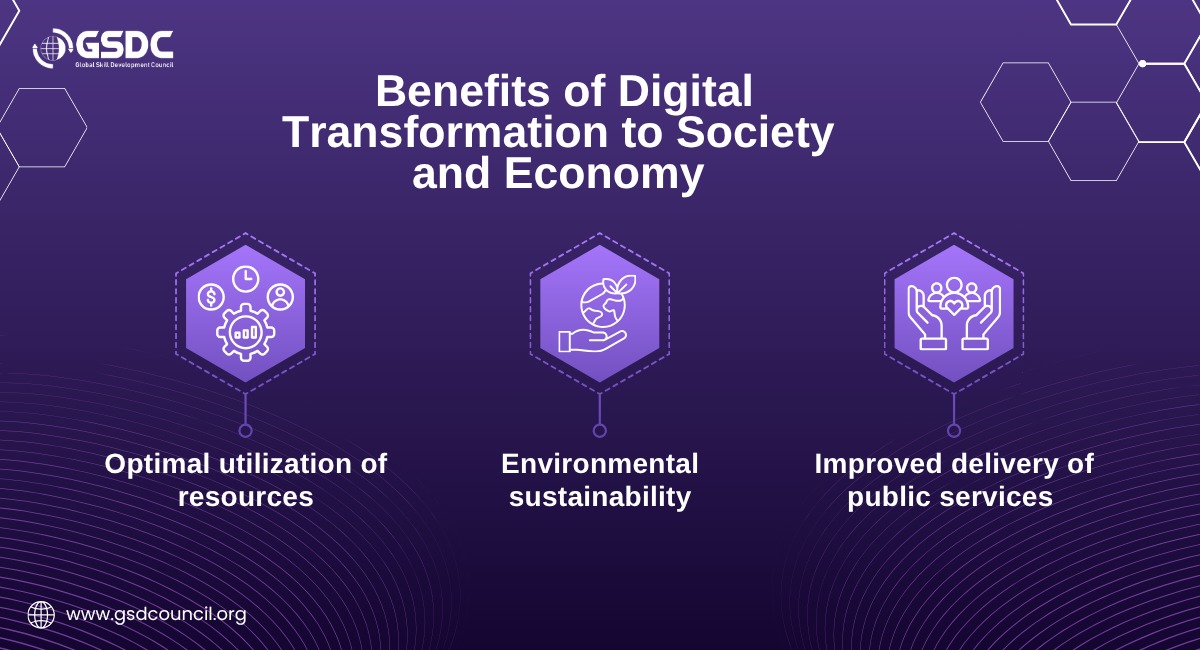
Some of the benefits include:
- Improve productivity and efficiency by automating workflows and reducing manual errors
- Reduce operational costs by optimizing resources and streamlining processes
- Enhance customer experience through faster, more personalized interactions
- Make faster, data-driven decisions using better data collection and insights
- Increase innovation by developing new product/service offerings and creating new business opportunities.
- Strengthen collaboration and communication among teams via digital collaboration tools.
Digital transformation also supports an organization's entry into new markets, strengthens relationships with customers, and provides a competitive edge.
Overall, the benefits of digital transformation enable organizations to expand, evolve, and remain competitive in a dynamic business environment.
Common Challenges
Although digital transformation is beneficial to the organization, it also comes with its own set of challenges.
Some of the challenges facing the organization include:
- Change resistance, as the employees may be reluctant to change the way they do things
- Lack of digital literacy to support the digital transformation process
- Ineffective planning and setting of goals, which may affect the success of the digital transformation process
- Difficulty in integrating the new technology with the existing technology
- Financial constraints, which may affect the organization’s ability to invest in new technology
- Security and privacy issues, as the organization will be using digital technology to store data
- Lack of support and alignment from the leadership.
Overcoming these challenges requires strong leadership, a clear strategy, the right skills, and a willingness to adapt to change.
What Businesses Should Focus On
To achieve success in digital transformation, businesses should focus on certain areas.
- Focus on customers’ needs in delivering better, faster, and more personalized experiences
- Invest in technology that is scalable enough to support future growth and evolving business needs
- Build digital skills in the organization so that employees can effectively use digital technology
- Foster innovation by creating a culture that supports new ideas and innovation
- Continuously improve processes in delivering more efficient results and minimizing gaps in operations
- Leverage data in delivering better decision-making and business insights
- Provide strong leadership in digital transformation to set the right direction
It is important to note that digital transformation is a continuous journey and not a one-time project.
Developing Digital Transformation Skills
Digital transformation is not just a technological change, but it is also a change driven by the right skills.
It is a change driven by professionals who are knowledgeable in digital tools, data, and new ways of working.
Organizations such as the Global Skill Development Council are offering certifications such as the Digital Transformation Officer Certificate, which will help professionals gain the right knowledge to support digital transformation.
The development of the right skills will enable businesses to implement strategies effectively.

Conclusion
This digital transformation complete guide shows that digital transformation is more than just technology. It is about rethinking how a business works in a digital-first world.
Organizations that adopt digital transformation can stay competitive, improve performance, and deliver better value to customers. It also helps them become more flexible, make better decisions, and respond quickly to change.
In today’s fast-changing environment, digital transformation is not a choice. It is a necessity for long-term success.

Frequently Asked Questions
Digital transformation is a concept in which digital technologies are used to enhance a business, its processes, and its value delivery to its customers.
Stay up-to-date with the latest news, trends, and resources in GSDC
If you like this read then make sure to check out our previous blogs: Cracking Onboarding Challenges: Fresher Success Unveiled
Not sure which certification to pursue? Our advisors will help you decide!