Leadership in the Digital Era: Driving Innovation & Navigating Change
Written by Charity McDonald
- The Digital Reality: Why Leadership Must Evolve in the Age of AI
- Why Leaders Must Act Now on Digital Transformation
- Why Digital Transformation Is More Than Just Technology
- The Evolving Role of Leaders in a Digital-First World
- Essential Digital Leadership Skills for 2026 and Beyond
- Why Digital Transformation Initiatives Fail (and How Leaders Can Avoid It)
- How Digital Leadership Drives Business Performance
- Case Study: How Digital Transformation Reshaped a Global Bank
- The Future of Leadership in the Digital Era: What Leaders Must Prepare For
- Enabling Digital-Ready Leadership
- Conclusion
Digital transformation is no longer a future goal; it is the operating reality of modern organizations. Leaders today are expected to manage not only people and performance, but also rapid technological disruption, shifting skill requirements, and continuous innovation. Artificial intelligence (AI), data-driven systems, and automation are reshaping how work gets done across industries.
In this fast-changing environment, leadership itself must evolve. Traditional leadership approaches are no longer sufficient. Leaders must develop digital leadership skills to guide teams through change and create a culture of continuous learning and innovation.
This blog explores what is digital leadership, why it matters, and how organizations can prepare leaders to succeed in a technology-driven environment.
The Digital Reality: Why Leadership Must Evolve in the Age of AI
Technological disruption is happening at an unprecedented pace. New tools and platforms are changing:
- How work is performed
- How customers interact with organizations
- How competitors gain an advantage
Many organizations struggle to keep up with this speed of change. While technology evolves quickly, organizational structures, job roles, and workforce skills often change much more slowly. This creates a gap between what technology can offer and what organizations are ready to implement effectively.
Leaders must recognize that digital transformation is not a one-time project. It is an ongoing journey that requires constant learning, experimentation, and adaptation - highlighting why digital transformation is important for long-term success.
Why Leaders Must Act Now on Digital Transformation
Organizations face a growing skills gap as roles evolve rapidly with digital technologies. Leaders who delay capability building risk falling behind competitors that are actively developing future-ready teams.
Without focused investment in skills, organizations face lower productivity, reduced innovation, higher turnover, and slower transformation. This is exactly why leadership skills are important in enabling organizations to adapt and remain competitive.
Why Digital Transformation Is More Than Just Technology
Many organizations begin their digital journey by adopting new technologies such as AI tools, automation platforms, or digital systems. However, technology alone does not create transformation.
True digital transformation requires leadership in digital transformation that focuses on people, processes, and culture.
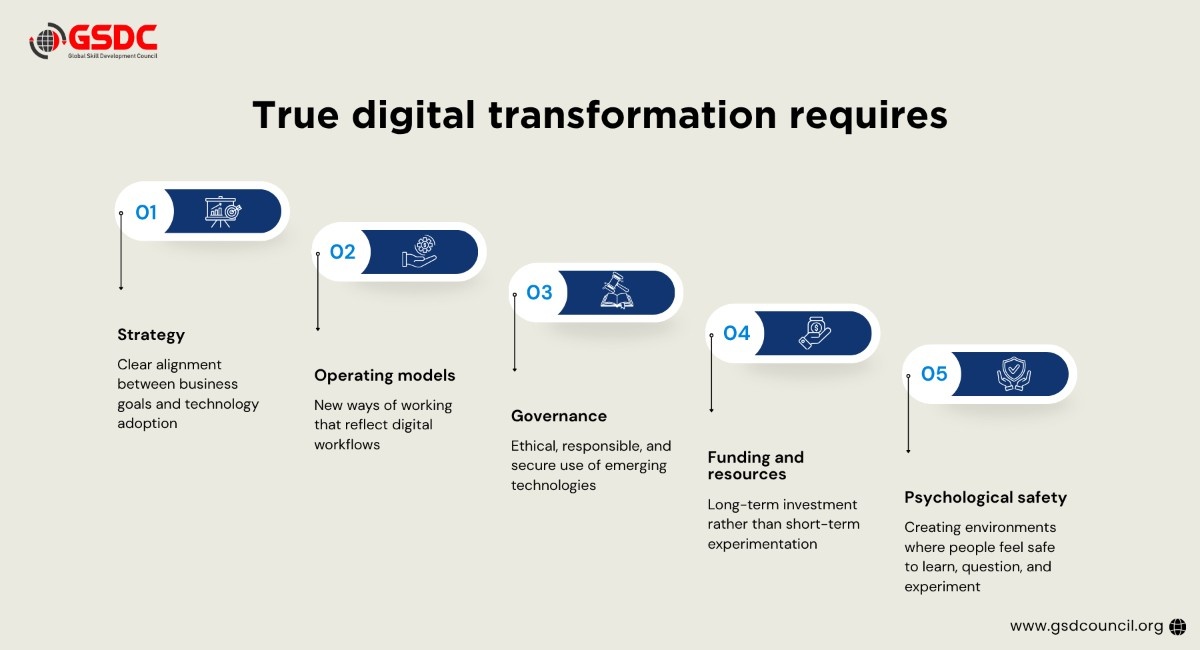
When organizations focus only on tools without preparing people, digital initiatives often fail. Successful transformation happens when a digital transformation leader guides teams through change, builds confidence in using new technologies, and connects digital initiatives to real business outcomes.
The Evolving Role of Leaders in a Digital-First World
Leadership in the digital era is both technological and deeply human-centered. Digital transformation leadership requires balancing technical understanding with empathy and adaptability.
Key responsibilities of digital leaders include:
- Creating a clear vision for digital transformation
- Supporting teams as they adapt to new ways of working
- Encouraging experimentation and learning
- Building trust and psychological safety
- Ensuring ethical and responsible use of technology
Strong technology leadership ensures that innovation is implemented responsibly while keeping people at the center.
Essential Digital Leadership Skills for 2026 and Beyond
To lead effectively in a digital-first world, leaders need a combination of technical awareness and strong human skills. These digital leadership skills include:
1. Effective Communication
Clear communication helps teams understand why change is happening and how it will impact them. Leaders must explain digital initiatives in simple terms and listen to concerns.
2. Lifelong Learning Mindset
Digital leaders must continuously update their own skills and encourage learning across the organization. Learning is no longer a one-time activity but an ongoing responsibility.
3. Adaptability and Agility
Leaders must be comfortable with change and uncertainty. Being open to new ideas and adjusting strategies quickly is essential in a fast-moving digital environment.
4. Ethical and Responsible Leadership
As AI and data become more widely used, leaders must ensure technologies are implemented responsibly, with fairness, transparency, and accountability.
5. Coaching and Empowerment
Modern leaders do not need to have all the answers. Instead, they should ask the right questions, support team growth, and empower employees to take ownership of learning and innovation.
These capabilities reflect the evolution of innovation leadership and demonstrate how leadership and innovation go hand in hand.
Why Digital Transformation Initiatives Fail (and How Leaders Can Avoid It)
Despite heavy investment, many digital initiatives fail to deliver results. The root cause is rarely technology - it is often weak digital transformation leadership and a lack of alignment.

Organizations that succeed adopt innovative leadership strategies and integrate innovation management practices into their transformation efforts.
How Digital Leadership Drives Business Performance
Skill gaps are no longer just a learning issue; they are a direct business risk.
Organizations that embrace digital leadership training and prioritize innovation management see improvements in:
- Lower productivity
- Slower innovation cycles
- Reduced employee engagement
- Higher turnover and retention challenges
As learning becomes a strategic business function, digital leadership increasingly influences performance outcomes. Leaders who invest in upskilling and workforce readiness are better positioned to sustain competitive advantage and proactively redesign work as roles evolve with new technologies.
Case Study: How Digital Transformation Reshaped a Global Bank
A powerful illustration of digital leadership in action comes from the banking sector. One global bank reimagined itself as a technology-driven organization that happens to provide financial services. Rather than simply deploying digital tools, leadership redefined the customer journey, restructured workflows, and embedded technology into core operations.
Key success factors included:
- A clear vision of the desired customer experience
- Strong digital transformation leadership
- Integration of technology with organizational transformation, not as a standalone initiative
This transformation enabled the bank to deliver more personalized digital experiences, improve customer engagement, and unlock new revenue streams through digital channels. The case highlights that sustainable transformation emerges when leadership, strategy, and technology move together.
The Future of Leadership in the Digital Era: What Leaders Must Prepare For
The future belongs to leaders who combine technology leadership with human-centric thinking.
Understanding 5 types of leadership - including transformational, situational, and innovation-driven approaches - helps leaders adapt their style in a digital-first world.
Digital leadership is not about replacing people with technology. It is about using technology wisely to support people, improve processes, and drive sustainable innovation.
Enabling Digital-Ready Leadership
As organizations navigate rapid disruption, investing in digital leadership training becomes essential. The Global Skill Development Council (GSDC) enables this transformation through globally recognized programs like the Certified Learning & Development Professional (CLDP).
CLDP empowers professionals to build future-ready leadership capabilities, drive innovation, and align learning with business outcomes in a digital-first world.

Conclusion
Leadership in the digital era requires a fundamental shift in mindset. It is no longer sufficient to focus only on managing processes and performance.
Leaders must embrace digital leadership, strengthen leadership in digital transformation, and adopt innovative leadership strategies to stay relevant.
Organizations that invest in digital transformation leadership today will be far better prepared to navigate disruption, adapt to change, and drive meaningful innovation.

Related Certifications
Frequently Asked Questions
Stay up-to-date with the latest news, trends, and resources in GSDC
If you like this read then make sure to check out our previous blogs: Cracking Onboarding Challenges: Fresher Success Unveiled
Not sure which certification to pursue? Our advisors will help you decide!