Hardware Asset Management Guide: Benefits, Tools & Best Practices
Written by Matthew Hale
- What is Hardware Asset Management?
- Why Hardware Asset Management Is Important
- Responsibilities in a Hardware Asset Management Job
- Hardware Asset Management Benefits for Organizations
- What Are Asset Management Tools?
- Hardware Asset Management Best Practices
- Hardware Asset Management Certification and Career Growth
- Developing Expertise in Hardware Asset Management
- Conclusion
As organizations grow, their hardware count grows too. Laptops enable employees to get work done, servers power mission-critical applications, and networking equipment keeps everything connected. Without proper tracking and visibility, keeping an eye on all that hardware is indeed a challenge.
If hardware assets aren't properly managed, various issues arise. This is where understanding what is hardware asset management becomes important in today’s organizations.
Proper hardware asset management is crucial in helping organizations visualize their IT assets, reduce costs, and increase operational efficiency. This blog will cover what exactly is the hardware asset management job description, what the benefits of hardware asset management are, how asset management tools play a part in it, and what the best practices organizations can follow.
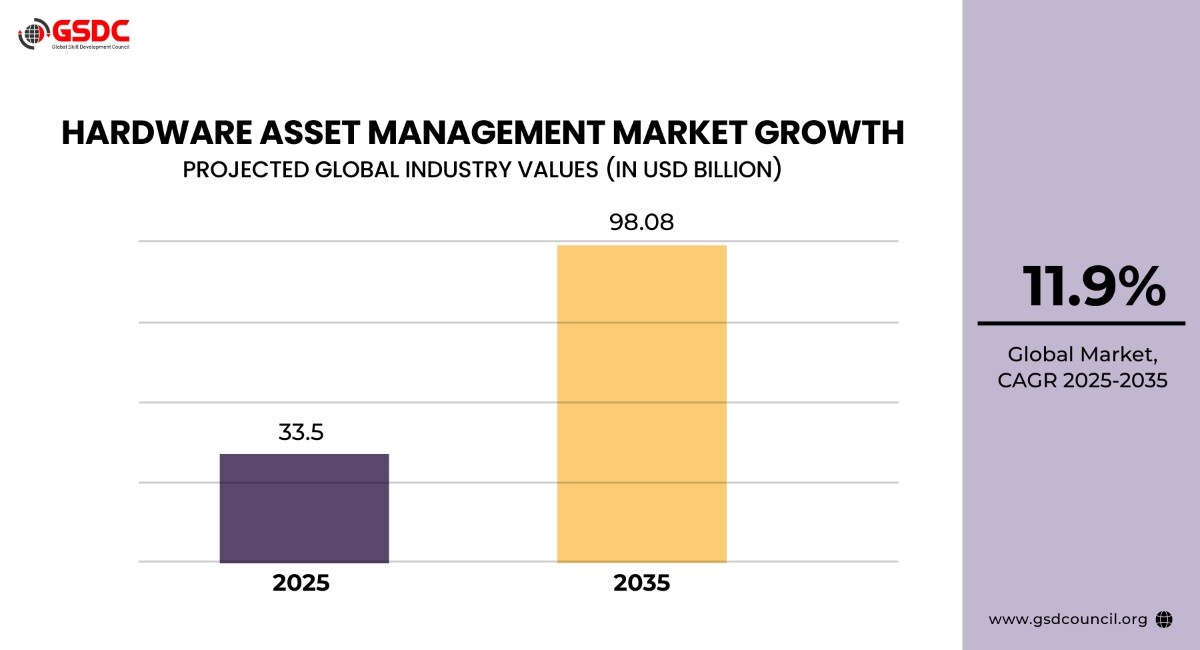
Studies show that the hardware asset management market is set to experience rapid growth in the coming years, with organizations investing in better asset tracking and lifecycle management.
What is Hardware Asset Management?
Hardware Asset Management (HAM) is all about keeping an eye on physical IT equipment from the time it is acquired until it is discarded. This includes laptops, servers, monitors, phones, networking equipment, printers, and many other pieces of equipment that organizations use on a daily basis.
It is all about maintaining visibility of all equipment from the time it is acquired until it is discarded. This is what effective Hardware Asset Management is all about.
Why Hardware Asset Management Is Important
As an organization grows, the amount of hardware it uses is likely to increase. This includes laptops, servers, networking equipment, etc. It is not easy to keep track of all the hardware used in an organization. This is where hardware asset management comes into play.
The importance of hardware asset management is clearly visible in the following scenarios:
- Missing hardware assets or inability to track them.
- Purchasing new hardware while existing hardware is unused.
- Security threats resulting from hardware asset management.
- Difficulty in audits.
- Increased costs in IT departments.
According to studies, organizations end up wasting 30% of their total IT budget on hardware that is not being used. This is where the importance of hardware asset management comes into play.
Understanding the significance of hardware asset management would help organizations gain better control over their hardware assets. It would help in reducing unnecessary costs. It would ensure that hardware assets are used to the maximum.
Responsibilities in a Hardware Asset Management Job
When in a hardware asset management job, the main concern is how the IT hardware is being managed throughout its life cycle, ensuring that the hardware is being tracked and utilized in the most efficient way possible in the organization.
Some of the main tasks performed by a hardware asset management job include:
1. Establishing Hardware Policies
To develop policies regarding how to acquire, track, and maintain IT equipment throughout the organization.
2. Managing Hardware Inventory
To manage the accuracy of hardware inventories to provide correct tracking capabilities and to allow for visibility of all hardware within the organization.
3. Risk Identification
To identify risks associated with hardware, such as failure of hardware, use of hardware that is outdated, or associated security risks.
4. Coordinate Maintenance and Updates
To manage the repair and upgrade cycles of IT hardware to ensure the efficiency of IT infrastructure.
5. Asset Allocation
To assign IT equipment to employees or departments so that accountability for its use can be established and tracked.
Individuals who are looking to advance their careers in hardware asset management may pursue certification from various organizations, such as the Certified Hardware Asset Manager (CHAM) or from other hardware asset management certification programs; this will guide individuals through the implementation of hardware asset management best practices within organizations and through the successful execution of asset lifecycle management.
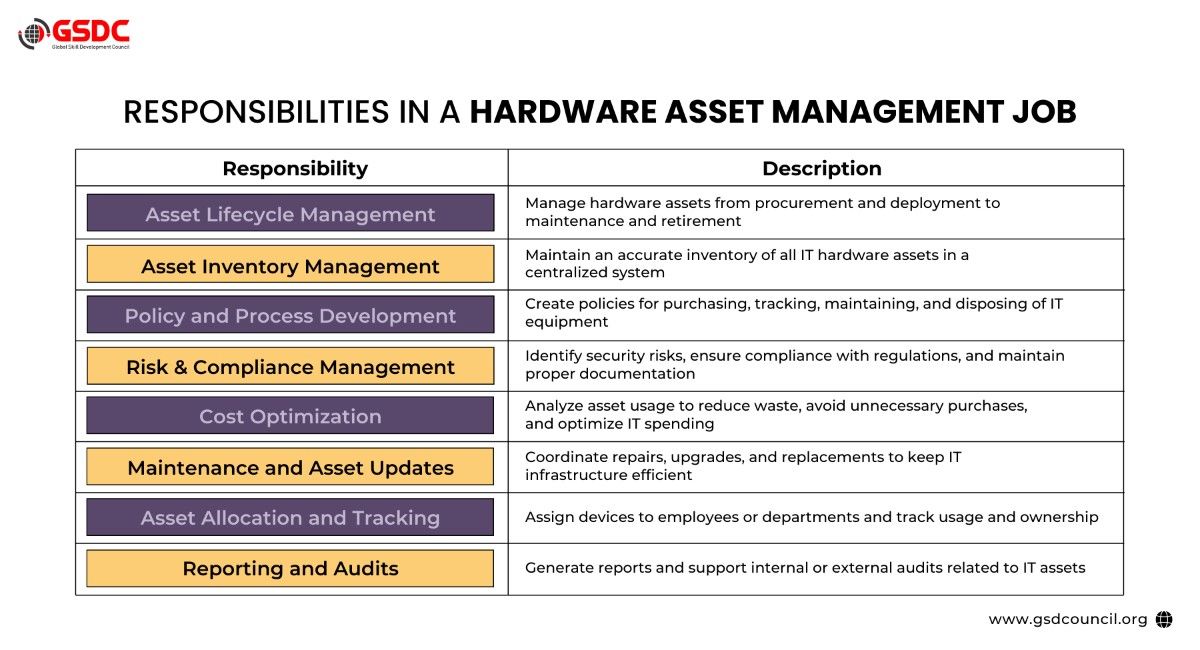
Professionals in a hardware asset management job oversee the entire lifecycle of IT assets to ensure they are tracked, optimized, and aligned with business goals.
Hardware Asset Management Benefits for Organizations
Using HAM allows organizations to realize a number of strategic benefits. As IT environments continue to become more complex, many organizations are investing more and more in formalized asset management solutions.
According to some industry forecasts, the global HAM market will expand from approximately USD 33.5 billion in 2025 to about USD 98 billion by 2035. This clearly indicates that firms have realized that they must be as efficient as possible in order to manage their hardware efficiently.
Some key hardware asset management benefits include:
Cost Minimization
Organizations are able to reduce unnecessary hardware acquisitions through tighter asset tracking and better use of their assets; therefore, minimizing costs associated with hardware purchases.
Improved Visibility of Assets
Through centralized tracking of all of the organization's hardware, the organization has a single point of reference for where all hardware assets are located.
Increased Compliance
Organizations will have accurate and up-to-date records of their assets which will help to meet their internal policies and achieve regulatory compliance.
Lifecycle Optimization of Assets
Ensures that an organization has its hardware assets maintained, upgraded and retired when they need to be replaced.
Operational Efficiency
Minimize downtime to allow employees to have the necessary hardware resources available to do their job efficiently.
Improved Security
Enable IT teams to locate and identify devices that are no longer under management or are outdated and therefore pose a risk to security.
Oftentimes, organizations adopt structured processes and recognized industry best practices for hardware asset management from organizations like the Global Skills Development Council (GSDC), in order to solidify their asset management strategies and enhance IT governance.
What Are Asset Management Tools?
Asset management tools, in brief, can be described as the kind of software that organizations use in order to monitor and track their hardware. It is the kind of tool that makes the management of the entire life cycle of the hardware easier.
Common features of asset management tools include:
- Real-time tracking of the hardware
- Automated update of the inventory
- Asset life cycle reports
- Maintenance and warranty tracking
- Integration of the tool with other service management tools
Tools such as Microsoft Intune, Manage Engine AssetExplorer or Freshservice are popular asset management solutions that help businesses keep reasonable hardware inventories available and streamline their asset lifecycle management.
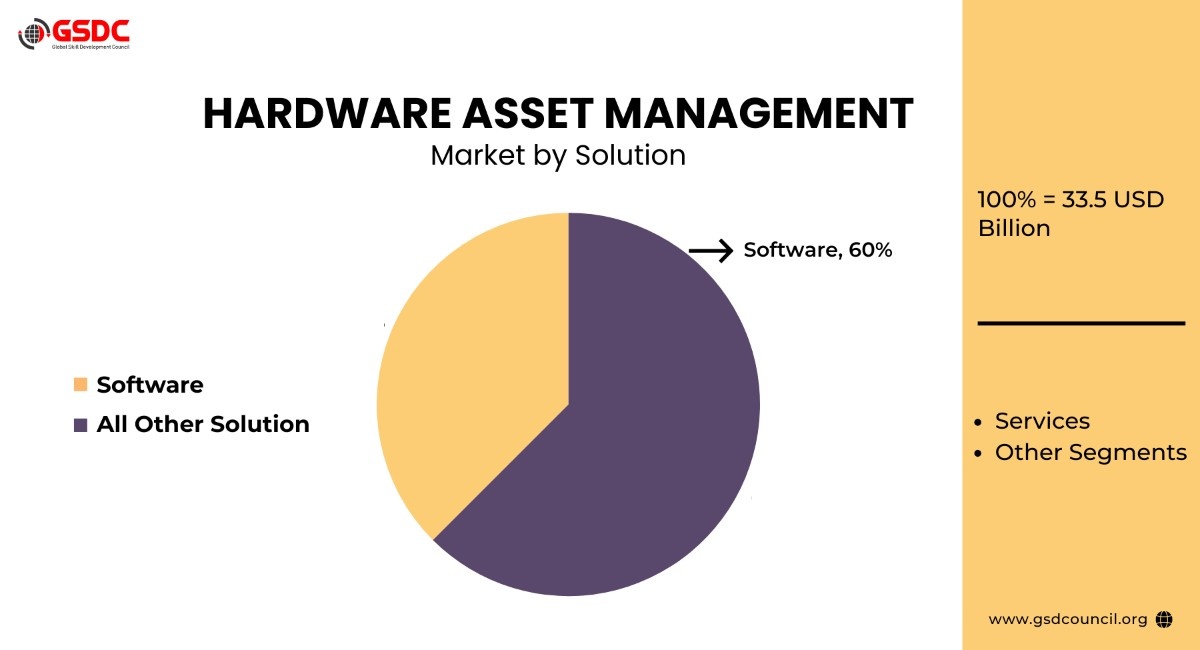
Understanding what are asset management tools helps organizations streamline hardware tracking and reduce reliance on manual processes.
Hardware Asset Management Best Practices
Implementing HAM successfully requires organizations to follow proven hardware asset management best practices to improve asset visibility, control costs, and manage IT infrastructure effectively.
- Maintain a centralized asset inventory to ensure accurate tracking and visibility of all hardware assets.
- Automate asset tracking to reduce manual errors and keep inventory records up to date.
- Implement lifecycle management to manage hardware assets from procurement to retirement.
- Conduct regular audits to identify missing, unused, or outdated hardware devices.
- Integrate hardware asset management with IT service management systems to streamline IT operations.
Following these hardware asset management best practices helps organizations manage hardware assets efficiently throughout their lifecycle.
Hardware Asset Management Certification and Career Growth
With increasing dependence on technological foundations, the need for people who possess specialized skillsets to manage hardware assets is also on the rise. Many people are pursuing certifications through various organizations to enhance their knowledge around the management of hardware assets, and its associated governance/lifecycle processes.
A hardware asset management certification helps professionals develop skills in:
- Management of the Hardware Lifecycle
- Governance of IT Assets and Compliance
- Tools used for Tracking Assets
- Methods and Strategies for Optimizing Hardware Assets
Earning a HAM certification can open career opportunities in IT operations, asset management, and infrastructure management roles.
Average Salaries for Hardware Asset Management Roles
Job Role | Average Salary (USD/year) |
IT Asset Manager | $95,000 – $120,000 |
Hardware Asset Manager | $85,000 – $110,000 |
IT Operations Manager | $105,000 – $140,000 |
Asset Management Analyst | $70,000 – $90,000 |
IT Infrastructure Manager | $110,000 – $150,000 |
Developing Expertise in Hardware Asset Management
As organizations develop and implement asset management disciplines, many professionals are looking to earn credentials that help them develop their expertise. The Global Skill Development Council (GSDC) provides the Certified Hardware Asset Manager (CHAM) certification.
The CHAM certification is designed to help professionals develop their expertise in hardware asset management by creating processes for hardware asset management and improving IT governance. The CHAM certification is intended for IT professionals and asset management professionals who want to develop the skills required to effectively manage hardware assets in organizations.

Conclusion
For any business that relies on technological infrastructures, hardware asset management (HAM) is an essential component to consider. Organizations will gain improved visibility into their IT environments by instituting structured asset lifecycle management processes, utilizing contemporary tools, and adhering to recommended practices for HAM.
HAM certification or HAM credentialing can also benefit professionals selecting to advance their careers in this area through the purchase of specific certifications. A company that invests in an effective framework for managing its hardware assets will be able to exert more effective management over its overall expenses while enhancing its overall business operational efficiency.

Related Certifications
Frequently Asked Questions
Stay up-to-date with the latest news, trends, and resources in GSDC
If you like this read then make sure to check out our previous blogs: Cracking Onboarding Challenges: Fresher Success Unveiled
Not sure which certification to pursue? Our advisors will help you decide!