The Role of Data Protection Officers in 2026 and the Years Ahead
Written by Matthew Hale
- What Is a Data Protection Officer (DPO) and What Are Their Roles and Responsibilities?
- Why the DPO Role Is Critical in 2026
- What Happens Without a Data Protection Officer?
- What a Data Protection Officer Brings to Your Organisation
- How to Prepare for the DPO Era (2026 Onward)
- Data Protection: From Compliance to Strategic Advantage
- Conclusion
In 2025, the global average cost of a data breach reached USD 4.44 million, with organisations facing significantly higher losses in major markets like the United States, where the average breach cost exceeded USD 10 million. These figures illustrate the escalating financial and operational risks organisations face when sensitive data is compromised, beyond regulatory penalties and reputational damage.
As organizations build, hold, and process ever greater volumes of personal and business information, tremendous opportunity builds, but so do risks. With stricter privacy regulations, ever-evolving cyber threats, and ever more enlightened customers, no longer is data protection a "nice to have" – it remains a key element of good governance, legal compliance, customer relationship management, business sustainability, and. survival.
This is where the data protection officers role becomes critical - not just for regulated industries, but for every modern business navigating digital transformation.
What Is a Data Protection Officer (DPO) and What Are Their Roles and Responsibilities?
A Data Protection Officer (DPO) is a senior-level expert in privacy whose role is to ensure the organization’s methods for dealing with data comply with all applicable privacy/data protection legislation, regulations, and business processes. A Data Protection Officer’s role, however, extends beyond the letter of compliance, providing a key influence on how responsible data management is built into business strategies, digital development, and technology.
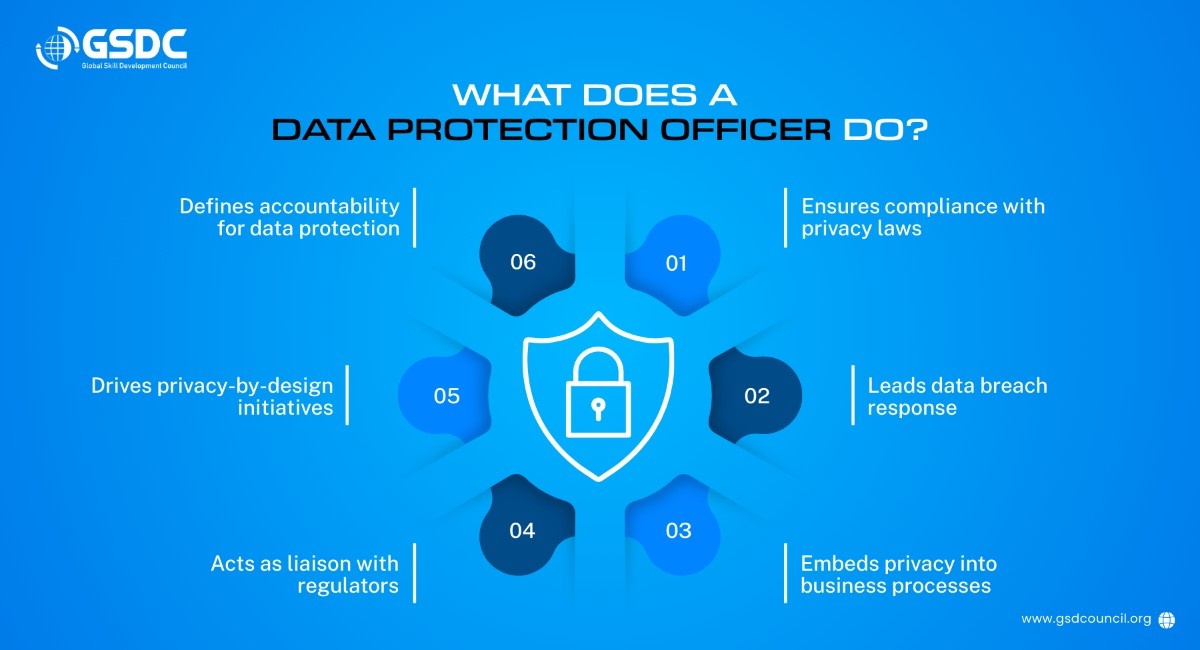
In practice, the data protection officer roles and responsibilities extend across legal, operational, and risk domains, including:
- Advising on data protection obligations and regulatory requirements, helping leadership interpret evolving laws and translate them into actionable policies and controls
- Monitoring organisational compliance with privacy laws, internal policies, and contractual obligations, including periodic audits and assessments
- Training internal teams on data privacy principles, secure data handling, and privacy-by-design practices to reduce operational risk
- Acting as a point of contact for regulators and data subjects, ensuring timely, transparent, and compliant responses to inquiries and requests
- Managing and coordinating responses to data breaches and incidents, including incident reporting, root cause analysis, and remediation planning
- Supporting privacy impact assessments and risk reviews for new products, digital platforms, and AI-driven initiatives
- Advising on data minimisation, retention, and cross-border data transfers to ensure lawful and ethical data use across the organisation
In simple terms, the DPO clarifies who is responsible for data protection across the organisation, bridges legal, technical, and business teams, and ensures accountability at all levels of decision-making.
Why the DPO Role Is Critical in 2026
1. Data Privacy Laws Grow Worldwide
In recent years, privacy laws have made significant progress. The EU GDPR model is still influencing the world as various countries like India, Singapore, Brazil, and some U.S. states are raising their data protection standards.
Such rules demand regular accountability, transparency, and proactive governance. Hence, several companies are hiring professional data protection officers to handle such matters instead of spreading them across IT or legal departments.
A professional DPO guarantees continuous compliance and preparedness for the changes in regulations.
2. Customers Care About Privacy and Trust
These days, customers are more aware than ever of how their personal information is gathered, shared, and used. Whether a company respects data privacy or not significantly affects the degree of consumer trust, the status of the brand, and the duration of customer loyalty.
Companies showing that they are well-governed by, for example, providing their DPO with well-structured training and setting clear accountability, are in a good position to gain trust and stand out in very competitive markets.
3. Data Is Both a Business Asset and a Business Risk
Data powers AI, analytics, digital services, and personalised experiences. At the same time, poor data governance exposes organisations to operational, regulatory, security, and reputational risks.
This elevates the data protection officers role from a compliance function to a strategic risk and governance function. As data becomes more central to business strategy, leadership teams increasingly ask: Do I need a data protection officer to manage these risks at scale?
For many organisations in 2026 and beyond, the answer is yes - and building this capability is increasingly supported by formal upskilling pathways such as Certified Data Protection Officer Certification, which helps professionals develop the expertise required to operate effectively in complex regulatory environments.
What Happens Without a Data Protection Officer?
The absence of a dedicated DPO can result in:
- Compliance gaps that continue to go unnoticed
- Privacy practices are becoming inconsistent across different departments
- Delays or uncoordinated breach responses
- Senior management does not have a clear view of data protection risks
Hence, structured data protection officer services are being adopted by organizations more and more to ensure consistent governance and accountability. At the same time, many of them also rely on professional frameworks, certifications, and capabilities, building initiatives supported by organisations such as Global Skill Development Council (GSDC) to making long, term data protection maturity more robust.
What a Data Protection Officer Brings to Your Organisation
A professionally trained and certified Data Protection Officer adds meaningful value across compliance, operations, and strategic risk management. Beyond fulfilling regulatory requirements, certified DPOs strengthen organisational credibility, accountability, and long-term data governance maturity. For a deeper perspective on why certification matters, see Why Every Organization Needs Certified Data Protection Officers.
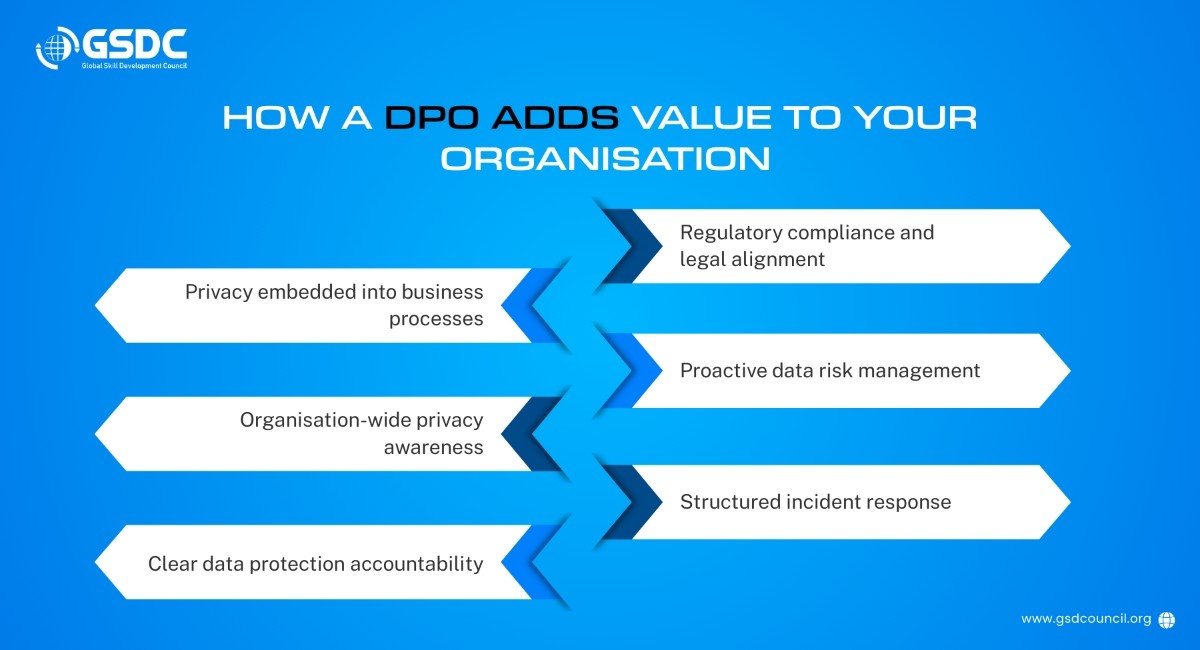 A DPO supports the organisation by delivering:
- Regulatory compliance through continuous monitoring of evolving data protection laws and standards
- Operational integration of privacy controls into core business processes and decision workflows
- Proactive risk management across the data lifecycle to reduce legal, security, and reputational exposure
- Organisation-wide awareness through structured data protection officer training and ongoing education
- Structured incident response and effective engagement with regulators during audits or breaches
- Clear accountability for who is responsible for data protection across teams and leadership
How to Prepare for the DPO Era (2026 Onward)
To capture the full potential of the DPO function, organisations should:
- Review their data practices and data flows
- Define clearly the roles and responsibilities of data protection officers
- Ensure the DPO’s independence and access to senior leadership
- Invest in privacy tools, governance frameworks, and training
- Build internal capacity by sending a data protection officer to a formal course and also encourage continuous learning
Professionals in the field of data protection officer jobs will find that the demand for their services is increasing in all sectors. Getting a formal data protection officer certification and acquiring hands-on experience through data protection officer training are becoming indispensable for career advancement.
Candidates for data protection officer jobs can use interview preparation materials, for example, Top Data Protection Officer (DPO) Interview Questions & How to Ace Them, to get a clear idea of the qualities that employers are looking for when they hire for DPO roles.
Data Protection: From Compliance to Strategic Advantage
Data protection in 2026 is not just about avoiding fines. Organisations that put up a strong privacy leadership framework have a significant advantage, including:
- Raises customer trust and loyalty
- Risk visibility and governance improved
- Better data for analytics and AI
- Quicker and more assured decision-making
- More precise accountability throughout the organisation
An experienced DPO, with recognised data protection officer certification aligned with global competency frameworks, can help the organisation turn compliance into a long-term strategic advantage. Many organizations and professionals find global benchmarking on skills and establish their credibility on data protection and privacy leadership through reputed international organizations such as the Global Skill Development Council (GSDC).

Conclusion
Because data is at the heart of how organizations plan and grow in a digital way, the role of the data protection officer isn't a luxury; it's a must-have. It is a strategic requirement for organisations that want to operate responsibly, build trust, and scale securely in 2026 and beyond.
For organisations, the question is no longer “Do I need a data protection officer?” but how quickly they can build strong internal DPO capability or engage reliable data protection officer services.
For professionals, investing in a recognised data protection officer course, continuous data protection officer training, and globally relevant data protection officer certification opens the door to growing opportunities in data protection officer jobs across regions and industries.

Related Certifications
Stay up-to-date with the latest news, trends, and resources in GSDC
If you like this read then make sure to check out our previous blogs: Cracking Onboarding Challenges: Fresher Success Unveiled
Not sure which certification to pursue? Our advisors will help you decide!