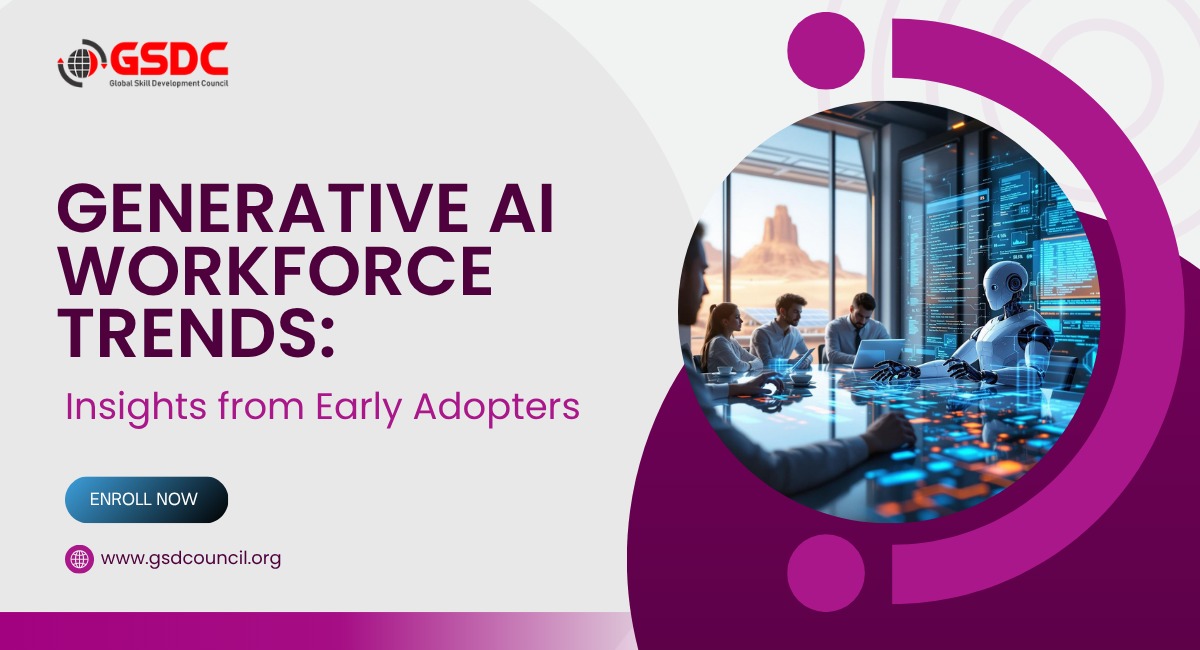
Generative AI Workforce Trends: Insights from Early Adopters
Written by Matthew Hale
Automation has always been part of business growth, but generative AI is taking it to a different level.
Instead of just executing predefined tasks, it can create, adapt, and support work across functions. This shift is forcing organizations to rethink what generative AI is and how it fits into everyday operations.
In fact, organizations using generative AI are already reporting 20–50% improvements in productivity and speed, showing that the impact is not theoretical; it’s already happening.
With adoption increasing quickly, companies are now asking a more practical question: how does generative AI affect workforce performance and roles?
The answer is becoming clear through early adopters already using it at scale.
What Is Generative AI and How Does It Work?
In order to explore its influence, one should start with an understanding of what is generative AI and how does it work.
Generative AI is a particular type of artificial intelligence that can produce new text, imagery, or even code through the process of learning patterns in large quantities of data.
At a basic level, generative AI processes large data sets, identifies patterns in data, and uses acquired knowledge to produce new content according to users’ requests.
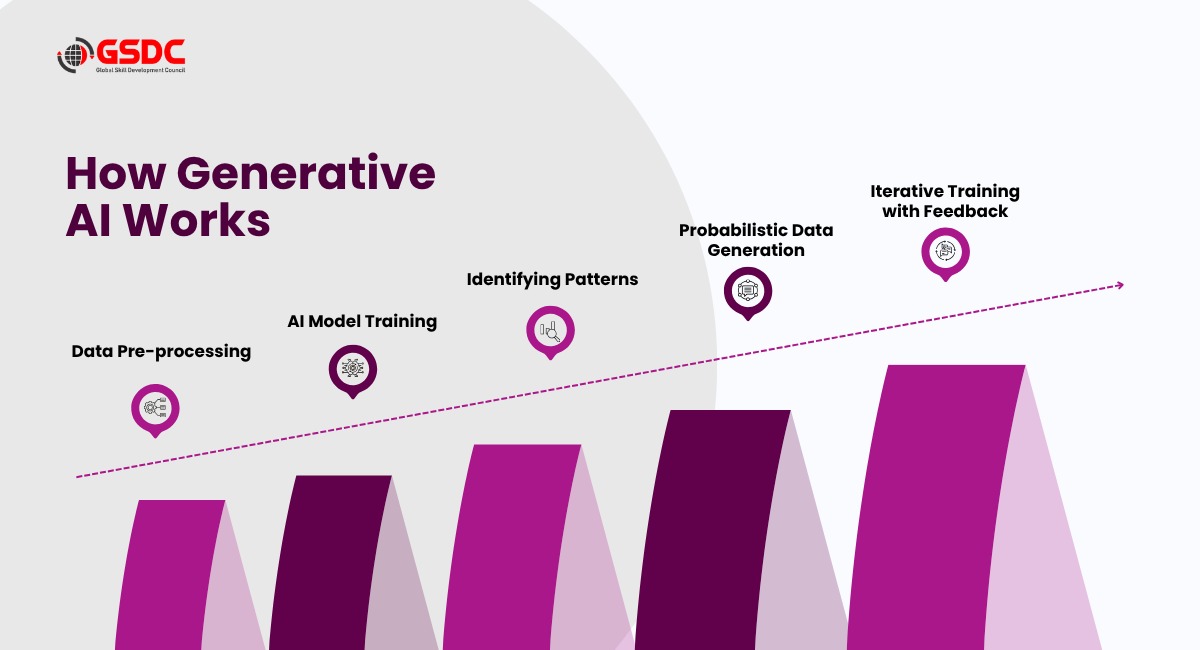
It also allows us to better differentiate between generative AI and artificial intelligence in general. While traditional AI processes data and analyzes it, generative AI produces content.
Simply put, what is generative AI? It is a creation tool, not an analysis tool.
Why Generative AI Adoption Is Growing Fast
The adoption of AI technology is rising rapidly.
Currently, most organizations are implementing AI technologies, while others in sectors such as technology have surpassed 60% adoption rate among teams utilizing AI in their processes.
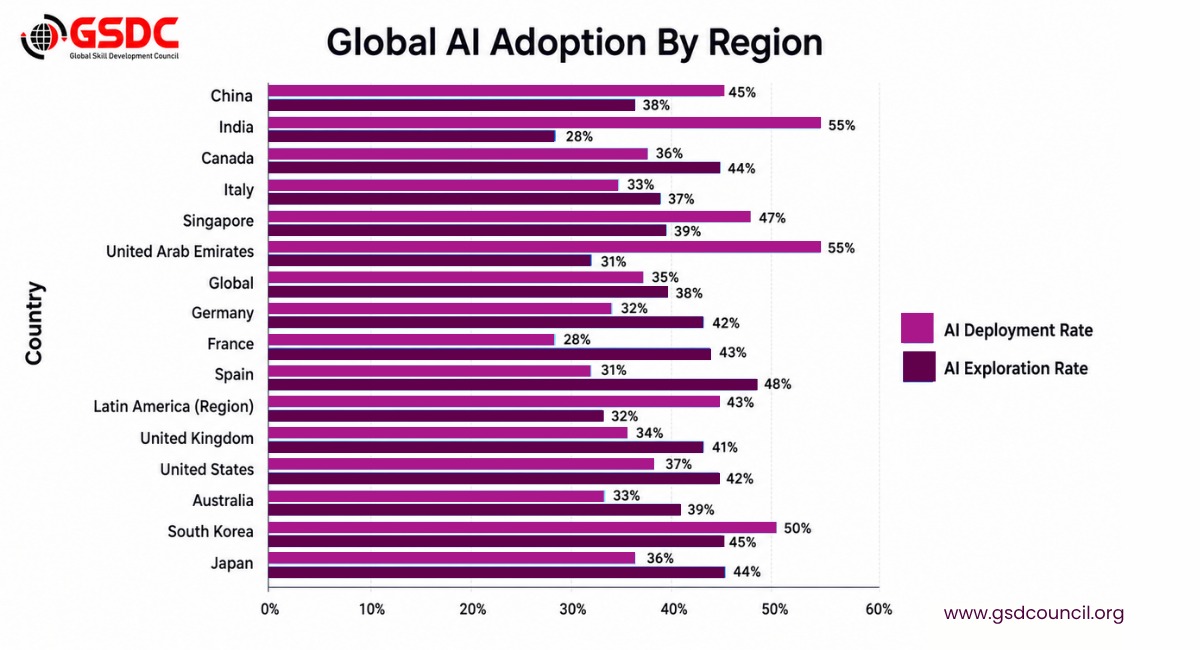
These statistics clearly indicate that the adoption of AI technology is rapidly growing around the world, with India, UAE, and Singapore being the top adopters and explorers.
Individuals within organizations are also contributing to the trend, with many already adopting AI technology despite the lack of official implementation by firms.
Key Workforce Trends from Early Adopters
1. AI Is Helping People, Not Replacing Them
The first thing that comes to mind when talking about artificial intelligence is losing your job. But the numbers say something else.
The impact of AI on workforce is largely positive. Employees are saving hours on repetitive work, and in many cases, productivity has increased by around 20–25% in AI-supported tasks. This allows people to focus more on creative and strategic work.
So, how does generative AI affect workforce? It supports employees and improves how they work, instead of replacing them.
2. AI Will Change Jobs, But Also Create New Ones
AI will have some impact on jobs, yet not necessarily a negative one.
According to research, as many as 15% of workers around the globe will undergo a job transformation caused by AI. Simultaneously, new jobs related to AI and automation are developing at a rapid pace.
This means that the truth of generative AI workforce impact will be transformative, rather than destructive.
3. Companies Are Adopting AI Step by Step
Successful firms are not jumping into AI.
Rather, they begin with smaller experiments, see what succeeds, and then scale up. Such an incremental strategy is better for mitigating risks and minimizing the disruption to workers caused by AI.
4. Employees Are Adopting AI Faster Than Expected
The adoption of AI is not limited to leaders but also applies to the staff.
According to research, almost 90% of the people in the workplace are currently familiar with the capabilities of generative AI. At the same time, one-third think AI will be used significantly in their work within the next few days.
5. AI Is Increasing Employee Value
Generative AI not only makes processes more efficient but also increases the worth of skilled employees. In several sectors, employees who use generative AI efficiently have experienced greater demand for their services and rapid career advancement. It also underscores the significance of the question of how generative AI affects the workforce.
6. Skills Are Becoming More Important Than Ever
Artificial intelligence changes the requirements for skills that the personnel should have.
Many companies are placing an increased emphasis on reskilling and upskilling programs. In the context of the generative AI future of work, the employees will be required to learn how to work with AI tools and develop new skills constantly.
Moreover, the work done by companies such as the Global Skill Development Council shows a growing emphasis on developing learning standards for emerging technologies.
Challenges Companies Still Face
Despite its widespread acceptance, there remain various issues for companies to address.
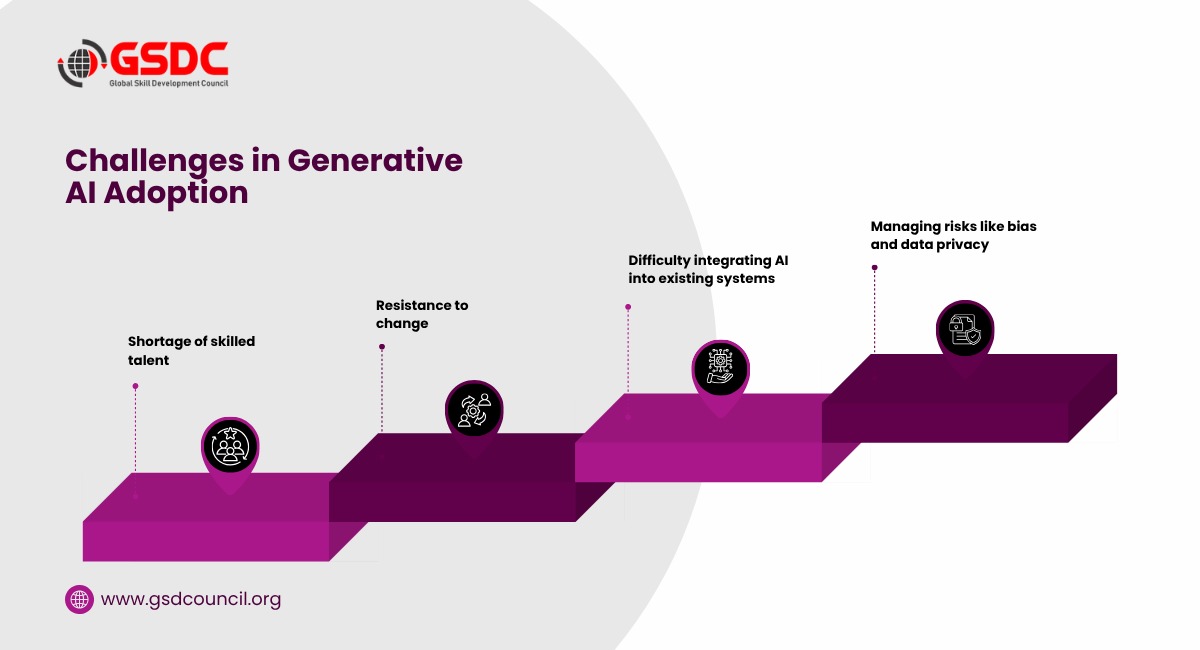
These issues involve a shortage of skilled talent, reluctance to change, implementation challenges, and hazards such as bias and privacy issues.
A major gap is the lack of professionals who can work effectively with AI, which is why many organizations are investing in upskilling through generative AI professional certification.
These challenges show that the generative AI workforce impact is not just about technology; it also involves people, culture, and strategy.
How Companies Can Succeed with Generative AI
As seen from the early adopters, there is an effective way for businesses to succeed through AI generation.
- Begin small and grow slowly
- Choose impactful business areas
- Train the workforce
- Develop governance for the use of data and risks
- Motivate employees to adapt to AI
To fully comprehend the influence of generative AI on employees, a balance between technology and human ability is required.
Generative AI Future Trends to Watch
For the future, there are several AI generative future trends that will affect the work environment:
- Increased integration between people and AI, with AI helping out with day-to-day activities and decision-making
- AI is being applied in all business units, and not confined only to the technical departments
- Growing demand for AI-skilled professionals as organizations scale their adoption
- Greater emphasis on ethics and accountability in using AI, especially when it comes to the use of data and governance practices
Finally, the generative AI technologies are forecasted to generate annual economic value exceeding $1 trillion in the coming years.
All of the above industry trends about AI generative technology demonstrate its continued relevance in the coming period.
Building Skills for an AI-Driven Workforce
Generative AI has already begun to change work, making skills building increasingly important.
The changing dynamics brought about by generative AI have led to greater requirements for practical skill sets that will allow professionals to succeed at work. Global Skill Development Council is one such body that is working on setting industry standards.
Furthermore, generative AI certification and Generative AI professional Certification have made it easier for professionals to remain up-to-date with the future of work.
Conclusion
The case of early adopters proves that generative AI is not only a technology but also a revolution in the way we work.
The generative AI future of work will depend on how well organizations use AI responsibly, support their employees, and invest in skills and training.
Companies that recognize how generative AI influences the workforce and react quickly to change can succeed better than competitors who act slowly.

Related Certifications
Frequently Asked Questions
Stay up-to-date with the latest news, trends, and resources in GSDC
If you like this read then make sure to check out our previous blogs: Cracking Onboarding Challenges: Fresher Success Unveiled
Not sure which certification to pursue? Our advisors will help you decide!