Which SRE Model Is Right for Your Organization in 2026?

Written by Matthew Hale
- What Is Site Reliability Engineering (SRE) Explained
- Understanding the SRE Model
- The Most Common SRE Models
- Site Reliability Engineer: What Do They Do?
- How to Become a Site Reliability Engineer: Learning Path
- Key Principles of the Site Reliability Engineering Framework
- Benefits of Adopting an SRE Model
- Challenges to Consider
- How to Learn and Get Site Reliability Engineering Certification
- Conclusion
Today’s companies operate based on digital technologies – but a mere loss of a couple of minutes might result in severe financial and reputation losses.
As systems become more advanced, it becomes harder to ensure that they remain reliable. In such cases, it is essential to consider the SRE model.
Developed by Google, Site Reliability Engineering (SRE) is a concept that allows companies to ensure reliability through the use of engineering rather than operations.
There is a rising demand for SRE across industries. According to Statista, the SRE tooling global market is forecast to reach a CAGR of about 15%, reaching $25-30 billion by 2030. This is due to cloud computing adoption and the digitalization of processes.
In this blog, we’ll explore what is SRE model, how it works, different types of site reliability engineering framework, and how you can build a career in this field.
What Is Site Reliability Engineering (SRE) Explained
In order to explain the SRE Model, it is essential to define Site Reliability Engineering (SRE).
Site Reliability Engineering (SRE) refers to an engineering practice that involves applying software engineering methods to operational procedures to design scalable, efficient, and reliable systems. This includes defining service level objectives, analyzing system metrics, automating redundant processes, and implementing constant monitoring of system performance.
These practices form the foundation of a strong site reliability engineering framework, enabling organizations to maintain performance as systems grow in complexity.
Understanding the SRE Model
Well, what exactly is the working of an SRE model?
The SRE model describes how the teams are organized, how the responsibility is divided, and how the reliability of the systems is handled. The SRE model differs from other models because the site reliability engineering model is very flexible and adjusts according to organizational needs. Organizations do not follow one particular model because the model evolves with time.
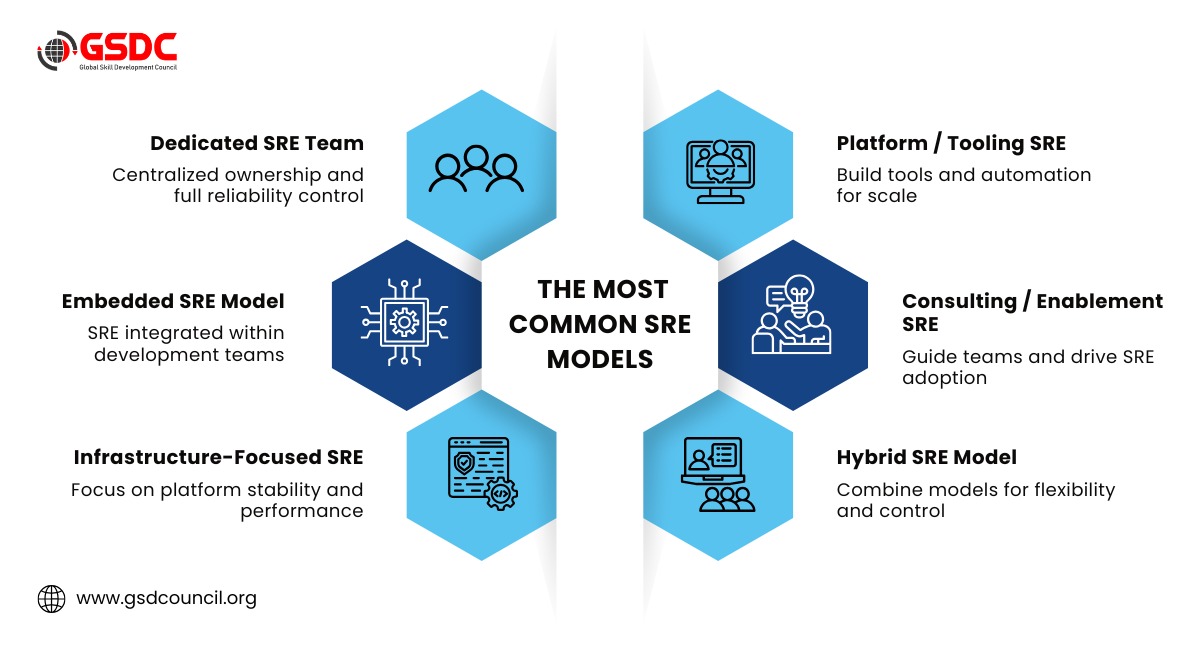
The Most Common SRE Models
Depending upon the size of an organization, its complex systems, and objectives, SRE models vary. No one-size-fits-all standard exists in relation to SRE models as teams create their own site reliability engineering model according to their needs.
1. Dedicated SRE Team (Google Model)
One of the most common SRE models involves a dedicated team that controls the reliability of the system. In this case, engineers are responsible for development and operations, which allows better ownership, quick problem resolution, and reliability scaling.
2. Embedded SRE Model
Under this model, the SRE team is embedded in the development teams. Incorporating reliability into the development process, this increases collaboration, leading to faster deployments without compromising system reliability.
3. Infrastructure-Focused SRE
This particular SRE model revolves around managing infrastructure, keeping it stable and performing optimally in order to provide the best scaling ability for the systems.
4. Platform / Tooling SRE
SRE under this model works by developing internal tools that help automate the systems as well as develop monitoring platforms, which aid other teams in managing their reliability.
5. Consulting or Enablement SRE
Rather than owning any systems, such groups act as advisers to other groups within an organization. They outline best practices and help implement SRE principles more broadly.
6. Hybrid SRE Model
Most organizations end up implementing a hybrid SRE model after trying out several SRE models. The hybrid SRE approach is flexible and allows for continued growth within its structure.
Ultimately, there is no “one-size-fits-all” SRE model. The most effective approach is the one that aligns with your organization’s structure, culture, and reliability goals.
Site Reliability Engineer: What Do They Do?
If you’re wondering what a site reliability engineer actually does, here’s a simple explanation.
Site reliability engineers are responsible for making sure that the systems work effectively, efficiently, and reliably, especially when they are scaled.
The duties of a site reliability engineer usually include the following:
- Automating operational tasks to reduce manual effort and improve efficiency
- Monitoring system performance to detect and resolve issues early
- Managing incidents and ensuring quick recovery from failures
- Improving system resilience to handle unexpected disruptions
- Building and maintaining scalable infrastructure
They play a critical role in bridging the gap between development and operations, ensuring both speed and reliability are maintained.
How to Become a Site Reliability Engineer: Learning Path
In case you are interested in finding out more about how to become a site reliability engineer, you need to consider taking a step-by-step site reliability engineer learning path.
A practical approach includes:
- Acquiring knowledge of programming languages like Python, Go, or Java
- Learning about Linux and the basics of system administration
- Building experience in using cloud computing platforms
- Learning how to practice DevOps and automate processes
- Using monitoring and observability tools
- Studying distributed systems basics
- Studying basic networking and system communication
- Building CI/CD pipeline capabilities for continuous delivery
- Using Infrastructure as Code for environment management
- Managing incidents and developing response strategies
This combination of skills helps you develop the ability to build, manage, and scale reliable systems in real-world environments.
Key Principles of the Site Reliability Engineering Framework
All site reliability engineering frameworks operate based on core concepts that govern system design, management, and improvement:
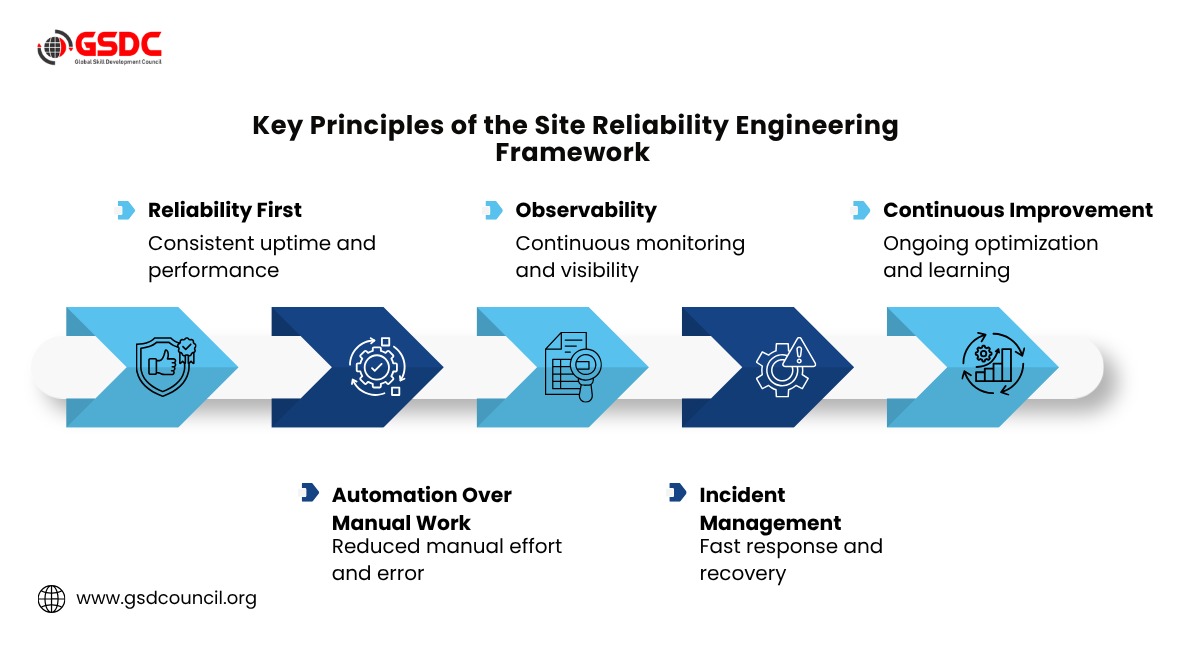
These principles ensure that any SRE model can deliver scalable, resilient, and high-performing systems.
Benefits of Adopting an SRE Model
By adopting the right SRE approach, organizations will be able to experience considerable benefits in terms of system performance and process efficiency:
- Higher level of system reliability and uptime
- Increased speed in identifying incidents and solving them
- More effective cooperation between developers and operators
- Greater efficiency thanks to process automation
- Scalable system architecture for supporting growth
- Higher system resilience
- Improved system performance monitoring capability
SRE implementation is important for organizations to operate with high performance and scalability.
Challenges to Consider
While adopting an SRE model offers many benefits, organizations may also face several challenges during implementation:
- Resistance to change across teams and processes
- Skill gaps in development, operations, and automation expertise
- Balancing speed of delivery with system reliability
- Lack of clear ownership and responsibility across teams
- Difficulty in defining and measuring reliability metrics
- Integration challenges with existing systems and workflows
Addressing these challenges early helps ensure smoother adoption and long-term success of the SRE model.
How to Learn and Get Site Reliability Engineering Certification
For those interested in how to learn site reliability engineering, it is important to consider how one learns the actual hands-on skills necessary to work within the field. Here, GSDC will help you throughout.
One strategy would involve:
- Getting hands-on experience working on projects
- Acquiring skills via real-world applications and cases
- Acquiring design thinking to create systems that scale
- Dealing with production problems and debugging
In addition to learning the skills, acquiring a site reliability engineer certification will further help with both gaining solid theoretical knowledge and getting a better job.
Site Reliability Engineer Salary by Role (Global)
Role / Designation | Experience Level | Average Salary (USD) |
0–2 years | $70,000 – $100,000 | |
2–5 years | $100,000 – $140,000 | |
5–8 years | $130,000 – $180,000 | |
8+ years | $160,000 – $220,000+ |
A large number of individuals opt for Site Reliability Engineering (SRE) Foundation Certification (CSREF) to switch from their careers as DevOps or IT into SRE. The certification is ideal for IT professionals, DevOps engineers, and system administrators looking to strengthen operational excellence and service reliability expertise.

Conclusion
Site Reliability Engineering (SRE) is flexible. It is a system that changes as your business changes.
While it’s important to know what site reliability engineering is all about, it’s more important to be able to implement it in such a manner that it will suit the needs and objectives of your business. Whatever SRE model you choose will be a compromise between reliability and business.
If you opt for any SRE models, whether it is a dedicated, embedded, or hybrid team, the goal will remain the same. You want a reliable and scalable system that will allow your company to grow.
In the end, your success as far as SRE models go will depend on your system performance, not the model itself.

Related Certifications
Frequently Asked Questions
Stay up-to-date with the latest news, trends, and resources in GSDC
If you like this read then make sure to check out our previous blogs: Cracking Onboarding Challenges: Fresher Success Unveiled
Not sure which certification to pursue? Our advisors will help you decide!