Navigating the Future: Essential Skills Every IT Security Analyst Needs to Succeed
Written by Anshuman Tripathi
The cybersecurity industry is undergoing rapid transformation, with threats growing in complexity and sophistication.
Against this backdrop, IT Security Analysts have a pivotal role in defensive actions towards protecting digital assets.
The dynamic nature of this field demands that an IT Security Analyst be equipped with an equal share of both technical and soft skills.
The article discusses some of the imperative skills analysts will need if they are to navigate the horizon of cybersecurity effectively.
Technical Skills: The Foundation of Cybersecurity Expertise
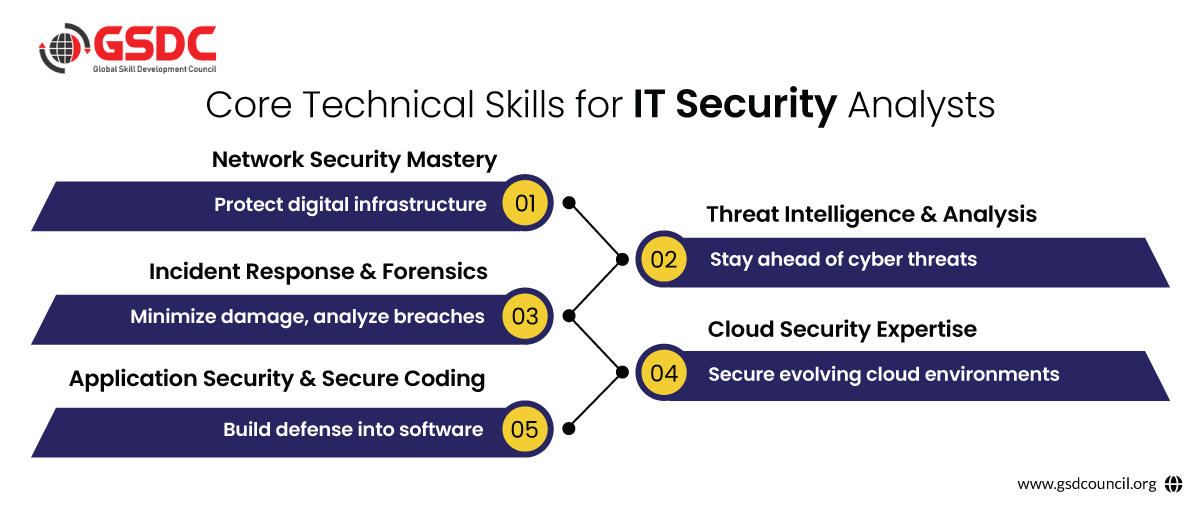
1. Network Security and Architecture
Gaining knowledge about network architecture and security protocols is a prerequisite for IT Security Analyst training.
It requires commands in firewall configuration, intrusion detection/prevention systems (IDS/IPS), and virtual private networks (VPNs).
For example, according to a 2024 cybersecurity report from Gartner, a well-configured firewall prevents over 90% of direct cyberattacks.
Security certifications such as Cisco CCNA Security or CompTIA Security+ can substantiate this competency.
2. Threat Intelligence and Analysis
Cyber threats are dynamic, and this makes threat intelligence an important skill.
Analysts must be capable of observing the indicators of compromise (IOCs), analyzing the attack vector and method of operation, and using security information and event management (SIEM) tools.
For instance, when using proactive threat intelligence solutions, organizations have reported a 40% decrease in intrusions. Splunk, IBM QRadar, and Microsoft Sentinel are some of the common platforms that can achieve this.
3. Incident Response and Digital Forensics
Response to security incidents in a timely manner can reduce damage and result in the prevention of data loss.
Forensic examination, Malware Analysis, and Root Cause Analysis should form an indispensable part of the training for an IT Security Analyst.
Forensic analysts played an essential part in helping identify the breach of the SolarWinds compromise, which occurred in 2021.
4. Cloud Security Expertise
As cloud adoption grows significantly, securing cloud environments has become a priority.
Analysts should have a solid understanding of the security framework for the cloud (NIST, CIS Benchmarks) and IAM, as well as the shared responsibility models for cloud providers.
Certifications such as AWS Certified Security Specialty, Microsoft Certified: Azure Security Engineer Associate, etc. are preferred for the domain.
5. Application Security and Secure Coding Practices
As software supply chain attacks rise, understanding the secure coding principles is vital.
Familiarity with OWASP Top 10 vulnerabilities, secure DevOps (DevSecOps), and penetration testing techniques is crucial.
For example: the Log4j vulnerability in 2021 underscored the importance of secure coding practices in software development.
6. Zero Trust and Identity Management
The Zero Trust model, which runs on the premise of "never trust, always verify," thus becomes an important strategy in modern cybersecurity.
Skills include MFA implementation, PAM, and EDR. Organizations that adopt the Zero Trust framework suffer 50% fewer data breaches, according to Forrester Research.
Soft Skills: The Human Element in Cybersecurity
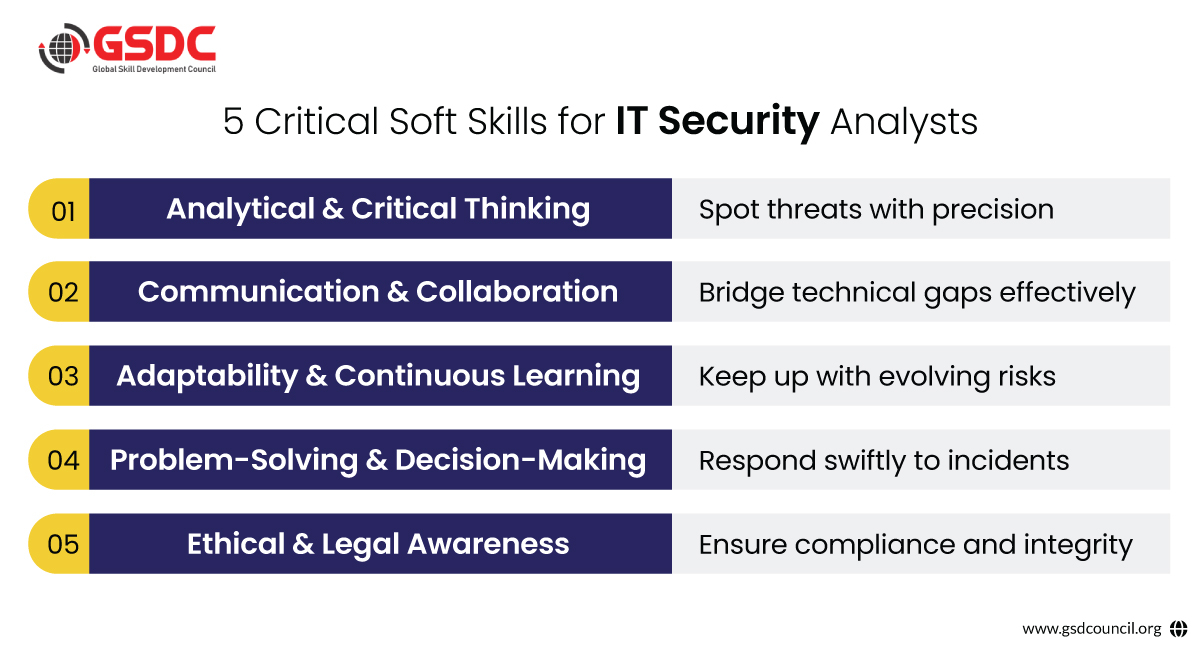
1. Analytical and Critical Thinking
IT Security Analysts must analyze vast amounts of data to detect anomalies and threats.
For example, the ability to differentiate between false positives and genuine threats is crucial in a Security Operations Center (SOC) environment.
2. Communication and Collaboration
Cybersecurity is a team effort that requires clear communication with both technical and non-technical stakeholders.
Security Analysts must translate complex cybersecurity issues into actionable insights for executives and end users.
For example, presenting a security risk assessment to the executive management requires both technical knowledge and persuasive communication.
3. Adaptability and Continuous Learning
Cybersecurity is ever-changing, requiring professionals to stay updated with the latest trends, threats, and regulations.
For example: the rise of AI-driven attacks demands Security Analysts to adapt and learn new countermeasures.
4. Problem-Solving and Decision-Making
Rapid decision-making in the face of security incidents is a crucial skill.
For example: in the event of a ransomware attack, analysts must quickly decide whether to isolate systems, restore from backups, or engage external cybersecurity firms.
5. Ethical and Legal Awareness
Understanding ethical hacking principles and regulatory compliance requirements is also an essential skill.
Frameworks such as GDPR, CCPA, and ISO/IEC 27001 guide legal and ethical decision-making.
For example: Non-compliance with GDPR can result in hefty fines, emphasizing the need for legal awareness in cybersecurity roles.

Future Trends and Evolving Skill Sets
As cybersecurity threats evolve, new skills will emerge as critical requirements for IT Security Analysts:
- Artificial Intelligence and Machine Learning in Cybersecurity: Analysts must understand how AI is used in both cyberattacks and defense strategies.
- Quantum Computing Risks and Cryptography: The rise of quantum computing may render current encryption methods obsolete, necessitating new cryptographic approaches.
- Cyber Resilience and Risk Management: Organizations are increasingly focusing on resilience strategies to maintain operations during cyber incidents.
A career in cybersecurity would make for a bright future, provided there is a set of skill-based training that includes an adequate balance of technical know-how and interpersonal and problem-solving skills.
IT security analysts will be an important line of defense for digital infrastructure in years to come as they keep on improving their skills further, gaining advanced knowledge of emerging trends and happenings.
By being well-versed in the essential technical and soft skills discussed in this article, professionals in the field will be more focused and oriented in facing the challenges ahead and excel in an industry characterized by ever-evolving trends.

Related Certifications
Stay up-to-date with the latest news, trends, and resources in GSDC
If you like this read then make sure to check out our previous blogs: Cracking Onboarding Challenges: Fresher Success Unveiled
Not sure which certification to pursue? Our advisors will help you decide!