The Road to Data Science Mastery: Tools, Trends, and Techniques
Written by Matthew Hale
- Understanding the Role of a Data Science Professional
- The Data Science Career Path: Where to Begin
- Data Science Tools and Techniques: Building Your Modern Toolbox
- Latest Trends in Data Science: What’s Shaping the Future
- Data Science Platform Market Size and Forecast 2024 to 2034
- Mapping the Data Science Career Roadmap
- Data Science Career Outlook 2025 and Beyond
- Mastering Data Science Skillset: From Learning to Leadership
- Is Data Science a Good Career? The Final Verdict
- Final Thoughts
In an era where data powers every decision, data science has emerged as one of the most promising and transformative fields of the 21st century. Whether it’s optimizing business performance, driving innovation, or shaping smarter public policies, data science professionals are the architects behind data-driven insights.
For anyone exploring a data science career path, understanding the right tools, evolving trends, and essential techniques is key to mastering this fast-growing domain. This blog serves as your complete roadmap, answering questions like “Is data science a good career?” and outlining how to build your skills through practical learning and a data science professional certificate.
From Python and machine learning frameworks to the latest automation trends, you’ll gain a clear view of what it takes to thrive and grow as a successful data science professional in today’s competitive landscape.
Understanding the Role of a Data Science Professional
A data science professional is responsible for collecting, analyzing, and interpreting complex data to help organizations make better decisions. Their role often involves data wrangling, building predictive models, and visualizing insights for non-technical stakeholders.
In short, a data scientist transforms raw data into business value. As the global economy becomes more digital, data science career opportunities are multiplying across industries like e-commerce, banking, logistics, and education.
With the demand rising so rapidly, pursuing a data science professional certificate can give you an edge in demonstrating your skills and credibility to employers.The Data Science Career Path: Where to Begin
Starting a data science career path doesn’t require you to be a math genius; it requires curiosity, consistency, and the right learning structure. Most beginners start by learning programming languages like Python or R, understanding data science tools and techniques, and building projects that solve real problems.
If you’re thinking is data science in demand, absolutely yes. The data science career outlook remains highly positive, with roles evolving alongside AI and automation.
A data science professional certificate can serve as your gateway, helping you acquire practical skills and join the fast-growing pool of data science professionals worldwide.Data Science Tools and Techniques: Building Your Modern Toolbox
Mastering the right tools is essential for any data science professional. These tools simplify complex computations, support model building, and enable clear data visualization.
Let’s look at the data science tools list every learner should know and how they are used in real-world scenarios.
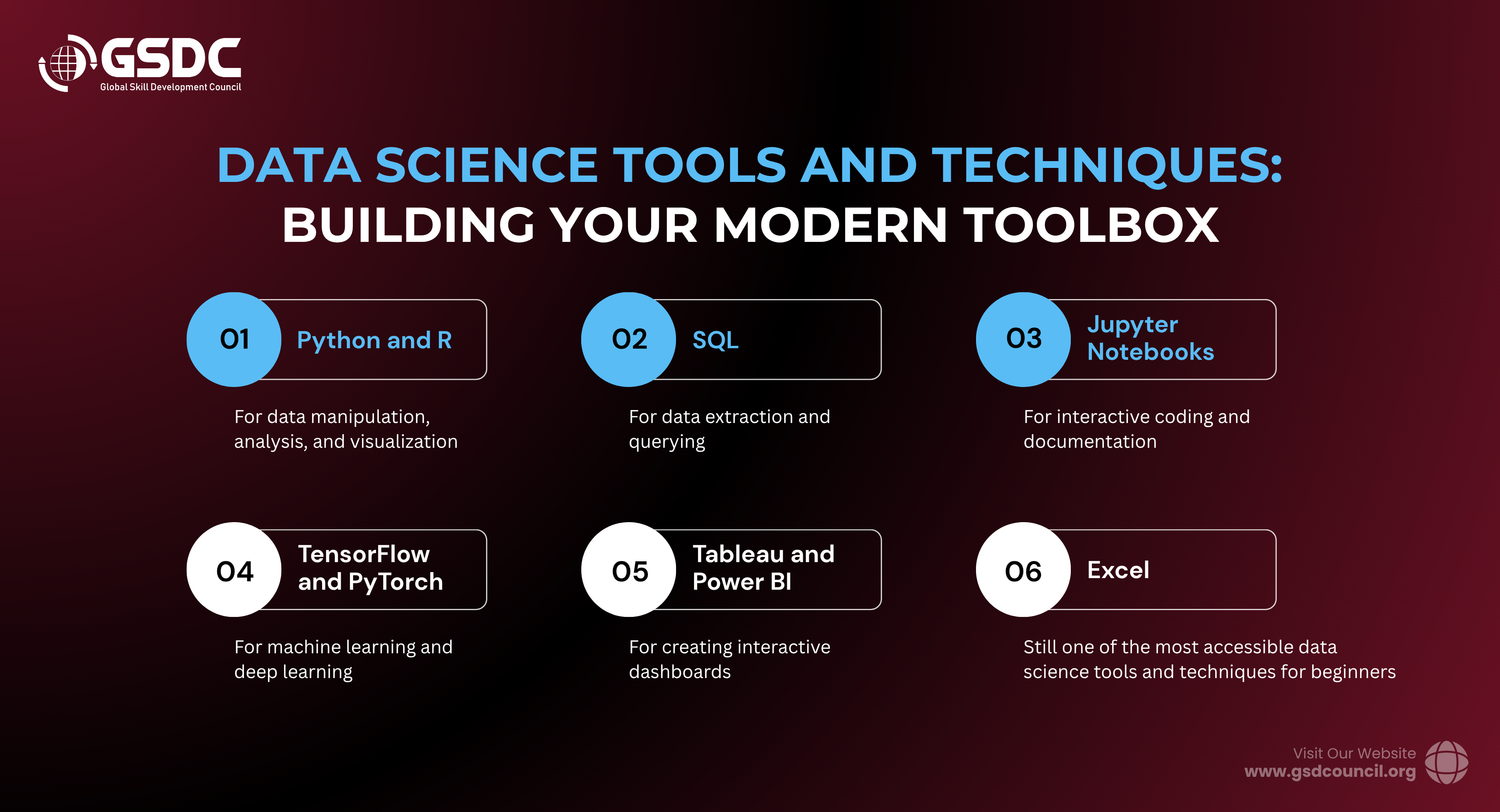
1. Python and R
Both Python and R are foundational programming languages for any data science career track. Python is widely used for automation, machine learning, and visualization through libraries like pandas, NumPy, and scikit-learn. R, on the other hand, excels in statistical computing and academic research.
2. SQL
Structured Query Language is one of the tools required for data science. It allows data scientists to extract, filter, and join data from multiple sources efficiently. SQL proficiency is essential to work with relational databases, a key skill highlighted in 10 Essential Data Science Interview Questions.
3. Jupyter Notebooks
Jupyter is a favorite among data science professionals for interactive coding and visualization. It helps document code, display charts, and share findings with teams, making collaboration smoother.
4. TensorFlow and PyTorch
When it comes to advanced data science techniques like deep learning, frameworks such as TensorFlow and PyTorch dominate. These tools allow you to build and train neural networks for image recognition, NLP, and more, making them critical in modern data science technology.
5. Tableau and Power BI
Visualization tools like Tableau and Power BI transform data into clear, compelling dashboards. These are must-haves in your Data Science Toolbox to communicate results effectively to business teams.
6. Excel
While often overlooked, Excel remains one of the simplest yet powerful data science tools and techniques. It’s particularly helpful for quick analyses and early-stage data exploration.
By mastering this mix of programming, visualization, and analytical tools, you’ll gain the technical edge needed to accelerate your data science career growth and stand out in a competitive field.📘 Unlock your data science potential — gain skills that employers value most.
Latest Trends in Data Science: What’s Shaping the Future
As the field evolves, staying informed about latest trends in data science is key to building a sustainable data science career outlook 2025.
Here are some of the most influential data science industry trends every aspiring professional should know.
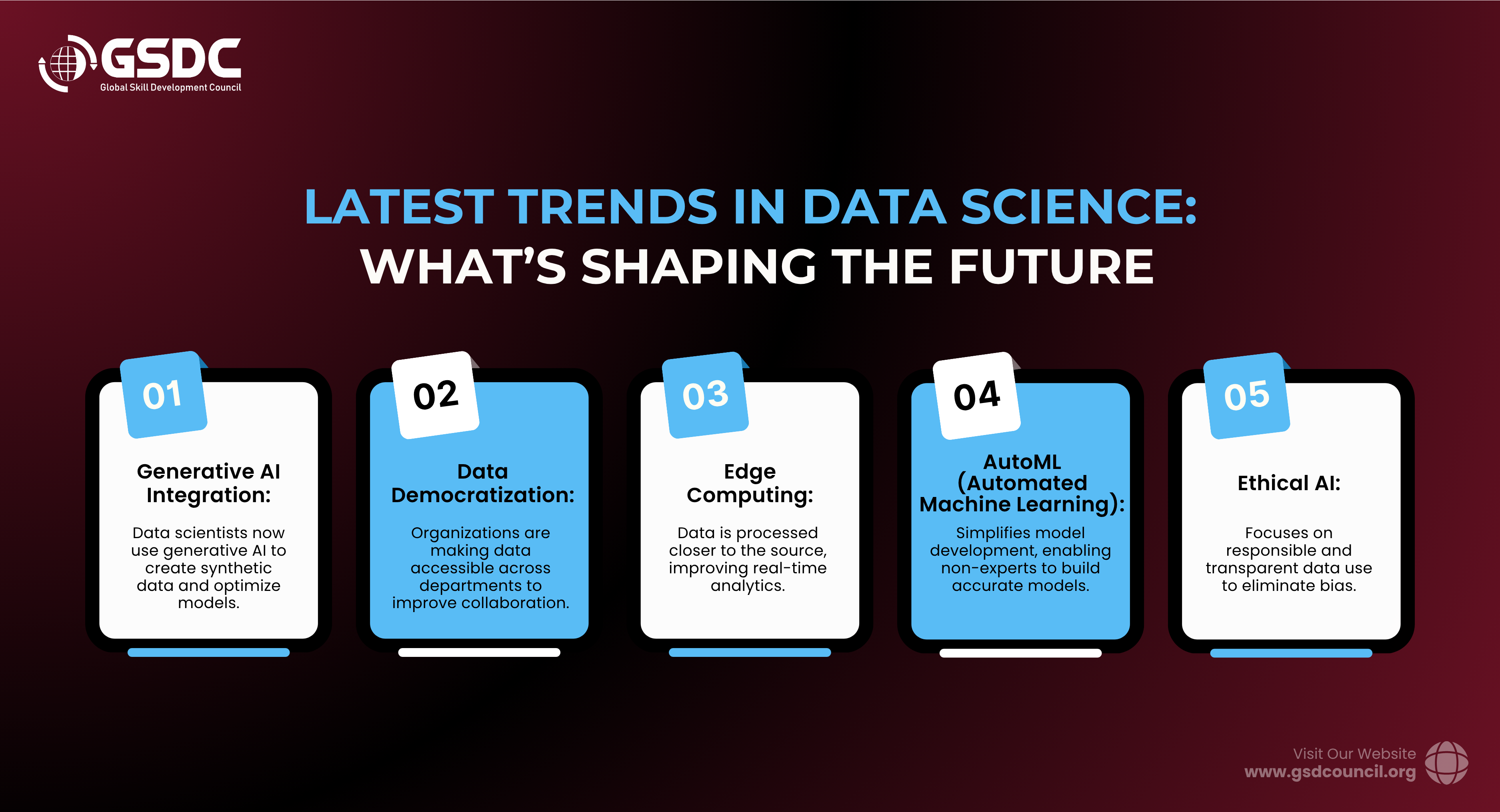
1. Generative AI Integration
Generative AI is revolutionizing data science tools and techniques by creating synthetic datasets, optimizing models, and automating feature engineering. It’s helping data science professionals work faster and smarter, reshaping how models are developed.
2. Data Democratization
Companies are moving toward making data accessible to everyone, not just analysts. This shift allows cross-functional teams to make better decisions and opens new data science career opportunities in training and governance.
3. Edge and Real-Time Analytics
With the explosion of IoT devices, data science technology now focuses on analyzing data at the edge near the source of data generation. This enables faster insights for industries like logistics and healthcare.
4. AutoML and Low-Code Platforms
AutoML tools are automating repetitive model development tasks. This trend allows even non-programmers to engage in machine learning, creating a more inclusive data science career path.
5. Ethical and Responsible AI
As AI systems grow more powerful, the demand for ethical and transparent data use has increased. Understanding AI ethics will soon become a vital part of any data science career guide.
Together, these trends are defining the skills and data science career track that professionals will need to stay competitive in the years ahead.Data Science Platform Market Size and Forecast 2024 to 2034
The future of data science is not just promising, it’s booming.
Global Market Outlook:
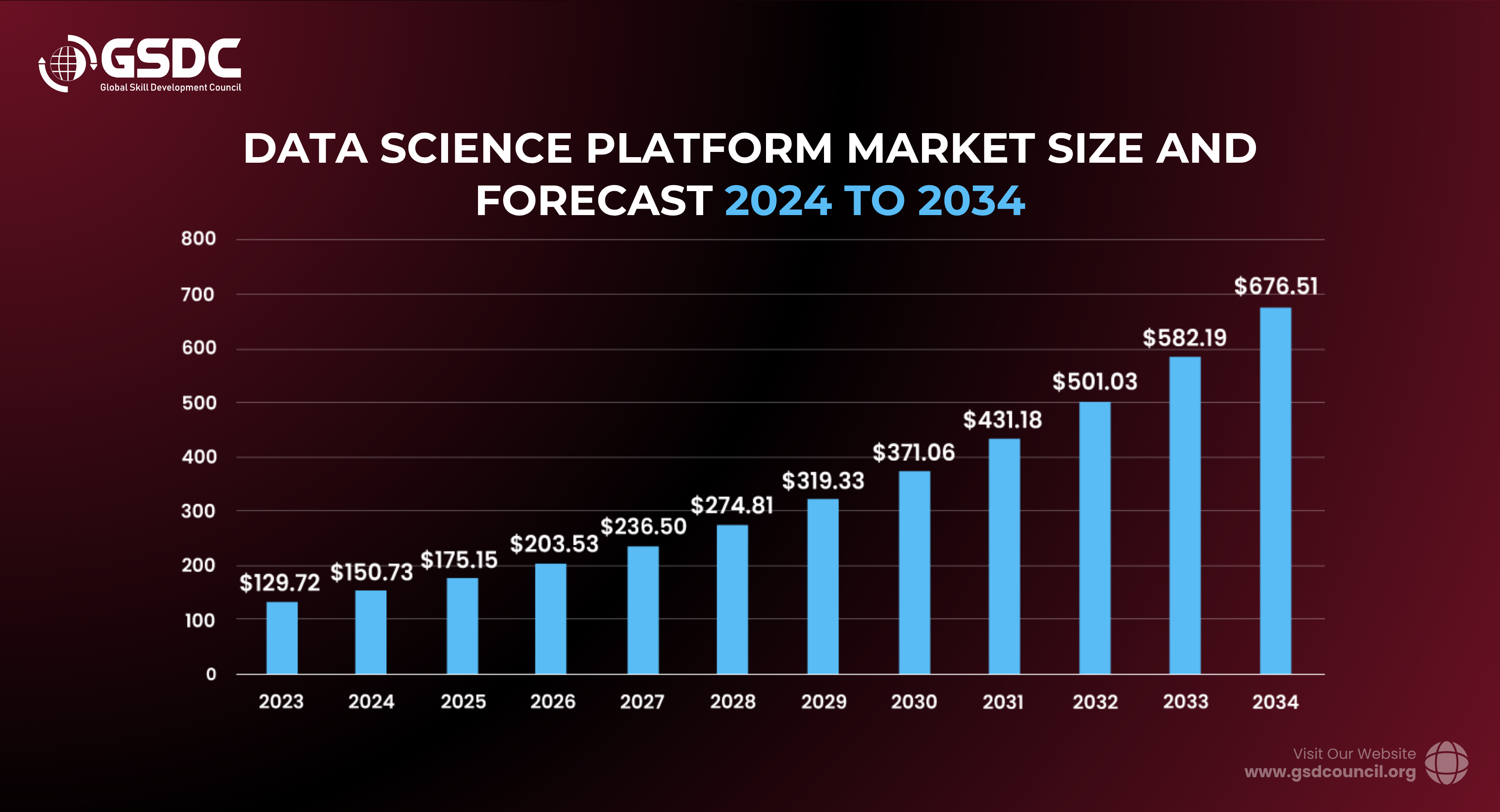
As per the report, the global data science platform market size is estimated to be USD 150.73 billion in 2024 and is projected to reach approximately USD 676.51 billion by 2034, growing at a CAGR of 16.20% from 2024 to 2034.
U.S. Market Outlook:
The U.S. data science platform market size stands at USD 37.98 billion in 2024 and is projected to reach USD 174.08 billion by 2034, growing at a CAGR of 16.42%.
These figures highlight the immense data science career growth potential and affirm that is data science in demand? Absolutely, yes. The numbers speak for themselves.Mapping the Data Science Career Roadmap
Every aspiring data science professional needs a clear direction. Here’s a practical data science career roadmap with steps that help you grow from learner to expert.
1. Learn the Fundamentals
Start with the basics, that is, statistics, probability, and data cleaning. Understanding data patterns and summary statistics will form the foundation for all your data science techniques.
2. Master Core Programming Skills
Languages like Python and R are must-haves for your data science career path. Practice data analysis projects and participate in online competitions to sharpen your skills.
3. Explore Machine Learning
Once comfortable with the basics, move to machine learning. Learn regression, classification, and clustering algorithms. These are critical for your data science career track as they power most predictive systems.
4. Build Real-World Projects
Work on datasets from industries like finance or healthcare. This helps you apply data science tools and techniques practically and makes your portfolio stand out to employers.
5. Earn a Certification
Completing GSDC’s data science professional certificate validates your skills and increases your earning potential. The data science certificate salary is often 20–30% higher than average tech roles.
6. Network and Stay Updated
Engage in forums, webinars, and industry events. Networking helps you learn how data science professional skills evolve and discover mentorship opportunities.
7. Advance Your Role
As you gain experience, aim for roles like Senior Data Scientist or AI Engineer. Your continuous learning and problem-solving mindset will ensure long-term data science career growth.Data Science Career Outlook 2025 and Beyond
The data science career outlook 2025 remains incredibly strong. As companies adopt automation and AI, the need for skilled data science professionals continues to rise.
Reports indicate that are data science jobs in demand? Absolutely. The U.S. Bureau of Labor Statistics projects job growth of over 35% for data scientists by 2032, one of the fastest among all professions.
With such exponential data science career growth, there’s never been a better time to enter the field or advance your expertise.Mastering Data Science Skillset: From Learning to Leadership
Developing the Mastering Data Science Skillset involves a blend of technical expertise and strategic thinking. Professionals who combine analytical depth with creativity and communication skills are the ones who rise fastest.
As you move forward, focus on enhancing how data science professional skills align with business outcomes. This will prepare you not only for technical success but also for leadership roles in analytics, AI strategy, or digital transformation.Is Data Science a Good Career? The Final Verdict
Without a doubt, data science remains one of the most promising fields in technology. With abundant data science career options, lucrative salaries, and continuous innovation, it offers both stability and excitement.
Whether you’re beginning your journey or aiming to specialize, understanding data science tools and techniques, staying updated on the latest trends in data science, and following a structured data science career roadmap will set you on the path to long-term success.

Final Thoughts
The journey to becoming a skilled data science professional is both challenging and rewarding. With the right data science professional certificate, a clear data science career path, and mastery over modern tools, you can confidently build a future-proof career in this ever-evolving field.
Stay curious, keep learning, and let the power of data guide your next big move.

Related Certifications
Stay up-to-date with the latest news, trends, and resources in GSDC
If you like this read then make sure to check out our previous blogs: Cracking Onboarding Challenges: Fresher Success Unveiled
Not sure which certification to pursue? Our advisors will help you decide!