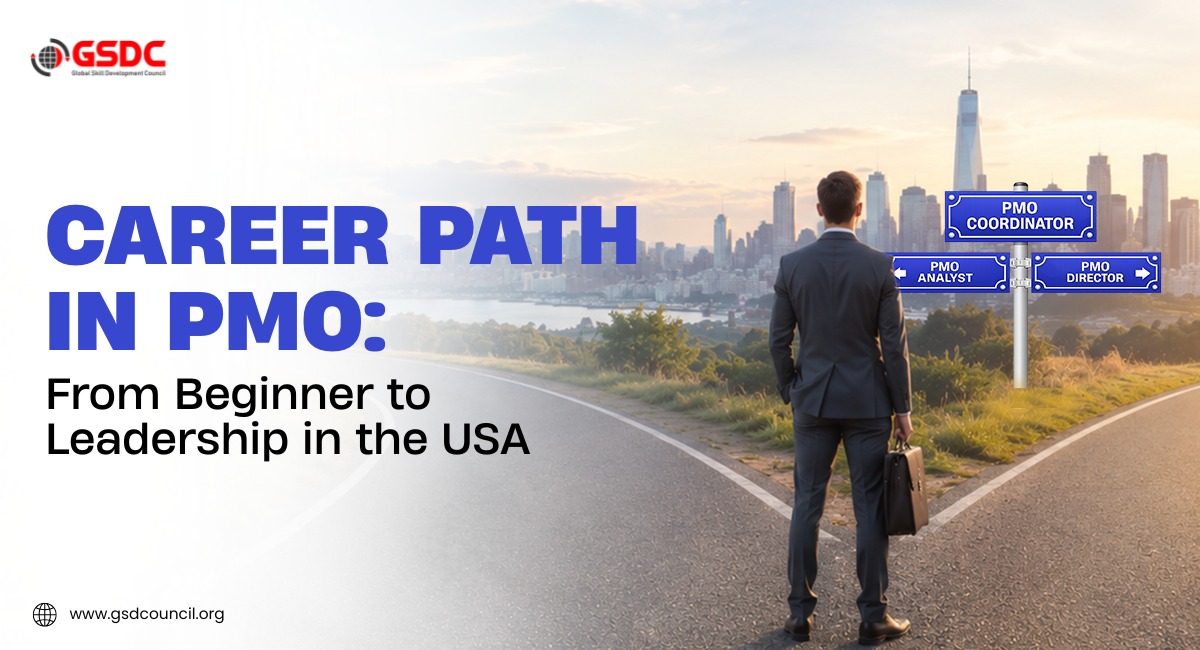
Career Path in PMO: From Beginner to Leadership in the USA
Written by Emily Hilton
- What Is a PMO?
- Why Choose a PMO Career in the USA?
- Understanding the PMO Hierarchy
- PMO Career Path from Beginner to Leadership
- How to Grow in PMO Career
- GSDC Certified PMO Professional: Strengthen Your PMO Career
- Steps to Become PMO Director
- Common Challenges Along the PMO Career Path
- Future of PMO Careers in the USA
- Conclusion
Project Management Offices (PMOs) have evolved from administrative support functions into strategic business units that help organizations deliver projects successfully, manage portfolios, and align initiatives with business goals. As companies across the United States invest more in digital transformation, AI, infrastructure modernization, and enterprise governance, the demand for skilled PMO professionals continues to grow.
If you're planning a PMO career path, understanding how to progress from an entry-level role to executive leadership is essential. Whether you're a recent graduate or an experienced project coordinator, the right combination of technical expertise, business acumen, certifications, and leadership skills can help you build a rewarding project management career path.
This guide explains the PMO career path from beginner to leadership, explores the typical PMO hierarchy, and outlines the steps to become PMO Director in the USA.
What Is a PMO?
A Project Management Office (PMO) is a centralized department responsible for establishing project governance, standardizing project management methodologies, monitoring performance, managing risks, and ensuring projects align with organizational objectives.
Unlike individual project managers who focus on executing specific projects, PMO professionals oversee processes, reporting, resource optimization, portfolio management, and organizational strategy.
Today's PMOs are becoming strategic partners rather than administrative functions, making a PMO career increasingly attractive for professionals interested in both business and project leadership.
Why Choose a PMO Career in the USA?
The United States remains one of the largest markets for project management professionals across industries, including IT, healthcare, finance, manufacturing, government, and construction.
Several factors make a PMO career progression USA highly promising:
- Organizations continue investing in enterprise project governance.
- Digital transformation programs require structured portfolio management.
- AI and automation initiatives need strong project oversight.
- Companies increasingly rely on PMOs to improve project success rates.
According to PMI's Project Management Salary Survey, PMO Directors in the U.S. reported median salaries exceeding $220,000, highlighting the strong earning potential of senior PMO leadership roles.
Understanding the PMO Hierarchy
One of the first things professionals should understand is the PMO hierarchy. While organizations may use different titles, most follow a similar progression.
Career Stage | Primary Focus |
PMO Coordinator / Project Coordinator | Documentation, scheduling, reporting |
PMO Analyst | Metrics, dashboards, governance support |
Project Manager | Project execution and delivery |
Senior Project Manager | Managing large, complex programs |
Program Manager | Coordinating multiple related projects |
Portfolio Manager / PMO Manager | Portfolio governance and resource optimization |
PMO Director | Strategic leadership and enterprise governance |
Head of PMO / VP of PMO | Organizational transformation and executive strategy |
PMI describes a similar evolution where professionals move from project-focused roles into enterprise-level leadership, with PMO Director and executive positions responsible for organizational project governance.
PMO Career Path from Beginner to Leadership
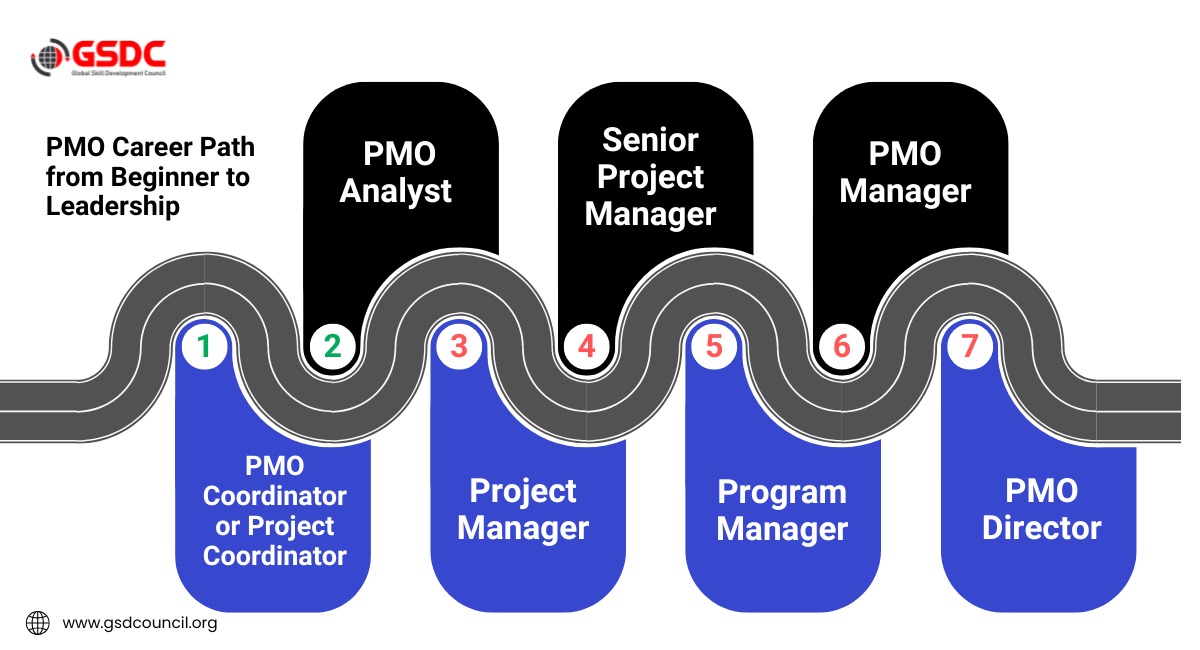
Let's explore the complete PMO career path from beginner to leadership.
Stage 1: PMO Coordinator or Project Coordinator
Most professionals begin their project management career path as coordinators.
Typical responsibilities include:
- Maintaining project documentation
- Updating project schedules
- Tracking budgets
- Organizing meetings
- Preparing project status reports
- Supporting project managers
At this stage, professionals develop organizational discipline, communication skills, and an understanding of project lifecycles.
Skills to Build
- Microsoft Project
- Excel
- Jira
- Documentation
- Communication
- Time management
This role usually provides the foundation for the rest of your PMO career path.
Stage 2: PMO Analyst
The next step in the PMO hierarchy is becoming a PMO Analyst.
Instead of simply supporting projects, analysts begin improving organizational project governance.
Responsibilities include:
- Portfolio reporting
- KPI dashboards
- Risk analysis
- Resource planning
- PMO audits
- Governance compliance
- Executive reporting
Here, professionals learn how projects contribute to organizational strategy.
Essential Skills
- Data analysis
- Power BI
- Excel dashboards
- Reporting automation
- Governance frameworks
- Portfolio metrics
Many organizations also encourage professionals to earn project management certifications at this stage.
Stage 3: Project Manager
Moving into project management is a significant milestone in the project management career path.
Project Managers become responsible for delivering projects within scope, schedule, quality, and budget.
Daily responsibilities include:
- Managing stakeholders
- Risk management
- Vendor coordination
- Resource allocation
- Budget monitoring
- Team leadership
Professionals at this level gain practical experience handling cross-functional teams and business challenges.
Stage 4: Senior Project Manager
Senior Project Managers oversee larger, high-risk initiatives involving multiple departments.
Key responsibilities include:
- Enterprise projects
- Executive stakeholder management
- Multi-million-dollar budgets
- Cross-functional leadership
- Strategic planning
- Mentoring junior project managers
This stage focuses less on project administration and more on leadership and business outcomes.
Stage 5: Program Manager
Program Managers supervise several related projects simultaneously.
Rather than focusing on individual project success, they ensure the entire program delivers business value.
Responsibilities include:
- Benefits realization
- Program governance
- Strategic alignment
- Portfolio coordination
- Organizational change management
Program Managers often work closely with PMOs to align delivery with executive priorities.
Stage 6: PMO Manager
The PMO Manager role represents a major transition from operational management to organizational leadership.
Responsibilities typically include:
- Managing the PMO team
- Standardizing methodologies
- Portfolio governance
- Resource optimization
- Executive reporting
- Process improvement
- PMO maturity initiatives
At this level, professionals begin influencing organizational decision-making instead of managing individual projects.
Stage 7: PMO Director
The final destination for many professionals pursuing a PMO career is becoming a PMO Director.
This role focuses on enterprise-wide strategy rather than project execution.
PMO Directors oversee:
- Portfolio governance
- Organizational transformation
- Investment prioritization
- Executive communication
- Enterprise project standards
- Business strategy alignment
- PMO performance measurement
According to PMI salary data, PMO Directors represent one of the highest-paid leadership positions within project management.
How to Grow in PMO Career
Professionals often ask how to grow in PMO career beyond simply gaining years of experience.
Growth depends on continuously developing expertise across four key areas.
1. Build Strong Project Management Fundamentals
Understand:
- Project lifecycle
- Scheduling
- Cost management
- Risk management
- Agile
- Waterfall
- Hybrid delivery
A solid foundation helps professionals perform effectively at every stage of the PMO career path.
2. Learn Business Strategy
Senior PMO leaders understand business, not just projects.
Develop knowledge in:
- Financial planning
- Portfolio prioritization
- Business case development
- ROI analysis
- Organizational governance
The more business-oriented you become, the faster your PMO career progression USA can accelerate.
3. Improve Leadership Skills
Leadership becomes increasingly important after becoming a Project Manager.
Focus on:
- Conflict resolution
- Negotiation
- Executive communication
- Coaching
- Team motivation
- Stakeholder influence
These soft skills often differentiate future PMO Directors from experienced project managers.
4. Develop Analytical Skills
Modern PMOs rely heavily on data-driven decisions.
Learn:
- Power BI
- Tableau
- Excel
- KPI development
- Portfolio analytics
- Forecasting
Executives increasingly expect PMOs to provide insights rather than just reports.
GSDC Certified PMO Professional: Strengthen Your PMO Career
Earning a specialized PMO certification is one of the most effective ways to accelerate your PMO career path. The GSDC Certified PMO Professional certification is designed for project managers, PMO analysts, coordinators, and aspiring PMO leaders who want to develop expertise in project governance, portfolio management, PMO frameworks, and strategic business alignment.
The certification equips professionals with practical knowledge of PMO operations, governance models, performance measurement, resource management, risk management, and best practices for managing enterprise projects. It also helps learners understand how PMOs contribute to organizational strategy, improve project success rates, and drive business value.

Benefits of GSDC Certified PMO Professional Certification
- Builds a strong PMO foundation by covering project governance, PMO frameworks, and industry best practices.
- Enhances project governance skills to establish standardized processes, improve compliance, and drive project consistency.
- Develops portfolio management expertise for prioritizing projects, allocating resources, and aligning initiatives with business goals.
- Strengthens strategic decision-making through performance measurement, KPIs, reporting, and PMO metrics.
- Improves risk and resource management by equipping professionals to identify risks, optimize resources, and support successful project delivery.
Whether you are beginning your project management career path or planning your PMO career progression USA, this certification provides the knowledge and confidence needed to support organizational transformation and advance toward leadership roles.
Steps to Become PMO Director
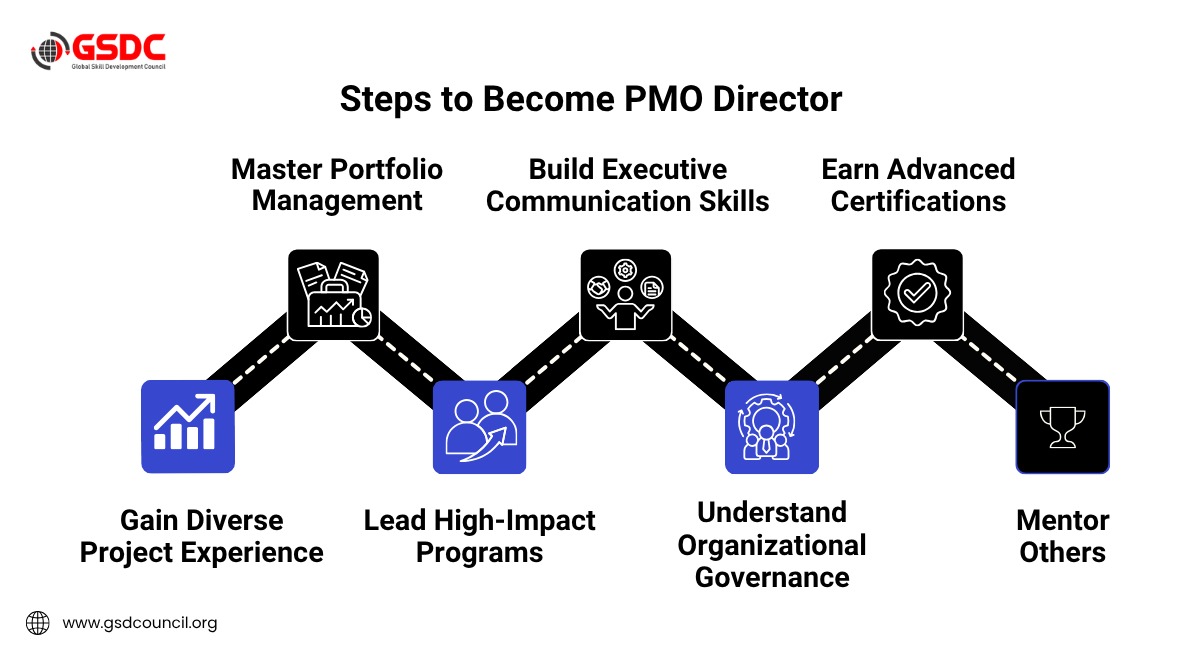
If your long-term goal is executive leadership, these are the practical steps to become PMO Director.
Gain Diverse Project Experience
Work across industries, project types, and organizational functions.
Master Portfolio Management
Learn how projects contribute to enterprise strategy rather than individual deliverables.
Lead High-Impact Programs
Large transformation initiatives provide valuable leadership experience.
Build Executive Communication Skills
PMO Directors regularly present to C-suite executives and board members.
Understand Organizational Governance
Become familiar with enterprise risk management, compliance, and strategic planning.
Earn Advanced Certifications
Professional certifications demonstrate commitment to continuous learning and leadership excellence.
Mentor Others
Developing future project managers showcases leadership capability and prepares you for executive roles.
Common Challenges Along the PMO Career Path
Every PMO career progression USA includes challenges.
Common obstacles include:
- Managing organizational change
- Balancing governance with agility
- Handling executive expectations
- Managing conflicting stakeholder priorities
- Demonstrating PMO value
- Adapting to evolving technologies like AI
Successful professionals embrace continuous learning and remain adaptable as business environments evolve.
Future of PMO Careers in the USA
The future of the PMO career is becoming increasingly strategic.
Modern PMOs are expanding beyond project governance into areas such as:
- AI project governance
- Digital transformation
- Portfolio optimization
- Data analytics
- Strategic resource planning
- Enterprise change management
Recent compensation research also shows growing opportunities across PMO leadership roles in the U.S., particularly for professionals combining governance expertise with strategic and digital transformation capabilities.
Organizations are looking for leaders who can connect projects with measurable business outcomes rather than simply monitor schedules.
Conclusion
A successful PMO career path is built through continuous learning, hands-on experience, and strong leadership skills. By understanding the PMO hierarchy, gaining expertise in project and portfolio management, and earning relevant certifications, professionals can steadily advance from entry-level roles to leadership positions.
As organizations across the USA continue prioritizing strategic project governance, the demand for skilled PMO leaders is expected to grow. Following the right steps to become PMO Director and consistently developing both technical and business capabilities will help you achieve long-term success and unlock rewarding opportunities in your project management career path.

Related Certifications
Stay up-to-date with the latest news, trends, and resources in GSDC
If you like this read then make sure to check out our previous blogs: Cracking Onboarding Challenges: Fresher Success Unveiled
Not sure which certification to pursue? Our advisors will help you decide!