Project Management Officer (PMO): Roles, Skills, and Career Guide for 2026
Written by Matthew Hale
- What Is a PMO and a Project Management Officer?
- Project Management Officer Role
- Responsibilities of Project Management Officer
- PMO Best Practices for High-Performing Teams
- PMO Examples in Real Organizations
- Project Management Officer Salary Trends 2026
- Is Project Management a Good Career in 2026?
- Project Management Career Path and Goals
- Make Your PMO More Effective
- Final Thoughts
As we see our world going through digital transformation faster than ever before, organizations have no choice but to make sure that the way their projects are managed is beyond question. As per one survey conducted by PwC, 97% of organizations understand project management as a key performance indicator of business. At the heart of all processes of project management lies the Project Management Office (PMO).
If you’ve been trying to understand what are PMO, or why some organizations consistently deliver successful projects while others struggle, the answer often lies in how structured and well-governed their project environments are.
Whether you're considering a career shift, exploring project management career information, or defining your project management career goals for 2026, this guide covers everything you need to know. From understanding the project management officer role and the core responsibilities of project management office, to exploring salary insights and the most relevant PMO certification options, this is your complete PMO guide.
What Is a PMO and a Project Management Officer?
Project Management Office is a function in organizations that is responsible for defining and enforcing project management standards. PMOs make sure that projects are consistently, efficiently, and effectively planned, implemented, and managed.
In other words, what is PMO? The concept is defined as the spine of the whole process of project implementation and delivery.
The PMO provides this kind of organizational spine through creating standardized procedures, resource management, monitoring performance, etc.
On an individual basis, what comes next is understanding what is a project management officer?
Project management officers provide oversight over the projects within the created infrastructure. In case someone wonders what is a project management officer’s function, the list includes:
- Managing scope, timelines, and coordination
- Ensuring projects align with business objectives
Project Management Officer Role
The project management officer role has come a long way since its inception. Initially involved mostly in technical supervision, it has grown into a function that demands both a strategic approach and proper stakeholder management.
A modern-day Project Management Officer oversees one or several projects, ensuring they align with corporate priorities and remain consistent in implementation. It acts as an interface connecting top management, project teams, and stakeholders by adding clarity and direction throughout the entire process.

If you're asking, what does a project management officer do exactly, the answer is simple—they ensure projects are delivered efficiently, aligned with business objectives, and executed with consistency from start to finish.
Responsibilities of Project Management Officer
The understanding about project management officers' responsibilities makes it possible to comprehend the significance of PMOs for achieving project success consistently. In this regard, their duties involve all the processes that take place throughout the project life cycle.
Creation of a project framework and definition of its scope
A project management officer defines the methods that should be used within the project and its scope. Thus, it guarantees that all the initiatives are aligned with business objectives from the very beginning.
Development of resource, time, and budget management plans
It is aimed at planning project deliverables, resources required, timeline, and costs necessary to carry out a project successfully.
Progress monitoring and risk management
Continuous progress tracking, risk identification, and the implementation of the needed measures allow the PMO to control projects.
Alignment and stakeholder communication
It is responsible for keeping alignment between the business strategy and projects, as well as communication with stakeholders.
Learning resources and frameworks provided by different organizations, such as the Global Skill Development Council (GSDC) demonstrate how the list of responsibilities evolves nowadays.
Such responsibilities contribute to making better decisions and improving predictability.
PMO Best Practices for High-Performing Teams
Implementation of appropriate PMO best practices distinguishes successful teams from poor performers characterized by inefficiency and misalignment. Properly designed PMOs emphasize not only control but enable consistent and scalable success of projects.
Align projects with business strategy
It is important to ensure that all projects serve organizational objectives; otherwise, even successful projects do not provide any added value.
Standardize processes with flexibility
While standardization brings certain benefits to project management practices, PMOs that incorporate some flexibility into processes perform much better.
Incorporate tools and capabilities
Proper tools contribute to improved project management but depend on the extent to which teams understand how to utilize them.
Build a culture of transparency
It is critical to promote honest reporting since it allows for detecting possible risks quickly and implementing corresponding measures.
Evaluate and enhance performance continuously
Monitoring metrics enables PMOs to optimize their activities and become more efficient.
Developing these capabilities often requires structured learning, and professionals pursuing a Certified PMO Professional credential typically gain deeper exposure to these best practices in real-world contexts.
Strong PMO best practices ultimately lead to better visibility, stronger governance, and more predictable project outcomes.
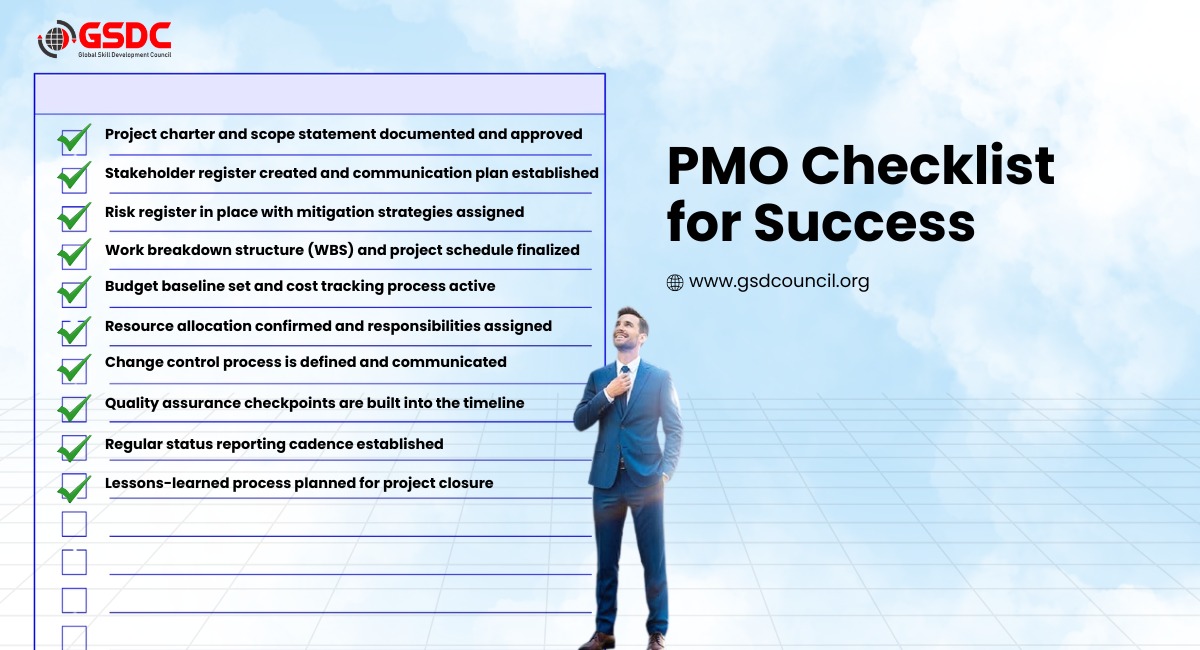
PMO Examples in Real Organizations
Examining some examples of real-life PMOs can aid in highlighting how the role of the PMO changes within different industries, yet keeps its core principles intact.
Some typical PMO examples of include:
- IT organizations leveraging PMOs in managing complicated lifecycles of software development, as well as delivering projects using agile or hybrid models
- Construction companies use PMOs to effectively monitor costs and risks
- Consulting firms using PMOs to provide standardized methods of project execution
It might be seen that despite varying context, the examples above show a trend of consistency in project execution.
These PMO examples demonstrate how adaptable and valuable the PMO function is in driving reliable and scalable project outcomes.
Project Management Officer Salary Trends 2026
One of the most frequently asked questions is about project management officer salary as the remuneration shows the importance of the job.
Depending on experience and industry, the project management officer salary increases for professionals who progress through the levels.
It can be stated that certification is an integral part of being a project manager because it helps increase salary as certified individuals are able to manage projects better.
In conclusion, project management officer salary makes this job choice promising and profitable.
Is Project Management a Good Career in 2026?
Project management is still recognized as one of the most robust and profitable career paths available. As more businesses adopt a project management mindset, the demand for individuals capable of handling complex situations and delivering results will only increase.
Some of the key benefits include:
Universally demanded skills
Project management skills are needed by every organization and across all sectors, including health care, information technology, finance, and construction, meaning that the skills learned can be used anywhere.
Career path opportunities
There are well-defined career paths in project management that allow employees to develop a plan of action that aligns with their desired project management career goals.
High pay
Certified individuals can earn salaries well above average.
High impact
Project managers play a pivotal role in translating organizational strategy into execution.
For anyone who questions whether or not a project management career path would be a good choice, the answer may lie in the combination of strategic thinking, leadership, and execution skills that such a role requires.
Project Management Career Path and Goals
A clear vision of what needs to be done and what skills should be acquired is a key factor for building an effective career in project management. Effective project management career goals of project managers lead them to change from an operational to a strategic management function.
Well-planned career path
Career options can include managing complex projects, managing programs and portfolios, or becoming an industry specialist.
Developing project management skills
It is essential to understand the significance of these skills and why project management skills are important. Communication skills, risk management, and resource management are some of those.
Market demands changing
Strong project management career information highlights a clear trend—demand is increasing, expectations are evolving, and professionals who continuously build their capabilities stay competitive.
Make Your PMO More Effective
The Global Skill Development Council (GSDC) equips professionals with tools that make it easier to establish and grow effective PMOs.
Becoming a Certified PMO Professional enables you to transition from project management to creating consistent and business-aligned results.

Final Thoughts
The importance of having an organized and efficient PMO cannot be overstated, as it becomes a significant catalyst that influences the manner in which projects are executed by companies today. As you look into what is PMO or examine the significance of project management officers, you will notice that their influence keeps growing.
As companies require more efficiency and effectiveness in executing projects, the demand for professionals with these qualities is likely to increase, thereby emphasizing the importance of project management within businesses today.
With the right combination of qualifications, experience, and even PMO certification, professionals can find themselves at the heart of this change, making their careers more fulfilling and rewarding in many ways.
Subscribe to Our Newsletter
Stay up-to-date with the latest news, trends, and resources in GSDC

Related Certifications
Frequently Asked Questions
Stay up-to-date with the latest news, trends, and resources in GSDC
If you like this read then make sure to check out our previous blogs: Cracking Onboarding Challenges: Fresher Success Unveiled
Not sure which certification to pursue? Our advisors will help you decide!