Is a PMO Certification Worth It? Honest ROI Analysis
Written by Emily Hilton
If you're thinking about getting a PMO certification, you've probably asked yourself one simple question.
Is it really worth it?
After all, earning a certification takes time, effort, and money. Before making that investment, you want to know whether it will actually help your career.
The short answer is yes, but not for the reasons most people think.
A PMO certification is not just another certificate to add to your resume. It helps you understand how successful organizations manage projects, reduce risks, and achieve business goals. More importantly, it prepares you for the way project management is changing. Today, companies expect project professionals to do much more than track deadlines. They want people who can improve processes, support business decisions, and work with modern technologies like AI.
This is exactly why PMO professionals are becoming more valuable across industries.
In this blog, we'll understand what a PMO does, why a project management office certification is becoming more valuable today, whether the investment is really worth it, and how to choose the best PMO certification for your career.
Why a PMO Certification Is More Valuable Today
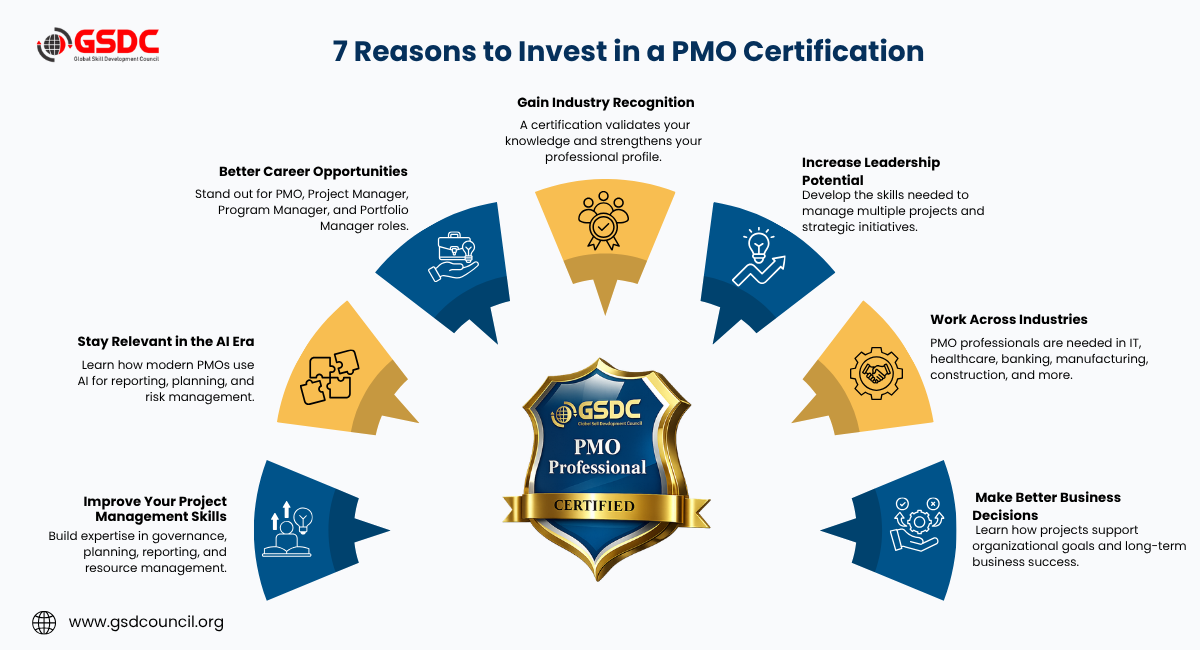
1. Companies Need Better Project Management Today
Businesses today are handling more projects than they used to handle before. They are adopting AI, moving to the cloud, launching new products, and expanding into new markets at the same time. Managing all these projects without a proper system can lead to delays, higher costs, and confusion. This is why organizations are strengthening their project management offices (PMOs). They need professionals who can bring structure and improve project delivery. A PMO certification teaches you these skills and helps you understand how successful organizations manage multiple projects. That makes it a valuable investment for anyone planning a career in project management.
Why this makes a PMO certification worth it:
- Companies are investing more in PMOs: Organizations are creating dedicated PMO teams to improve project success and support business growth.
- Project governance is now a priority: Businesses want professionals who can create standard processes, manage risks, and keep projects aligned with company goals.
- Complex projects need skilled professionals: Managing multiple projects requires knowledge of planning, reporting, budgeting, and stakeholder management.
- PMO skills improve decision-making: Certified professionals know how to track project performance and provide leaders with the right information at the right time.
- The demand for PMO professionals continues to grow: As organizations take on more strategic projects, professionals with PMO knowledge are becoming increasingly valuable.
2. AI Is Changing How PMO Teams Work
AI has changed the way PMO teams work. Earlier, project managers spent hours updating Excel sheets, preparing reports, and collecting project updates from different teams. Today, much of this work can be done in minutes with AI tools. Reports are created automatically, dashboards update in real time, and risks can be identified much earlier, this saves time and allows PMO professionals to focus on solving problems instead of doing repetitive work. A modern PMO course helps you understand both traditional PMO practices and the growing role of AI, making your skills more valuable in today's workplace.
Why this makes a PMO certification worth it:
- AI is changing project management, not replacing it: Routine tasks are becoming automated, but organizations still need professionals who can make decisions, solve problems, and guide projects successfully.
- Companies want professionals who can work with AI tools: Understanding AI-powered dashboards, reporting tools, and project management software is becoming an important workplace skill.
- PMO roles are becoming more strategic: With AI handling repetitive work, PMO professionals can spend more time on governance, planning, stakeholder communication, and business decisions.
- Modern certifications prepare you for the future: A good PMO certification introduces current project management practices and helps you understand how AI fits into the project lifecycle.
- Learning AI today gives you a competitive advantage: As more organizations adopt AI in project management, professionals who understand both PMO fundamentals and modern technology will be better prepared for future opportunities.
3. Certification Helps You Stand Out
The job market has become more competitive than ever. Many professionals have similar qualifications and work experience, making it harder to stand out. A certified PMO professional credential gives employers more confidence in your skills. It shows that you understand project governance, reporting, risk management, and PMO best practices. While certification alone won't guarantee a job, it can make your profile stronger and improve your chances of getting shortlisted. It also shows that you are serious about learning and growing in your career. For many employers, that commitment makes a real difference during the hiring process.
Why this makes a PMO certification worth it:
- It validates your knowledge: A certification shows that you have learned industry-recognized PMO practices instead of relying only on on-the-job experience.
- It gives your resume an advantage: When employers compare candidates with similar experience, a recognized certification can help your profile stand out.
- It builds trust with recruiters: Hiring managers often see certified professionals as candidates who are committed to learning and professional growth.
- It prepares you for better interviews: A strong understanding of PMO concepts helps you answer interview questions with more confidence and clarity.
- It supports long-term career growth: Certification is not just for getting your next job. It also helps you prepare for bigger responsibilities and future leadership roles.
4. PMO Skills Are Useful in Every Industry
One of the biggest benefits of a project management office certification is that the skills are useful in almost every industry. Every organization runs projects, whether it is in healthcare, banking, IT, manufacturing, retail, construction, or government. These projects all need planning, coordination, risk management, and reporting. The basic principles remain the same even if the industry changes. This gives you the flexibility to explore different career opportunities throughout your professional journey. Instead of being limited to one sector, you can apply your PMO knowledge wherever strong project management is needed.
Why this makes a PMO certification worth it:
- Your skills are transferable: PMO knowledge is not limited to one industry. You can apply the same principles across different sectors and roles.
- You have more career options: If you want to switch industries in the future, your PMO skills will still be relevant and valuable.
- Organizations of all sizes need PMOs: From startups to multinational companies, every business benefits from structured project management and governance.
- It offers better job security: Project management is a core business function. As long as organizations continue to run projects, there will be demand for skilled PMO professionals.
- You can build a global career: PMO practices follow internationally accepted standards, making it easier to explore opportunities with organizations around the world.
5. It Helps You Grow Into Leadership Roles
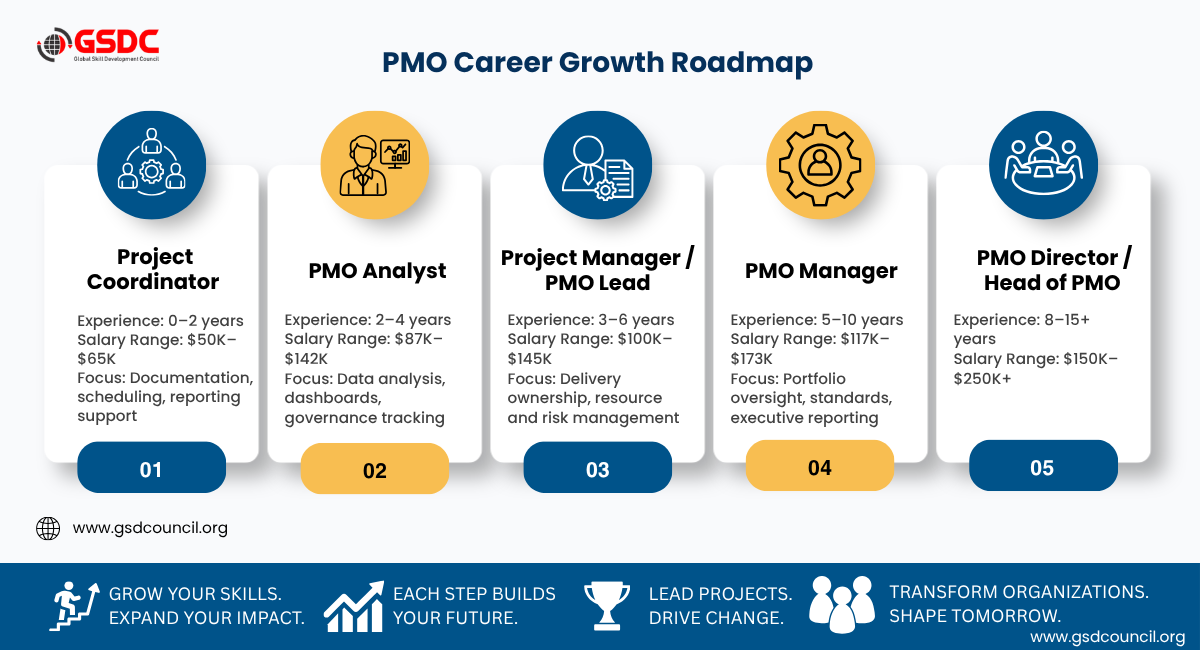
Managing a single project is very different from managing multiple projects across an organization. As you grow in your career, companies expect you to think beyond deadlines and daily tasks. They want professionals who understand business goals, governance, resource planning, and project priorities. A PMO certification helps you develop this broader perspective. It prepares you for roles such as PMO Manager, Program Manager, or Portfolio Manager. Instead of only managing projects, you learn how to support business decisions and lead projects that create long-term value for the organization.
Why this makes a PMO certification worth it:
- It prepares you for bigger responsibilities: Instead of managing one project, you learn how to oversee multiple projects and support business priorities.
- You develop leadership skills: PMO professionals work closely with senior leaders, project managers, and stakeholders, helping improve communication and decision-making.
- It opens the door to senior roles: A strong PMO foundation can help you progress to roles like PMO Manager, Program Manager, Portfolio Manager, or Project Director.
- You learn to think strategically: Certification helps you understand how projects contribute to business growth, making you a more valuable professional.
- Leadership roles often come with better opportunities: As your responsibilities grow, you become eligible for higher-impact roles, better career progression, and increased earning potential.
6. The Long-Term Benefits Are Worth the Investment
Many professionals think about the PMO certification cost before enrolling, and that's completely understandable. Every certification requires both time and money. However, the value of a certification should be measured over the long term. The knowledge you gain stays with you throughout your career. It can improve your confidence, strengthen your resume, and help you qualify for better opportunities. While certification alone won't guarantee a promotion, it gives you skills that employers continue to value. Over time, those skills often provide much greater returns than the initial investment you make.
Why this makes a PMO certification worth it:
- The skills stay with you for life: Unlike software or tools that change over time, PMO principles and governance practices remain valuable throughout your career.
- It offers value beyond your current job: The knowledge you gain can help you perform better in future roles, new industries, and leadership positions.
- It improves your professional confidence: A stronger understanding of PMO concepts makes it easier to contribute to meetings, solve problems, and make informed decisions.
- The return grows over time: You may not see immediate results, but the certification can support promotions, new job opportunities, and long-term career growth.
- It's an investment in yourself: The money you spend today can lead to years of learning, career development, and better professional opportunities, making it a worthwhile investment.
7. You Don't Need Years of Experience to Get Started
Many people believe PMO certifications are only for experienced project managers, but that is no longer true. Today, there are excellent options for PMO certification for beginners that teach the fundamentals in a simple and structured way. Whether you're a project coordinator, business analyst, team lead, recent graduate, or someone planning a career in project management, you can benefit from learning PMO concepts early. Starting now helps you build a strong foundation and prepares you for bigger responsibilities in the future. The earlier you begin, the more opportunities you'll have to apply what you learn.
Why this makes a PMO certification worth it:
- You don't have to wait to build your skills: Learning PMO concepts early helps you understand how projects are planned, managed, and delivered from the very beginning.
- It creates a strong career foundation: A certification introduces you to project governance, risk management, reporting, and other essential PMO practices.
- It's suitable for professionals from different backgrounds: Whether you work in operations, IT, business analysis, or project coordination, PMO knowledge can support your career growth.
- You gain confidence before taking on bigger roles: Understanding PMO principles early makes it easier to handle new responsibilities as your career develops.
- Starting early gives you a long-term advantage: The more experience you gain after certification, the more valuable your knowledge becomes, helping you grow faster than learning everything on the job.
Want to Explore a Career in PMO?
Whether you're just starting out or aiming for a leadership role, having a clear roadmap can help you grow faster.
Honest ROI Analysis: Is a PMO Certification Really Worth Your Money?
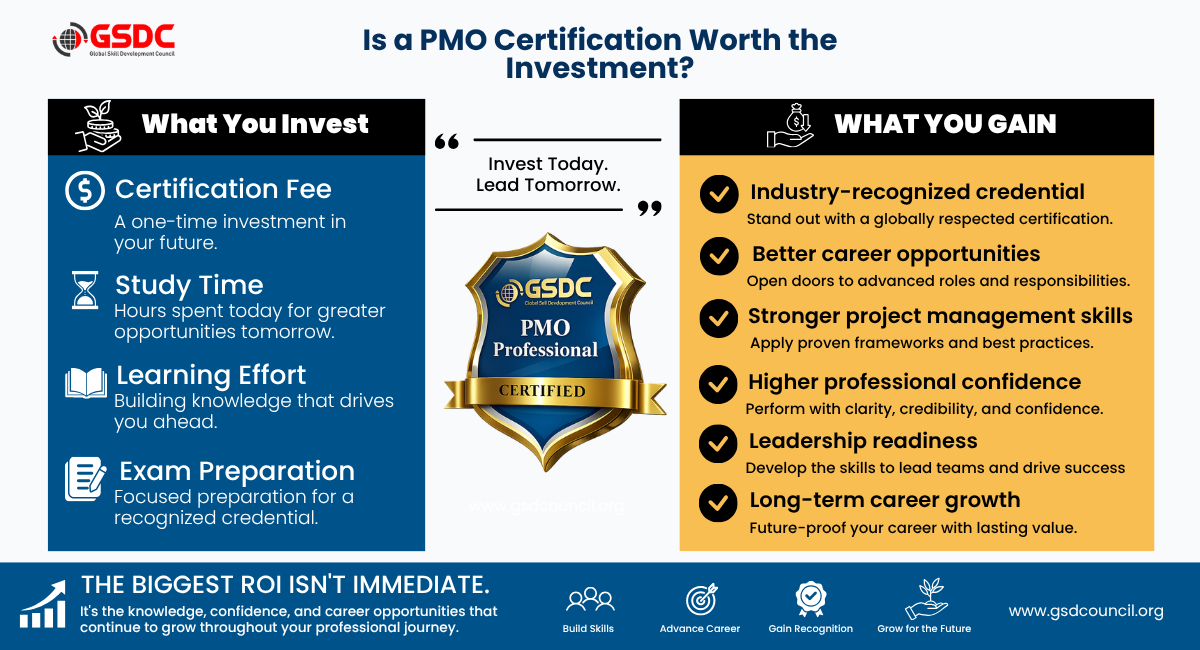
When people think about the return on investment (ROI) of a certification, the first thing that usually comes to mind is salary. While earning potential is certainly important, it's only one part of the picture. The real value of a PMO certification goes beyond a pay raise. It helps you build practical skills, improve your professional credibility, prepare for leadership roles, and stay relevant in a rapidly changing project management landscape.
A certification is not a shortcut to success, and it won't guarantee an immediate promotion or a higher-paying job. Your career growth will always depend on a combination of your experience, performance, communication skills, and willingness to keep learning. However, a project management office certification gives you a structured foundation that can help you progress faster and perform more confidently in your role.
The best way to evaluate ROI is to look at both the investment you make and the long-term benefits you receive.
Your Investment | What You Gain |
| Certification fee | A globally recognized credential that strengthens your professional profile |
| Study time | A structured understanding of PMO frameworks, governance, and best practices |
| Exam preparation | Greater confidence during interviews and professional discussions |
| Learning new concepts | Practical skills that can be applied across different projects and industries |
| Continuous learning | Better readiness for leadership and strategic project management roles |
Financial ROI
A PMO certification should not be viewed as a quick way to increase your salary. Instead, think of it as an investment that improves your long-term earning potential. Certified professionals often become eligible for roles with greater responsibilities, such as PMO Manager, Portfolio Manager, or Program Manager, which can lead to better compensation over time. The certification also helps you stand out in a competitive job market where employers increasingly value verified skills.
What you gain financially:
- Better chances of qualifying for higher-level PMO roles.
- Stronger profile when applying for new job opportunities.
- Increased long-term earning potential through career growth.
- Greater value in organizations that prioritize certified professionals.
Professional ROI
One of the biggest returns comes from the knowledge and confidence you gain. Instead of relying only on workplace experience, you learn globally accepted PMO practices that can be applied in real projects. This makes it easier to communicate with stakeholders, manage governance, and contribute more effectively to project success.
A certification also demonstrates your commitment to continuous learning, something employers highly value in today's rapidly evolving workplace.
Professional benefits include:
- Stronger understanding of PMO frameworks and governance.
- Improved confidence during interviews and client meetings.
- Better decision-making and problem-solving skills.
- Higher professional credibility within your organization.
- Recognition as someone committed to career development.
Long-Term ROI
The workplace is evolving quickly. Organizations are adopting AI, automation, cloud technologies, and data-driven decision-making, all of which are changing how projects are managed. Professionals who continue learning are better prepared to adapt to these changes than those who rely only on past experience.
A PMO certification helps build skills that remain valuable throughout your career. Whether you stay in project management or move into portfolio management, program management, consulting, or leadership positions, the knowledge you gain continues to support your professional growth.
Long-term advantages include:
- Future-ready skills that stay relevant as project management evolves.
- Better preparation for leadership and strategic roles.
- Flexibility to work across multiple industries.
- Stronger adaptability to AI-enabled project environments.
- Continuous career growth through recognized expertise.
So, Is a PMO Certification Worth It?
If you're expecting a certification to transform your career overnight, you may be disappointed. No certification can replace hands-on experience, consistent performance, or a willingness to learn.
However, if you're looking at your career over the next five to ten years, the picture changes completely.
A PMO certification gives you structured knowledge, improves your credibility, helps you stand out in a competitive job market, and prepares you for roles with greater responsibility. When combined with practical experience, it becomes a valuable investment that continues to deliver returns throughout your career.
The real ROI isn't just the certificate you earn. It's the skills you build, the confidence you gain, and the opportunities that become available as you grow into a more capable project management professional.
How to Choose the Right PMO Certification
With so many certification options available today, choosing the right one can feel overwhelming. Every provider promises career growth and better opportunities, but not every certification offers the same value. The best PMO certification is one that matches current industry needs, provides practical knowledge, and is recognized by employers.
Before enrolling in any PMO course, take some time to compare your options. A good certification should help you build real-world skills that you can apply in your job, not just prepare you to pass an exam.
What to Look for in a PMO Certification
- Industry-recognized certification: Choose a certification that is respected by employers and accepted across different industries. Recognition adds credibility to your professional profile.
- Updated curriculum: Project management is evolving with AI, automation, Agile practices, and digital transformation. Make sure the certification covers modern PMO concepts, not outdated methods.
- Practical learning approach: The best certifications focus on real business scenarios, governance frameworks, portfolio management, and decision-making instead of only theoretical concepts.
- Flexible learning options: If you're a working professional, choosing a PMO certification online allows you to learn at your own pace without affecting your work schedule.
- Good value for your investment: Don't choose a certification based only on price. Compare the curriculum, recognition, learning resources, and long-term career value before making a decision.
Why Choose the GSDC Certified PMO Professional Certification?
If you're looking for a certification that combines practical learning with global recognition, the GSDC PMO certification is a strong choice.
Designed by industry experts, this certification helps professionals understand how modern PMOs operate and how they contribute to organizational success. Instead of focusing only on theory, the program covers practical concepts that professionals can apply in real project environments.
Whether you're already working in project management or planning to enter the field, this certification helps you build a solid understanding of governance, portfolio management, project controls, performance measurement, and strategic planning.
What Makes GSDC Stand Out?
- Industry-focused curriculum: The certification covers the latest PMO practices, governance frameworks, project portfolio management, risk management, and performance measurement.
- Learn practical, job-ready skills: The program is designed to help professionals apply PMO concepts in real workplace situations rather than simply memorizing theory.
- Flexible online learning: The PMO certification online format allows professionals to learn at their own pace, making it ideal for busy schedules.
- Suitable for different experience levels: Whether you're looking for a PMO certification for beginners or want to strengthen your existing project management skills, the program is designed for a wide range of professionals.
- Globally recognized credential: A GSDC certification is recognized in 190+ countries, and it demonstrates your commitment to professional development and helps strengthen your profile for opportunities across industries.
- Prepare for future career growth: The certification equips you with the knowledge needed for roles such as PMO Analyst, PMO Manager, Program Manager, Portfolio Manager, and Project Management Consultant.
Final Thoughts
Project management is changing rapidly, and so is the role of the Project Management Office. Today's PMOs are expected to do much more than monitor project progress. They help organizations improve governance, manage risks, align projects with business goals, and make better strategic decisions. As businesses continue investing in AI, digital transformation, and enterprise-wide project management, professionals with strong PMO skills will remain in demand.
So, is a PMO certification worth it today?
For most professionals, the answer is yes.
If you're planning to build a successful future in project management, choosing the right project management office certification is an important first step. And if you're looking for a globally recognized program that combines practical learning with industry-relevant knowledge, the GSDC Certified PMO Professional certification is an excellent place to begin your journey.

Related Certifications
Frequently Asked Questions
Yes, for most professionals. It builds structured governance and portfolio skills that employers actively look for, and certified professionals typically qualify for higher-responsibility roles faster than those without one.
Yes. Many programs are built specifically for PMO certification for beginners and teach core concepts from the ground up. You do not need prior PMO experience to start, though some project or business exposure helps you apply the concepts faster.
Yes. Organizations are running more concurrent projects than ever, and structured project governance has become a business priority rather than a nice-to-have. Demand for trained PMO professionals is rising across industries like IT, healthcare, banking, and manufacturing.
No, but it is changing what the job looks like. AI is automating repetitive tasks like status reporting and dashboard updates, which frees PMO professionals to focus on decision-making, risk management, and stakeholder communication instead of manual admin work.
Look for one that is globally recognized, vendor-neutral, and built around real PMO governance rather than general project management theory. The GSDC Certified PMO Professional certification is a strong option here, recognized in 190-plus countries and designed around practical, job-ready skills like portfolio management, risk governance, and performance reporting, so you're not just learning concepts you'll forget after the exam.
It can, though not instantly. Certified professionals become eligible for higher-paying roles like PMO Manager or Program Manager, and certification helps you stand out when employers compare similar candidates.
Most PMO certification programs take a few weeks to a few months, especially if they are self-paced. This is much faster than a traditional degree, which makes it easier to fit around a full-time job.
Most PMO certifications do not require a specific degree or years of experience to enroll. A background in project coordination, business analysis, operations, or IT is helpful, but many programs are open to career switchers and recent graduates.
Common roles include PMO Analyst, PMO Coordinator, PMO Manager, Program Manager, Portfolio Manager, and Project Management Consultant. The exact role depends on your existing experience level, but the certification applies to entry-level, mid-career, and leadership positions alike.
Pay varies quite a bit by role level, industry, and location, but general PMO roles in the US currently average around $150,000 a year, with a typical range of roughly $113,000 to $201,000. Entry-level PMO Analyst roles tend to average closer to $110,000, while PMO Manager roles average between $117,000 and $139,000, rising higher at senior and director levels.
Stay up-to-date with the latest news, trends, and resources in GSDC
If you like this read then make sure to check out our previous blogs: Cracking Onboarding Challenges: Fresher Success Unveiled
Not sure which certification to pursue? Our advisors will help you decide!