HR Trends 2026: 10 Key Trends Shaping the Future of HR
Written by Matthew Hale
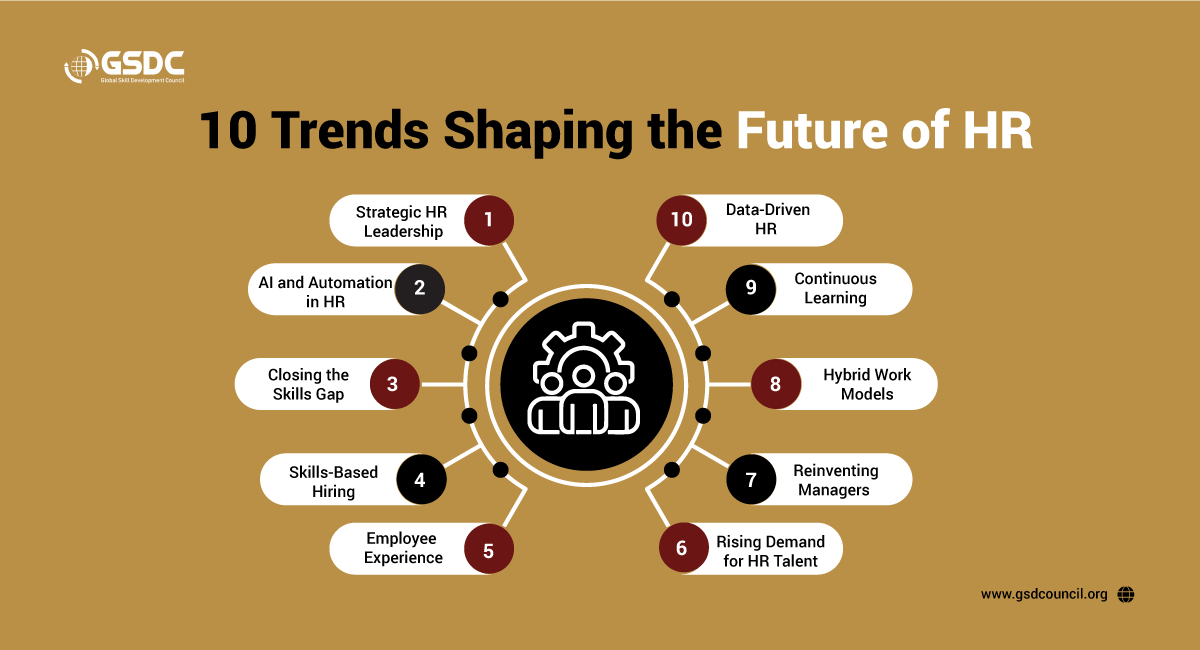
- 1. HR Is Becoming a Strategic Business Function
- 2. AI and Automation Are Reshaping HR Operations
- 3. The Skills Gap Is Becoming a Major HR Challenge
- 4. Skills-Based Hiring Is Replacing Degree-Based Hiring
- 5. Employee Experience Is a Strategic Priority
- 6. Data-Driven HR Decision Making Is Growing
- 7. Continuous Learning and HR Professional Certification
- 8. Remote and Hybrid Work Are Redefining HR Practices
- 9. Managers Are Being Reinvented
- 10. Demand for Skilled HR Professionals Is Rising
- Preparing for the Future of HR
- Advance Your HR Career with Professional Certification
- Conclusion
Are structures or flexibility more important for organizations? Is technology a replacement for human labor or a means of augmenting it? Are control or trust more important for leaders?
These are some of the questions that are increasingly defining the way companies manage their talent and leadership. In HR trends 2026, companies are no longer just managing these trade-offs but are instead reaching a point where technology, workforce, and leadership decisions will have a direct impact on the future of HR.
For every HR professional, this shift is expanding expectations. The role now demands stronger HR skills, deeper human resource skills, and the ability to navigate constant change.
According to insights gained through Deloitte's Global Human Capital study, companies are rethinking the way work, leadership, and talent strategies are operating.
For professionals pursuing a human resource job or planning their HR career path, understanding these latest HR trends is essential.
Below are the top HR trends shaping the HR future.
1. HR Is Becoming a Strategic Business Function
One of the biggest human resource trends is the transition from the administrative role of human resources to a more strategic leadership position.
Currently, the human resources functions are expected to contribute to business strategy, organizational transformation, etc. This shift is redefining what is an HR professional in modern workplaces is.
No longer are human resources professionals only concerned with organizational policies, processes, etc. Instead, they are helping shape the organizational culture, leadership, etc.
As a result, strategic thinking is becoming one of the most important skills required for human resources professionals.
Key responsibilities now include:
- Aligning HR strategies with business goals
- Supporting leadership and talent development
- Improving employee engagement and workplace culture
2. AI and Automation Are Reshaping HR Operations
The use of artificial intelligence is changing how human resource teams handle workforce planning and employee engagement.
According to Gartner, organizations that use AI technology are changing how human resource teams handle operations. The study suggests that by 2030, up to 50% of human resource operations could be automated or carried out by AI agents. The use of AI technology is a key aspect that demonstrates how technology is changing the future of human resource operations.
As part of these latest HR trends, HR professionals need to develop new capabilities, including:
- Using AI-powered human resource platforms
- Understanding workforce data and human resource analytics
- Managing digital workforce systems
The Certified Human Resources (HR) Professional Certification program is a key course that can help human resource teams acquire the skills and responsibilities that human resource teams need in modern organizations.
3. The Skills Gap Is Becoming a Major HR Challenge
One of the most important HR trends 2026 is the skills gap that has become a major issue on a global level.
Recent research has shown that 66% of managers and executives believe that many new recruits are not fully prepared for the workforce.
The skills gap has become a major challenge for organizations that are seeking to address the issue by hiring the best workforce and providing them with the necessary skills for development.
As a result, HR teams must focus on strengthening key HR skills and human resource skills, such as:
- Workforce planning and talent development
- Data-driven HR decision making
- Leadership and employee engagement
- Continuous learning and skill development
Organizations such as the Global Skill Development Council (GSDC) support this shift by promoting learning programs that help professionals build the skills required for human resources and advance their HR career path.
4. Skills-Based Hiring Is Replacing Degree-Based Hiring
Organizations are increasingly focusing on skills rather than qualifications.
This is one of the most impactful top HR trends, as companies are now focusing on skills and flexibility during hiring processes.
Many organizations are also asking an important question: what HR skills are most in demand?
Some of the most valuable skills required for human resources include:
- Communication and leadership
- Data-driven decision making
- Workforce analytics
- Employee experience design
These human resource skills are becoming extremely important for HR professionals who are ready to shape the future of HR.
5. Employee Experience Is a Strategic Priority
The employee experience has become a key priority for many HR organizations.
Organizations are investing more in their cultures and in programs that focus on employee well-being and career development. According to research, improving employee engagement and experience remains a top priority for HR leaders worldwide.
As a result, designing better workplace experiences has become an important part of HR skills and responsibilities.
HR teams are focusing on areas such as:
- Improving employee engagement and communication
- Supporting employee well-being and work-life balance
- Creating career growth opportunities for employees
All these activities help HR professionals create a more productive and sustainable workplace.
6. Data-Driven HR Decision Making Is Growing
HR analytics is an important tool for workforce planning and talent management.
Today, organizations are increasingly relying on workforce data to make decisions regarding workforce hiring strategies, employee engagement strategies, and employee retention strategies.
The analytics capabilities are now considered an essential skill set for HR professionals.
Data-driven decision-making is turning out to be the next big driver of the latest HR trends.
7. Continuous Learning and HR Professional Certification
In addition, continuous learning has become essential due to the continued expansion of HR responsibilities.
Some professionals are pursuing HR professional certification programs in order to remain abreast of the latest HR trends.
The HR professional certification program helps HR professionals improve their human resource skills and advance their HR career path.
For organizations, continuous learning helps them remain prepared for the future of HR.
8. Remote and Hybrid Work Are Redefining HR Practices
Because of the increased popularity of the distributed work culture, remote work and hybrid work are now considered permanent changes in many businesses.
HR professionals have the responsibility of designing policies that promote collaboration, productivity, and work-life balance among the geographically dispersed workforce.
Running a hybrid work setup requires a completely new set of HR skills such as digital communication, performance management, and engagement with the distributed workforce.
This trend is still unfolding the HR future and, as a result, the very human resource job roles in a company are undergoing changes.
9. Managers Are Being Reinvented
The role of managers is changing as organizational changes to their HR practices persist.
Studies have proven that 73% of organizations believe that managers have to reinvent their role; however, only 7% are making strong progress.
The difference reflects the increasing role of HR to ensure manager training is provided.
As a result, modern managers are expected to focus more on:
- Coaching and supporting team development
- Improving communication and employee engagement
- Managing hybrid and distributed teams
Building these leadership capabilities has become an important part of HR skills and responsibilities.
10. Demand for Skilled HR Professionals Is Rising
As HR becomes more strategic, organizations are investing more in HR talent.
The demand for experienced HR leaders is growing across industries. This is influencing HR professional salary levels and expanding career opportunities.
Companies are looking for HR professionals who combine strong HR skills, leadership abilities, and digital expertise.
This shift is redefining what is an HR professional and expanding the scope of human resource job opportunities.
Preparing for the Future of HR
The HR trends 2026 indicate that the role of HR is becoming more strategic in the modern organization.
The future of HR ranges from AI-based tools to skills-based hiring. The future of HR needs HR professionals to have good human resource skills and an understanding of the changing workplace.
Whether you are beginning a career in a human resource job, thinking about your HR career path, or seeking an HR professional certification, being knowledgeable about the latest HR trends can make you more competitive in the future of HR.
Advance Your HR Career with Professional Certification
With the changing landscape of HR trends 2026, it is important for HR professionals to continually develop their HR skills and human resource skills to be competitive in the changing future of HR.
The Global Skill Development Council (GSDC) is a professional certification program that can be helpful for those who want to advance their career in an HR role or are planning to advance their career in an HR profession by obtaining a HR professional certification that is aligned with the latest HR trends.

Conclusion
The HR trends 2026 emphasize the dynamic nature of the HR professional's role. The latest HR trends are creating a future for HR professionals, including AI technology, skills-based hiring, employee experience, and data-driven decision making, among others.
For individuals who are seeking a career path in HR or are already employed in a human resource job, it is important to note that having good HR skills and human resource skills is important. Earning an HR professional certification is also important, including understanding HR skills and responsibilities, in order to be competitive in the future of HR.
As organizations continue to evolve, individuals who are building the skills required for HR will be ready for the future of HR.

Related Certifications
Frequently Asked Questions
Stay up-to-date with the latest news, trends, and resources in GSDC
If you like this read then make sure to check out our previous blogs: Cracking Onboarding Challenges: Fresher Success Unveiled
Not sure which certification to pursue? Our advisors will help you decide!