Personalized Learning with AI, Data, and Technology
Written by Ritesh Ratti
- The Rise of AI in the Learning Ecosystem
- From Traditional Learning to Adaptive Learning
- Key Technology Pillars of AI-Powered Learning
- AI in Learning Content Management
- AI-Powered Knowledge Retrieval
- AI in Personalized Learning Experiences
- AI in Holistic Learning and Development
- Ethical AI in Learning
- Prepare for the Next Wave of AI Innovation
- Conclusion
The learning and development (L&D) landscape is undergoing a dramatic transformation. Traditional “one-size-fits-all” training programs are being gradually replaced by AI-powered, personalized learning systems that leverage artificial intelligence, data analytics, and advanced technologies. These solutions support personalized learning using AI, helping organizations tailor educational experiences to individual learners in ways that are more effective, engaging, and scalable.
In a recent webinar hosted by the Global Skill Development Council, key insights were shared on how organizations can leverage modern technologies to deliver tailored learning experiences. The session highlighted how, with the rapid growth of digital learning platforms, organizations are increasingly adopting AI-powered tools and AI-powered automation to enhance learning outcomes, streamline training processes, and support workforce development.
This blog summarizes the key insights from the webinar and explains how AI-driven technologies are reshaping personalized learning.
The Rise of AI in the Learning Ecosystem
The global education technology sector is experiencing rapid expansion. Analysts estimate that the smart education and learning market could exceed $1.4 trillion by 2033, reflecting the growing demand for digital and personalized learning solutions.
Traditional learning models relied on fixed curricula, standardized pacing, and instructor-led training sessions. However, modern learners have different learning styles, speeds, and preferences. This is where personalized learning platforms and AI-driven systems are transforming the AI learning process. They make it possible to adapt training more effectively to individual needs, whether for enterprise learning or even AI for personal use in self-paced education and skill development.
AI enables learning platforms to:
- Analyze learner behavior and progress
- Deliver customized learning paths
- Provide real-time feedback
- Adjust content difficulty dynamically
These capabilities allow organizations to shift from course-centric training to learner-centric development, where each learner receives a more flexible and personalized educational experience.
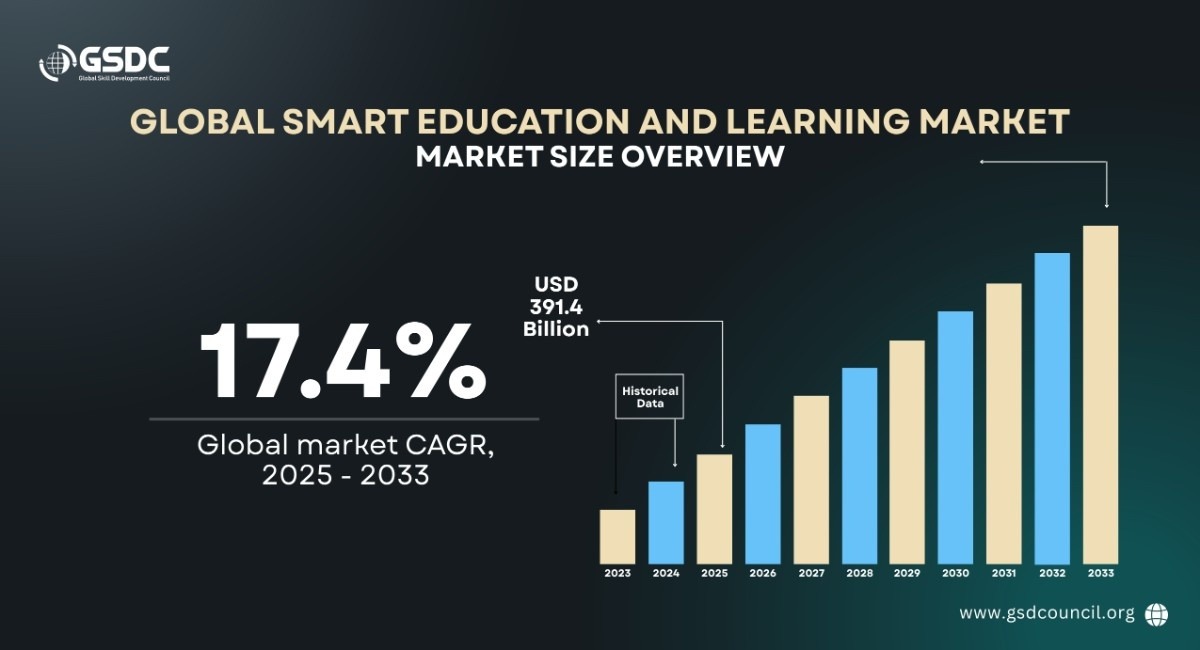
Personalised Training tailors content, pace, and assessment to each individual’s needs, strengths, and interests. It analyses learner data and automatically delivers customised educational experiences at scale. Adaptive Learning, a related concept, focuses specifically on modifying content difficulty and sequence based on learner performance. Leads a shift from course-centric to learner-centric training.
From Traditional Learning to Adaptive Learning
Traditional training models follow a rigid structure:
- Fixed curriculum for all learners
- Same pace of learning for everyone
- Instructor-controlled content delivery
While this model works for standardized education, it does not accommodate the unique learning needs of individuals.
Adaptive learning systems powered by AI change this approach by offering:
- Customized content based on learner performance
- Self-paced learning environments
- Continuous progress monitoring
- Predictive learning support
These systems analyze learner data and automatically recommend the next best learning activity, ensuring that learners receive the right content at the right time.
The result is improved learner engagement, better knowledge retention, and reduced training costs.
Key Technology Pillars of AI-Powered Learning
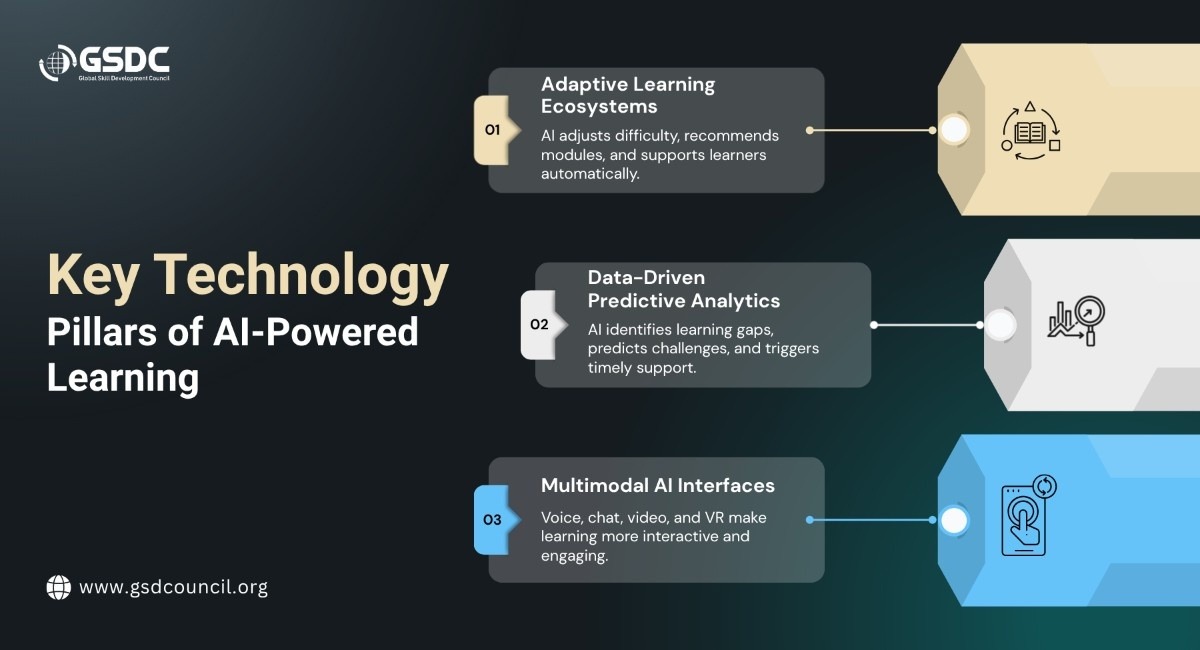
Modern AI-based learning platforms rely on three major technology pillars.
1. Adaptive Learning Ecosystems
Modern learning platforms function as interconnected ecosystems that integrate learning management systems, data platforms, and analytics engines.
Agentic AI systems can autonomously:
- Adjust course difficulty levels
- Recommend learning modules
- Provide automated support to learners
This automation significantly enhances the learning experience while reducing administrative workload.
2. Data-Driven Predictive Analytics
Predictive analytics plays a critical role in personalized learning.
AI models analyze learner behavior and performance data to:
- Identify learning gaps
- Predict performance challenges
- Trigger automated interventions
For example, if a learner struggles with a specific concept, the system may automatically recommend additional resources, exercises, or tutorials.
3. Multimodal AI Interfaces
Modern AI learning platforms support multiple interaction methods, including:
- Voice assistants
- Chatbots
- Video-based tutoring
- Virtual reality (VR) learning environments
These multimodal interfaces allow learners to interact with educational content using text, voice, or immersive technologies, making the learning process more engaging.
AI in Learning Content Management
One of the most significant contributions of AI in education is its ability to manage and generate learning content efficiently.
AI-powered tools can assist in:
- Course content creation
- Curriculum design
- Automated assessments
- Knowledge retrieval
For example, generative AI systems can transform raw documents into structured training modules. They can also generate quizzes, summaries, and learning guides from existing content.
Two major technologies driving this transformation are:
Generative AI
Generative AI models can create educational materials such as:
- Course modules
- Quiz questions
- Learning summaries
- Interactive exercises
These tools significantly reduce the time required to develop training programs.
Agentic AI
Agentic AI systems go beyond content creation. They act as orchestrators that coordinate multiple AI agents to perform complex tasks such as:
- Researching course topics
- Structuring learning modules
- Creating assessments
- Managing knowledge bases
Together, these technologies enable organizations to produce high-quality training materials at scale.
AI-Powered Knowledge Retrieval
Another major challenge in learning systems is retrieving relevant information from large knowledge bases.
AI-powered retrieval systems use techniques such as Retrieval-Augmented Generation (RAG) to deliver accurate answers to learners' queries.
These systems work by:
- Indexing learning materials into searchable formats
- Matching learner queries with relevant information
- Generating contextual responses
Unlike traditional keyword searches, AI-powered retrieval systems understand context and meaning, enabling more accurate and helpful responses.
AI in Personalized Learning Experiences
AI also plays a vital role in personalizing learning journeys.
AI systems analyze learning patterns such as:
- Study duration
- Quiz performance
- Interaction behavior
- Knowledge retention levels
Based on this data, the system can:
- Recommend new learning modules
- Provide targeted feedback
- Adjust content difficulty levels
- Suggest additional resources
These personalized recommendations significantly improve learner engagement and success rates.
AI in Holistic Learning and Development
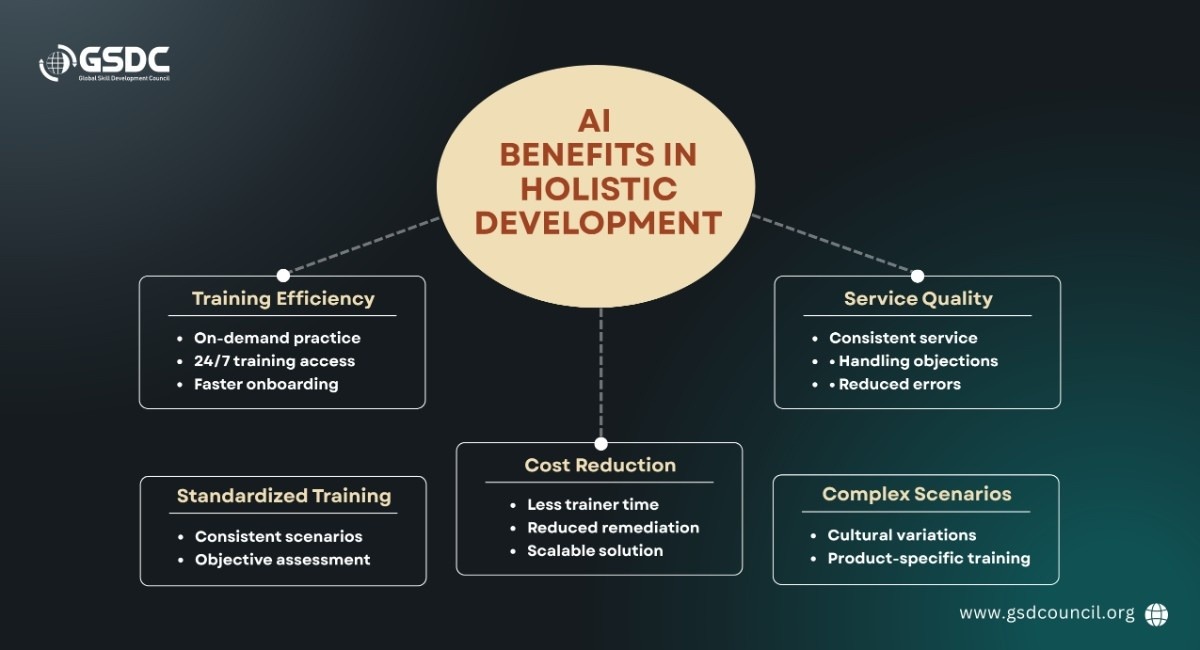
Beyond content delivery, AI also supports holistic learning development by assisting both learners and trainers.
AI Voice Assistants
Voice-enabled AI assistants allow learners to interact with training systems through natural language conversations.
These systems can:
- Answer questions instantly
- Guide learners through training processes
- Provide on-demand learning support
Voice interfaces make learning more accessible and convenient.
AI-Powered Avatars
AI-generated avatars are increasingly used in corporate training environments.
These avatars simulate real-world interactions and help learners practice scenarios such as:
- Customer conversations
- Sales negotiations
- Problem-solving discussions
By simulating real-life scenarios, AI avatars enable learners to develop practical skills in a safe environment.
AI-Based Performance Evaluation
AI systems can also evaluate learner performance using advanced analytics.
Using audio, video, and text analysis, AI tools can assess:
- Communication skills
- Emotional tone
- Confidence levels
- Engagement patterns
For example, AI systems can analyze body language, facial expressions, and voice modulation to provide feedback to trainers and learners.
This level of evaluation helps organizations identify areas of improvement and enhance training effectiveness.
Ethical AI in Learning
While AI offers tremendous potential in education, it also introduces ethical challenges.
Responsible AI practices are essential to ensure fairness, transparency, and privacy.
Key principles of ethical AI include:
Transparency and Explainability
AI systems should clearly explain how decisions or recommendations are generated.
Fairness and Non-Discrimination
AI models must avoid biases related to gender, ethnicity, language, or demographics.
Data Privacy and Security
Educational platforms must protect learner data and comply with regulations such as the General Data Protection Regulation. Sensitive personal information should always be safeguarded.
Human-in-the-Loop Governance
AI should assist human educators, not replace them. Human oversight ensures that AI systems maintain educational integrity and ethical standards.
The Future of AI-Powered Learning
The future of learning will be increasingly personalized, adaptive, and AI-driven.
Emerging trends include:
- Emotion-aware learning systems
- Neurodiversity-friendly education platforms
- Blockchain-based digital credentials
- Immersive VR learning environments
These innovations will enable organizations to build future-ready workforces by delivering tailored learning experiences at scale.
Prepare for the Next Wave of AI Innovation
Agentic AI is helping professionals and organizations move beyond passive AI tools toward systems that can plan, reason, decide, and execute tasks with greater autonomy. This shift enables faster decision-making, improved productivity, smarter workflow automation, and more adaptive business operations across functions.
To build practical expertise in this rapidly evolving space, the GSDC Certified Agentic AI Professional certification equips professionals with a strong understanding of agentic AI concepts, enterprise implementation strategies, governance considerations, and real-world business use cases.
Conclusion
AI, data analytics, and advanced technologies are transforming how individuals and organizations approach learning and development. By leveraging adaptive learning systems, AI-generated content, and intelligent analytics, organizations can use AI tools for personalized learning and other personalized learning tools to create highly tailored training programs that enhance engagement and improve outcomes.
This also reinforces why personalized learning is important, as it helps meet individual learner needs while improving knowledge retention, performance, and long-term capability building. Organizations that embrace AI-driven learning strategies today will be better positioned to develop skilled, agile, and future-ready talent in the years ahead.

Related Certifications
Frequently Asked Questions
Stay up-to-date with the latest news, trends, and resources in GSDC
If you like this read then make sure to check out our previous blogs: Cracking Onboarding Challenges: Fresher Success Unveiled
Not sure which certification to pursue? Our advisors will help you decide!