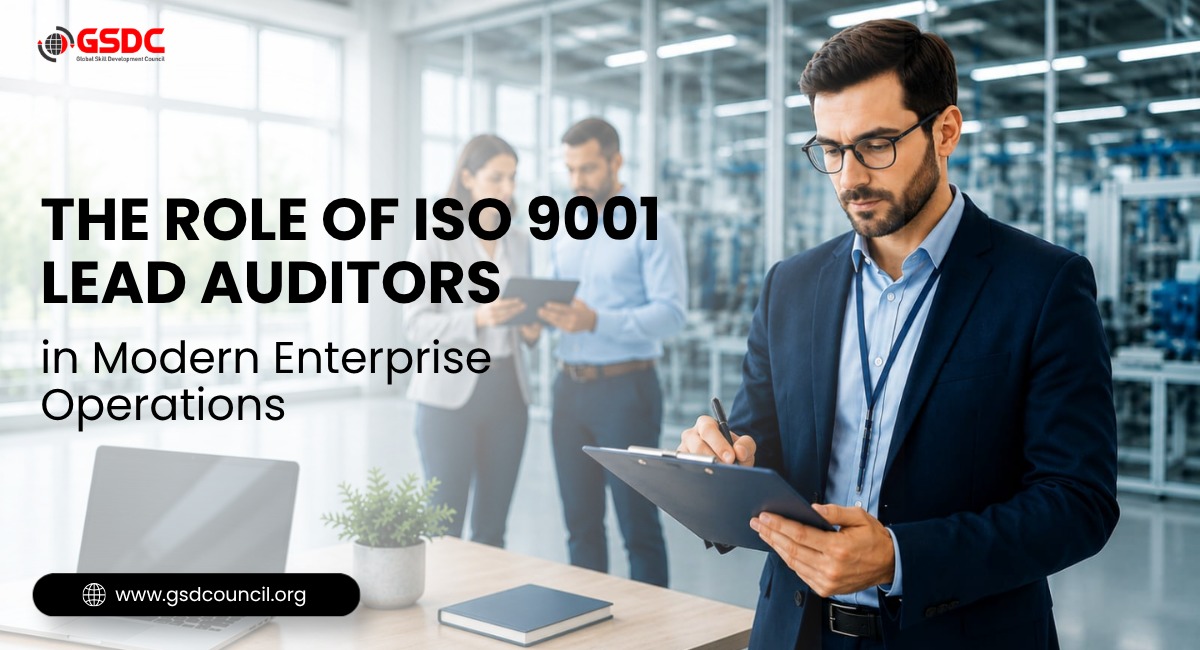
The Role of ISO 9001 Lead Auditors in Modern Enterprise Operations
Written by Matthew Hale
- The Scale of ISO 9001 - and the People Who Make It Work
- What Does an ISO 9001 Lead Auditor Actually Do?
- How ISO 9001 Lead Auditors Drive Modern Enterprise Operations
- The ISO 9001 Audit Process, Start to Finish
- What ISO 9001 Lead Auditor Training Actually Covers
- ISO 9001 Lead Auditor Certification: The Career and Salary Picture
- Is This the Right Time for You?
- The Bigger Picture
Ask most people what an ISO 9001 Lead Auditor does, and you will get one of two answers. Either a blank stare or something along the lines of "they check that your paperwork is in order." Both answers miss the point entirely.
The reality is that ISO 9001 Lead Auditors have quietly become some of the most valuable people in modern enterprise operations - not because they carry clipboards and tick boxes, but because they do something far more difficult. They find the gap between what an organization says it does and what it actually does. In industries where that gap costs lives, contracts, or regulatory licenses, that skill is worth a great deal.
This blog covers what these professionals actually do day to day, why their role has expanded well beyond the audit room, how the ISO 9001 audit process works from start to finish, and what to look for if you are considering ISO 9001 lead auditor training or certification.
The Scale of ISO 9001 - and the People Who Make It Work
ISO 9001 is the world's most widely adopted quality management standard. The current version, ISO 9001:2015, gives organizations a framework to consistently deliver products and services that meet customer and regulatory requirements. But the standard doesn't enforce itself.
Metric | Figure | Source |
ISO 9001 certificates globally (2022) | Over 1.2 million | ISO Survey 2022 |
Countries with certified organizations | 187 | ISO Survey 2022 |
Year-over-year growth (2021–2022) | +4% | ISO Survey 2022 |
Top sector: Manufacturing | ~30% of all certificates | ISO Survey 2022 |
Fastest-growing sector: IT services | +12% year-over-year | ISO Survey 2022 |
Source: ISO Survey of Management System Standard Certifications 2022 (iso.org)
Every single one of those 1.2 million certifications requires at least one qualified person to verify the organization's quality management system is actually working, not just documented. That person is an ISO 9001 Lead Auditor. The gap between having a QMS on paper and having one that performs under pressure is exactly the gap lead auditors are trained to find and close.
What Does an ISO 9001 Lead Auditor Actually Do?
The title can sound bureaucratic. In reality, the job combines investigative rigour, process knowledge, people skills, and the ability to translate complex findings into decisions that executives can act on. Here is the core of the work.
Planning and Scoping
Before a single interview takes place, a lead auditor builds an audit plan identifying which processes to examine, which clauses of ISO 9001:2015 apply, who needs to be interviewed, and what documents need review. Poor planning is the single biggest reason audits miss real issues.
Gathering Objective Evidence
Lead auditors examine documents, observe processes in action, and interview personnel at multiple levels. They are looking for objective evidence of whether the documented system matches what actually happens on the floor or in the office, not impressions, not assumptions.
Identifying Nonconformities
When evidence reveals a gap between what ISO 9001 requires and what the organization does, the auditor raises a nonconformity. Skilled lead auditors go further, they identify systemic patterns and root causes, helping organizations fix problems permanently rather than just patching symptoms.
Reporting and Follow-Up
A well-written audit report is a strategic asset. Lead auditors translate technical findings into clear, evidence-backed language that both the quality team and senior leadership can use. After the audit, they track corrective actions to verified closure.
How ISO 9001 Lead Auditors Drive Modern Enterprise Operations
The role of Certified ISO 9001:2015 Lead Auditor in modern enterprise operations has expanded significantly over the past decade, largely because the problems these professionals are trained to solve have started appearing in places nobody expected them.
Digital Transformation
Organizations have been migrating quality records to cloud platforms, integrating QMS software with ERP systems, and automating process controls at a pace. What many of them discovered along the way is that digitizing a broken process does not fix it - it just makes the broken process faster.
A 2023 Gartner survey found that 67% of quality leaders at manufacturers with over 1,000 employees said their QMS digitization projects failed to deliver expected compliance outcomes. The primary reason cited was that audit and verification processes had not been updated alongside the technology. Lead auditors who understand platforms like SAP QM or ETQ Reliance are not just compliance resources in that environment; they are the people who catch problems before they scale.
Operational Efficiency
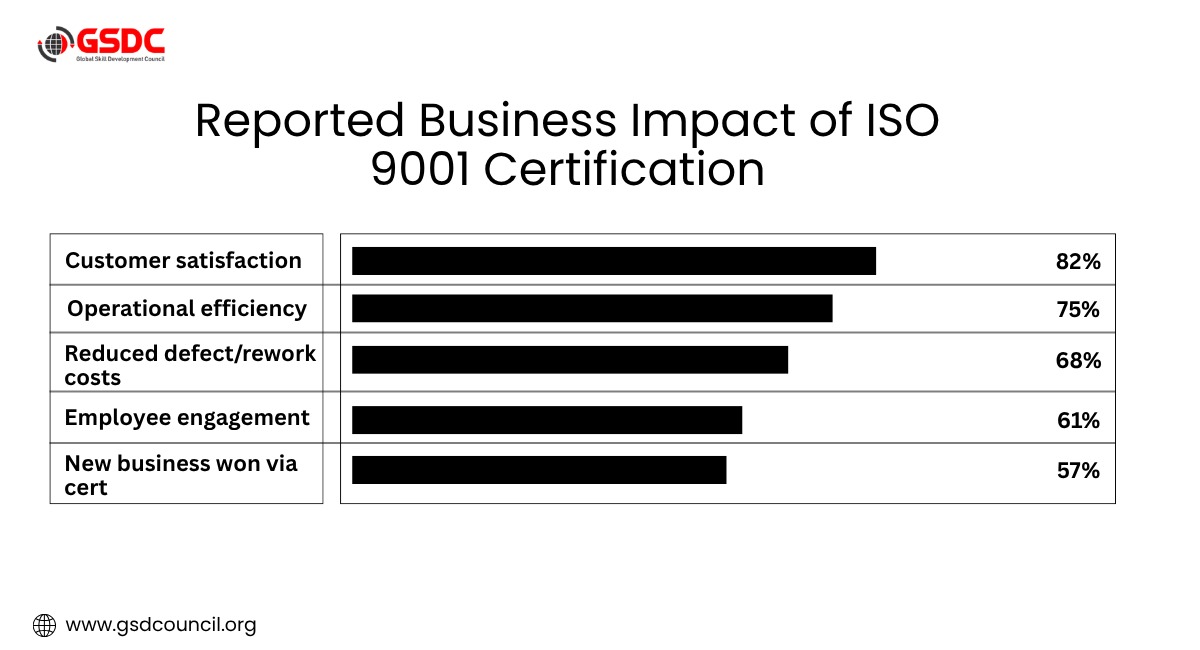
ISO 9001:2015 is built around a process approach, which means organizations are required to manage and continuously improve their key processes, not just document them. When a lead auditor flags a pattern of repeated nonconformities in a production workflow, or traces a cluster of customer complaints back to a single process failure, they are handing the operations team exactly the data it needs to make a targeted improvement investment. BSI Group's 2022 certification value study found that 75% of ISO 9001-certified US organizations reported measurable operational efficiency gains, with the highest gains coming from organizations running active internal audit programs.
Supply Chain Risk
According to Deloitte's 2023 Global Supply Chain Survey, quality-related supply chain disruptions cost mid-to-large US manufacturers an average of $4.4 million per incident. Lead auditors conducting second-party supplier audits, applying the ISO 9001 audit process directly to external suppliers, provide early warning before those disruptions happen. This has become a distinct career path in its own right, sitting within procurement and supply chain functions rather than the quality department.
Enterprise Risk Management
ISO 9001:2015 introduced risk-based thinking as a core requirement, not an optional add-on. Lead auditors evaluate whether an organization's approach to identifying and managing risk is proportionate to the risks it actually faces. In regulated industries, such as medical devices, aerospace, and financial services, that evaluation feeds directly into enterprise risk frameworks. It is one of the reasons that lead auditors are increasingly show up in risk committee conversations rather than just quality team meetings.
Customer Experience
Clause 9.1.2 requires organizations to monitor customer perception and use that data to drive improvement. Lead auditors check whether that monitoring is meaningful or cosmetic. An annual satisfaction survey that produces a number nobody does anything with does not satisfy the intent of the clause. Auditors who push on this tracing complaint patterns, examining service recovery processes, asking what actually changed as a result of customer feedback, have a direct line to the metrics that matter most to customer-facing businesses.
The ISO 9001 Audit Process, Start to Finish
For anyone preparing to lead their first audit, or an organization about to host one, knowing how the ISO 9001 audit process actually unfolds takes a lot of the anxiety out of it. The structure is consistent regardless of the size or sector of the organization being audited.
| Stage | What Happens | Why It Matters |
| 1. Initiation | Define objectives, scope, and criteria | Sets clear boundaries from the start |
| 2. Document Review | Assess QMS documentation before going on-site | Surfaces gaps before time and resources are committed |
| 3. Audit Plan | Build schedule; assign audit team responsibilities | Keeps the process efficient and reduces audit fatigue |
| 4. Opening Meeting | Confirm scope; explain process; set expectations | Creates the conditions for honest, open responses |
| 5. On-Site Audit | Interviews, observation, and record review | Where the real picture of QMS performance emerges |
| 6. Findings Review | Evaluate evidence; classify nonconformities | Produces consistent, defensible conclusions |
| 7. Closing Meeting | Present findings; agree on response timelines | Converts findings into clear accountability |
| 8. Audit Report | Formal documented record of all findings and evidence | The foundation for everything that follows |
| 9. Follow-Up | Verify corrective actions are implemented and working | The step that determines whether any of this was worth it |
The organizations that extract real value from auditing treat this as a nine-stage improvement cycle. The ones that treat it as a five-day certification exercise tend to have the same findings year after year.
What ISO 9001 Lead Auditor Training Actually Covers
A common misconception is that ISO 9001 lead auditor training is essentially a refresher on the standard itself. It is not. Accredited programs, including those offered by the Global Skill Development Council (GSDC), follow CQI-IRCA guidelines that are substantially more rigorous, and the practical components are where most of the real learning happens.
A typical five-day program covers:
- ISO 9001:2015 Requirements: Clause-by-clause analysis, risk-based thinking, and what genuine conformity looks like across different sectors and organizational sizes
- Audit Principles and Planning: Audit types under ISO 19011, auditor independence and ethics, scope definition, risk-based sampling, and building an audit program that holds up under scrutiny
- Conducting the Audit: Evidence gathering, interview technique, managing difficult situations in the field, and building audit trails that produce defensible conclusions
- Reporting and Follow-Up: Nonconformity classification, writing evidence-backed findings, and verifying that corrective actions were actually effective
- Practical Exercises and Examination: Simulated audit scenarios, written case studies, and the CQI-IRCA-accredited written examination
Passing the examination earns a course certificate and entry into the CQI-IRCA Provisional Auditor grade. Progressing to full ISO 9001 lead auditor certification, the grade certification bodies actually require involves logging documented audit days under a registered lead auditor. GSDC's program is structured to support candidates through that entire progression
ISO 9001 Lead Auditor Certification: The Career and Salary Picture
The career return on investment for ISO 9001 lead auditor certification in the US market is well-documented. Here is what the data shows.
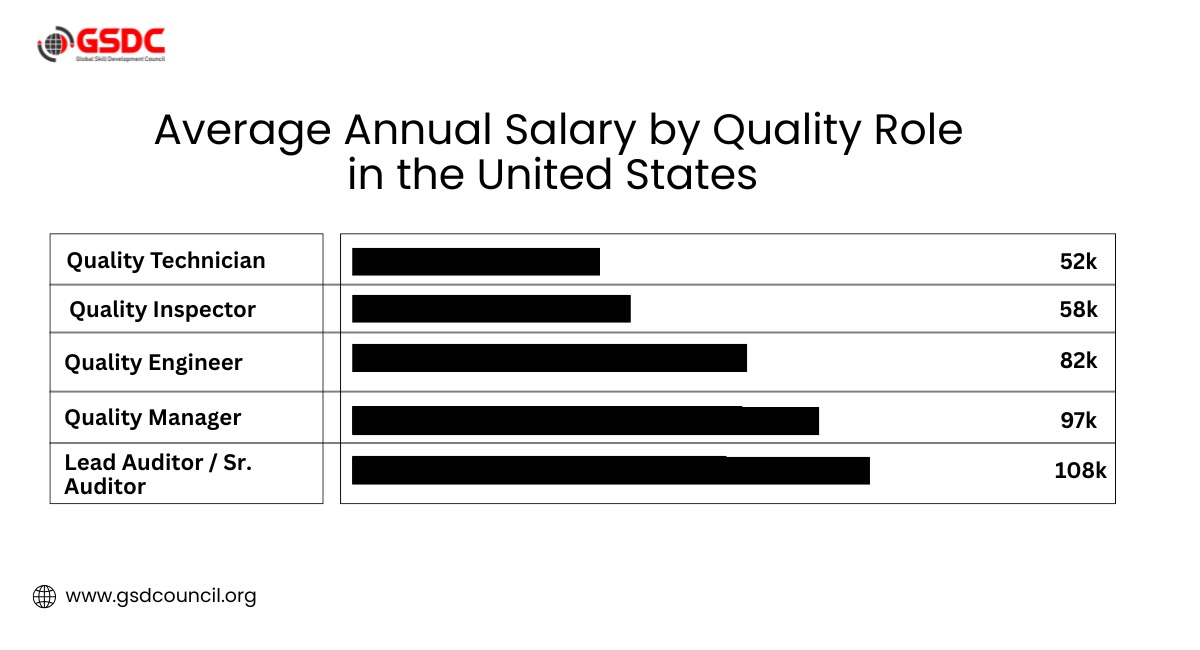
The U.S. Bureau of Labor Statistics projects quality management specialist roles to grow 6% through 2032, faster than average for all occupations. Lead auditor roles in healthcare, defense, and automotive sectors are seeing even tighter talent markets, with many positions receiving fewer than five qualified applicants.
Accredited five-day ISO 9001 lead auditor training programs in the US typically cost between $1,500 and $3,500. Measured against the salary premium and career mobility that the credential unlocks, the return on investment is clear within the first year.
Is This the Right Time for You?
The professionals who get the most from this credential are usually already doing parts of the audit role informally, leading supplier visits, coordinating internal audits, managing corrective actions, but without a recognized framework behind them.
If you are managing audits without formal training, targeting a role at a certification body, preparing for an upcoming external assessment, or looking for a clear differentiator in a quality career, the answer is probably yes.
The Global Skill Development Council (GSDC) offers the Certified ISO 9001:2015 Lead Auditor as an accredited qualification built for working professionals who need flexible delivery without sacrificing recognition or rigor. It is not a speculative investment. It is a direct response to a gap that only gets more expensive the longer it stays open.
The Bigger Picture
Quality assurance has spent a long time trying to prove it belongs at the strategy table. The organizations that have figured this out are not waiting for external auditors to identify what is broken. They are developing internal lead auditor capability, building audit programs that generate genuine insight, and treating quality as an operational advantage rather than a compliance obligation.
The role of ISO 9001 Lead Auditors in modern enterprise operations will only expand from here as supply chains grow more complex, regulatory environments tighten, and the cost of quality failures continues to rise.
For professionals ready to step into that space, the path is well defined. ISO 9001 lead auditor training and certification is where it starts.

Related Certifications
Frequently Asked Questions
An internal auditor checks specific processes within their own organization. A lead auditor plans, manages, and closes an entire audit - across any organization, not just their own. They are accountable for the audit team, the methodology, and the final report. It is a broader, more senior capability, and the one certification bodies and large employers specifically look for.
Not necessarily. GSDC's Certified ISO 9001:2015 Lead Auditor course is designed to take candidates with a working knowledge of quality management through to audit competence. Some familiarity with ISO 9001:2015 helps, but coming in with experience of working inside a certified organization is usually enough of a foundation.
The training runs five days. Progressing to full Lead Auditor registration after that requires logging documented audit days under a registered lead auditor. For most working professionals, the complete journey takes somewhere between six months and two years, depending on how regularly they can log qualifying audit activity.
Yes. GSDC's program follows CQI-IRCA accreditation guidelines - the internationally recognized standard for lead auditor training. CQI-IRCA registration is specifically required by certification bodies including BSI, SGS, Bureau Veritas, TUV Rheinland, and Intertek across global markets. It is a credential that travels with you.
Both options are available and both can be accredited. Online and blended delivery formats have been accepted under CQI-IRCA guidelines since 2020. The format matters less than the accreditation status of the provider. An unaccredited online course, however well produced, does not count toward CQI-IRCA registration.
The ISO 9001 audit process runs through nine stages - initiation, document review, audit planning, opening meeting, on-site evidence gathering, findings review, closing meeting, formal report, and corrective action follow-up. A typical certification audit for a mid-sized organization takes three to five days on-site, with planning and reporting time on either side.
Manufacturing accounts for roughly 30% of all ISO 9001 certifications globally and remains the largest employer. The fastest-growing demand is coming from IT services, healthcare, defense, and financial services. Supply chain and procurement functions are also increasingly hiring lead-auditor-qualified professionals to manage supplier audit programs as a standalone role.
According to the ASQ Quality Progress Salary Survey 2023, the median annual salary for a Lead or Senior Auditor in the US is around $108,000 - compared to $97,000 for a Quality Manager and $82,000 for a Quality Engineer. The credential also opens access to roles at third-party certification bodies that are not accessible without CQI-IRCA registration.
Accredited five-day programs in the US typically cost between $1,500 and $3,500. Against the salary premium and career mobility the credential generates, most candidates see a clear return within the first year. The more useful question is what staying uncertified is costing professionals who are already doing audit work without the formal recognition behind them.
You will not get a qualification that counts toward CQI-IRCA registration, which means certification bodies will not recognize it and the audit days you log will not count toward Lead Auditor grade progression. It is a common and costly mistake. GSDC's Certified ISO 9001:2015 Lead Auditor carries CQI-IRCA accreditation - always verify that before committing to any provider.
Stay up-to-date with the latest news, trends, and resources in GSDC
If you like this read then make sure to check out our previous blogs: Cracking Onboarding Challenges: Fresher Success Unveiled
Not sure which certification to pursue? Our advisors will help you decide!