How Poor Quality Is Draining Manufacturing Profits and How to Stop It
Written by Matthew Hale
- What Is Quality in Manufacturing - Really?
- Why Is Quality Important in Manufacturing? 5 Business Benefits
- Real-World Lessons: What Quality Failures Actually Cost
- How to Improve Quality Control in Manufacturing: 5 Proven Methods
- Quality Control Tools in Manufacturing: The Practical Toolkit
- ISO 9001 Lead Auditor Certification: From Certificate to Capability
- The Bottom Line
Walk into most U.S. manufacturing plants and ask who owns quality. You'll usually get a name - the quality manager, the QA team, maybe a VP of Operations. What you won't often hear is "everyone." And that gap, between who's responsible and who actually owns it day-to-day, is where billions of dollars quietly disappear.
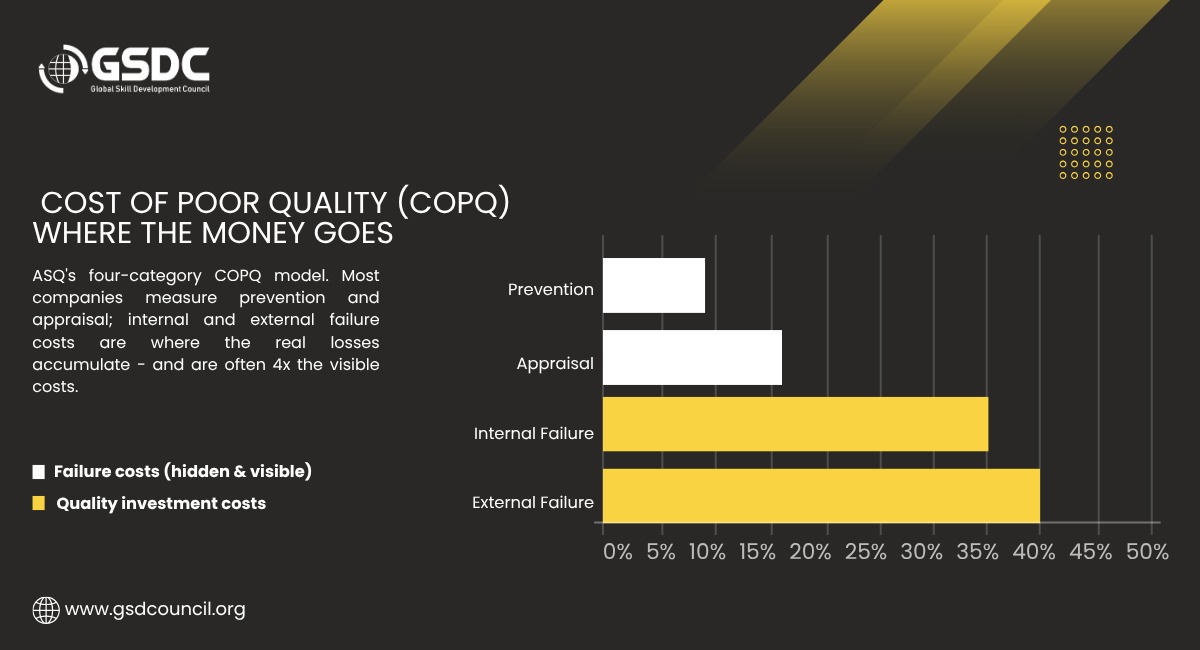
The American Society for Quality (ASQ) has documented for decades that quality-related costs at many manufacturers run 15% to 20% of sales revenue. For companies with poorly functioning systems, that figure can climb to 40% of total operations. Most of those costs are invisible on a standard P&L - buried in scrap, rework, inspection overtime, warranty claims, and customer chu
This blog is about making them visible - and then doing something about it.
What Is Quality in Manufacturing - Really?
Quality in manufacturing is not just about the finished product passing inspection. It's the consistent ability to produce products that conform to requirements, on time, with minimal waste, at every step of the process - from supplier selection through delivery and after-sale support.
Most quality failures don't start at final inspection. They start much earlier: a supplier ships out-of-spec material, a process drifts beyond its control limits, an operator skips a step because the documentation is unclear, or a corrective action gets closed on paper without verifying the root cause was fixed. By the time the problem shows up at the end of the line, the cost of fixing it has already multiplied.
McKinsey documented a 30% reduction in cost of nonquality - warranty claims, waste, and rework - at a multinational industrial manufacturer that moved from reactive to structured quality management.
Why Is Quality Important in Manufacturing? 5 Business Benefits
The importance of quality in manufacturing extends well beyond the production floor. Here are five business outcomes that are directly tied to quality system maturity.
1. Revenue Protection
ASQ estimates that quality costs account for 15–20% of sales at many manufacturers, and up to 40% of operations at companies with poor systems. Reducing COPQ flows directly to profit margin.
2. Recall Avoidance
A joint study by the Food Marketing Institute and Grocery Manufacturers Association found the average direct cost of a food recall is $10 million before brand damage and legal costs are factored in.
3. Regulatory Standing
In FDA-regulated manufacturing, quality system gaps - not just product defects - are the leading trigger for warning letters, consent decrees, and facility action. The FDA's own inspection data consistently shows this pattern.
4. Supply Chain Access
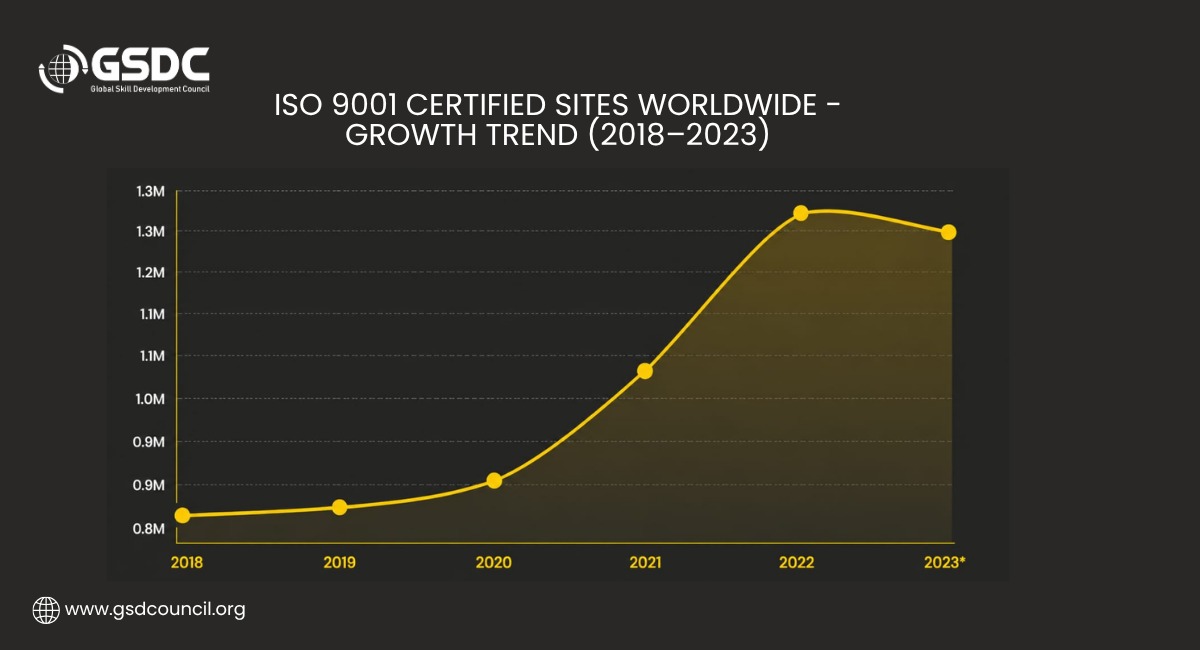
Major OEMs in automotive, aerospace, and defense increasingly mandate quality certifications from suppliers. ISO 9001 has grown to over 1.25 million certified sites globally precisely because buyers require it - and companies that field a Certified ISO 9001:2015 Lead Auditor internally are better positioned to maintain that standing without scrambling before every external audit.
5. Analytics-Driven Cost Reduction
McKinsey's research on advanced-industries manufacturers found that smart quality programs combining analytics with structured processes have enabled some companies to reduce the total cost of quality by up to 50%.
Real-World Lessons: What Quality Failures Actually Cost
The following cases are not cautionary tales from decades past. They are recent, documented, and drawn from public records and company filings.
- Boeing 737 MAX - When Quality Culture Breaks Down (Case Study - Aerospace)
Boeing's own earnings disclosures confirmed that 737 MAX-related costs surpassed $18.7 billion by early 2020, covering compensation to airline customers, production halt costs, and deferred program expenses. The U.S. Department of Justice's deferred prosecution agreement added a further $2.5 billion in criminal monetary penalties and victim compensation. Congressional investigations found that quality oversight processes had been systematically subordinated to delivery schedules. The financial figure is extraordinary; the underlying cause a quality management culture that lost its independence is disturbingly common.
- Ford's Quality Turnaround - The Prevention Shift (Case Study - Automotive)
After high-profile quality failures in the early 2000s, Ford overhauled its supplier quality development through the Q1 certification program and the AIAG FMEA framework, moving accountability from final inspection upstream to design and supplier selection. By the end of the decade, Ford had achieved its highest J.D. Power initial quality scores in company history. The structural change: quality engineers gained equal standing with production engineers in program reviews.
- Medtronic - Quality Systems as Competitive Infrastructure (Case Study - Medical Devices)
Following FDA warning letter activity in the mid-2000s related to quality system gaps, Medtronic undertook a comprehensive quality management overhaul across its Cardiac Rhythm Management division, including internal audit restructuring and tighter alignment with ISO 13485 requirements. The company has since publicly described its quality infrastructure as a strategic differentiator, not just a compliance requirement, in a market where FDA inspection standing directly affects commercial credibility.
- Caterpillar - Supplier Quality as Risk Management (Case Study - Industrial Equipment)
Caterpillar's Supplier Quality Manual requires ISO 9001 certification and second-party audit compliance from all major suppliers. The program structures ongoing quality performance tracking and corrective action management as contract conditions not optional requests. The logic is straightforward: when you build heavy equipment with hundreds of suppliers contributing thousands of components, a quality failure upstream doesn't stay upstream.
The patterns across these cases, cultural drift, upstream prevention, audit independence, and supplier accountability, reflect the core competencies that quality professionals are expected to carry into the field. The Global Skill Development Council (GSDC) draws on documented industry evidence like this when building its certification frameworks, ensuring the training reflects how quality failures actually happen, not just how standards describe them.
How to Improve Quality Control in Manufacturing: 5 Proven Methods
1. Move from Detection to Prevention
Catching defects at final inspection is the most expensive way to manage quality. Every defect found there represents materials, labor, and overhead already spent. Prevention-focused quality means investing in process design, poka-yoke systems, operator training, and statistical process control to identify process drift before it becomes a failure. The prevention ROI is well-documented: ASQ's framework consistently shows that prevention spending reduces failure costs at a multiple, not a one-for-one trade.
2. Give Operators the Authority to Stop and Report
People closest to the process are best positioned to spot problems but rarely empowered to act. Toyota's Georgetown, Kentucky facility, one of the most studied quality operations in U.S. manufacturing, operates on the principle that any operator can stop the production line. That authority and the cultural safety behind it are primary reasons the plant consistently outperforms domestic peers on quality metrics. Creating formal, consequence-free reporting channels is a prerequisite for a functional quality culture.
3. Use Data, Not Just Intuition
McKinsey found that "smart quality" programs combining advanced analytics with structured quality processes have enabled manufacturers to reduce total cost of quality by up to 50% in documented cases across steel, automotive, and industrial manufacturing.
Modern manufacturers have access to real-time SPC software, IoT sensors, and machine learning tools. Many facilities still rely on manual inspection logs. Closing that gap systematically, not aspirationally, is one of the most reliable paths to measurable quality improvement.
4. Lead from the Top, Visibly
Quality culture is set by leadership behavior, not quality policy documents. The organizations that sustain quality improvement over the years are those where senior leaders conduct regular shop-floor walks, participate in quality reviews (not just receive summaries), and consistently demonstrate that shipping a product with a known defect is not an option, regardless of schedule pressure. When that standard is set visibly, the entire organization recalibrates around it.
5. Build Internal Audit Capability
External certification audits maintain your ISO certificate. They rarely surface the early-stage process drift that leads to nonconformances between audit cycles. Organizations that invest in training internal auditors, particularly those pursuing ISO 9001 lead auditor certification, build the ongoing detection capability that external auditors cannot provide. The audit program becomes a management tool, not just a compliance event.
Quality Control Tools in Manufacturing: The Practical Toolkit
- Statistical Process Control (SPC)
Real-time monitoring via control charts. Catches process drift before defects occur. The core tool of any prevention-focused quality program.
- FMEA
Failure Mode & Effects Analysis: identifies potential failure modes, rates their severity and likelihood, and prioritizes action. Required under AIAG automotive and AS9100 aerospace standards.
- Root Cause Analysis
5-Why and Ishikawa (fishbone) methods for finding the true cause of a defect, not just its surface symptom. Prevents the same problem from recurring under a different name.
- Measurement System Analysis
Validates that your measurement tools can detect the differences that matter. An unreliable measurement system makes every other quality data point suspect.
- 8D Problem Solving
Ford-developed corrective action framework: contain, analyze, solve, verify, prevent recurrence. Ensures problems are closed for real, not just administratively.
- Value Stream Mapping
Makes quality waste scrap, rework, and overprocessing visible as a cost category. Often reveals that the biggest losses are invisible on standard production reports.
ISO 9001 Lead Auditor Certification: From Certificate to Capability
ISO 9001 is the world's most widely adopted quality management system standard, with 1.25 million certified sites across 170+ countries as of the 2023 ISO Survey. For U.S. manufacturers, it has become a baseline entry requirement for major supply chains in automotive, aerospace, defense, and healthcare. Yet most organizations treat it as a certificate to maintain rather than a system to use, and that gap is where quality improvements stall.
A Certified ISO 9001:2015 Lead Auditor closes that gap. Trained to plan and conduct first-, second-, and third-party audits, write objective nonconformance reports, and drive corrective actions to verified closure, they provide the internal surveillance that external certification bodies cannot catch process drift between audits, not just after it causes a failure. Credentials offered through bodies such as the Global Skill Development Council (GSDC) are built around these practical demands, not just the standard's clause structure.
For manufacturers balancing customer requirements, supplier oversight, and regulatory expectations at once, a trained internal lead auditor is the mechanism that makes a quality management system work as a management tool rather than a compliance filing that gets dusted off once a year.

The Bottom Line
The numbers in this article aren't abstract. Every percentage point of sales lost to scrap, rework, and warranty claims is a margin that a better-run operation keeps. The tools exist, the frameworks are proven, and the certification infrastructure is in place. What separates manufacturers that improve from those that don't is rarely knowledge; it's whether someone in the building has the mandate and the training to act on it.

Related Certifications
Frequently Asked Questions
It's the system of processes and checks that ensures products meet defined specifications at every stage from incoming materials to final output. The best programs prevent failures upstream rather than catching them at the end of the line.
Poor quality shows up everywhere, scrap, rework, recalls, lost contracts, and regulatory action. ASQ puts quality-related costs at 15–20% of sales for many manufacturers. It's not a support function; it's a direct hit to margin.
QC is reactive; it checks whether something meets requirements. QA is proactive; it builds the systems that prevent failures before they happen. Mature operations run both.
Shift from detection to prevention, invest in process design, SPC, and operator training before defects occur. Pair that with visible leadership commitment and data-driven decision making, and improvement compounds over time.
SPC, FMEA, Root Cause Analysis (5-Why and Ishikawa), Measurement System Analysis, 8D corrective action, and Value Stream Mapping. Most quality engineers use several of these in parallel, depending on where problems are showing up.
They plan and lead quality management system audits, write nonconformance reports based on objective evidence, and follow corrective actions through to verified closure. Internally, they catch process drift between certification cycles which external auditors simply can't do.
It's a credential that qualifies professionals to conduct audits against ISO 9001:2015. It's built for quality managers, internal auditors, supplier quality engineers, and compliance leads, anyone responsible for keeping a quality management system functional, not just certified.
Most programs run five days, covering audit planning, conducting audits, writing nonconformances, and managing corrective actions. The credential is awarded on passing the final assessment.
Not by law, but major OEMs in automotive, aerospace, defense, and healthcare routinely make it a supplier requirement. In those supply chains, it's effectively mandatory if you want to stay on the approved vendor list.
A mature quality culture cuts the internal friction that quietly drains margin, rework loops, warranty claims, supplier disputes, and management time spent on recurring problems. Treat quality as infrastructure, and it compounds. Treat it as compliance, and so do the costs.
Stay up-to-date with the latest news, trends, and resources in GSDC
If you like this read then make sure to check out our previous blogs: Cracking Onboarding Challenges: Fresher Success Unveiled
Not sure which certification to pursue? Our advisors will help you decide!