ISO 9001 Explained: Understanding the Quality Management System Standard
Written by Matthew Hale
ISO 9001 is one of the most widely implemented standards for quality management worldwide. Organisations use it to improve processes, reduce errors, and deliver consistent results through a strong quality management system.
Global adoption continues to grow, with more than 1.28 million ISO 9001 certificates issued in the latest reporting cycle. This reflects rising demand for structured quality frameworks and recognised compliance.
ISO 9001 is also important for professionals in auditing and process improvement. It forms the foundation for advanced roles such as ISO 9001 Lead Auditor. This guide explains the standard in simple terms for organisations preparing for certification and professionals moving into auditing roles.
What Is ISO 9001?
ISO 9001 is an international standard that defines the requirements of a ISO 9001 Quality Management System (QMS). It provides a systematic approach for documenting processes, monitoring performance, preventing errors, and maintaining continual improvement.
The standard helps organisations:
- Reduce operational errors
- Work more efficiently
- Improve customer satisfaction
- Build predictable and reliable workflows
- Strengthen internal communication
- Support continual improvement across functions
The flexibility of ISO 9001 makes it suitable for small businesses, large corporations, government bodies, service providers, and manufacturing companies. Its requirements are designed to fit organisations with different levels of complexity.
The Importance of ISO 9001 for Organisations
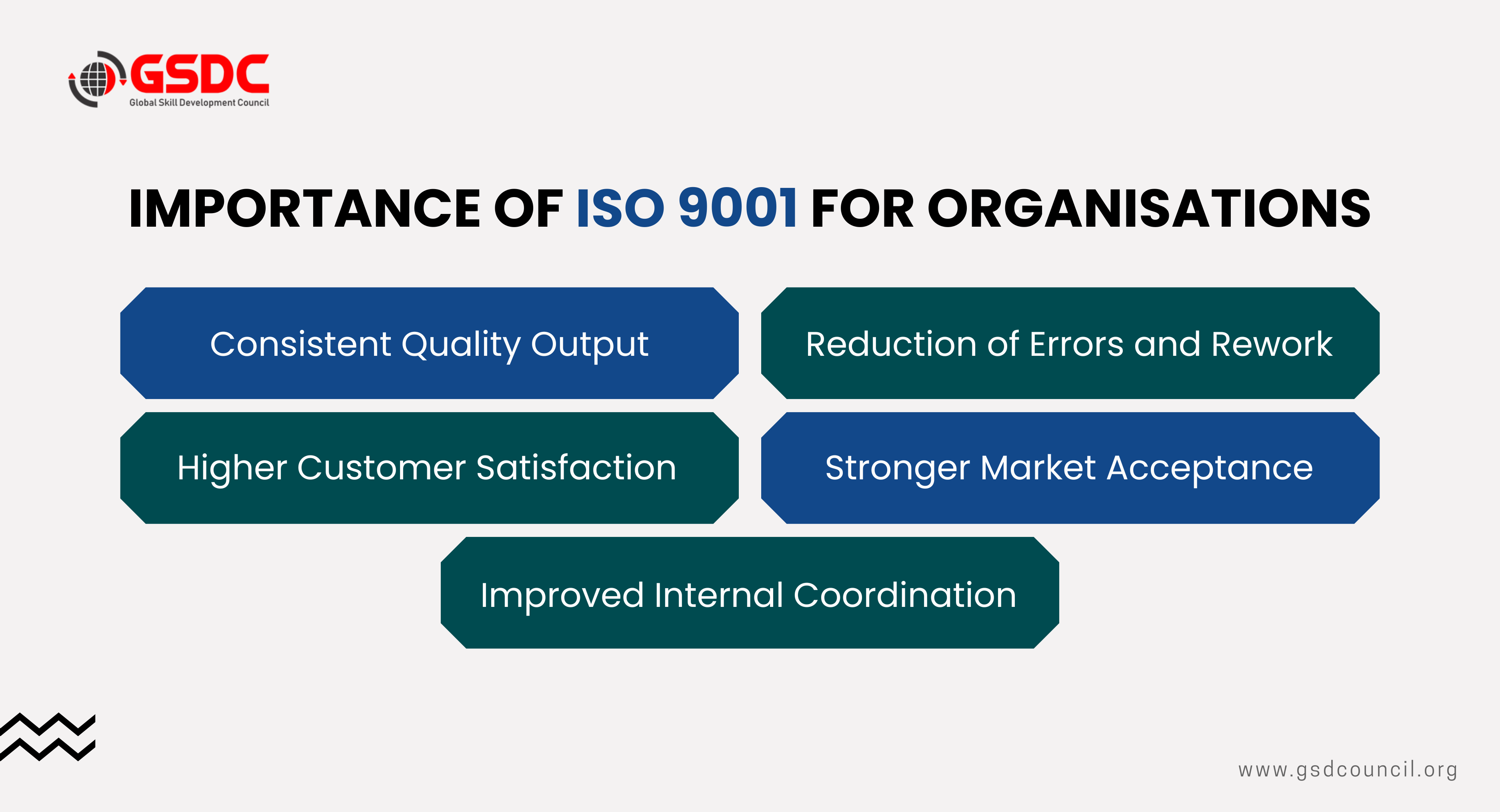
ISO 9001 is one of the major factors that lead to improved organisational performance. The implementation of this standard significantly facilitates the smooth running of the process, increases product reliability, and gives the company an advantage in the market.
- Consistent Quality Output: This standard requires an organisation to have documented processes, clearly delineated responsibilities and be under regular supervision, thus it can continuously deliver high-quality results.
- Reduction of Errors and Rework: The provision of clear instructions and the use of standardised workflows greatly reduces the occurrence of misunderstandings, process gaps, and repetitive errors.
- Higher Customer Satisfaction: The ISO 9001 standard puts great emphasis on the understanding of customer needs and measuring their satisfaction. This provides organisations with the opportunity to efficiently address the gaps that exist and improve their service delivery.
- Stronger Market Acceptance: In many industries, suppliers are required to have an ISO 9001 certification as one of the criteria to be accepted. Certified organisations have an easier way of accessing new business opportunities and building relationships with other companies.
- Improved Internal Coordination: The establishment of roles and the documentation of processes facilitate the interaction between departments and the reduction of internal conflicts.
Comprehensive industry studies predict a substantial rise in the quality management systems market, estimating it to be worth USD 20.4 billion by 2030. This increase is greatly attributed to the greater use of well-structured standards like ISO 9001.
Understanding the Quality Management System (QMS)
A quality management system is the centre of ISO 9001. It specifies how an organisation manages, controls, and changes its processes to ensure that the results are stable ones.
Typically, a QMS will have:
- A written quality Policy
- Quality objectives that are consistent with the organisation's goals
- Qualifying procedures and work instructions
- Documented workflows
- Records and forms as required
- Defined roles and responsibilities
- Methods for monitoring and measurement
- Facilities for corrective and preventive action
It lessens the exposure to risk, increases effectiveness, and ensures that customer expectations and legal requirements are met especially when QMS risk documentation is supported by a standardised risk register template aligned with ISO 31000:2018 to ensure consistent risk recording across all quality processes.
ISO 9001: Key Quality Management Principles
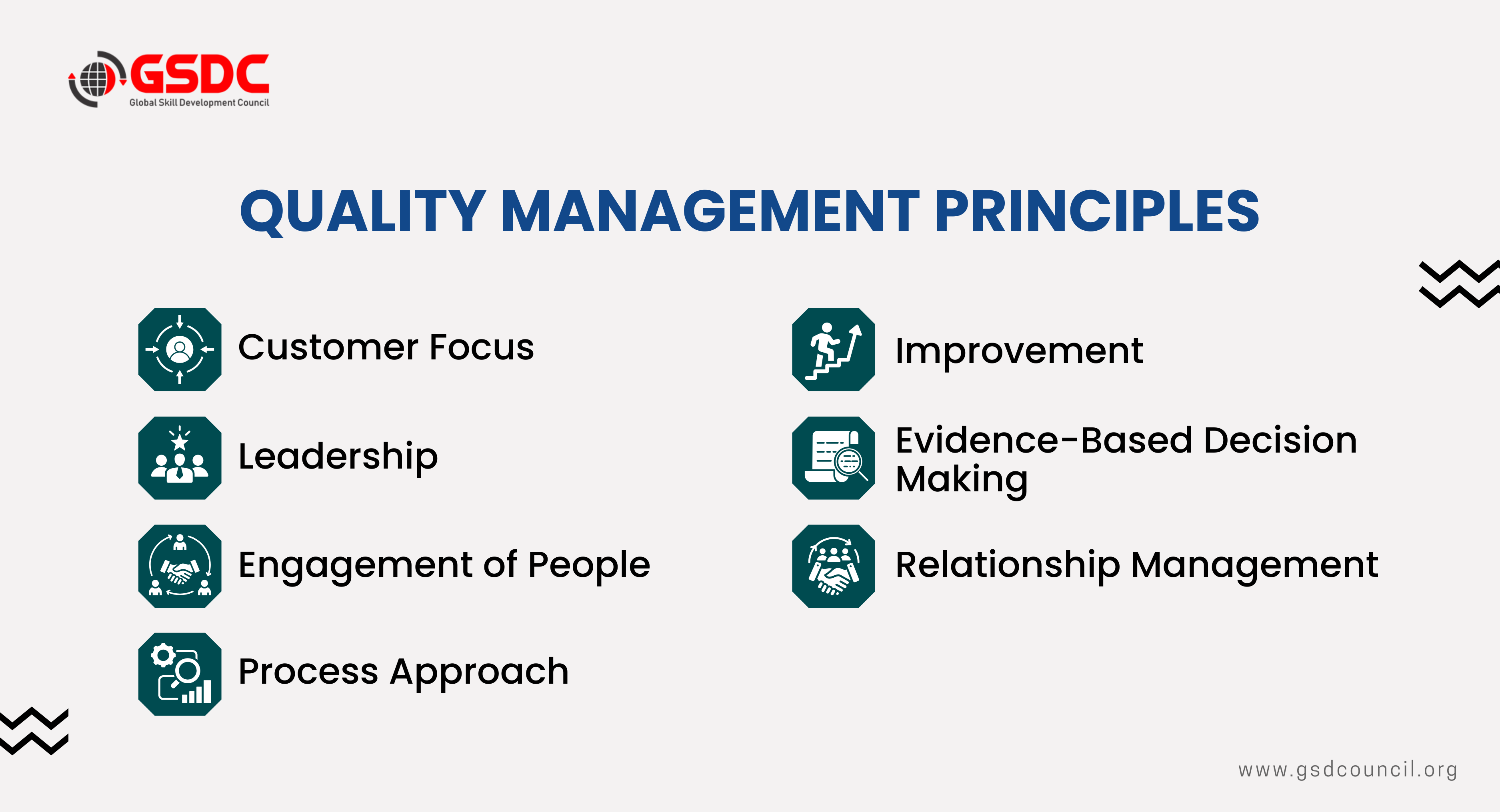
Seven key principles form the basis of ISO 9001, which is a quality management system standard:
- Customer Focus: An organisation should study its customers, understand and meet their requirements on a regular basis.
- Leadership: The management should establish the direction, drive the enthusiasm and harmonise the processes with the organisational goals.
- Engagement of People: People at different levels inside the organisation are a vital part in the QMS maintenance and improvement.
- Process Approach: The norm encourages analysing activities as linked processes that collaborate to yield results.
- Improvement: An organisation is required to improve its performance, systems and results continually.
- Evidence-Based Decision Making: Decisions should be based on data and factual analysis.
- Relationship Management: Managing relationships effectively with suppliers and stakeholders leads to better organisational performance.
These principles represent the core of the quality management framework of ISO 9001.
Core Requirements of the ISO 9001 Standard
- dle risks and opportunities
- Giving what is necessary, such as resources, facilities, and training
- Setting up and controlling business processes through documentation
- Checking and measuring performance
- Internal auditing
- Management reviews
- Improving by corrective actions
These are the requirements that make sure that the QMS is operational, effective, and still customer-oriented.
How ISO 9001 Certification Works
Organisations seeking ISO 9001 certification follow a structured certification process:
1. Initial Gap Assessment: Identifying differences between current practices and ISO 9001 requirements.
2. QMS Development or Enhancement: Creating and refining policies, procedures, workflows, and documented information.
3. Employee Training: Ensuring employees understand the QMS and their responsibilities.
Organisations often rely on professionals trained as Certified ISO 9001:2015 Lead Auditors to support internal evaluations, compliance readiness, and continuous improvement initiatives.
4. Internal Audit: Evaluating QMS performance internally to confirm readiness for external assessment.
5. External Certification Audit: A certification body conducts a two-stage ISO 9001 audit, including documentation review and on-site verification.
6. Certification Decision: The organisation receives ISO 9001 certification upon fulfilling all requirements.
7. Surveillance Audits: Annual reviews confirm continued compliance and QMS effectiveness.
ISO 9001 for Small Business
Being a scalable standard, ISO 9001 is a perfect fit for small businesses. Some of the benefits are:
- Day-to-day operations are becoming more structured and organised
- Decrease in errors that result from informal working methods
- Improved customer satisfaction
- Greater competitiveness
- Ability to meet the requirements of tenders and supply chains
The standard is flexible enough to accommodate small teams and less resources without the need for a lot of documentation.
ISO 9001 Audit Process
The ISO 9001 audit process is essential for verifying whether the QMS meets the standard. It generally includes:
- Audit planning
- Document review
- Verification of process implementation
- Interviews with employees
- Identification of non-conformities
- Reporting and recommendations
Professionals pursuing ISO 9001 lead auditor certification should be proficient in comprehending and handling the audit process at each level.
Formal learning schemes provided by organisations like the Global Skill Development Council (GSDC) help professionals to acquire the necessary skills for successful auditing.
ISO 9001 and Professional Career Development
ISO 9001 supports career growth in quality management, internal auditing, external auditing, compliance, and process improvement. Professionals often pursue:
- ISO 9001 auditor certification
- Quality auditor certification
- ISO 9001 lead auditor certification
An ISO 9001 lead auditor is qualified to evaluate organisations and conduct external audits for certification bodies. Many professionals choose to complete ISO 9001 lead auditor certification online for flexible learning.
Download the checklist for the following benefits:
Download the ISO 9001 Essentials Guide and start learning the smart way. ⬇️
GSDC Training Pathways for ISO 9001 Professionals
The Certified ISO 9001:2015 Lead Auditor program by GSDC provides comprehensive training for professionals aiming to progress in auditing and quality management. The program is designed to:
- Build a solid understanding of ISO 9001 requirements
- Strengthen audit planning, execution, and reporting skills
- Enhance QMS evaluation abilities
- Prepare candidates for the ISO 9001 certification exam
- Develop competence in identifying risks, process gaps, and improvement areas
The certification supports career advancement in compliance, auditing, consultancy, and organisational quality roles. It prepares participants for positions such as an ISO 9001 certified lead auditor.

Conclusion: Why ISO 9001 Remains Essential Today
ISO 9001 is a globally recognised standard for managing quality and improving organisational performance. It provides a clear, scalable, and effective framework for ensuring process consistency, customer satisfaction, and continual improvement. For organisations, ISO 9001 certification enhances credibility and operational reliability. For professionals, the standard offers strong career pathways in auditing and quality leadership.
Understanding the ISO 9001 standard and pursuing certifications such as the ISO 9001 Lead Auditor program from GSDC strengthens both organisational capabilities and individual career growth.

Related Certifications
Stay up-to-date with the latest news, trends, and resources in GSDC
If you like this read then make sure to check out our previous blogs: Cracking Onboarding Challenges: Fresher Success Unveiled
Not sure which certification to pursue? Our advisors will help you decide!