How to Master Machine Learning for Real-World Impact: Certified Machine Learning Master
Written by Matthew Hale
- Why Professionals Need to Master Machine Learning
- AI vs Machine Learning: Understanding the Difference and Career Impact
- Building a Strong Foundation in Machine Learning
- Turning Knowledge into Business Impact
- Mapping the Machine Learning Career Path
- Earning Recognition: The Power of Certification
- Conclusion: Building the Future with Applied Machine Learning
- Frequently Asked Questions (FAQs)
Every click, swipe, or online search teaches machines to understand human behavior a little better. The same intelligence that powers these digital interactions is now transforming how organizations operate, make decisions, and compete.
The global machine learning market is projected to reach USD 113.10 billion by 2025, growing at a CAGR of 34.8%.As industries from finance and healthcare to retail adopt AI-driven systems, machine learning in the workplace is redefining efficiency and innovation. For professionals, knowing how to master machine learning is key to turning data into strategic advantage.
For professionals across domains, understanding how machine learning works has become a must-have skill. It’s not about coding-it’s about harnessing data to make smarter, faster, and more strategic decisions that impact business outcomes.
Why Professionals Need to Master Machine Learning
Modern enterprises rely on AI and machine learning to stay competitive. Over 42% of large companies already use AI in operations, with another 40% exploring adoption. This evolution makes machine learning one of the most critical skills for professionals aiming to stay relevant.
The Rise of Intelligent Operations
Machine learning allows organizations to move from manual analysis to predictive intelligence-forecasting trends, automating workflows, and optimizing decisions. Professionals today are not just data users; they are data strategists turning models into actionable outcomes.
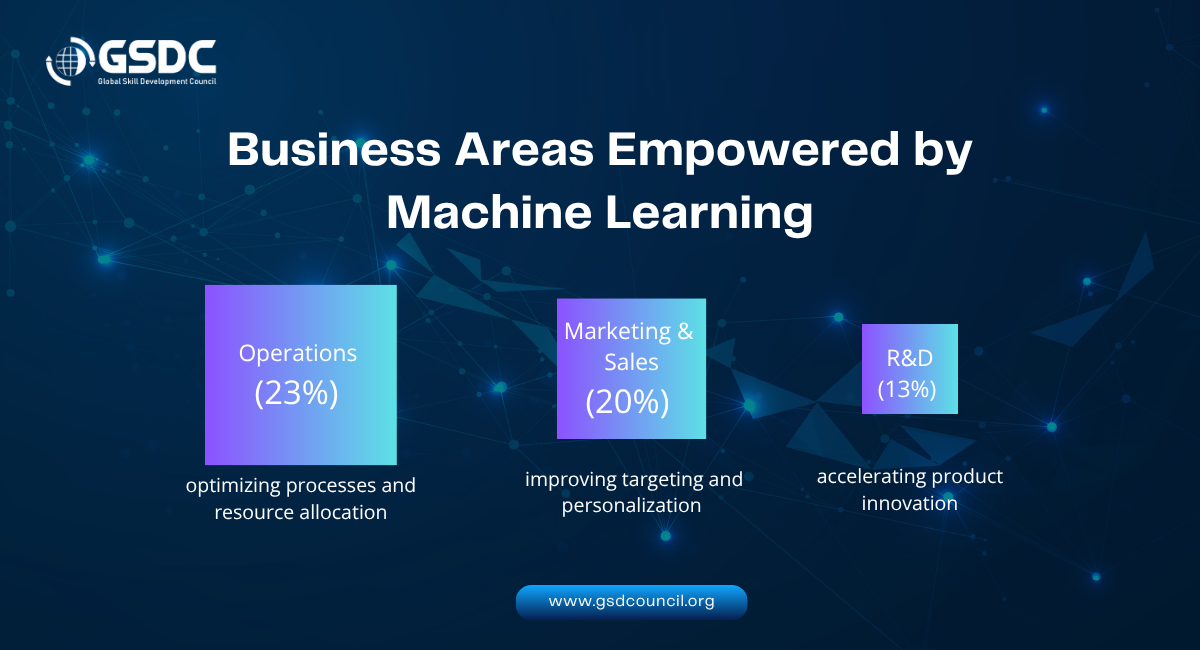 Why Businesses Depend on Machine Learning
Machine learning has become a strategic necessity across industries. Studies show organizations adopting AI and ML report significant productivity gains and stronger customer experiences, especially in sectors like finance, manufacturing, and healthcare.
Bridging the Skills Gap
While demand for ML skills surges, only 12% of professionals have practical exposure to AI or ML. For mid-level professionals, this presents an opportunity to strengthen their profile, gain career resilience, and stay ahead of automation trends.
The Strategic Edge
Mastering machine learning empowers professionals to:
- Identify new data-driven opportunities
- Collaborate effectively with data science teams
- Enhance productivity through automation
- Lead innovation and digital transformation
Machine learning isn’t just about algorithms - it’s about enabling smarter, faster business decisions. Understanding how does machine learning work helps professionals unlock hidden value across operations.
AI vs Machine Learning: Understanding the Difference and Career Impact
AI and machine learning are often used interchangeably, but they play distinct roles within the same ecosystem.
AI: The Broad Intelligence Framework
Artificial Intelligence (AI) replicates human reasoning and decision-making through:
- Natural Language Processing (NLP)
- Computer Vision
- Expert systems and automation
- Robotics and autonomous systems
ML: The Engine Behind AI
Machine Learning focuses on training systems to learn from data and improve over time. It drives real world AI applications such as:
- Fraud detection
- Recommendation engines
- Predictive maintenance
- Dynamic pricing models
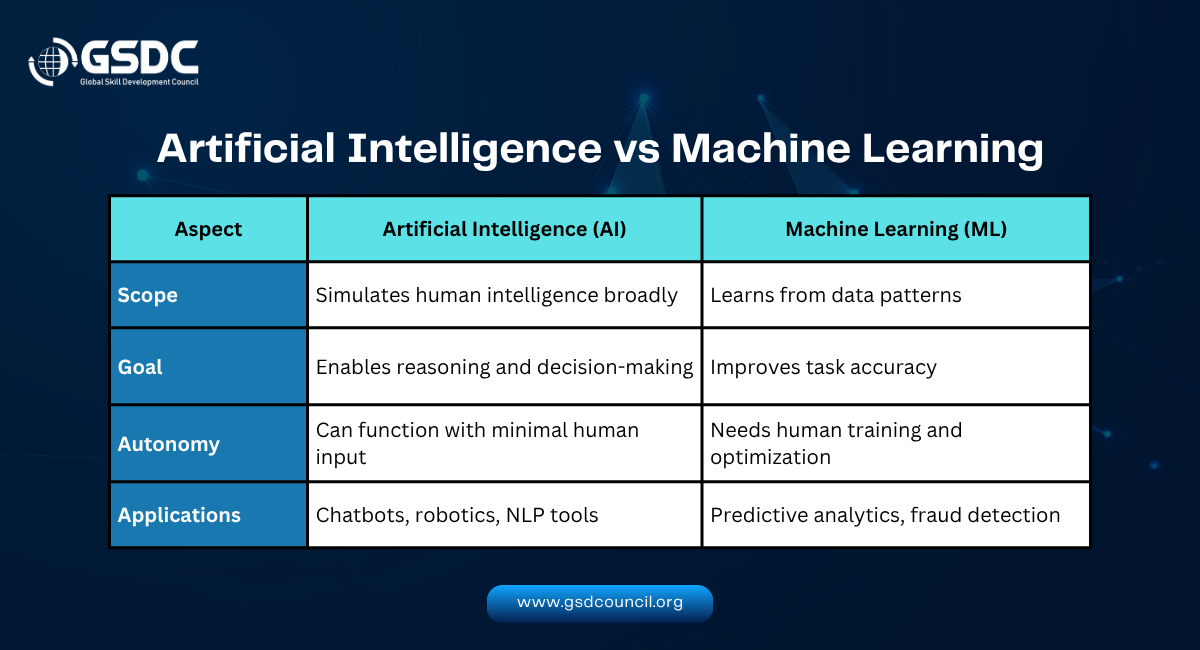 Understanding machine learning vs AI and how does AI and machine learning work provides professionals clarity on how to apply both effectively in business.
Building a Strong Foundation in Machine Learning
Professionals exploring how to learn machine learning or how to get started with AI and ML should first strengthen their fundamentals before advancing to complex models.
Essential Skills
- Programming Proficiency: Learn Python and libraries like NumPy, TensorFlow, and Scikit-learn.
- Mathematics Mastery: Strengthen your understanding of linear algebra, calculus, and probability.
- Data Science Fundamentals: Gain experience in data cleaning, visualization, and feature engineering.
Learning Pathways
- Structured Courses: Platforms like Coursera, edX, and Udemy offer guided learning paths.
- Self-Learning: Open-source projects, GitHub repositories, and YouTube tutorials provide flexible options.
- Mentorship & Community: Join online AI forums or ML groups to stay updated with the latest trends.
Practical Learning through Projects
Building real-world projects enhances your credibility and portfolio:
- Image classification using Convolutional Neural Networks (CNNs)
- Natural language processing with Recurrent Neural Networks (RNNs)
- Recommendation systems using collaborative filtering
- Time-series forecasting with ARIMA or LSTM models
True mastery comes from applying knowledge through projects. Learning with GSDC strengthens expertise and boosts career growth in AI and ML.
Turning Knowledge into Business Impact
Mastering ML is not just about understanding algorithms - it’s about driving measurable business outcomes. Professionals use AI and ML to transform data into insights that boost innovation and ROI.
Real-World Applications of Machine Learning
- Finance: Predictive analytics improves forecasting accuracy, helping businesses make smarter investment decisions.
- Retail: Inventory optimization powered by ML minimizes waste and ensures demand-driven stock levels.
- Healthcare: AI-driven diagnostics enable faster, more accurate disease detection, improving patient care.
-
Case Insight: General Motors
General Motors partnered with Autodesk to apply generative design, using ML algorithms to redesign a seat bracket. The result? A 40% lighter and 20% stronger component, integrating multiple parts into one 3D-printed structure. This innovation demonstrates how ML optimizes design, reduces material costs, and accelerates production.
-
Case Insight: John Deere
John Deere’s “See & Spray” system uses ML and computer vision to identify weeds in real time. It precisely applies herbicide only where needed, reducing chemical use and boosting sustainability - a direct blend of technology and environmental responsibility.
-
Case Insight: FDA’s IDx-DR
The FDA-approved IDx-DR system employs ML to detect diabetic retinopathy, achieving an 87.4% accuracy rate in diagnosis. It enables primary care physicians to perform eye screenings without specialist intervention - a clear example of ML bridging healthcare accessibility gaps.
These real-world examples show why machine learning matters - it transforms data into innovation and measurable results. Earning the Certified Machine Learning Master credential validates this expertise and empowers professionals to drive business impact with confidence.
Download the checklist for the following benefits:
Gain access to our exclusive Professional Toolkit packed with insights and practical guides.
📥 Download now and take the next step in your career growth.
Mapping the Machine Learning Career Path
The machine learning career path offers varied roles that combine technical depth with strategic influence.
Key Roles
- Machine Learning Engineer: Designs, builds, and deploys ML models.
- Data Scientist: Extracts actionable insights from structured and unstructured data.
- AI Product Manager: Bridges business goals with AI-driven solutions.
Job Market & Salaries (2025)
According to global hiring reports:
- Demand for ML professionals is expected to grow by 40% from 2023–2027.
- India: Average salary for ML Engineers is ₹39.4 lakh per year, with the top 10% earning above ₹78 lakh.
- U.S.: ML Engineers earn USD 157,000–178,000 annually, with Data Scientists earning up to USD 190,000.
With strong demand and high pay, it’s clear is machine learning a good career? Absolutely - it’s one of the fastest-growing, most rewarding fields in tech.
Earning Recognition: The Power of Certification
As competition in data-driven roles intensifies, professionals pursue machine learning certification programs to validate their skills.
The Global Skill Development Council (GSDC) offers the Certified Machine Learning Master - featuring 50+ hours of hands-on learning, project-based assessments, and interview preparation. This machine learning certification helps professionals blend strategy with technical expertise, advancing their AI machine learning career path globally.
Conclusion: Building the Future with Applied Machine Learning
Mastering ML is essential for professionals aiming to remain relevant in an AI-driven future. Those who apply how to master machine learning principles to business challenges lead innovation and transformation.
Continuous learning, applied experimentation, and certifications like the GSDC Certified Machine Learning Master enable professionals to achieve excellence in this evolving domain.
The future belongs to those who understand why machine learning is important - and turn that knowledge into real-world impact.
Frequently Asked Questions (FAQs)
1. How to master machine learning?
You can master machine learning by combining theory with hands-on projects. Focus on Python, data analysis, and real-world AI applications to build practical skills.
2. How long does it take to master machine learning?
It usually takes 6–12 months to master machine learning, depending on your experience, learning pace, and project involvement.
3. How does machine learning work?
Machine learning works by training algorithms to learn from data, recognize patterns, and make predictions without explicit programming.
4. How to learn machine learning?
Start by learning programming, mathematics, and data science basics. Then, take structured courses or earn a machine learning certification for professional growth.
5. What’s the difference between machine learning vs AI?
AI mimics human intelligence broadly, while machine learning focuses on algorithms that learn from data to improve task performance.
6. How does AI and machine learning work together?
AI sets the goal of intelligent behavior, and machine learning provides the data-driven learning needed to achieve it through predictive and adaptive models.
7. How to get started with AI and ML?
Learn Python, explore online tutorials, and build beginner projects. Earning certifications helps create a strong foundation in AI and ML.
8. What are real world AI applications?
Real-world AI applications include fraud detection, predictive maintenance, customer personalization, and healthcare diagnostics.
9. Why is machine learning important?
Machine learning is important because it drives automation, enhances decision-making, and fuels innovation across modern industries.
10. What is the typical machine learning career path?
The machine learning career path starts from data analyst roles and progresses to ML engineer, AI specialist, and leadership positions.

Related Certifications
Stay up-to-date with the latest news, trends, and resources in GSDC
If you like this read then make sure to check out our previous blogs: Cracking Onboarding Challenges: Fresher Success Unveiled
Not sure which certification to pursue? Our advisors will help you decide!