Why Businesses Are Adopting Generative AI Faster Than Ever
Written by Matthew Hale
Generative AI in business operations is transforming the landscape at an unprecedented pace. Organizations across industries are adopting AI solutions to boost productivity, drive innovation, and stay competitive. In 2025, the global AI industry is valued at $18.5–$37.9 billion, with projections suggesting it could surpass $350 billion by 2030. 55% of companies are piloting generative AI in business, while 10% have already deployed it in production.
Businesses are leveraging generative AI for business transformation to automate repetitive tasks, generate creative content, enhance analytics, and deliver hyper-personalized customer experiences. Marketing, content creation, product design, and software development are leading areas of adoption, with tools like GitHub Copilot and ChatGPT improving developer efficiency by 10–30%. Millennials and Gen Z are driving adoption, creating a tech-savvy workforce that integrates AI seamlessly into daily operations.
From small startups to Fortune 500 companies, 92% of large enterprises have implemented generative AI, seeing up to $3.70 in value for every $1 invested. Companies where Leaders Leverage Generative AI strategically are not just modernizing-they are reshaping decision-making, creativity, and innovation to maintain a competitive edge.
Generative AI in business operations is transforming the landscape at an unprecedented pace. Organizations across industries are adopting AI solutions to boost productivity, drive innovation, and stay competitive. In 2025, the global AI industry is valued at $18.5–$37.9 billion, with projections suggesting it could surpass $350 billion by 2030. 55% of companies are piloting generative AI in business, while 10% have already deployed it in production.
Businesses are leveraging generative AI for business transformation to automate repetitive tasks, generate creative content, enhance analytics, and deliver hyper-personalized customer experiences. Marketing, content creation, product design, and software development are leading areas of adoption, with tools like GitHub Copilot and ChatGPT improving developer efficiency by 10–30%. Millennials and Gen Z are driving adoption, creating a tech-savvy workforce that integrates AI seamlessly into daily operations.
From small startups to Fortune 500 companies, 92% of large enterprises have implemented generative AI, seeing up to $3.70 in value for every $1 invested. Companies where Leaders Leverage Generative AI strategically are not just modernizing-they are reshaping decision-making, creativity, and innovation to maintain a competitive edge.
What Is Driving the Rapid Adoption of Generative AI in Business?
 The adoption of generative AI use cases in business is fueled by its ability to enhance efficiency, creativity, and data-driven decision-making. Companies are increasingly turning to AI to automate routine tasks, generate insights, and accelerate innovation.
- Automation of Routine Tasks: Generative AI handles repetitive work like drafting emails, summarizing reports, or generating code snippets. This frees employees to focus on high-value, strategic projects.
- Boosting Creativity: Marketing teams leverage how generative AI is changing creative work to produce content, visuals, and campaign ideas at scale, while product teams simulate and optimize designs before production.
- Enhanced Analytics: Predictive AI models help businesses anticipate market trends, allocate resources efficiently, and make smarter decisions.
Industries Leading the Adoption:
- Finance: Fraud detection, risk modeling, and customer behavior prediction.
- Healthcare: Patient care optimization, diagnostics, and research.
- Retail & E-commerce: Personalized marketing, product recommendations, and inventory forecasting.
- Technology & Software: Code generation and workflow automation through AI tools.
Generative AI adoption is no longer optional. Organizations that leverage it effectively gain operational efficiency, improved creativity, and a strategic advantage over competitors.
How Generative AI is Reshaping Modern Business
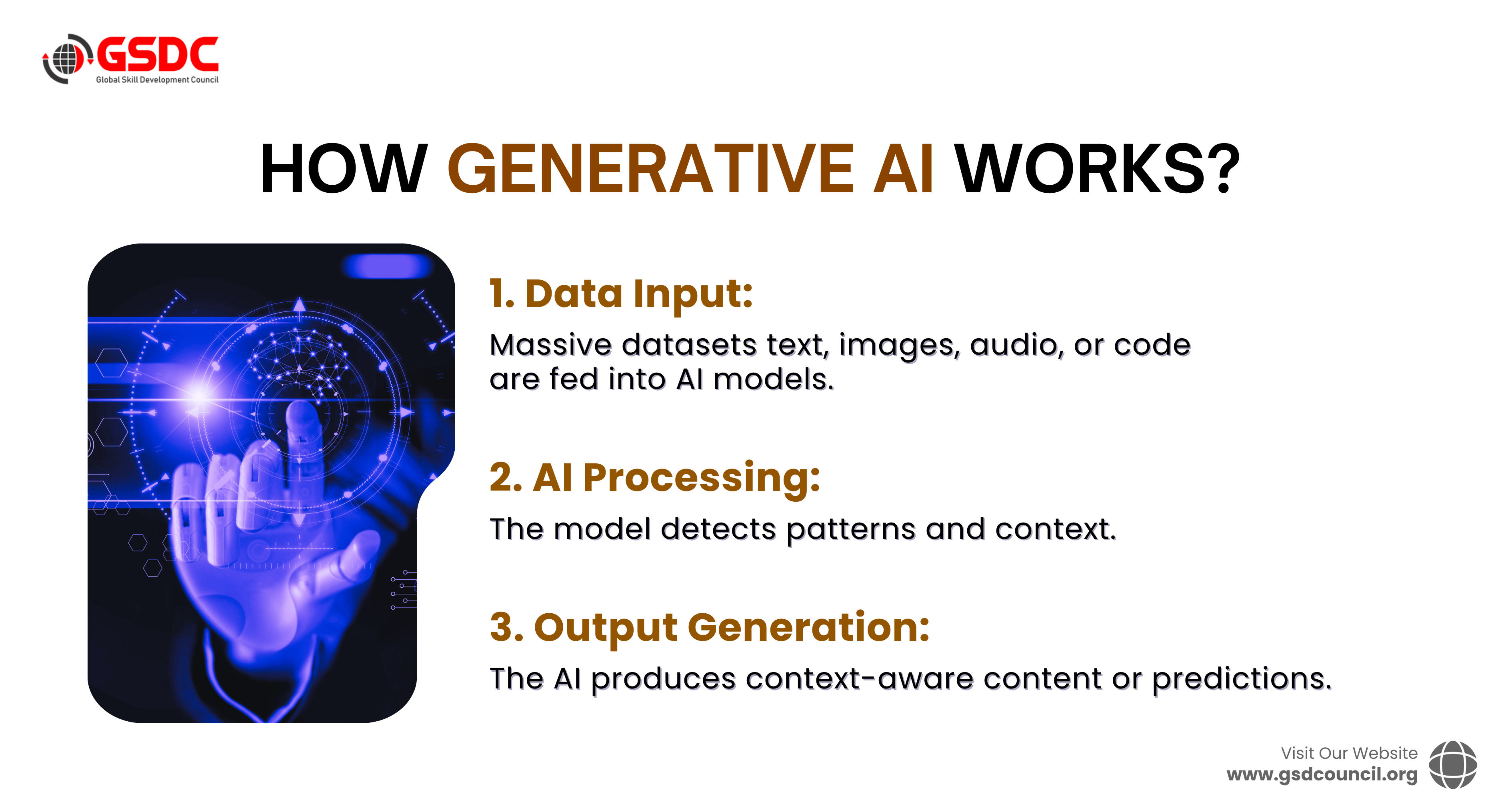
How generative AI works is central to transforming operations. Generative AI is redefining business processes by streamlining operations, fostering innovation, and delivering superior customer experiences.
-
Enhancing Efficiency and Productivity:
- Automating tasks: Companies like IBM and Microsoft use AI for document summarization, code generation, and workflow automation.
- Streamlining operations: Retailers such as Walmart and logistics firms like DHL optimize supply chain management using AI.
- Boosting productivity: AI allows employees to focus on strategic initiatives, increasing output across departments.
-
Driving Creativity and Innovation:
- Content generation: Brands like Netflix and Nike create marketing visuals and campaign ideas at scale.
- Accelerating innovation: Pharmaceutical and tech companies use AI to analyze data and identify new product opportunities.
-
Improving Customer Experience:
- Personalization: Amazon and Sephora deliver hyper-personalized recommendations and chat experiences.
- Meeting expectations: AI helps companies respond instantly, improving customer satisfaction and loyalty.
-
Strategic Advantages:
- Competitive differentiation: Faster innovation and efficient operations set AI adopters apart.
- Data-driven insights: Transforming raw data into actionable business decisions.
Businesses that embrace AI under the guidance of executives who understand how Leaders Leverage Generative AI can turn technology into a competitive advantage
How Much Is the AI Industry Worth
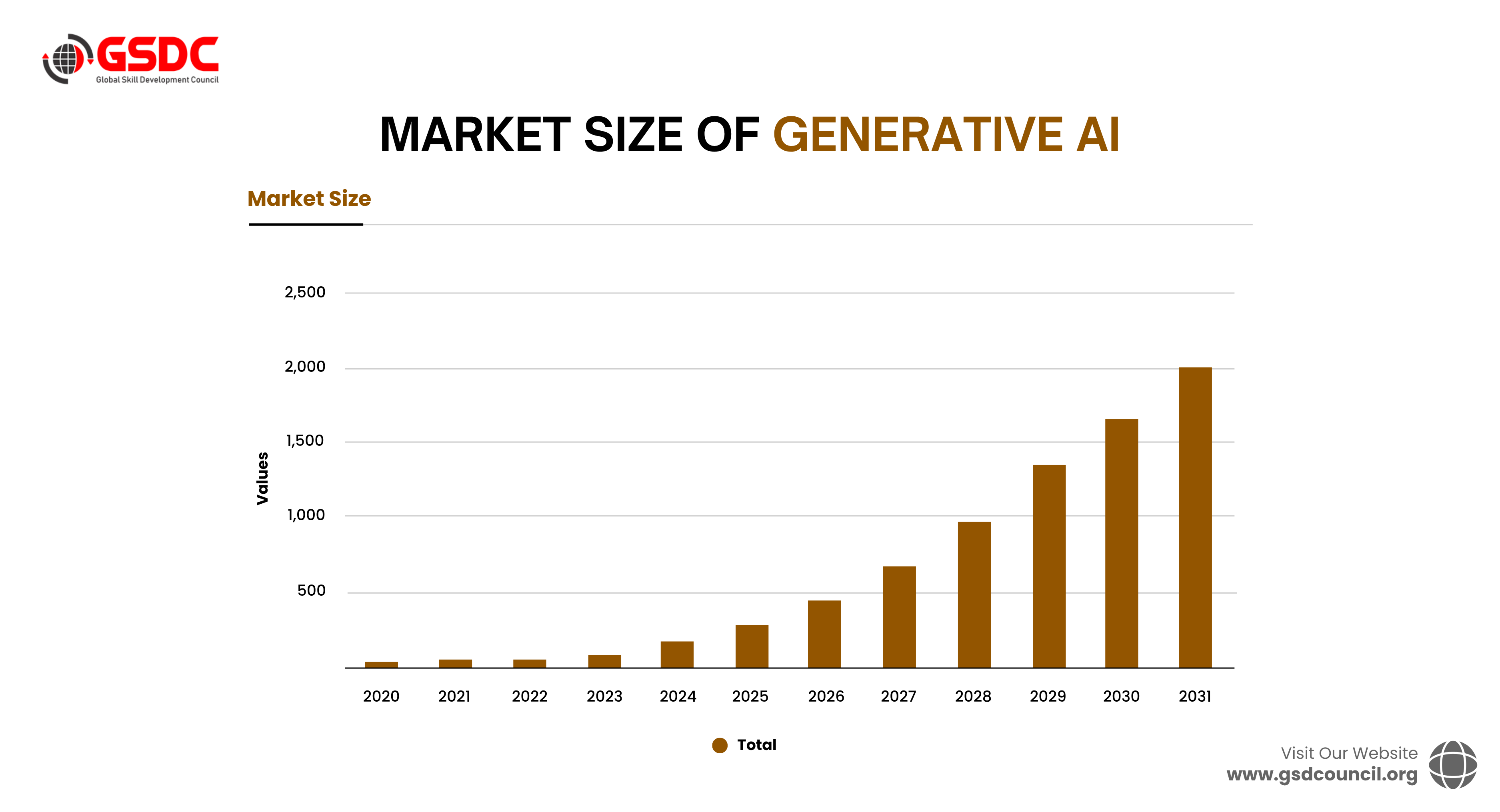
The rapid growth of generative AI in business operations is reflected in the market size and adoption trends. According to Statista Market Insights, the global Generative AI market is projected to reach US$59.01 billion in 2025. It is expected to grow at a CAGR of 37.57% from 2025 to 2031, reaching US$400 billion by 2031. The United States leads the market with US$27.51 billion in 2025, followed by China, Germany, Japan, and France.
Current trends include midjourney models, bridging pretrained models like GPT-3 with customized solutions, enabling businesses to fine-tune AI for specific tasks. Popular models like ChatGPT allow interactive, context-aware, and dynamic experiences for business applications.
Future growth will focus on advanced machine learning and deep learning, enabling:
- Highly realistic virtual actors
- Personalized content generation
- Applications in healthcare, entertainment, design, and fashion
- Creation of novel artworks, architectural designs, fashion trends, and personalized treatment plans
- Synthesis of new drug compounds
Ethical considerations remain essential, as AI could potentially be misused to generate realistic but misleading content.
This massive expansion of how much is the AI industry worth underscores why business transformation in generative AI is no longer optional for companies seeking efficiency, innovation, and competitive advantage.
Key Use Cases of Generative AI in Business
Generative AI is transforming industries by enabling innovation, reducing costs, and delivering personalized experiences. Key applications include:
1. Content Creation and Design: Platforms like Adobe Firefly and Canva generate visuals, videos, and marketing campaigns. AI also helps create blog posts, social media content, and product descriptions, reducing creative bottlenecks and allowing teams to focus on strategy.
2. Predictive Business Modeling: Banks use AI for fraud detection, credit risk assessment, and forecasting customer behavior. Retailers like Walmart and Target optimize inventory and pricing using AI-driven predictions, enabling faster, data-driven decisions and improved profitability.
3. Chatbots and Customer Experience: AI chatbots at Amazon, Domino’s, and Sephora offer instant, personalized responses. Generative AI enhances these bots with adaptive conversations and multilingual support, boosting engagement, retention, and satisfaction.
4. Product Design Innovation: Brands like Nike, Tesla, and Procter & Gamble use AI to generate prototypes, simulate performance, and test design variations. This accelerates R&D, reduces prototyping costs, and encourages experimentation.
5. Code Generation and Workflow Automation: Tools like GitHub Copilot help developers write code and automate repetitive tasks. Teams save time, reduce errors, and increase productivity, focusing on innovation and strategic projects.
Businesses that provide Training for Leaders Is the Real Game-Changer ensure executives can implement AI responsibly and inspire their teams to adopt innovation effectively.
-
Benefits of generative AI in business
Generative AI drives efficiency, personalization, and innovation, enabling faster decision-making, operational savings, scalable creativity, and improved customer experiences. Businesses applying AI across these areas unlock measurable value, sustainable growth, and new revenue opportunities.
Programs that focus on Shaping Future Leaders help executives develop the vision and skills required to guide their organizations through AI-driven transformation while fostering talent that innovates and executes with precision.Download the checklist for the following benefits:
Download the step-by-step toolkit for Generative AI 📘
Learn, apply, and transform your business now! ⚡
Certification and Skill Development:
 For professionals aiming to maximize AI impact, the Certification in Generative AI in Business offers hands-on learning and real-world application. Recognized by the GSDC, this program equips learners to implement AI responsibly, enhance career growth, and drive AI-powered business transformation. Certification programs provide practical knowledge and guidance, ensuring that Training for Leaders Is the Real Game-Changer for professionals seeking to maximize AI impact and achieve measurable business outcomes.
Conclusion: The Transformative Power of Generative AI
Generative AI impact on business is seen across efficiency, creativity, and strategic advantage. Companies leveraging AI gain significant generative AI business value and remain competitive in a rapidly evolving marketplace.
Executives who embrace AI skills and certifications demonstrate Effective Leadership, showing how technology can be harnessed for sustainable business growth. By investing in knowledge and practical expertise, organizations and individuals can unlock the full potential of generative AI, turning innovation into tangible business value and Shaping Future Leaders in the process.
FAQ’s
Q1: What is generative AI in business operations?
Generative AI in business operations uses AI tools to automate tasks, generate content, and provide insights that improve efficiency and decision-making.
Q2: How does generative AI work for business transformation?
How generative AI works involves processing data with models like ChatGPT and midjourney models to support innovation, productivity, and personalized customer experiences.
Q3: What are the key generative AI use cases in business?
Generative AI use cases in business include content creation, predictive analytics, chatbots, product design simulations, and code generation for workflow automation.
Q4: How is generative AI changing creative work?
How generative AI is changing creative work includes generating marketing visuals, campaign ideas, design prototypes, and simulations faster and more efficiently.
Q5: What are the benefits of generative AI in business?
Benefits of generative AI in business include increased productivity, scalable creativity, improved customer experiences, cost reduction, and data-driven decisions.

Related Certifications
Stay up-to-date with the latest news, trends, and resources in GSDC
If you like this read then make sure to check out our previous blogs: Cracking Onboarding Challenges: Fresher Success Unveiled
Not sure which certification to pursue? Our advisors will help you decide!