PCI DSS 4.0: Key Requirements and What It Means for Payment Security
Written by Matthew Hale
- What Is PCI DSS 4.0?
- Why PCI DSS Is Important
- Why PCI DSS Needed an Update
- Key Changes Introduced in PCI DSS 4.0
- Key PCI DSS 4.0 Security Controls
- Technologies Supporting PCI DSS Compliance
- When Is PCI DSS 4.0 Required?
- PCI DSS Certification
- The Future of Payment Security and Compliance
- Development of Knowledge in the Field of PCI DSS Compliance
- Conclusion
Digital payments have become the lifeblood of business. Companies now use online orders, mobile payments, and digital wallets to reach customers worldwide. As payment systems grow from card machines to cloud platforms, APIs, and mobile devices, the risk of unauthorized access to cardholder data increases.
In response to the increased risks, the Payment Card Industry Council has recently released PCI DSS 4.0, an updated version of the PCI Data Security Standard.
Many are now trying to understand what is PCI DSS 4.0 and how it will impact their payment security strategy. By implementing the new standard, companies will be expected to move from doing compliance checks from time to time towards adopting security.
What Is PCI DSS 4.0?
PCI DSS 4.0 is the new version of the Payment Card Industry Data Security Standard and a global security framework for payment card data protection.
This document outlines security protocols for entities that handle credit card data (store, process, or transmit), as a way to help them minimize the risk of fraud and data breaches.
The revised PCI DSS 4.0 requirements comprise enhanced security controls, better authentication methods, and ongoing monitoring to cover various payment environments of today, like cloud systems, mobile payments, and fintech platforms.
Why PCI DSS Is Important
In the absence of strong security measures, companies risk facing both financial losses and damage to their reputation. PCI DSS is a set of security standards designed to ensure that all companies that accept, process, store, or transmit credit card information maintain a secure environment.
Cases of fraud in digital payment channels strongly call for more secure payment methods. Internal Image:
Most Frequent Channels for Fraud Events. Since businesses depend more on online and mobile payments, the criminals who want to commit cybercrimes are also focused on these platforms.
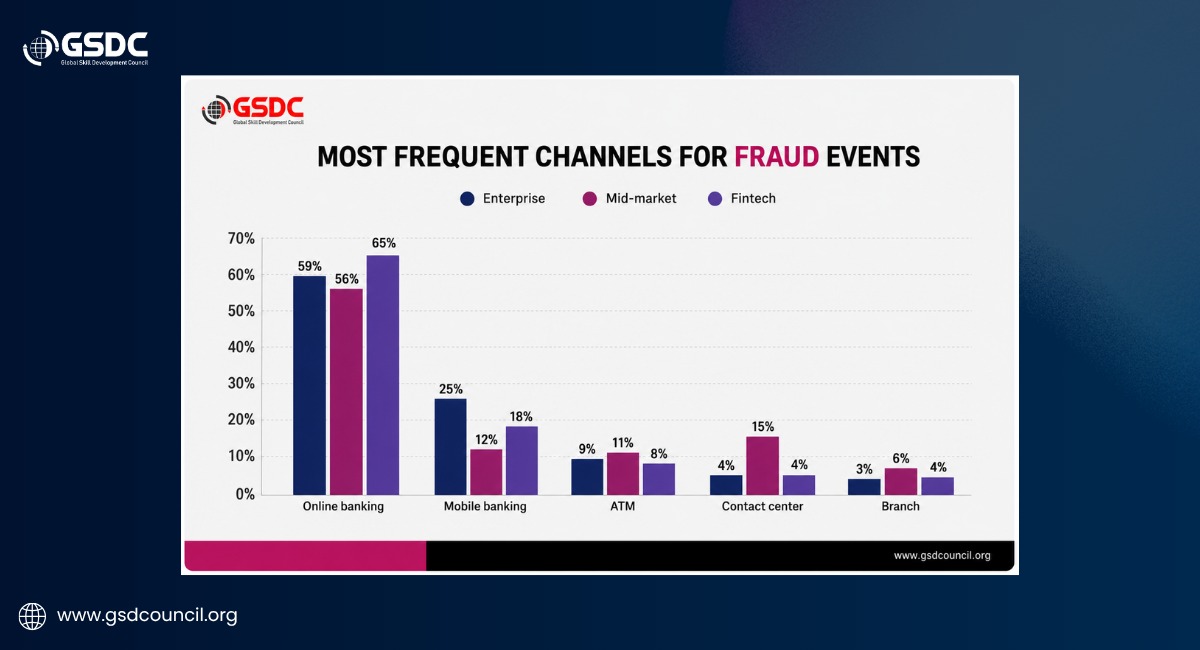
Grasping the reasons behind PCI compliance will lead to building payment systems with enhanced security, fostering customer goodwill, and undermining the likelihood of data breaches. Furthermore, professionals seeking a better knowledge of payment security can get industry-recognized credentials like the Certified PCI DSS (Payment Card Industry Data Security Standard) certificate.
Why PCI DSS Needed an Update
Besides focusing on annual compliance audits, previous versions of the standard paid limited attention to other aspects of payment security. Modern payment ecosystems however have become far more complex and diverse in nature.
Today’s payment infrastructure often includes:
- Cloud-based payment gateways
- Mobile point-of-sale systems
- API-driven fintech services
- Distributed digital commerce platforms
These technologies increase the number of potential entry points for cyber attackers.
To address these challenges, the updated PCI DSS 4.0 requirements strengthen security practices and encourage organizations to continuously monitor and validate their security controls.
As organizations adapt to these evolving security requirements, developing expertise in payment security frameworks becomes increasingly important. Industry organizations such as the Global Skill Development Council (GSDC) support professionals in building knowledge around compliance standards, cybersecurity practices, and payment data protection.
Key Changes Introduced in PCI DSS 4.0
The latest version, PCI DSS 4.0, introduces updates to strengthen payment security and support evolving digital payment systems. Compared to earlier versions, it emphasizes continuous security monitoring, stronger authentication, and greater flexibility in implementing security controls.
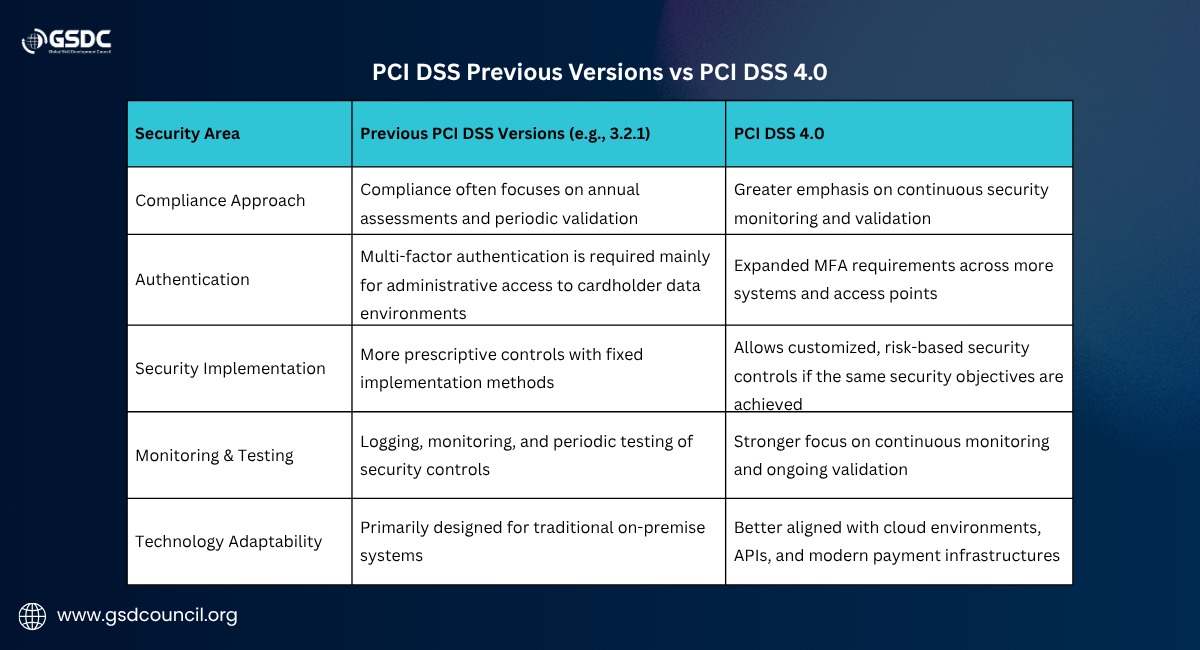
These updates highlight how PCI DSS 4.0 strengthens payment security while giving organizations greater flexibility in implementing compliance controls.
- Continuous Security Monitoring
One of the changes that the new version, PCI DSS 4.0, introduces is the continuous security monitoring approach. Unlike the previous versions, which emphasized conducting security tests annually, the new version ensures that organizations remain vigilant at all times.
As such, the new version ensures that organizations remain vigilant at all times. Therefore, the new
- Stronger Authentication Controls
The new framework places more emphasis on stronger identity verification measures. This includes:
- Multi-factor authentication
- Access monitoring tools
- Robust identity verification measures
These steps ensure that unauthorized parties are denied entry into systems handling payments. This is in compliance with the updated PCI DSS 4.0 requirements.
- Flexible Security Implementation
Another upgrade in the PCI DSS 4.0 is the added flexibility. This is in the sense that the PCI DSS 4.0 framework allows companies to use their preferred security measures depending on their technology environment, as long as the basic security needs are met.
This is especially important for companies using the cloud environment.
Key PCI DSS 4.0 Security Controls
As organizations prepare to comply with the PCI DSS 4.0 standard, they usually focus their attention on the major areas of the standard that the PCI DSS 4.0 requirements list.
The main focus areas include:
- Network security and firewalls
- Data at rest security
- Payment data encryption during transmission
- Access control measures
- System activity monitoring and logging
- Vulnerability testing
In addition, many teams also prepare their own internal PCI DSS 4.0 checklist to ensure they are able to track their progress and ensure the security controls remain in place.
Technologies Supporting PCI DSS Compliance
Today, organizations are relying more on technology to improve the security of their payments.
- Tokenization
In tokenization, the information of the cardholders is replaced with random values that have no value outside the system, hence reducing the risk of storing payment information.
- Point-to-Point Encryption (P2PE)
P2PE encrypts the payment information while in transit. It does this immediately after the information is captured at the terminal, hence making it hard for hackers to intercept the information.
- Zero Trust Security
Today, more organizations are adopting the Zero Trust model, which requires that every user, device, and system must be verified first before they can gain access.
These technologies help organizations strengthen payment security, protect cardholder data, and support compliance with PCI DSS requirements.
When Is PCI DSS 4.0 Required?
As you are moving towards the new standard, one of the questions on the minds of security professionals is when PCI DSS 4.0 is to be adopted.
If your organization is in the business of storing, processing, or transmitting cardholder data, you will have to comply with the new standard. Some of the changes you will notice in the new standard are stronger authentication, monitoring, and access controls.
To understand the foundation of PCI compliance, you can also explore the PCI DSS Requirements: Simple Guide to the 12 Essentials, which explains the core security controls organizations must implement. These twelve requirements form the basis of PCI DSS and help protect cardholder data from fraud and breaches.
Preparation is the key to minimizing compliance risks and strengthening your payment security.
PCI DSS Certification
When an organization seeks PCI DSS certification, it demonstrates that the organization complies with the security standards set for the protection of credit card information.
In most cases, organizations that seek PCI DSS certification are subjected to compliance checks, security audits, and continuous monitoring to ensure that the necessary security controls are in place.
The Future of Payment Security and Compliance
The future of payment security and compliance will continue evolving as new payment technologies emerge.
Digital wallets, contactless payments, embedded finance, and fintech platforms are changing how financial transactions take place. As these innovations grow, security frameworks like PCI DSS 4.0 will continue adapting to address new risks and protect sensitive financial data.
Organizations that treat compliance as an ongoing security strategy will be better prepared for this rapidly changing landscape.
Development of Knowledge in the Field of PCI DSS Compliance
With the ever-changing nature of the payment system, more people are looking for experts with in-depth knowledge of the payment security system or compliance standards. The Global Skill Development Council (GSDC) has introduced the Certified PCI DSS course to help individuals gain more knowledge about the compliance standards of the PCI DSS.
The Certified PCI DSS course helps learners to gain more knowledge about the working of the PCI DSS frameworks, the compliance standards of the frameworks, and the ways to handle the security risks in the payment system.

Conclusion
PCI DSS 4.0 introduces major changes in the way we protect payment data. The revised standards focus on ongoing supervision, enhanced authentication, and allowing businesses to choose the security measures that best meet their needs.
Familiarizing oneself with the changes PCI DSS 4.0 brings, consulting a detailed list of its requirements, and following a systematic PCI DSS 4.0 checklist help companies reinforce their defense against payment data breaches.
Given the rise of the digital economy, payment security that goes beyond just meeting regulatory standards is key to retaining customers' trust and safeguarding their monetary transactions.

Related Certifications
Frequently Asked Questions
Stay up-to-date with the latest news, trends, and resources in GSDC
If you like this read then make sure to check out our previous blogs: Cracking Onboarding Challenges: Fresher Success Unveiled
Not sure which certification to pursue? Our advisors will help you decide!