Agentic AI vs AI Agents: What’s the Difference and Why It Matters
Written by Matthew Hale
- What Are AI Agents?
- What Is Agentic AI?
- Agentic AI vs AI Agents: Key Differences
- Real-World Business Implications
- Why This Difference Matters for Organizations
- Challenges of AI Agents and Agentic AI
- When Should You Use Each?
- The Future: From Agents to Agentic Systems
- Want to Build Expertise in Agentic AI?
- Conclusion
In the context where AI technology becomes more advanced by transitioning from performing several predetermined tasks to making adaptive decisions, confusion arises regarding the use of the terminology of AI agents versus agentic AI, but the former and the latter are not interchangeable.
These concepts represent different stages of AI capability. Understanding agentic AI vs AI agents is essential for businesses moving beyond basic AI task automation. This distinction is not just technical; it directly impacts how organizations automate work, manage risk, and make decisions at scale.
In simple terms, the difference between AI agents and agentic systems is clear: AI agents execute tasks, while agentic AI systems can plan, decide, and act independently.
Adoption is already growing. Around 79% of companies are using AI agents (PwC), while nearly one-fourth are exploring or deploying agentic AI (McKinsey & Company).
In this blog, we’ll explain what are AI agents, what is agentic AI, and how they differ in a simple, practical way.
What Are AI Agents?
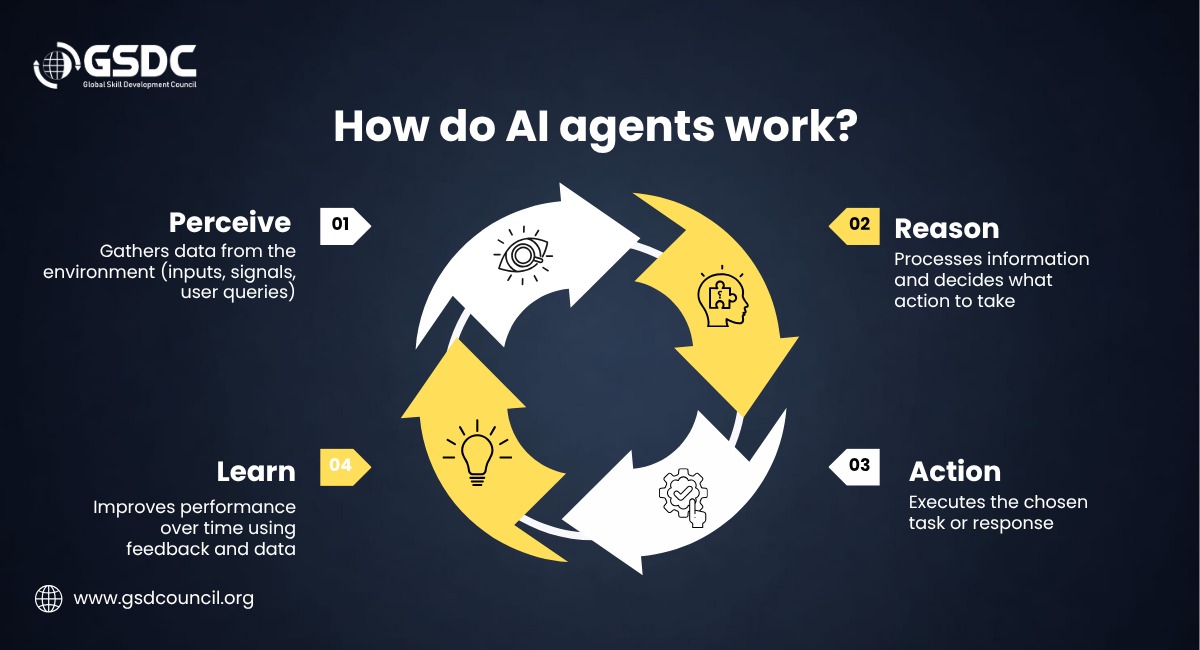
AI agents are software applications created to execute certain tasks according to predefined rules or commands.
AI agents find numerous applications in different areas of an organization, like customer support, suggestions, and information filtering.
Common AI agents examples include:
- Chatbots for answering common queries
- AI-based recommendation algorithms for the personalized experience of users
- Spam detectors for managing emails
They make up an essential part of the AI automation tool set and help in the daily automation of AI tasks. There is very fast growth in their use, and a vast number of companies have already implemented AI agents and observed increased efficiency and productivity.
In other words, AI agents can be said to be task-driven systems working within specific parameters.
What Is Agentic AI?
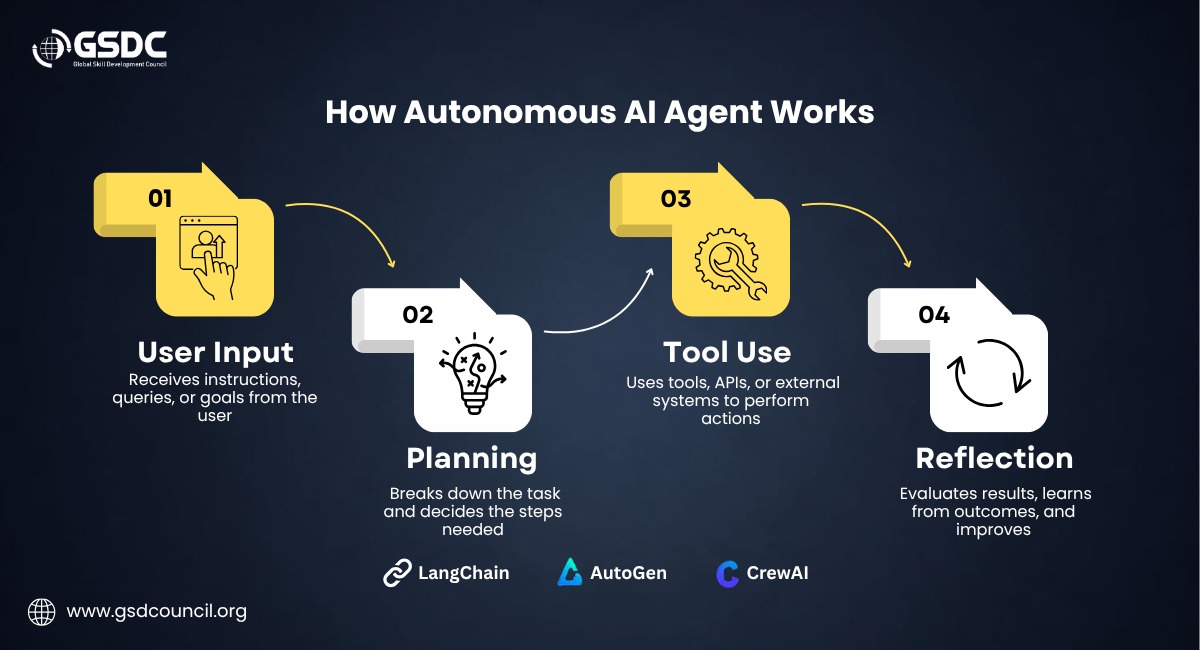
Agentic AI is described as intelligent AI systems that do not merely work but operate at a higher degree of autonomy.
These kinds of AI systems are not restricted to the implementation of a set of tasks. They have the ability to decide and plan, to be flexible, and even organize multi-step workflows autonomously.
Key capabilities of agentic AI include:
- Decision-making based on goals and environment
- Planning and carrying out multiple steps of an action
- Adaptability to changing environments
Thus, agentic systems are able to manage more complicated processes than simple automation instruments.
The application of agentic systems is increasing, and many businesses are starting to use them within their routine.
In other words, agentic AI can determine what should be done and how.
Agentic AI vs AI Agents: Key Differences
Knowledge about the AI agents vs agentic AI distinction will be key for organizations transitioning from simple automation systems to smart systems.
It’s not just about what these two types of technologies can do; it’s more about their way of functioning and decision-making process.
Feature | AI Agents | Agentic AI |
Core Function | Executes predefined tasks | Owns and manages complete processes |
Decision-making | Rule-based, limited to given instructions | Context-aware, goal-driven, and adaptive |
Autonomy Level | Low to moderate | High autonomy with minimal human input |
Flexibility | Works within fixed parameters | Adjusts dynamically to new situations |
Learning Capability | Pre-trained or limited learning | Continuous learning and improvement |
Scope of Work | Single-task execution | Multi-step workflows and end-to-end processes |
Interaction | Responds to inputs | Proactively initiates actions |
Error Handling | Requires human intervention | Can self-correct and optimize outcomes |
Role in Systems | Task executor | Decision-maker and process owner |
This comparison shows how agentic AI vs AI agents differ in capability and impact. While AI agents support structured AI task automation, they operate within fixed boundaries.
In comparison, agentic artificial intelligence is capable of managing complicated processes without much supervision and is therefore more fit for complicated business processes.
As it becomes more popular, companies have started spending money on educating their employees on working with agentic AI through courses like agentic AI certification.
Understanding what is agentic AI vs AI agents ultimately helps businesses choose between task-level automation and intelligent, end-to-end execution.
Real-World Business Implications
Insight into how agentic AI operates within the context of the real world allows for a clearer understanding of the implications of such technologies when contrasted with conventional AI systems.
1. Monitoring for Compliance
- AI Agent: Raises alarms in case of violations of pre-set criteria and rules.
- Agentic AI: Not only identifies compliance violations but also analyzes the situation, uncovers the reasons behind such an occurrence, and even suggests remedial steps. This type of AI can even prioritize issues according to their risk level and implications for the business.
2. Audit Processes
- AI Agent: Provides access to relevant information and assists with answering audit questions from structured data sources.
- Agentic AI: Prioritizes audits, adjusts the audit testing approach dynamically, and concentrates efforts on risky areas.
3. Risk Management
- AI Agent: Computes risk levels based on pre-set models and inputs.
- Agentic AI: Constantly analyzes data for early detection of new risks, assesses their possible consequences, and provides recommendations for risk mitigation.
The above examples are just one indication of a greater trend towards using AI in a new way within organizations, that is, not just for rule-based automation but for something more advanced.
The need to develop suitable capabilities when shifting towards autonomous AI systems is crucial. According to industrial groups such as the Global Skill Development Council (GSDC), there is a need for capabilities in areas such as AI governance, risk management, and intelligent automation.
Why This Difference Matters for Organizations
It is important for organizations to know about this distinction because organizations tend to make mistakes when they use automation techniques to tackle sophisticated issues.
AI agents perform very well when the task is predictable and structured, such as:
- Repeated actions
- Process flows
- Rule-bound environment
In such situations, AI agents enhance productivity through automation.
Whereas the agentic approach is more appropriate when faced with dynamic conditions. The agentic approach is most useful in:
- Challenging decision-making
- Dynamic situations
- Cross-functional processes
Both have advantages when applied correctly. The former increases operational efficiency through automation of repetitive and structured activities, while the latter leads to transformation through intelligent decisions made within contextual situations.
What this means for organizations
Organizations that have a clear understanding of this difference will be better equipped to make the proper choice when it comes to deploying AI. They will not overestimate the ability of automation but rather use it to enhance their AI strategies.
Challenges of AI Agents and Agentic AI
Even though there are many advantages to both AI agents and agentic AI, there are problems associated with them, which should be taken into account.
AI Agents
- High dependence on preprogrammed rules and low flexibility
- Ability to operate only in certain conditions
- Difficulties when dealing with uncertain situations
Agentic AI
- Governance complexity due to higher autonomy
- Dependence on good quality and dependable data
- Higher security risks because of wider access to the system
- Ethical issues, including bias and transparency
As AI systems become more advanced, managing governance, risk, and reliability becomes increasingly important.
When Should You Use Each?
The selection between AI agents and agentic AI will depend on the nature of the problem at hand, as well as its complexity.
This guarantees that companies can make good use of artificial intelligence by using agents for efficiency and agentic AI for flexibility.
The Future: From Agents to Agentic Systems
There are advancements in automation where businesses are going past just automating tasks towards automation in an intelligent system that operates autonomously.
The trend is a result of AI advancing from mere automation into intelligent systems.
As a result, there are new demands for professionals who have AI certification.
Want to Build Expertise in Agentic AI?
As organizations move toward intelligent automation, professionals are upgrading their skills to stay relevant.
Explore programs by the Global Skill Development Council (GSDC), including the Agentic AI Professional Certification, designed to help you build practical expertise in designing, managing, and scaling next-generation AI systems.
Conclusion
The distinction between AI agents and agentic AI serves as a clear illustration of how AI technology is developing from the mere automation of tasks to the development of intelligent entities driven by decisions.
As these technologies become increasingly popular, it will become crucial to know which one should be applied in what circumstances. Those companies that can effectively implement them will have an advantage in enhancing their performance.
However, those who can develop expertise in such technologies will also play a significant part in the future evolution of AI organizations.

Related Certifications
Frequently Asked Questions
Stay up-to-date with the latest news, trends, and resources in GSDC
If you like this read then make sure to check out our previous blogs: Cracking Onboarding Challenges: Fresher Success Unveiled
Not sure which certification to pursue? Our advisors will help you decide!