7 Data Protection Principles Every Organization Should Know
Written by Matthew Hale
How do organizations protect sensitive data in an increasingly digital world? As organizations continue to move further into digital tools and technology, it is more important than ever for organizations to adhere to best practices in data protection and security in order to maintain privacy, trust, and regulatory requirements. Understanding why protect data is important for organizations that collect and manage large amounts of personal information.
In fact, the average global cost of a data breach reached $4.44 million, showing how expensive poor data protection practices can be for organizations.
This blog serves as a guide to the data protection principles, explaining how many data protection principles are there and why the data protection officer role is becoming increasingly important for modern organizations.
Why Data Protection is Important for Today’s Organizations
Understanding why protect data is essential for organizations operating in a digital environment. Businesses collect large amounts of personal and operational information that must be handled responsibly.
The fundamental reasons are quite obvious:
- Personal data protection: Personal data should never end up in the wrong hands.
- Compliance with regulatory requirements: The need for data protection arises from the requirements of personal data protection principles.
- Building trust and reputation: People trust organizations more when they are able to protect their data.
- Building cyber security strength: Data protection helps reduce the chances of cyber-attacks.
A recent survey has revealed that 76% of consumers think organizations need to step up and protect their personal data, thus increasing the importance of data protection.
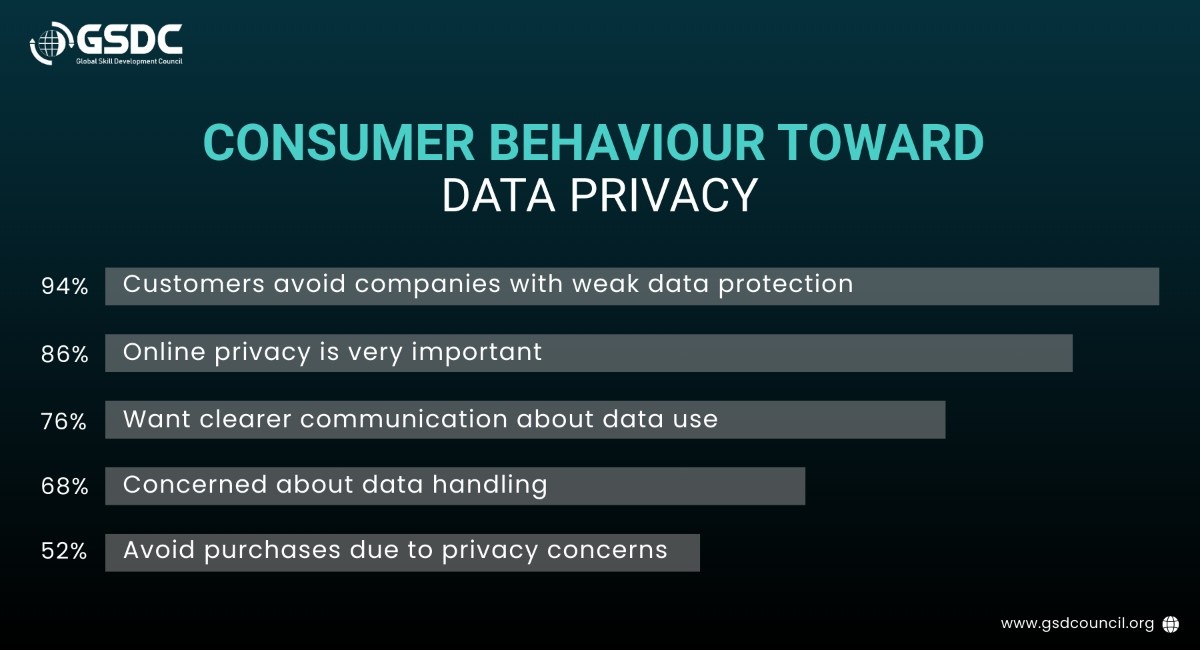
Caption: The increasing consumer expectations are compelling organizations to improve their data protection policies.
How Many Data Protection Principles Are There?
A common question organizations ask is how many data protection principles there are.
In most modern privacy systems, such as the GDPR, there are seven data protection principles. These are the key concepts that govern how data is collected, managed, and retained, especially regarding personal information, while promoting transparency and accountability in the process.
Understanding the seven data protection principles is crucial in establishing better privacy systems and ensuring compliance with international laws.
The 7 Core Data Protection Principles
The following data protection principles are the foundation upon which personal information is handled responsibly. These principles influence the collection, processing, utilization, storage, and protection of information, while ensuring transparency and accountability.
1. Lawfulness, Fairness, and Transparency
Data processing has to be carried out in a lawful, fair, and transparent manner. Individuals need to know, clearly, the method through which their information was collected, the reason for processing, and who has access to the information.
2. Purpose Limitation
Data processing has to be carried out for a specific, legitimate reason. Once a reason has been identified, the information cannot be used to carry out activities unrelated to the specified reason, without proper authorization.
3. Data Minimization
Only the information needed to fulfill the specified reason has to be collected. Additional information, which is not required, increases privacy risks and complicates data handling.
4. Accuracy
Personal data should be accurate and up to date. Organizations should seek to ensure that any inaccurate data is corrected or deleted to avoid making any business decisions based on inaccurate data.
5. Storage Limitation
Data should be stored for only as long as it is needed. Data storage policies should be developed, and personal data should be deleted or anonymized when it is no longer needed.
6. Integrity and Confidentiality
Personal data should be protected by security measures such as encryption and access controls to avoid any data breach or loss.
7. Accountability
Organizations should be able to demonstrate their ability to comply with these data protection principles and should also have data governance in place.
Data protection professionals, who are responsible for these data protection principles, may seek to be certified in data protection by undertaking training such as the Certified Data Protection Officer to be able to handle data protection effectively.
Understanding the Role of the Data Protection Officer
The Data Protection Officer role is gaining importance in recent times as more and more privacy policies come into place.
A Data Protection Officer (DPO) can assist organizations in complying with privacy policies, developing data protection strategies, and ensuring the safe and sound handling of personal data.
The key responsibilities of a Data Protection Officer:
- Ensuring compliance with data protection laws
- Advising organizations on privacy policies and best practices
- Conducting Data Protection Impact Assessments (DPIAs)
- Providing data protection training for employees
- Acting as a contact point for regulators and individuals
- Promoting privacy-by-design in digital systems and processes
The above responsibilities assist in minimizing data protection risks for organizations.
For a deeper understanding of data protection officer roles and responsibilities and how the role is evolving, explore our detailed guide: Data Protection Officer’s Role and Future.
Professionals in this field often pursue specialized training and professional development programs from organizations such as the Global Skill Development Council (GSDC) to build the knowledge and skills needed to manage privacy compliance and data protection responsibilities effectively.
How to Become a Data Protection Officer
Many professionals are interested in learning how to become a data protection officer.
The typical path includes:
- Understanding the law on privacy and cybersecurity
- Completing a data protection officer course
- Getting experience in compliance and information security
- Getting a data protection officer certificate
Professionals with backgrounds in IT security, legal compliance, or risk management often move into the data protection officer role.
Data Protection Officer Training and Certification
Many professionals take data protection officer training and certification to acquire skills in privacy governance. Data protection officer training and certification courses teach individuals about privacy rules, risk management, and safe data handling.
Some common data protection officer training and certification course content includes:
- Privacy rules and governance structures
- Risk management and checking compliance
- Privacy by design concepts
- Handling data breaches
Completing the data protection officer certification course proves that you have the basic knowledge and skills required to handle privacy rules in any company.
Industry training and certification courses, such as the Data Protection Officer Certification offered by the Global Skill Development Council (GSDC), can help you acquire skills in data protection governance, compliance, and risk management.
Completing these courses can help you advance your career in the fields of privacy, compliance, and information security.

Conclusion
As organizations increasingly depend on digital technology, it is essential to adhere to proper data protection rules. These rules are essential in protecting personal data and ensuring regulatory compliance and customer trust.
At the same time, the data protection officer role plays a key part in managing privacy frameworks and ensuring responsible data management. Understanding data protection officer roles and responsibilities, completing data protection officer training, and earning a data protection officer certification can help professionals build expertise in this growing field.
Organizations that prioritize privacy and follow strong data protection practices will be better prepared to manage risks and build long-term trust in the digital economy.

Related Certifications
Frequently Asked Questions
Stay up-to-date with the latest news, trends, and resources in GSDC
If you like this read then make sure to check out our previous blogs: Cracking Onboarding Challenges: Fresher Success Unveiled
Not sure which certification to pursue? Our advisors will help you decide!