How Does ISO 42001 Strengthen AI Risk and Third-Party Compliance?
Written by Matthew Hale
- What Is ISO 42001 and Why It Matters
- The Growing Risk of Third-Party AI Dependencies
- Understanding the ISO 42001 Risk Management Process
- How ISO 42001 Strengthens Third-Party Compliance
- ISO 42001 Checklist: What You Need to Get Started
- How to Implement ISO 42001 Successfully
- ISO 42001 vs Other Standards: Which ISO Certification Is Best?
- The Business Value of ISO 42001 Compliance
- ISO 42001 Compliance Capacity Building
- Final Thoughts
The use of AI is changing the way organisations operate and make decisions; however, without proper oversight, this technology can also bring about significant risks to businesses.
There are many challenges associated with using AI, including issues of bias, transparency, and data privacy; many of these issues can’t be addressed with the systems we currently have in place.
The crucial role of ISO 42001 compliance is to provide an effective structure for managing AI, as well as providing more efficient governance, better risk management and forward-looking guidance on how we will work with third-party compliance in the future.
For organisations working with vendors, strong ISO 42001 third party vendor compliance ensures risks are managed across the entire ecosystem, not just internally.
In this blog, we’ll explore how ISO 42001 helps organisations strengthen AI risk and third-party compliance in a practical way.
What Is ISO 42001 and Why It Matters
ISO 42001 certification is a global standard developed by ISO and IEC to help organisations manage AI systems in a responsible and structured way.
It provides clear guidance on how AI should be:
- Designed and used ethically
- Managed with transparent and reliable data
- Assessed for risks and impact
- Governed with clear accountability
- Monitored across third-party vendors
ISO 42001 focuses on managing AI across its full lifecycle from development to continuous monitoring.
It also aligns with existing ISO risk management guidelines, making it easier for organisations to integrate into current systems.
Even though it is voluntary, many organisations are adopting ISO 42001 compliance to stay ready for growing regulations and expectations.
Because of this, it is becoming a key framework to strengthen AI risk and third-party compliance.
The Growing Risk of Third-Party AI Dependencies
Modern AI systems depend on external vendors, platforms, and data sources. While this improves speed and scalability, it also introduces new risks.
These dependencies can affect data quality, transparency, and compliance if not properly managed.
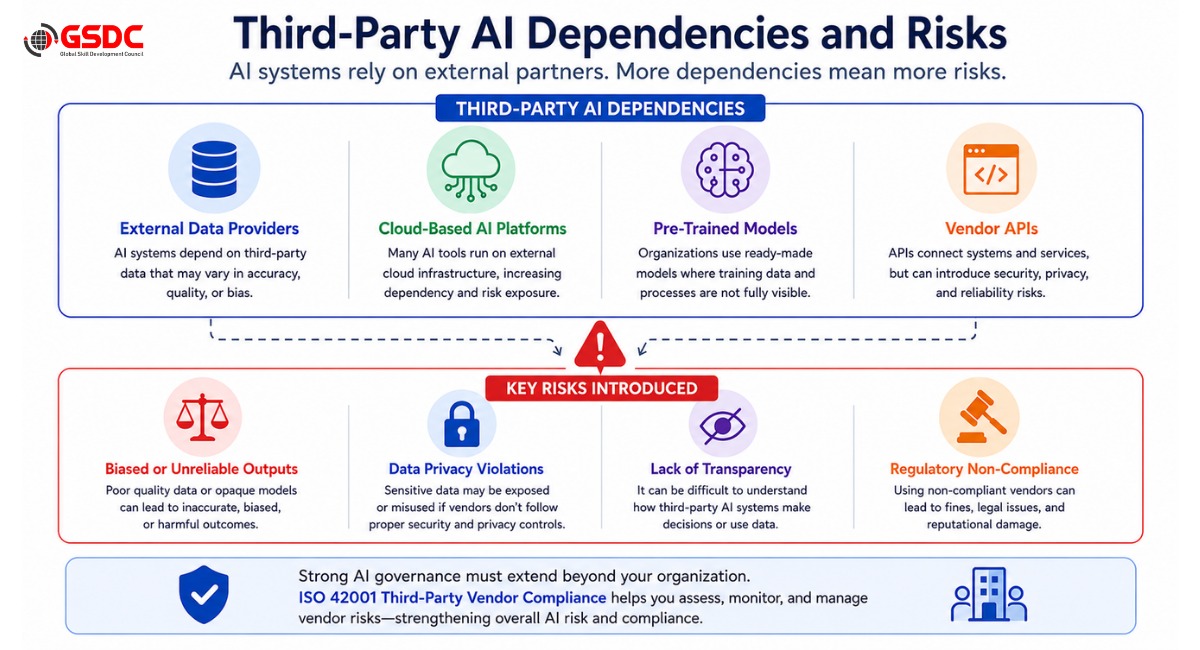
Because of this, AI governance cannot stop at internal systems. It must extend to vendors and partners as well.
That’s why ISO 42001 third party vendor compliance is becoming essential.
It helps organisations evaluate vendors, set clear expectations, and monitor risks over time. This strengthens overall ISO third party risk management and reduces exposure to external risks.
Understanding the ISO 42001 Risk Management Process
The ISO 42001 risk management process is a structured way to manage AI risks across the entire lifecycle, not just at one stage.
It helps organisations move from reacting to risks → to managing them proactively.
1. Risk Identification
Start by identifying AI-related risks such as bias, data issues, lack of transparency, or model misuse.
ISO 42001 also encourages organisations to consider risks coming from third-party systems and vendors.
2. Risk Assessment
Once risks are identified, they are evaluated based on impact and likelihood.
Tools like an ISO 42001 risk assessment template help prioritise which risks need immediate attention.
3. Risk Mitigation
Organisations then apply controls to reduce risks.
This can include governance policies, human oversight, and technical safeguards to ensure AI systems are used responsibly.
4. Continuous Monitoring
AI systems change over time, so risks must be monitored regularly.
This includes reviewing model performance, data quality, and third-party dependencies.
To manage this effectively, organisations often rely on trained professionals, such as a Certified ISO 42001:2023 Lead Auditor who understands how to assess AI systems, identify gaps, and ensure alignment with the standard.
How ISO 42001 Strengthens Third-Party Compliance
One of the key strengths of ISO 42001 is its focus on external accountability.
It ensures that third-party vendors follow the same governance standards as the organisation, instead of being treated separately.
Key Areas It Covers
Vendor due diligence
Organisations evaluate a vendor’s AI practices before onboarding to identify risks early.
AI transparency and explainability
Vendors are expected to clearly explain how their AI systems work and how decisions are made.
Data governance
Organisations must check where data comes from and how it is used in third-party systems.
Contractual controls
Contracts define responsibilities for data use, risk handling, and incident response.
Continuous monitoring
Third-party AI systems are reviewed regularly, especially when models or data change.
By applying ISO third party risk management, organisations can ensure that vendors follow responsible AI practices, reduce risks from external systems, and maintain better control over data and models.
Most importantly, responsibility still stays with the organisation even when using third-party AI. This is how ISO 42001 helps organisations strengthen AI risk and third-party compliance by extending governance beyond internal systems to the entire vendor ecosystem.
ISO 42001 Checklist: What You Need to Get Started
Getting started with ISO 42001 compliance requires a clear and structured foundation.
The checklist below highlights the key areas organisations should have in place when building an effective AI governance and risk management framework.
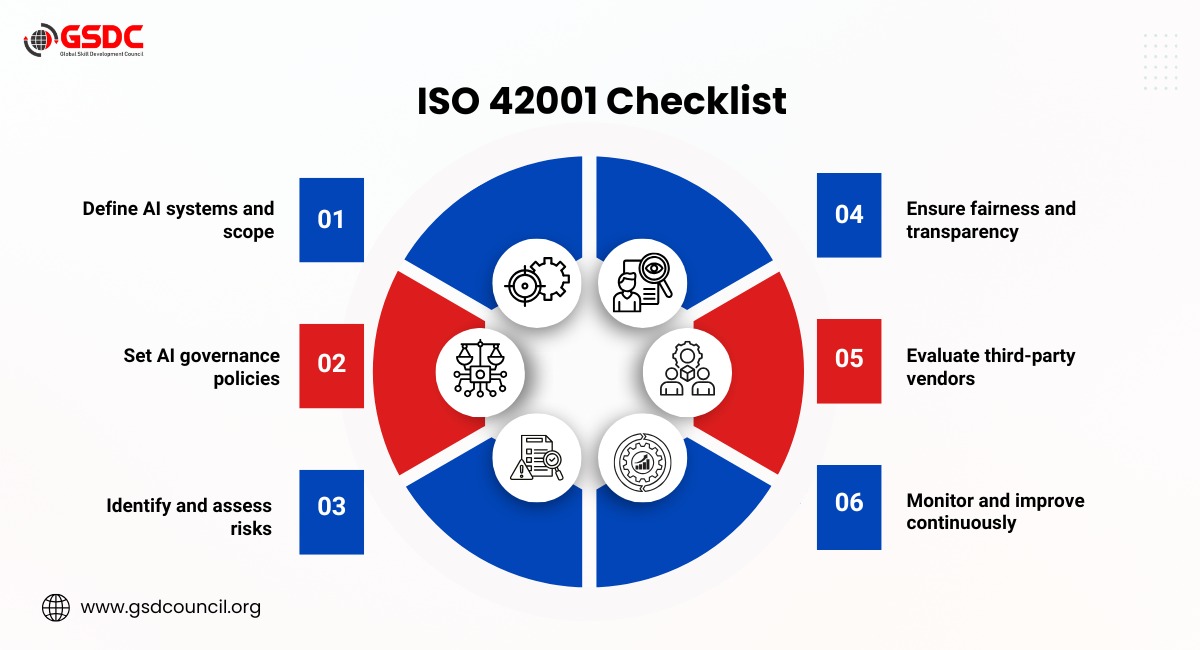
This checklist provides a quick overview of what is needed before moving into implementation.
How to Implement ISO 42001 Successfully
Once you have your foundational structure, the next step is to execute.
If you're wondering how to implement ISO 42001, here’s a simple and structured approach:
Step 1: Define Your AI Governance Structure
Establish the definition of AI Governance and determine the roles, responsibilities, and accountabilities of those responsible for AI Systems.
Step 2: Conduct Risk Assessment
Use the ISO 42001 Risk Assessment Template to identify and evaluate risks associated with AI Systems and third-party vendors.
Step 3: Implement Risk-Based Controls
Establish policies and safeguards to manage and mitigate any identified risks in order to promote the responsible use of AI.
Step 4: Improve Third-Party Controls
Build strong ISO 42001 third party vendor compliance through vendor evaluation, contracts, and continuous monitoring.
Step 5: Monitor and Change
Continually review and improve upon the AI System and controls based on risk assessment changes over time.
To achieve successful implementation, organisations typically utilise a structured training programme and guidance from recognised bodies such as the Global Skills Development Council to educate their employees on ISO 42001 requirements and the correct implementation methods in a real-world scenario.
ISO 42001 vs Other Standards: Which ISO Certification Is Best?
Many organisations ask: which ISO certification is best for AI governance?
Most ISO certifications exist to protect data and prevent unauthorised access to that data.
Comparison: ISO 42001 vs Other Standards
Area | ISO 42001 | ISO 27001 (Example) |
Focus | AI systems and governance | Information security |
Risk Coverage | AI risks (bias, transparency, ethics) | Data security risks |
Third-Party Compliance | Strong focus on vendor AI risks | Limited AI-specific vendor focus |
Lifecycle Coverage | End-to-end AI lifecycle | Not AI-specific |
Governance | Full AI governance framework | Security-focused governance |
ISO 42001 certification stands out because it is designed specifically for AI.
It helps organisations manage not just security, but also ethical, operational, and third-party risks.
For organisations using AI at scale, ISO 42001 compliance is quickly becoming essential, not optional.
The Business Value of ISO 42001 Compliance
Investing in ISO 42001 compliance is a step beyond complying with an ISO standard; it is about developing trust and managing AI responsibly at scale.
The key advantages of developing an Organisation ISO 42001 compliant:
Improved governance of AI
Allows organisations to develop ongoing transparent management of all AI throughout their entire life cycle.
Decreased risk from third parties
Improves control over vendors through better ISO third party risk management.
Increased regulatory readiness
Helps to prepare an organisation for those regulatory changes and expectations regarding compliance and regulation of AI systems of the future.
Increased confidence from stakeholders
Provides an increased level of trust from all customers and vendors through a transparent manner of operating AI systems.
Responsible and scalable AI
Provides a framework for responsibly scaling an organisation’s AI system while minimising the risks associated with AI systems not being operated and controlled properly.
Organisations that invest in ISO 42001 AI governance today are better prepared for future risks, regulatory changes, and increasing reliance on third-party AI systems.
ISO 42001 Compliance Capacity Building
In order for an organisation to be compliant with ISO 42001 compliance, it must have the appropriate processes and the qualified employees who can fulfil those roles.
Having the right qualified personnel will be key to the establishment of good practices for the governance of AI and managing the risks of third parties in conducting risk assessments and aligning them with ISO standards.
Capacity-building initiatives such as the Global Skill Development Council's Certified ISO 42001:2023 Lead Auditor training program are examples of how to help develop and build capacity in meeting this goal.

Final Thoughts
AI will have a considerable impact on business processes in the future; however, there are many risks associated with AI, especially with respect to third-party ecosystems.
ISO 42001 provides a clear and structured way to manage these risks.
Organisations that adopt ISO 42001 compliance can better manage AI risks, and they can also be assured of the reliability of their third-party partners and design AI systems that are transparent and accountable.
With AI playing a large part in real-world decision-making, good governance will be very important for organisations because it will help differentiate them in today's marketplace.

Related Certifications
Frequently Asked Questions
Stay up-to-date with the latest news, trends, and resources in GSDC
If you like this read then make sure to check out our previous blogs: Cracking Onboarding Challenges: Fresher Success Unveiled
Not sure which certification to pursue? Our advisors will help you decide!