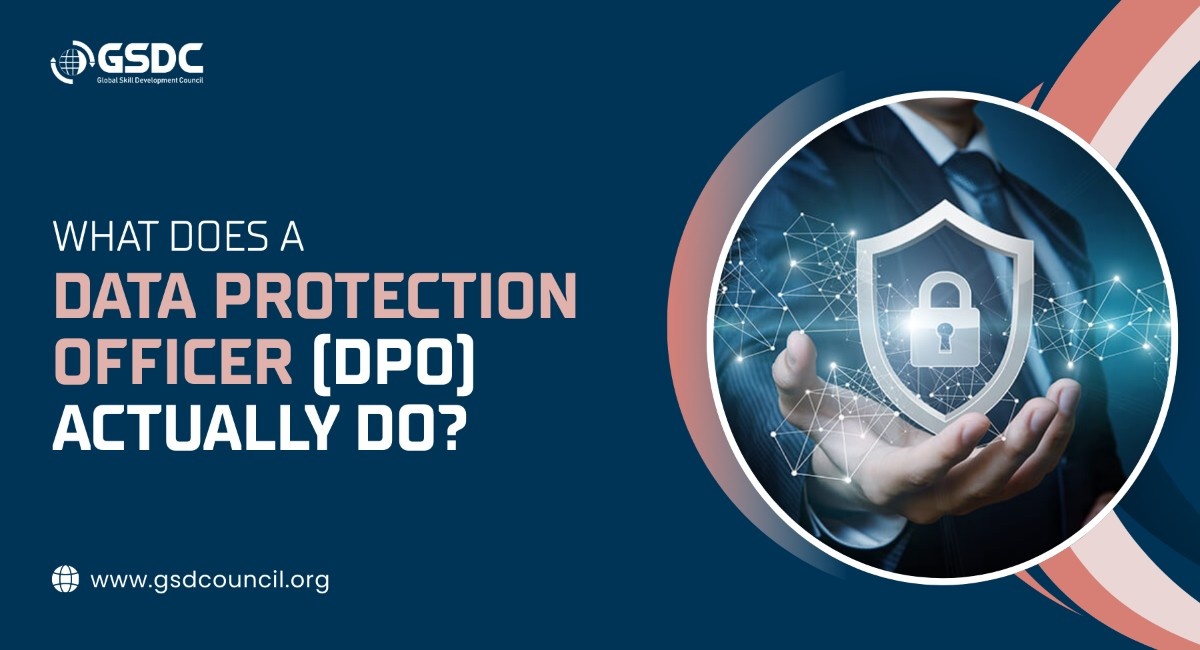
What Does a Data Protection Officer (DPO) Actually Do?
Written by Matthew Hale
- What Is a Data Protection Officer?
- What Does a Data Protection Officer Do?
- Data Protection Officer Qualification Requirements
- How to Become a Data Protection Officer
- Data Protection Officer Jobs and Career Outlook
- Data Protection Officer Services vs. In-House DPO
- Enhance Your Career with GSDC Certification
- Final Thought
In a data-driven economy, compliance is no longer a back-office function. It is a board-level responsibility.
At the center of modern privacy governance stands the Data Protection Officer (DPO). But what is a data protection officer, and why has this role become critical across industries?
Under regulations such as the GDPR outlined by the European Commission, certain organisations are legally required to appoint a DPO. Nevertheless, apart from the legal requirement, the role has turned into a strategic function that safeguards trust, reputation, and the long-term business resilience.
This guide explains what is a data protection officer, what does a data protection officer do, required qualifications, career opportunities, and how data protection officer services support organisations today.
What Is a Data Protection Officer?
A Data Protection Officer (DPO) is someone who is independently in charge of an organisation's data protection strategy and implementation of compliance with data protection laws such as GDPR. The DPO's job covers: monitoring compliance, advising management, working with regulators, and protecting the rights of data subjects.
One of the main reasons for a DPO appointment in regulated industries is that it is a statutory requirement. DPOs are seen as an integral part of privacy governance.
What Does a Data Protection Officer Do?
Understanding what does a data protection officer do requires examining both operational duties and strategic oversight, particularly under EU data protection laws such as GDPR.
1. Monitor Compliance
A DPO ensures the organisation complies with EU data protection regulations, internal privacy policies, and third-party processing agreements. This includes conducting audits, identifying areas where we are non-compliant, and suggesting solutions.
2. Counsel Senior Leadership
The Data Protection Officer briefs senior leadership on regulatory requirements, risks of privacy, and best practices for governance. According to the EU rules, the position should function independently and report directly to the highest level of management.
3. Oversee Data Protection Impact Assessments (DPIAs)
To the DPO, it is a matter of making sure that impact assessments are carried out before the launch of high-risk processing activities so that the privacy risks can be identified and minimized properly.
4. Act as Contact Point
Apart from being the point of contact with the EU data protection supervisory authorities, the DPO will also help individuals who wish to exercise their data protection rights.
In essence, the role translates EU regulatory requirements into practical safeguards that strengthen organisational accountability and trust.
For professionals aiming to build expertise aligned with these responsibilities, certification and structured training programs from organizations such as the Global Skill Development Council can enhance practical knowledge and professional credibility in the data protection domain.
Data Protection Officer Qualification Requirements
Governance and regulatory accountability have put a fresh spotlight on data protection officer qualification standards across industries.
GDPR does not require a particular certification; however, it stipulates that a DPO should have the required level of expertise to carry out the role effectively.
A strong data protection officer qualification typically includes:
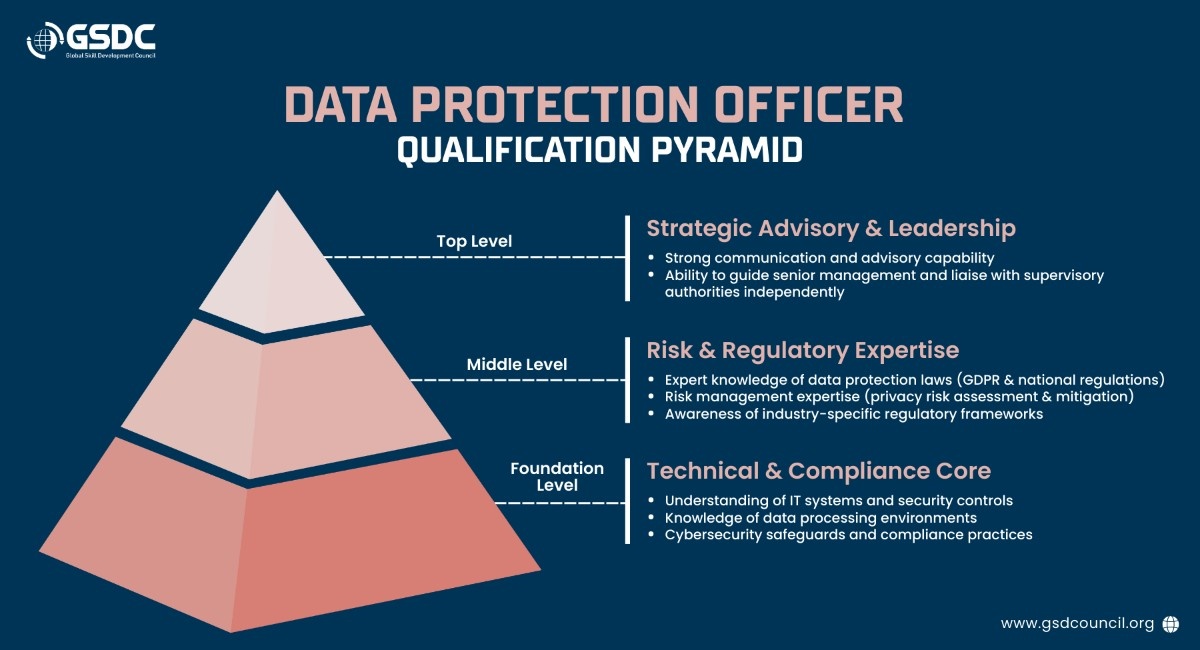
- Expert knowledge of data protection law: particularly GDPR and relevant national regulations.
- Understanding of IT systems and security controls: including data processing environments and cybersecurity safeguards.
- Risk management expertise: the ability to assess and mitigate privacy risks.
- Awareness of industry-specific regulatory frameworks: especially in sectors such as finance, healthcare, and technology.
- Strong communication and advisory capability: to guide leadership and interact with supervisory authorities independently.
At a minimum, a genuine data protection officer qualification merges legal knowledge, compliance experience, and information security skills hence the DPO is capable of converting the regulatory requirements into practical governance steps.
How to Become a Data Protection Officer
Those professionals who are considering ways to become a data protection officer are advised that, generally, the route to the position requires a combination of education, certification, and governance experience.
Step 1: Build Foundational Knowledge
People who enter this profession usually come from backgrounds such as law, cybersecurity, compliance, IT, or risk management. Knowing the law and the basics of data management well are the two main plank from which this position is (already) supported.
Step 2: Gain Privacy & Regulatory Expertise
Acquire an in-depth knowledge of the GDPR along with other international data protection regulations; familiarize yourself with various aspects such as data subject rights, lawful processing principles, and accountability requirements.
Step 3: Obtain Recognised Certifications
The journey towards enhancing your data protection officer qualification profile is marked by getting a Certified Data Protection Officer certificate. Such a certificate validates the holder's extensive knowledge of the copyright laws, compliance frameworks, risk assessment, and governance practices, etc.
Step 4: Develop Practical Governance Experience
The data protection officer role is a position for which the holder needs to have practical examples that demonstrate knowledge through audits, compliance programs, risk assessments, and policy implementation.
Experts deciding on the way to becoming a data protection officer should not only gear up for the acquisition of the technical and legal knowledge but they should also work on the independence qualities, the possession of good ethical judgment, and the capability to confidently advise the senior management.
Data Protection Officer Jobs and Career Outlook
The global demand for data protection officer jobs continues to be very high as companies adjust to stricter privacy laws and ever-increasing cybersecurity threats. Organisations from the technology, finance, healthcare, and government sectors are very much willing to hire for compliance and governance roles to fortify their frameworks.
Here is a snapshot of current salary trends across key markets:
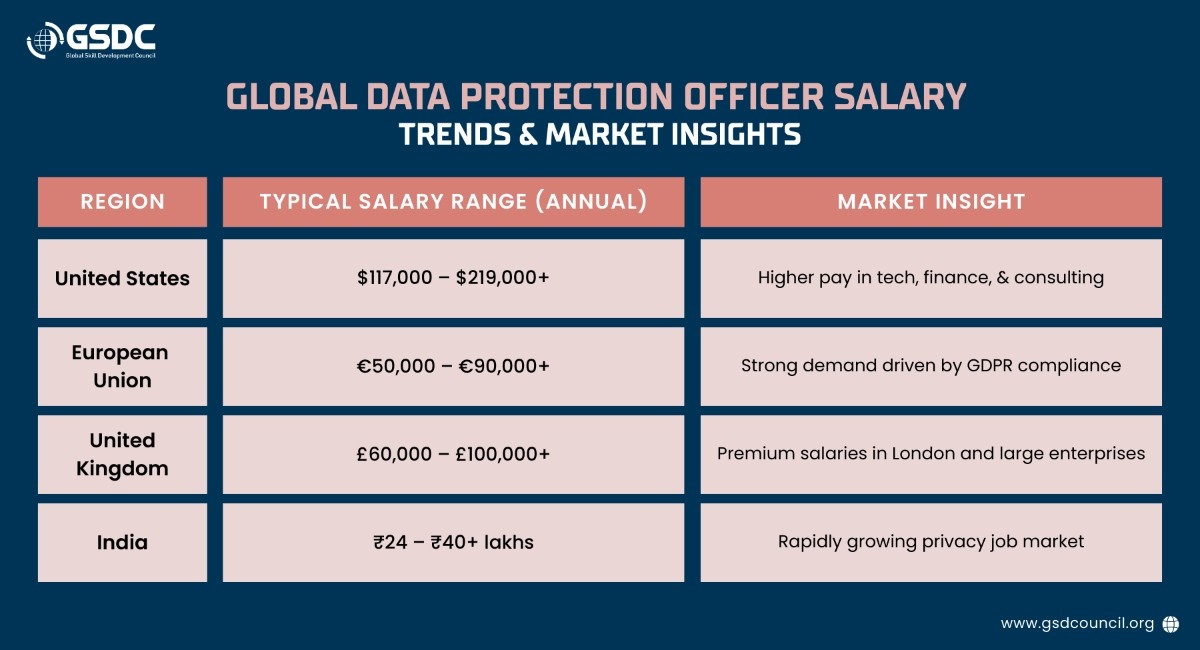
Data protection professionals usually move into more senior roles, such as Chief Privacy Officer, Head of Compliance, or CISO, when organizations consider governance a strategic priority. This is a positive change that ensures privacy becomes a strategic business function as opposed to a point-in-time activity.
Data Protection Officer Services vs. In-House DPO
Not every organisation appoints a full-time internal DPO. This has accelerated the adoption of data protection officer services, especially among growing and mid-sized businesses.
In-House DPO
An internal DPO is typically suited for large enterprises or organisations that process high volumes of sensitive data. This model allows deeper integration into daily operations but requires long-term investment in hiring and maintaining specialised expertise.
Data Protection Officer as a Service (DPOaaS)
Data protection officer as a service is a form of outsourcing where someone from outside the company, an individual or a firm, takes over the DPO role. This strategy allows a company to have a regulatory supervisor without incurring the pre-paid cost of an executive role.
There are multiple reasons for companies to use data protection officer services:
- Cost efficiency
- Access to specialised privacy expertise
- Scalability as the business grows
- Reduced conflict of interest through independent oversight
- Immediate compliance support
Data protection officer as a service is a great way for SMEs to achieve a structured regulatory compliance without having long-term overheads. The trend in data protection officer services is towards more flexible, expert-focused compliance models in the constantly changing regulatory environment of today.
Enhance Your Career with GSDC Certification
Across the globe, the need for privacy and compliance professionals is increasing as organizations are implementing strict data governance and dealing with an ever-increasing regulatory environment. The Global Skill Development Council (GSDC) provides a Certified Data Protection Officer Certification course in the area of GDPR, governance structures, risk, and regulatory compliance.
The certification program is a definite career advancement opportunity for anyone who wants to move into a leadership role in data protection and privacy.

Final Thought
Digital growth is accelerating, while regulations and customer expectations continue to tighten. Privacy can no longer be reactive.
Understanding the data protection officer role and the value it brings to organisational governance goes beyond compliance. It strengthens accountability, reduces risk, and builds resilience. Investing in the right data protection officer qualification or structured data protection officer services ensures innovation progresses without compromising trust.
Today, the digital economy is based on data, but the long-term growth of any company depends on the way it handles the data of its customers. Without trust, the whole thing will be on shaky ground.

Related Certifications
Frequently Asked Questions
Stay up-to-date with the latest news, trends, and resources in GSDC
If you like this read then make sure to check out our previous blogs: Cracking Onboarding Challenges: Fresher Success Unveiled
Not sure which certification to pursue? Our advisors will help you decide!