Creative Learning and Development Ideas to Build a Robust Framework for Employee Growth
Written by Emily Hilton
This is that time of the year when any organization that wants to grow will think of continued or progressive quality learning and development ideas.
Such ideas will then fit into retention strategies for talent. A well-articulated frame of learning and development would build employee engagement and integration for business performance.
Research states that companies that have a rich formal training component have revenue per employee that is 218 percent higher than those that do not have such formalized training.
This calls for a very up-front commitment toward strengthening the development of the workforce as a whole.
In this article, we speak about modern learning and development ideas being part of a sustainable learning and development construct for employees to grow in their careers and have organizations also take home improvement.
The Importance of Learning and Development in Organizations
Employee Retention and Growth
Training and career development are significant factors influencing job satisfaction and retention. According to research:
- 70% of employees across various generations consider job-related training crucial for their decision to stay in a company.
- This figure rises to 87% for Millennials, who prioritize learning and growth opportunities when selecting an employer.
- 74% of employees feel they are not reaching their full potential due to a lack of development opportunities.
Providing structured and engaging learning opportunities helps retain top talent while fostering a culture of continuous improvement.
Preference for Continuous Learning
Employees prefer working for organizations that encourage lifelong learning. Studies reveal that:
- 76% of employees want to work for companies that support continuous learning.
- 68% prefer learning at work, and 74% are willing to learn new skills to remain employable.
Having a competitive and adaptive workforce is very important for organizations in terms of integrating continuous learning within their learning and development framework.
Creative Learning and Development Ideas
1. Upskilling and Reskilling Initiatives
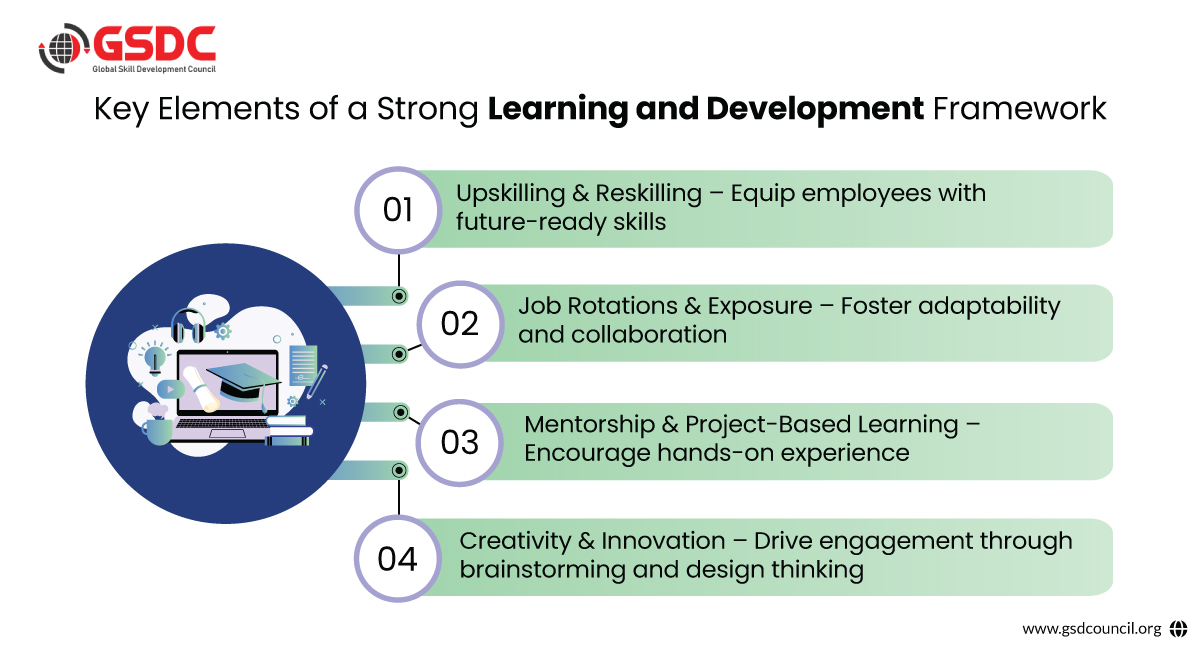
In view of fast technological changes in the present-day world, companies should offer upskilling and reskilling programs in line with industry trends which help employees to attain new skills and remain competitive.
- Technology Literacy Training – Regular workshops on AI, data analytics, and cloud computing to prepare employees for future trends.
- Industry-Specific Certifications – Partnering with accredited bodies to offer professional certifications.
- Microlearning Modules – Short, engaging lessons focused on skill development that employees can complete at their own pace.
2. Job Rotations and Cross-Functional Exposure
Encouraging employees to gain hands-on experience in different departments enhances collaboration, adaptability, and problem-solving skills.
- Rotational Programs – Employees take on various roles across the organization to gain holistic industry knowledge.
- Cross-Departmental Projects – Teams consisting of employees from different backgrounds working on common business challenges.
- Shadowing Leadership – Employees shadow senior managers to gain insight into strategic decision-making.
3. Project-Based Learning and Mentorship
Contrary to years past, the new approaches needed with the growth of the workforce safeguard those tenuous and intermittent sorts of things.
- Project-Based Assignments – Employees take ownership of live business problems and devise solutions.
- Mentorship Programs – Senior employees coach junior staff, enhancing knowledge transfer and career growth.
- Peer Learning Initiatives – Employees collaborate to share best practices and domain expertise.
4. Design Thinking Workshops and Brainstorming Sessions
The satisfaction of our members is largely increasing with the expansion of our network sensations.
- Design Thinking Workshops – Sessions where employees tackle real business challenges through creativity and experimentation.
- Hackathons and Innovation Sprints – Competitions that encourage teams to build prototypes and test innovative ideas.
- Brainstorming Forums – Regular collaborative meetings to discuss process improvements and new strategies.
5. Innovation Competitions and Creative Writing Exercises
Encouraging creativity among the staff can lead to fresh business solutions created and embraced as having generated higher productivity.
- Innovation Challenges – Internal competitions where employees pitch new business ideas.
- Creative Writing Workshops – Employees enhance communication and articulation skills by writing case studies and project documentation.
- Gamification Techniques – Learning modules incorporating rewards, points, and leaderboards to boost engagement.
Download the checklist for the following benefits:
Step-by-Step Implementation Guide & Action Plan
The Link Between Creativity, Engagement, and Development
Business success is greatly reliant on creativity in today's fast-paced environment.
When a business encourages creative thinking, it helps employees to develop problem-solving, innovative, and adaptable capabilities and behaviors—essential features needed in a fast-changing business environment.
Organizations devoted to cultivating a culture of creativity and engagement witness increased productivity, improved collaboration, and higher levels of employee satisfaction.
How Creativity Enhances Engagement and Performance
- The crux of the improvement-proof argument is that work engagement strengthens creativity, while feedback allows improvements in the relationship between engagement and innovation. An individual's involvement also directly reflects on the propensity for contributing new ideas, taking the initiative, and remaining motivated in their work.
- According to this creativity in organizations, the organizations remain competitive in the global markets. It enables businesses to provide infrastructure for the manufacture of products or services. It also allows for the free exploration of operational efficiencies.
- Employee autonomy is conducive to innovation; hence, autonomy has been granted to the employee by allowing him the freedom to tinker around with various solutions. Creative latitude makes employees feel at ease in tackling issues differently.
- Collaboration equals the idea of ideas compared to other ideas that work well in persuading those who think differently between teams to generate more effective innovations. Brainstorming as well as collaborative work from other departments causes much creativity.
Strategies to Foster Creativity and Engagement
- Encourage a Growth Mindset – Promote a culture where employees feel comfortable experimenting and learning from mistakes.
- Incorporate Creative Learning Methods – Implement activities such as design thinking workshops, storytelling exercises, and role-playing scenarios to enhance engagement.
- Leverage Gamification – Introducing game-like elements in learning modules, such as challenges, leaderboards, and rewards, can boost participation and motivation.
- Recognize and Reward Innovation – Encouraging creative contributions through recognition programs, innovation awards, and incentives can inspire employees to think outside the box.
- Provide Open Forums for Idea Sharing – Holding regular innovation sessions where employees can pitch ideas fosters a sense of ownership and engagement.
The Role of Feedback in Creativity and Development
This constructive feedback is one of the key ingredients for keeping the creative juices flowing.
If one keeps giving feedback from time to time, giving reasonably good reasons why things cannot work or giving ideas for what might work, it will help new perspectives to be formed, and the creative process continues.
- Real-Time Feedback Enhances Innovation – Encouraging managers and peers to provide immediate, constructive input helps employees iterate and improve their creative contributions.
- 360-Degree Feedback Strengthens Engagement – Collecting insights from different levels within the organization ensures employees feel heard and valued.
- Encouraging Risk-Taking in a Supportive Environment – Employees are more likely to experiment with new ideas when they know their efforts will be met with encouragement rather than criticism.
Creativity incorporated into organizational learning and development frameworks has been known to keep employees engaged, innovate, and create competitive advantages.
Inspired, included, and recognized for their creative efforts, employees further invest in their activities, generating higher results in that aspect of satisfaction and organizational success.
Creativity-based learning methodologies are integrated into the learning and development framework for increased employee satisfaction and innovation.
Preparing for the Future: Essential Skills Development
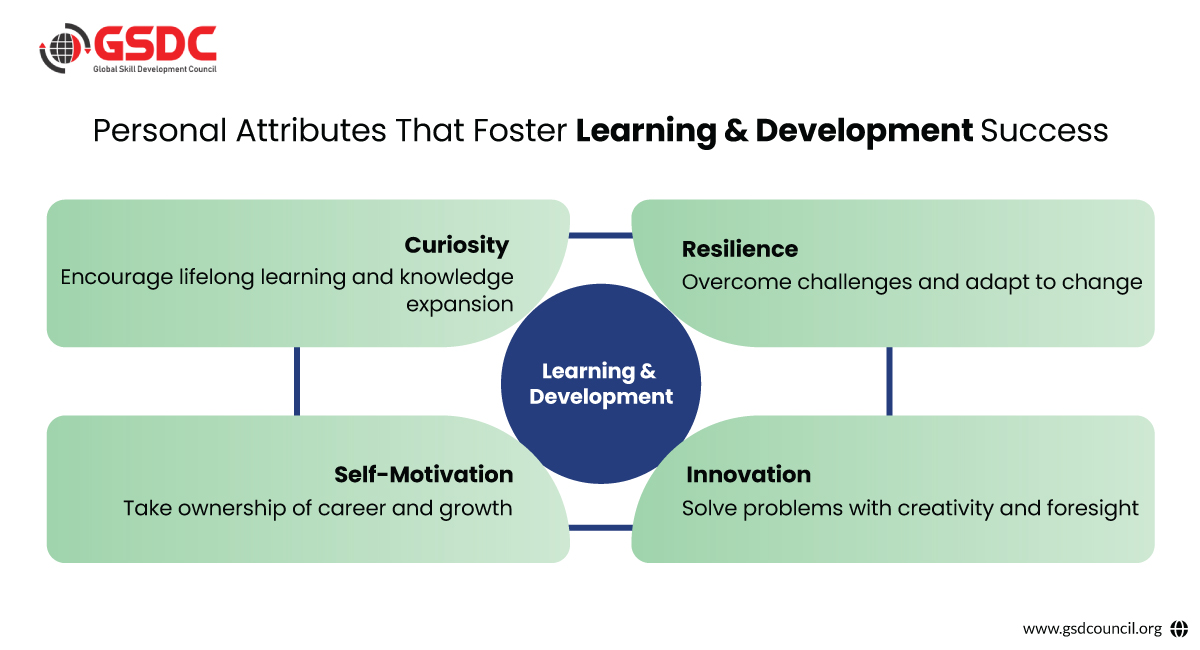
The evolvement of industries necessitates the need for organizations to focus more on preparing employees with the right skills for long-term success.
The dynamically shifting paradigm of business with respect to rapid technological advancement, new dynamics in the marketplace, and changing demands from customers necessitates forward-thinking companies to develop a workforce that is adaptable and competent in new and emerging skills.
For those looking to elevate their career in learning and development, the GSDC certification in learning and development provides comprehensive insights into modern training methodologies and strategies, equipping individuals with the skills necessary to build impactful learning initiatives.
Key Skills for Future-Proofing the Workforce
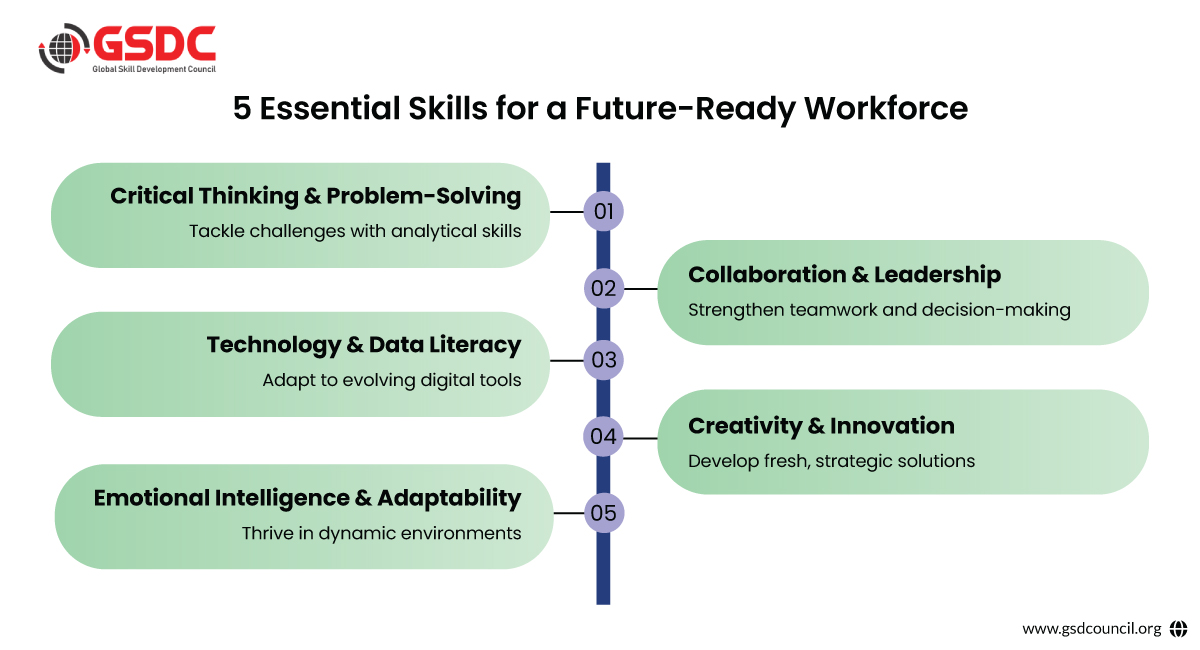
- Critical Thinking and Problem-Solving – Employees must develop analytical skills to assess complex challenges, identify innovative solutions, and make data-driven decisions. Problem-solving abilities allow individuals to navigate uncertainty and contribute effectively to organizational success.
- Adaptability and Emotional Intelligence – The ability to adapt to new situations, embrace change, and effectively manage emotions is crucial for long-term professional growth. Emotional intelligence enables employees to communicate effectively, collaborate with diverse teams, and build strong workplace relationships.
- Technology and Data Literacy – As digital transformation accelerates, employees must develop proficiency in using digital tools, data analytics, and artificial intelligence. Understanding how to leverage technology effectively enhances productivity and decision-making.
- Collaboration and Cross-Functional Teamwork – The ability to work seamlessly across departments and diverse teams fosters innovation and efficiency. Encouraging cross-functional collaboration enables employees to gain new perspectives and improve problem-solving capabilities.
- Leadership and Strategic Thinking – Leadership skills are essential for employees at all levels. Organizations should invest in leadership development programs that empower employees to take initiative, lead projects, and contribute to strategic planning.
- Creativity and Innovation – In an era of rapid change, businesses thrive on innovation. Encouraging a culture of creativity through brainstorming sessions, design thinking workshops, and open communication ensures employees remain proactive in generating new ideas.
- Resilience and Growth Mindset – A growth mindset encourages continuous learning and improvement. Employees who embrace lifelong learning are more likely to adapt to industry trends, take on new responsibilities, and thrive in competitive markets.
Strategies for Implementing Skills Development Programs
- Personalized Learning Plans – Organizations should tailor development programs based on individual career goals, strengths, and areas for improvement.
- Microlearning and On-Demand Training – Providing bite-sized, easily accessible learning resources ensures employees can upskill without disrupting workflow.
- Experiential Learning Opportunities – Hands-on projects, simulations, and case studies help employees apply theoretical knowledge to real-world scenarios.
- Continuous Feedback and Mentorship – Encouraging mentorship relationships and regular feedback ensures employees receive guidance and constructive insights for growth.
- Investment in Learning Technologies – Leveraging AI-driven learning platforms, virtual reality simulations, and interactive e-learning modules enhances the training experience.
This will enable the organizations to build their workforces that are future-ready, agile, and empowered to lead in long-term business success.
At the same time, such an investment in these skills as part of a learning and development framework ensures employees remain resilient in the changing job landscape.
Conclusion
Conclusion
The structure of the learning and development framework must include a wide variety of interesting and creative ideas associated with learning and development that motivate engagement, innovation, and professional development.
Continuous learning is valued by an organization that nurtures a culture where employees feel valued, motivated, and empowered to make their contributions.
By incorporating upskilling programs, mentoring, cross-functional training, or activities that foster innovation, an organization helps to build an adaptable, skilled, and future-ready workforce.
In this way, there will be learning opportunities for employees that are well-structured but also flexible so that they can remain competitive in an ever-evolving professional landscape.
Encouraging creativity and learning provides better collaboration problem-solving and leadership skills for those who work in the organization.
Indeed, such employees become engines of business success as they acquire new skills and develop the capacity to think innovatively.
Eventually, organizations that operate on the philosophy behind a holistic learning and development framework will not only enhance individual career paths but will also forge an adaptable, resilient workforce that will help sustain long-term success and create a competitive advantage.
This could include upskilling programs, job-rotation programs, or design-thinking workshops matching their learning strategies to employee needs.
Investing in continuous skill learning will increase performance, boost retention, and lead companies to greater overall success.

Related Certifications
Stay up-to-date with the latest news, trends, and resources in GSDC
If you like this read then make sure to check out our previous blogs: Cracking Onboarding Challenges: Fresher Success Unveiled
Not sure which certification to pursue? Our advisors will help you decide!