Data Science in Action: Real-Life Case Studies That Drive Impact
Written by Matthew Hale
- Why Case Studies Matter in Data Science
- Case Study 1 – Retail Industry: Demand Forecasting, Inventory, and Optimizations
- Case Study 2 – Banking and Finance: Fraud Detection
- Case Study 3 – Healthcare: Predictive Analytics for Better Outcomes
- Case Study 4 – Smart Cities: Optimizing Urban Life
- What These Case Studies Teach Us
- The Growing Demand for Data Science Skills
- Preparing for Real-World Data Science Challenges
- Conclusion
Data science is no longer an experimental field, but a strong driver of growth and innovation for business organizations. Today, with the help of data science, companies can make sense of their vast data and utilize it to predict and analyze market patterns, forecasts, and risks, as well as optimize their processes using advanced technology and resources.
The most genuine effect of something is often shown through its real life examples, and in the case of data science, it is through the data science case studies that show how data-driven strategies lead to measurable results in different industries.
In this blog, we take a look at some of the most persuasive data science case studies that reveal how analytics can change challenges in the real world into real opportunities.
Why Case Studies Matter in Data Science
Case studies help to illustrate the application of concepts in the field of data science in solving practical problems. This helps make an impact.
- Connecting theory and practice: While learning tools and techniques can be important and useful, true expertise in data science results from understanding how theories can and are being applied in a practical business sense through data science case studies examples.
- Examples of using data for business solutions: Case studies illustrate how organizations leverage data to address challenges such as operational inefficiency, risk management, and customer engagement, resulting in measurable business improvements.
- Link analytics to measurable results: One of the benefits of case study examples is that experts not only explore the theory behind data-driven decisions but also the results of those decisions, such as cost savings, better performance, or growth.
- Uncover practical implementation steps: Case studies illustrate how organizations plan, execute, and scale their analytics initiatives, offering insights that are practical and application-focused rather than purely theoretical.
- Help with interviews and career preparation: Case study questions based on real scenarios are often used by employers as one of the methods of evaluating candidates for a data science position. Hence, analyzing case studies will certainly become a valuable skill for aspiring professionals.
Organizations such as the Global Skill Development Council (GSDC)
also highlight the relevance of applied learning and exposure to real-world cases in the validation of professional competency in the field of data science.
Case Study 1 – Retail Industry: Demand Forecasting, Inventory, and Optimizations
Large retail companies are dealing with millions of products, which makes predicting the demand extremely challenging. Organizations such as Walmart, Amazon, and others depend on data science for predicting what is supposed to be sold, when the demand will be highest, and how much should be supplied.
These retailers optimize their inventory and supply chain operations through predictive analytics, which are based on the analysis of past sales records, customer buying habits, seasonal fluctuations, and other external market factors. The sophisticated forecasting tools used allow the companies to cut down on excessive stock while at the same time ensuring the availability of fast-selling items.
Results:
- Enhanced inventory precision and demand synchronization
- Lowered costs of storage and transportation
- Boosted sales productivity and maximized revenue
- Customer loyalty increased due to improved product availability
Data science case studies, in this case, not only illustrate operational efficiency but also profitability in a large-scale retail environment.
Case Study 2 – Banking and Finance: Fraud Detection
Financial institutions deal with millions of transactions daily; thus, it comes as no surprise that fraud detection is a high-stakes challenge. Leading global banks, such as JPMorgan Chase and PayPal, leverage data science to keep track of transactions in real-time and detect unusual activities.
Machine learning models scrutinize the patterns of transactions, user behavior, and past fraud records to identify high-risk transactions even before the losses happen. Additionally, these systems learn and update themselves continuously as new fraud tactics are introduced.
Result:
- More rapid and precise fraud detection
- Minimization of financial losses
- Heightened transaction security
- Enhanced customer confidence
Therefore, such data science case study examples reveal how analytics can be used as a two-sided shield that helps both businesses and consumers, and at the same time, allows for safe, scalable financial operations.
Case Study 3 – Healthcare: Predictive Analytics for Better Outcomes
Data science has changed the way patient care is delivered with great impact. For example, Mayo Clinic and IBM Watson Health leverage predictive analytics in the analysis of patient records and clinical data.
This machine learning can be utilized in identifying potential health problems and in developing personal treatment programs, and plays a crucial role in making effective use of resources in a hospital. With the help of predictive insights, clinicians can act at an earlier stage, leading to better patient outcomes and cost savings.
Result:
- Earlier and more accurate diagnoses
- Faster clinical decision-making
- Personalized treatment strategies
- Improved patient outcomes
These data science real life case studies show how data analytics has its roots in efficiency, yet it creates significant, life-saving impacts.
Case Study 4 – Smart Cities: Optimizing Urban Life
Cities around the world are turning to data science as a means of upgrading their infrastructure and public services. For example, the cities of Singapore and Barcelona have shown how urban analytics can be used to make life easier.
Using data from traffic sensors, energy systems, and public transport networks, planners can devise ways to manage congestion, utilize energy more efficiently, and ensure the safety of the public.
Result:
- Less traffic congestion
- Smarter Infrastructure Planning
- Reduced energy use
- Higher quality of urban living
From these examples, it can be noted that data science case studies are not confined to business and are an important part in transforming society as well.
In terms of professionals seeking to engage with similar massive projects, certifications such as Certified Data Science Professional can definitely help acknowledge the skills needed for implementing data-driven solutions.
What These Case Studies Teach Us
Across industries, several consistent insights emerge from these data science case studies examples, highlighting how analytics creates real business value.
- Data science leads to more intelligent and speedy decision-making: Companies leverage insights obtained from data to phase out decision-making based on hunches and replace it with decisions that are backed by facts, thereby improving both the accuracy and the speed of decisions.
- Analytics leads to efficiency and higher profitability: Analytics is helping organizations to improve their operating efficiency and keep their costs under control through various means such as inventory optimization, fraud reduction, and healthier outcome improvement.
- Machine learning helps to scale up automation: This is mainly because automated models are capable of dealing with complex tasks such as forecasting and pattern recognition that help the business scale without any reduction in accuracy.
- Real-world impact depends on practical implementation: The implementation of data science solutions for a real-world problem results in beneficial outcomes for a company or organization. Rather, it is the use of data science ideas that brings success, and not developing them.
Skills required for successfully answering the data science case studies questions in interviews and professional assessments are often supported by these principles. Evaluation of candidates is done not only on their technical proficiency but also on their grasp of general business aspects.
The Growing Demand for Data Science Skills
With the growing use of data-driven models, the demand for professionals in the sector continues to rise. The employment of professionals in the field of data science is also projected to increase by 36% between 2023 and 2033, which is much faster than the average rate for all occupations.
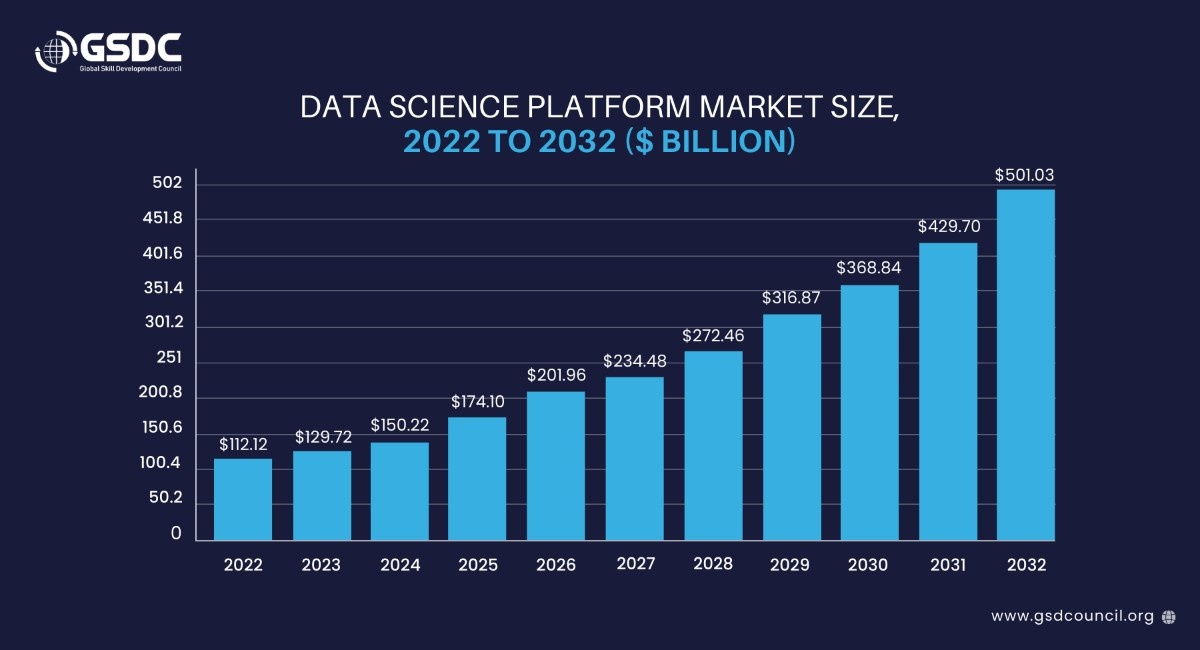
Today, firms are seeking professionals possessing the following qualities:
- Explore complex data sources and identify valuable patterns
- Build predictive models for supporting strategic decisions
- Use analytics tools and machine learning algorithms effectively
- Convert data findings into business value
This has also fueled the interest in a professional qualification, such as a data science certification, where many people are in pursuit of the best data science certification programs based on practical skills and experience.
Preparing for Real-World Data Science Challenges
Theoretical knowledge alone is not enough for data science jobs for professionals to do well in practical roles and competitive jobs in data science. Analytical thinking, hands-on experience, and problem-solving skills applied to real situations are the key ingredients for success.
Effective preparation usually comes from:
- Strong analytical and statistical foundations
- Project experience working with real data sets
- Exposure to real-world data science case studies
- structured learning through industry, relevant programs
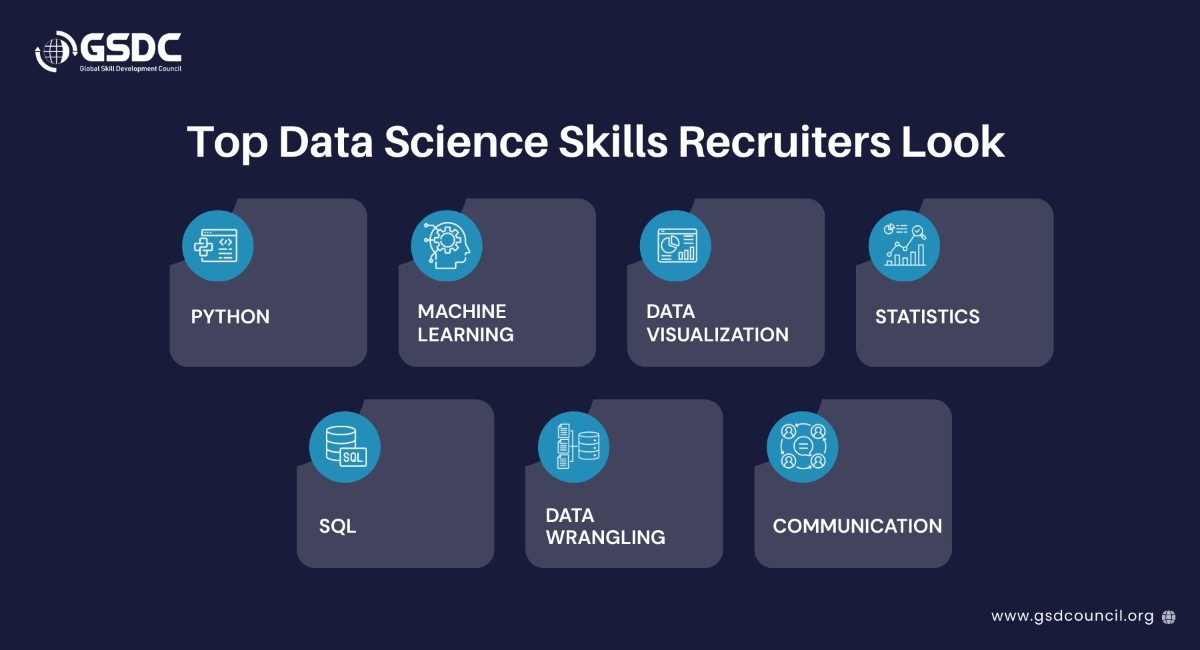
A good data science certification program can help students apply the knowledge gained in school to the real world. For example, the Global Skill Development Council (GSDC) offers courses that focus on validating applied skills rather than mere theoretical knowledge.

The Data Science Professional Certification credential targets the assessment of one's readiness for the real-world by putting emphasis on practical knowledge, problem-solving skills, and industry-aligned competencies.
Conclusion
Data science has proved to be the engine behind every innovative endeavor today. Data science applications range from preventing fraudulent transactions to improving healthcare to successfully executing retail and smart city projects.
For those seeking a career in this field, success will depend on the ability to apply skills to solve real-world problems involving data, as well as concepts related to data.
The future belongs to those who can analyze data to extract valuable information to make informed decisions to bring about a paradigm shift with a data-driven approach.

Stay up-to-date with the latest news, trends, and resources in GSDC
If you like this read then make sure to check out our previous blogs: Cracking Onboarding Challenges: Fresher Success Unveiled
Not sure which certification to pursue? Our advisors will help you decide!