From Tactical Buyer to Strategic Leader: The Power of Procurement Professionals

Written by Matthew Hale
- What is procurement? A definition and why it matters
- From tactical buyer to strategic leader: The shift in roles
- Challenges facing procurement professionals (and how to overcome them)
- How to stand out as a procurement professional: Career path and certification
- The procurement process in a strategic context
- Procurement tools: The enablers of strategic procurement
- Why procurement certification matters
- The strategic value procurement brings
- How to become the strategic procurement professional your business needs
- Embrace the strategic journey
- FAQs:
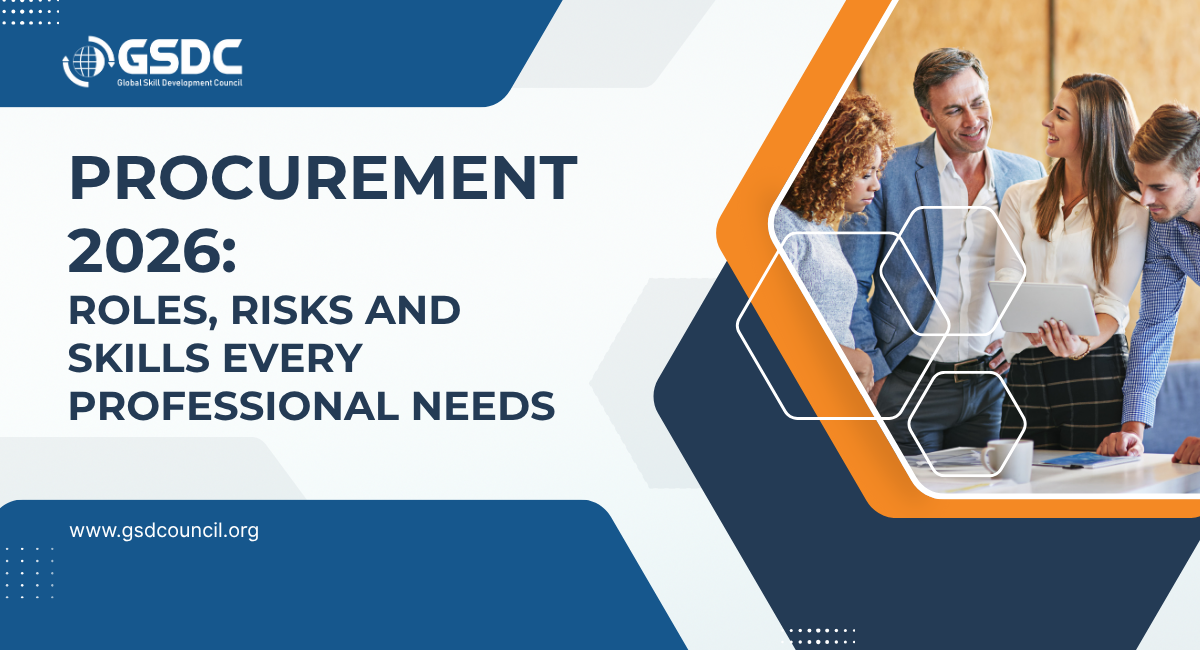
Procurement continues to be viewed in most organizations as a back-office transactional exercise - making orders, pursuing approvals, and managing supplier management. However, today, that image is not enough among the people in the procurement field.
The role has changed. You, as the procurement professional, can shift your role from cost-cutting to value creation, from order-placing to strategic leadership.
We shall discuss how the modern procurement specialist can develop, why procurement is significant, the challenges of procurement professionals today, and how you can become a certified procurement professional with tools, as well as the proper attitude.
What is procurement? A definition and why it matters
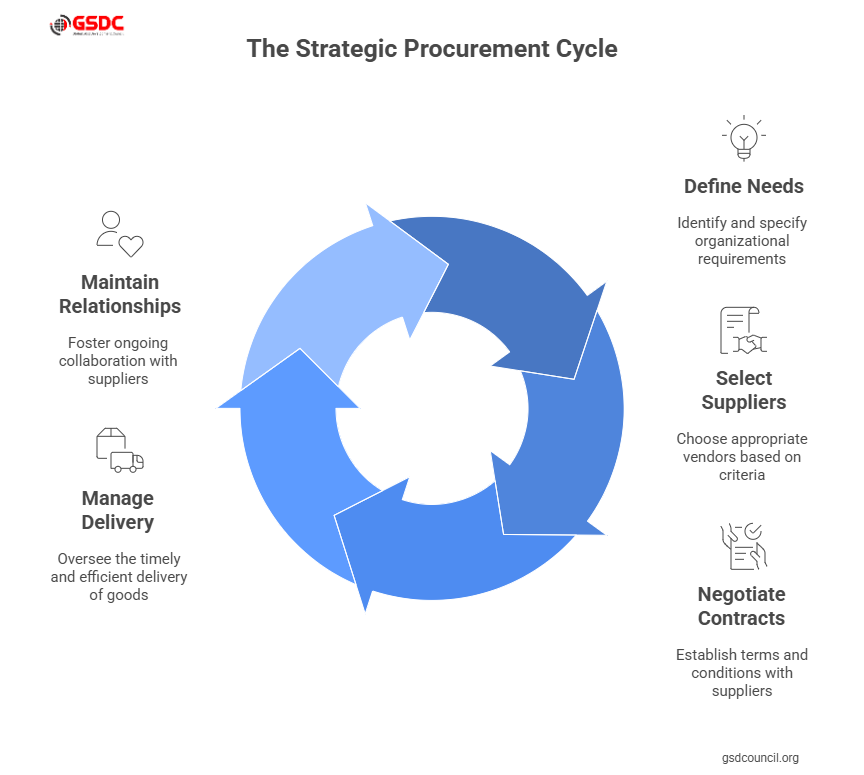
First things first: procurement definition. Simply put, procurement is the process by which an organization acquires goods, services, or works from external sources.
It includes everything from defining needs, selecting suppliers, negotiating contracts, managing delivery, and the ongoing relationship with those suppliers. This overarching procurement process touches nearly every business function and industry.
But procurement is far more than simply buying. In modern organizations, procurement influences cost structure, risk management, supply-chain resilience, innovation, and sustainability. That’s why why is procurement must be at the top of any strategic discussion.
When procurement professionals shift to strategic roles, they help shape business outcomes, not just manage purchase orders. Research shows that over 68% of procurement leaders still focus on cost and efficiency, but more than half now prioritize sustainability and supplier collaboration as strategic goals.
So, if you’re a procurement specialist or aspiring to a procurement career, your job isn’t just to buy things; it’s to tie procurement to business strategy, to move from tactical to strategic.
From tactical buyer to strategic leader: The shift in roles
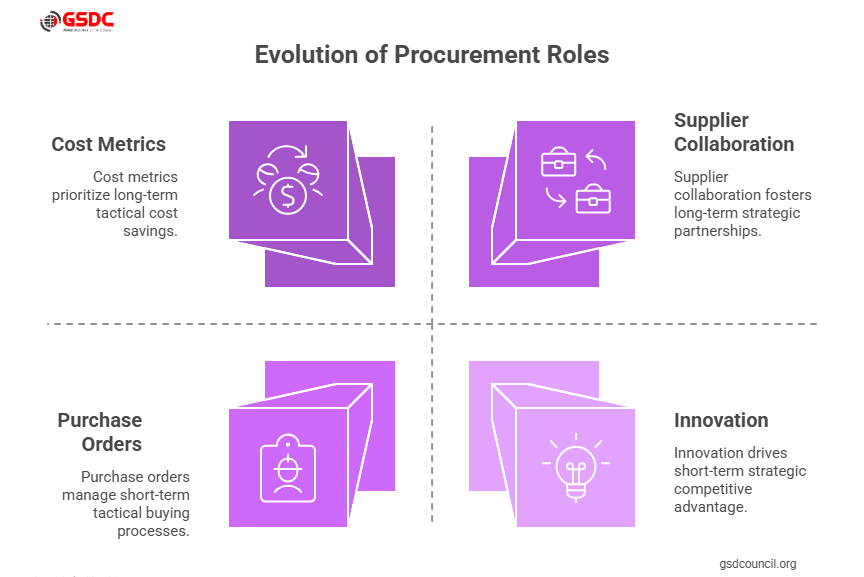
Traditionally, many procurement professionals were tactical buyers: focused on short-term cost savings, managing purchase orders, and chasing the lowest unit cost.
But the market is shifting. According to one study, only about 18% of supply-management headcounts are purely tactical.
A blog summarising this change described procurement specialists “no longer confined to the back office” but at the “forefront of strategic decision-making.”
What does this mean in practice? Here are some core differences:
- A tactical buyer focuses on immediate sourcing and cost metrics.
- A strategic procurement professional focuses on supplier collaboration, innovation, long-term value, risk, and alignment with organizational goals.
- The function evolves from “procurement tools and buying” to “supplier ecosystem design, category strategy and business outcomes”.
It’s this evolution that makes procurement careers exciting today.
The procurement specialist jobs of the future will demand higher-level skills: analytics, strategic thinking, negotiation, sustainability literacy, and category management. In other words, you’re not just buying, you’re leading.
Challenges facing procurement professionals (and how to overcome them)
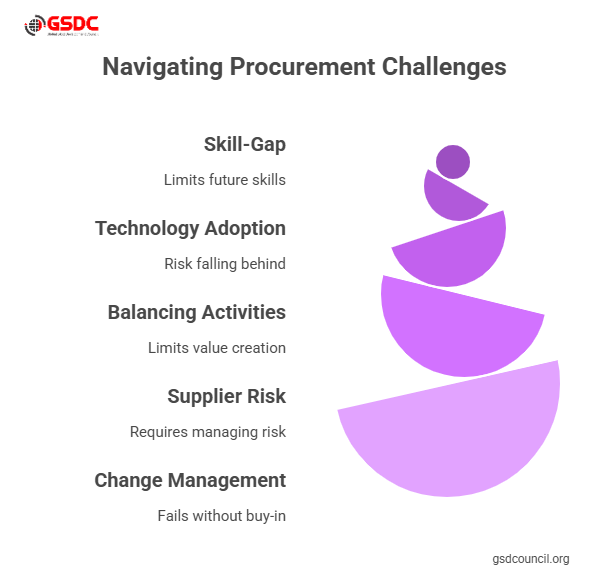
As procurement professionals aim for strategic leadership, they face plenty of obstacles. Understanding the challenges facing procurement professionals helps you prepare and stand out.
1. Skill-gap and talent shortage
While many organizations feel confident about current procurement talent, just 14% feel confident about their future skills pipeline. So, as a procurement specialist, you must invest in continuous learning. Understanding analytics, supplier risk, sustainability, and digital tools is key.
2. Technology adoption
The procurement tools landscape is evolving rapidly digital sourcing platforms, spend analytics tools, automation, and AI-enabled supplier management. Yet nearly 39% of leaders view automation/digital strategy as a top challenge. Without mastering the tools, procurement professionals risk falling behind.
3. Balancing tactical vs strategic activities
Even as organizations move to strategic procurement, many procurement professionals still spend large portions of their time on transactional tasks, limiting value creation. Balancing operational demands with strategic thinking is a classic challenge.
4. Supplier risk, sustainability & global complexity
Supply-chain disruptions, ESG demands, and global sourcing complexity require procurement professionals must manage risk and sustainability alongside cost. For example, sustainability is now prioritized by 72% of senior procurement leaders.
5. Change management and organizational alignment
Even the best procurement strategy fails without organizational buy-in. Procurement professionals must become change agents, aligning procurement with business leadership, operations, finance, and legal. That requires negotiation, communication, and influence.
Overcoming these challenges
- Invest in upskilling: analytics, category management, supplier collaboration.
- Adopt and master procurement tools – spend analytics, e-procurement, SRM systems.
- Re-design your role: carve out strategic time, delegate routine tasks, and build a roadmap for becoming a strategic procurement professional.
- Cultivate cross-functional relationships: procurement leadership doesn’t happen in isolation.
- Adopt measurement frameworks: Show your impact via risk reduction, supplier innovation, sustainability metrics, not just cost savings.
This is how you stand out as a procurement professional by bridging the gap between operations and strategy.
How to stand out as a procurement professional: Career path and certification
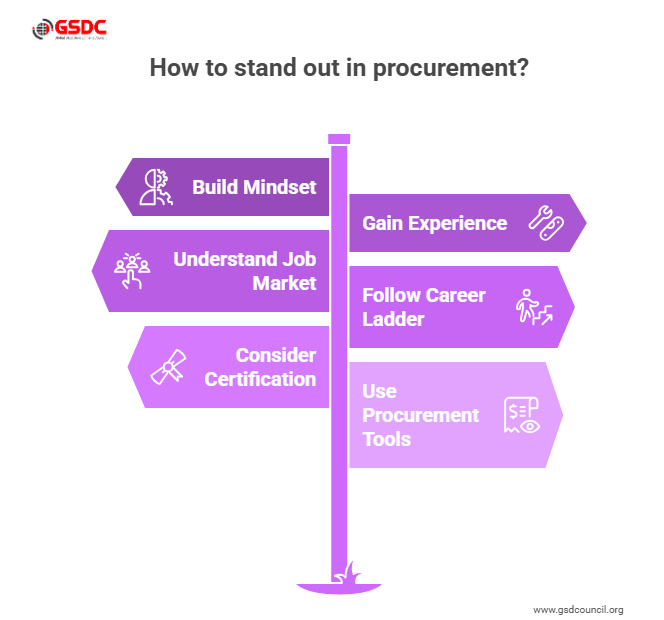
If you’re asking how to stand out as a procurement professional, there are a few strategic actions you can take.
Build the right mindset
- Move your thinking from “lowest cost” to “best value and risk-adjusted outcome”.
- Think long-term: category lifecycle, supplier relationship, total cost of ownership.
- Align procurement with broader business objectives.
Gain relevant experience and domains
- Work on category management, not just purchase orders.
- Develop skills in supplier relationship management, risk mitigation, and analytics.
- Participate in transformation initiatives (digital procurement, sustainability sourcing).
Understand the job market: What is a procurement specialist?
A procurement specialist is a professional responsible for sourcing goods/services, negotiating contracts, working with suppliers, and ensuring efficient procurement processes.
Procurement specialist jobs may include titles like Category Manager, Sourcing Analyst, Procurement Manager, and Strategic Buyer.
These jobs increasingly demand strategic skill sets.
Follow the procurement career ladder
- Entry level: Procurement Analyst, Sourcing Coordinator.
- Mid-level: Procurement Specialist, Category Buyer.
- Senior: Strategic Sourcing Manager, Head of Procurement, Procurement Leader.
And increasingly, a shift into business strategy roles.
Consider certification and credentials
The industry recognizes procurement certification as a way to validate your capabilities. Credentials like Certified Procurement Specialist or other recognized certifications signal strategic competence.
By investing in procurement certification, you record your commitment to professionalism and strategic procurement leadership.
The GSDC Procurement Professional Certification is designed to help you stand out as a procurement professional by mastering modern procurement tools, strategy, and leadership principles. It not only boosts your career prospects but also prepares you to lead transformation in global supply chains with confidence.
Use the right procurement tools & frameworks
Proficiency with procurement tools, e-procurement platforms, spend analytics, contract lifecycle management (CLM), and supplier performance dashboards is another differentiator.
Understanding how tools enable strategy (not just operations) sets you apart.
By combining the right mindset, experience, tools, and certification, you show you’re not just a buyer, you’re a strategic procurement professional whose impact spans across the business.
Download the Procurement Career Growth Roadmap for:
Practical tips, tools, and certifications to help you stand out as a procurement professional.
A structured roadmap to move from operational execution to strategic leadership.
The procurement process in a strategic context
To operate at the strategic level, procurement professionals must have mastery of the procurement process and adapt it for value-creation rather than mere transactions. Here’s a refreshed view:
- Define need & strategy – Understand organizational goals, category strategy, total cost of ownership.
- Market analysis & supplier assessment – Use spend data, market intelligence, supplier risk, and sustainability indices.
- Solicitation & negotiation – Conduct RFI/RFP/RFQ, negotiate contracts with strategic value, not just lowest price.
- Supplier onboarding & relationship management – Treat suppliers as partners. Build innovation, resilience, longevity.
- Execution & performance monitoring – Use procurement tools to track spend, supplier delivery, contract compliance, and risk metrics.
- Continuous improvement & innovation – Re-assess category strategy, leverage new tools, embed sustainability and supplier co-creation.
This eight-step or so process is no longer about simply filling orders; it's about creating long-term value through procurement.
The strategic procurement process uses data, tools, supplier insight, and business alignment to deliver outcomes. Research shows strategic sourcing frameworks lead to better innovation, lower long-term costs, and improved resilience.
Procurement tools: The enablers of strategic procurement
As procurement professionals advance into strategic roles, mastering the procurement tools landscape is critical. These tools elevate procurement from a tactical processor to a strategic advisor.
Some key tool types:
- Spend analytics platforms – Monitor spend by category, supplier, risk, and geography.
- e-Procurement / Source-to-Pay (S2P) platforms – Automate requisitions, approvals, contract management, and integrate with suppliers.
- Supplier relationship management (SRM) systems – Evaluate supplier performance, innovation contribution, and sustainability metrics.
- Contract lifecycle management (CLM) – Manage contract creation, renewal, obligations tracking, and compliance.
- Risk/sustainability dashboards – Monitor ESG, geopolitical supplier risk, supply-chain resilience.
According to recent research, the purchasing software market is projected to reach around $9.5 billion by 2028, underlining how important technology is for procurement professionals moving into strategic roles.
By becoming fluent in these tools, you not only increase operational efficiency but also give yourself the capability to deliver strategic insights: supplier innovation, cost avoidance, risk mitigation, and business alignment.
Why procurement certification matters
Let’s revisit procurement certification and its importance. As procurement professionals shift up the maturity ladder, credentials matter. A certified procurement specialist certification signals your readiness for strategic roles, not just buying.
Here’s why certification adds value:
- Validates your strategic mindset: Shows you understand procurement is more than cost-cutting.
- Signals readiness to use advanced procurement tools and frameworks.
- Helps you stand out in a competitive job market and advance your procurement career.
- Supports your learning path, one of the ways you can show you understand how to become a procurement analyst or specialist.
If you’re considering participation in procurement specialist jobs or thinking about how to stand out as a procurement professional, certification can be a key lever.
It tells your organization: “I understand procurement definition, I know the process, I know the tools, I know the strategic role.”
The strategic value procurement brings
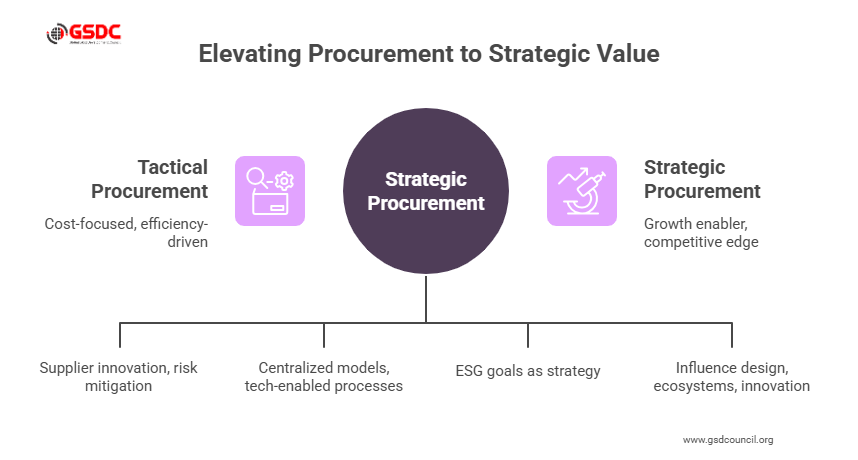
Let’s shift to the “so what?” the value of strategic procurement and what procurement professionals bring to the table.
Value creation beyond cost savings
- Cost savings remain important many procurement professionals still prioritize efficiency. But research shows the best procurement functions add value via supplier innovation, risk mitigation, sustainability, and strategic alignment.
- Procurement contributes to operational resilience: Centralized models, technology-enabled processes, and strategic sourcing reduce risk and improve responsiveness.
- Procurement supports sustainability: A high share of procurement leaders now see ESG goals as part of procurement strategy, not a side activity.
Strategic leadership
Procurement professionals as strategic leaders influence product design, supplier ecosystems, innovation pipelines, and global sourcing strategy. This aligns procurement with C-suite objectives.
As modern research says, the role is shifting from tactical buyer to strategic advisor.
Competitive differentiation
Companies with agile, strategic procurement functions have a competitive edge, lower cost of ownership, better supplier innovation, faster time-to-market, and stronger supply chains.
For you as a procurement professional, this means the opportunity to elevate your role from cost controller to growth enabler.
How to become the strategic procurement professional your business needs
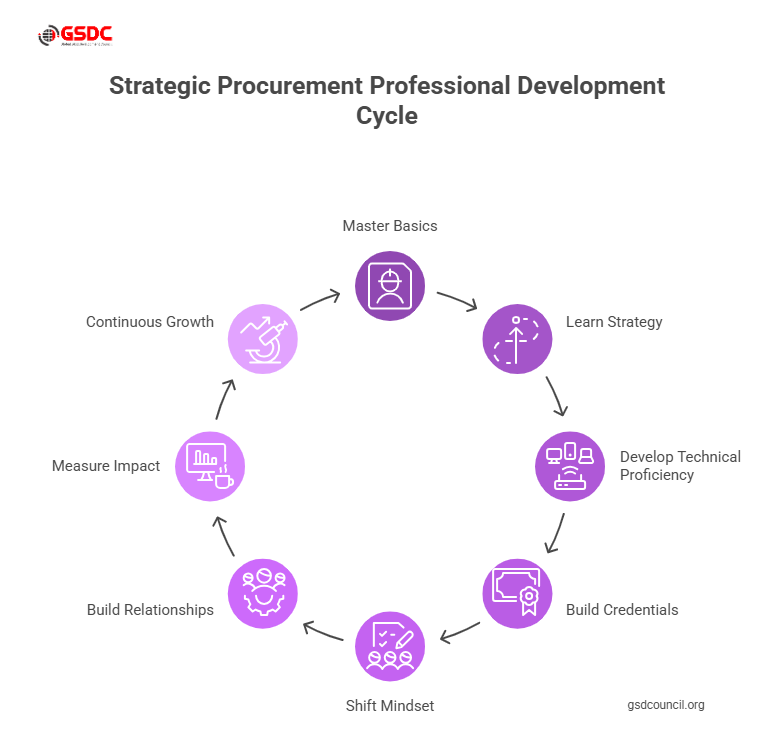
If you’re ready to step up, here’s a roadmap for how to become that strategic procurement professional.
1. Master the basics
Understand the procurement definition, the procurement process, and the operational mechanics of buying, supplier management, contracts, and tools. Be comfortable with tactical work.
2. Learn about strategy
Study category management, supply-chain strategy, risk management, and sustainability sourcing. Understand how procurement links to business objectives.
3. Develop technical proficiency
Here’s one of the most practical ways: become fluent in modern procurement tools. Learn what spend analytics can show you. Explore e-procurement platforms and SRM dashboards. Being conversant with procurement tools positions you for strategic work.
4. Build your credentials
Consider procurement certification or becoming a certified procurement specialist. If you aspire to move into mid-level specialist roles or procurement analyst work (e.g., “how to become a procurement analyst”), certification shows commitment and competence.
5. Shift your mindset
Instead of only thinking: “How do I get the lowest price today?” ask: “What is our total cost of ownership? How can this supplier partnership deliver innovation? How does this decision link to sustainability or business growth?”
6. Build relationships and influence
Strategic procurement professionals don’t work in isolation. They partner with suppliers, finance, operations, product development, and legal. Develop strong communication, negotiation, and stakeholder-management skills. One survey found 84% of employees who proactively negotiate supplier/company relationships secure better outcomes.
7. Measure and show your impact
Track metrics beyond cost: supplier innovation, risk reduction, sustainability indices, total cost of ownership improvements, and cycle-time reduction. Tell the story of how procurement delivered strategic value.
8. Continuous growth
Stay current: emerging procurement tools, digital sourcing platforms, AI in procurement, and sustainable sourcing frameworks. The strategic procurement professional never stands still.
Embrace the strategic journey
To any professional in the procurement field, regardless of what the job titles are, procurement specialist, buyer, sourcing analyst, or procurement manager, the prospects are evident. The function is evolving. Your role can evolve, too.
Learning how to master the procurement process, using the tools of procurement, obtaining the appropriate credentials, and having a business strategy behind you shifts you to the side of the business instead of supporting it.
Concisely, you can become a strategic leader out of a tactical purchaser. This transition makes procurement professionals change into innovators, resilient, and organizational growth drivers.
Your procurement certificate, your command of tools, your capacity to cope with issues that the procurement professionals are going through- all of these will make you more than a buyer.
Formal recognition of strategic procurement competence is one of the most effective approaches to being able to stand out as a procurement professional. Having an accreditation as a procurement professional or having obtained a certification as a certified procurement expert provides a strong message: you are up to leadership.
Now is the time to act in case you are willing to jump-start your procurement career. Understand the structures, borrow the equipment, develop your purchasing psyche, and demonstrate to your company that procurement is no longer a support; it is a strategy.
FAQs:
1. What does a procurement specialist do?
A procurement specialist manages sourcing, supplier negotiations, and purchasing to ensure cost efficiency and compliance.
2. How do I start a career in procurement or find procurement specialist jobs?
Begin with entry-level roles like analyst or buyer, learn core tools, and earn a procurement certification to access better procurement specialist jobs.
3. What are the main challenges facing procurement professionals today?
Key challenges include supply chain disruptions, ESG demands, cost pressures, and keeping pace with digital procurement tools.
4. Why is procurement important for business success?
Procurement drives profitability, reduces risks, and fosters sustainable supplier partnerships that support long-term business goals.
5. What skills or certifications help procurement professionals grow?
Analytical thinking, negotiation, and certifications like the GSDC Certified Procurement Specialist accelerate career growth and credibility.

Related Certifications
Stay up-to-date with the latest news, trends, and resources in GSDC
If you like this read then make sure to check out our previous blogs: Cracking Onboarding Challenges: Fresher Success Unveiled
Not sure which certification to pursue? Our advisors will help you decide!