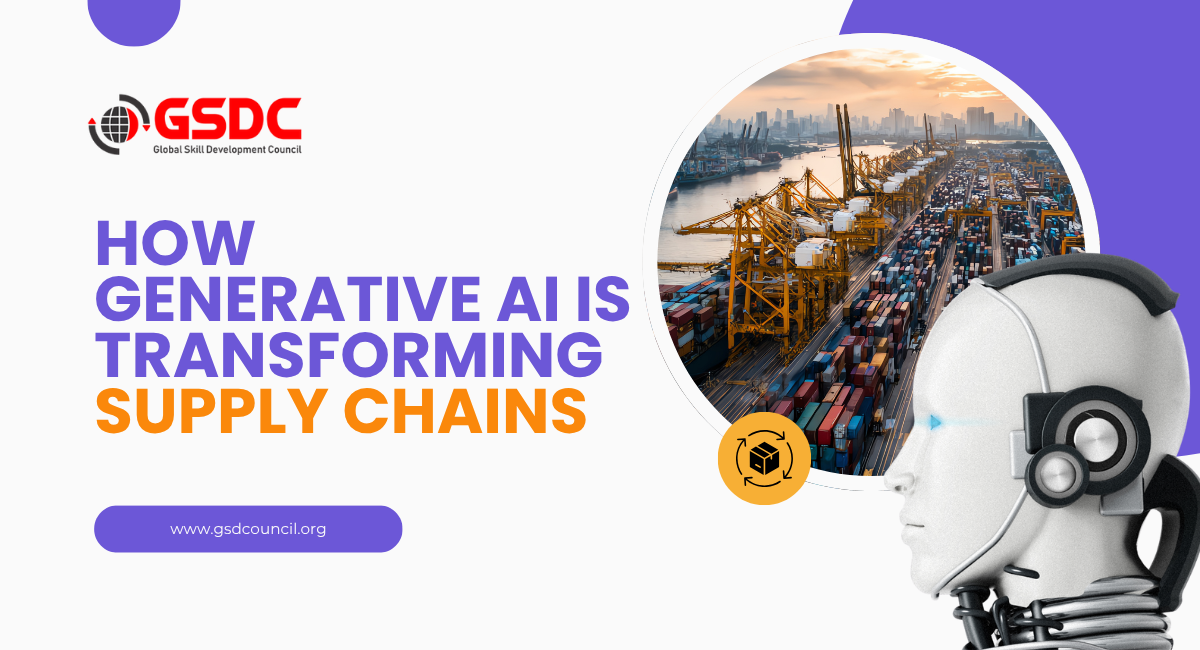
How Generative AI Is Transforming Supply Chains: Key Case Studies
Written by Matthew Hale
- What Generative AI Means for Supply Chain Management
- Case Study 1 - Demand Forecasting with AI
- Case Study 2 - Transportation & Route Optimization
- Case Study 3 - Supplier Risk Assessment
- Case Study 4 - Anomaly Detection & Quality Visibility
- Case Study 5 - Product Development & Innovation
- Case Study 6 - Contract Analysis & Procurement Automation
- Case Study 7 - The Self-Healing Supply Chain
- Key Takeaways: What These Transformations Reveal
- Implementation Considerations Before Adopting AI
- Preparing Your Team for the AI-Powered Supply Chain
- Conclusion: The Future of AI-Driven Supply Chains
Anyone working in the supply chain has faced that one unexpected moment - a delayed shipment, a sudden supplier issue, or a demand spike that throws plans off course. It's in those moments that many organisations realised their traditional tools couldn't keep up.
This led them to explore generative AI in supply chain operations as a way to predict risk, test scenarios, and make faster decisions. Unlike static systems, AI for supply chain management helps teams respond with clarity when things shift unexpectedly.
As disruption became more frequent, companies began relying on supply chain automation and predictive supply chain analytics to stay proactive. Real-world examples show how generative AI is already transforming forecasting, logistics, procurement, and overall resilience.
In this blog, we will explore how leading organisations are putting these capabilities into action - and what that means for the future of supply chain management.
What Generative AI Means for Supply Chain Management
Generative AI helps supply chains predict what might happen next, not just analyse what happened before. It can create possible scenarios, recommend actions, and give teams clearer options during uncertainty.
This is why the global Generative AI supply chain market has been growing rapidly, rising from USD 269 million in 2022 and projected to reach USD 10.3 billion by 2032 - a clear sign of how quickly companies are adopting AI-driven supply chain tools.
With supply chain artificial intelligence and generative AI supply chain optimization, teams can reduce risk, work proactively, and stay prepared for disruptions instead of reacting to them.
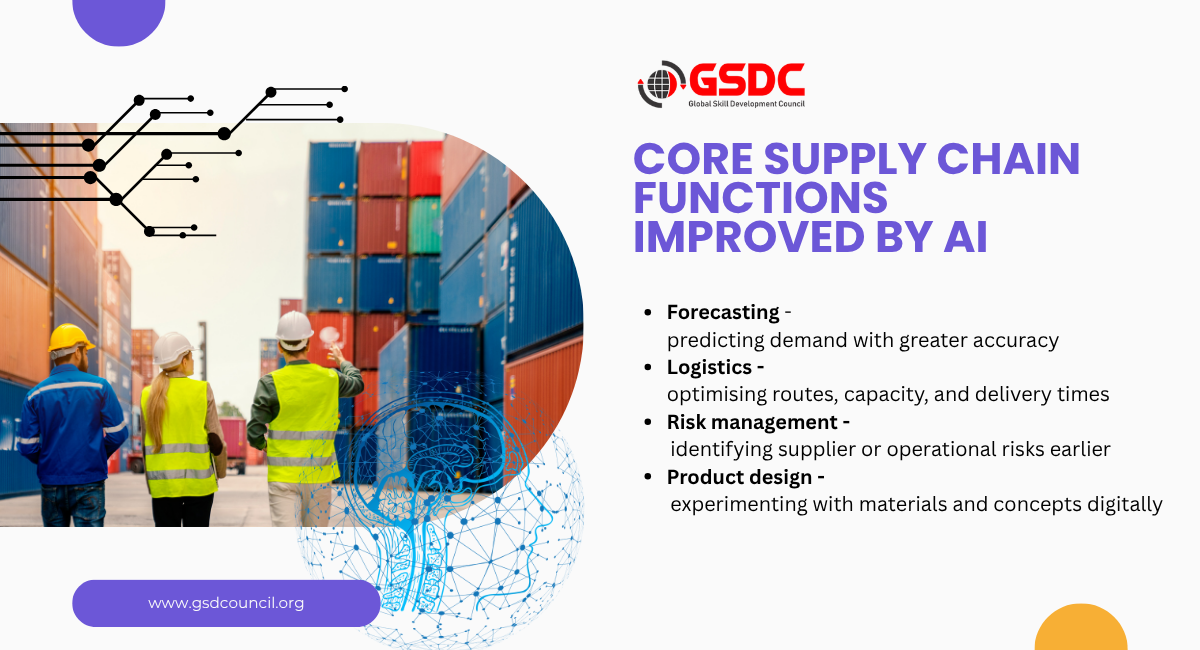
This leads us directly into real examples of how companies are using these capabilities today.
As generative AI grows, professionals often start with a Generative AI Foundation Certification to build essential AI knowledge before advancing into supply chain-focused tools.
Case Study 1 - Demand Forecasting with AI
AI didn’t just make forecasting better - it made it predictable.
Using demand forecasting with AI, companies can spot trends earlier and adjust inventory before problems appear. With predictive analytics in supply chain, planners gain a clear view of rising or falling demand. Modern supply chain automation software turns these insights into quick, accurate stocking decisions.
Example:
- Walmart and Amazon analyse real-time sales and seasonal patterns to restock faster and reduce excess inventory.
This helps them restock faster, reduce extra inventory, and understand what predictive analytics can reveal about customer needs.
Case Study 2 - Transportation & Route Optimization
AI didn’t just speed up logistics - it made every route smarter.
With AI-powered logistics, companies analyse traffic, weather, capacity, and fuel use in seconds. This improves delivery times, cuts costs, and turns supply chain automation into an everyday advantage. It’s one of the strongest uses of generative AI supply chain tools.
Example:
- UPS uses its ORION system to optimize routes for drivers, cutting millions of miles and reducing fuel use each year.
- Maersk applies AI in supply chain and logistics to adjust shipping paths in real time, helping vessels avoid delays and move more efficiently across global routes.
💡 Your AI Supply Chain Success Toolkit Is Here
Case Study 3 - Supplier Risk Assessment
AI didn’t just highlight risks - it made them visible before they became problems.
With predictive supply chain analytics, companies track supplier performance, delays, compliance issues, and global risks. Using supply chain artificial intelligence, teams make decisions with fewer surprises - one reason many organisations adopt AI for supply chain management.
Example:
Case Study 4 - Anomaly Detection & Quality Visibility
AI didn’t just catch issues - it spotted them before anyone noticed.
With predictive analytics in the supply chain, companies detect unusual demand, production, or quality patterns before they escalate. As part of an AI-powered supply chain, automated alerts ensure teams can act immediately.
Example:
- Siemens uses AI to identify early signs of equipment or production issues across its global plants.
- Toyota applies similar models to flag irregular demand or logistics patterns, helping them maintain consistent quality and operational stability.
Case Study 5 - Product Development & Innovation
AI didn’t just speed up innovation - it opened doors to ideas teams hadn’t even considered.
With generative AI in business, companies test product concepts digitally, explore materials, and reduce development cycles. When paired with supply chain artificial intelligence, innovation aligns faster with production and market needs - strengthening the entire AI-driven supply chain.
Example:
Case Study 6 - Contract Analysis & Procurement Automation
AI didn’t just speed up procurement - it took the heavy work out of contracts.
With AI powered supply chain management, companies scan contracts, flag risks, compare terms, and highlight key clauses instantly. As supply chain automation grows, teams shift from paperwork to strategic decision-making. Many professionals now pursue ai supply chain certification to keep up.
Even many professionals pursuing supply chain AI certification now learn these skills as they become standard in procurement roles.
Example:
- IBM uses AI tools to summarise contracts and identify compliance risks across thousands of documents.
As AI reshapes forecasting and procurement, many supply chain teams are realising they need new skills to work confidently with these tools.
This is why professionals are now exploring practical certifications like the Certified Generative AI for Supply Chain Management (CGAISCM), which helps them understand real AI applications and automation workflows in day-to-day operations.Case Study 7 - The Self-Healing Supply Chain
AI didn’t just improve operations - it gave supply chains the ability to fix themselves.
Using digital twins in supply chain, companies mirror their networks digitally and test actions instantly. Combined with generative AI supply chain optimization, systems can detect disruptions, recommend fixes, and trigger automated responses.
Example:
- Microsoft uses AI-powered supply chain tools to identify issues early and suggest corrective actions across its global network.
- Schneider Electric applies digital twins to rebalance production and inventory automatically when a disruption occurs, creating a more stable and responsive operation.
Key Takeaways: What These Transformations Reveal
AI didn’t just improve one part of the supply chain - it elevated the whole system.
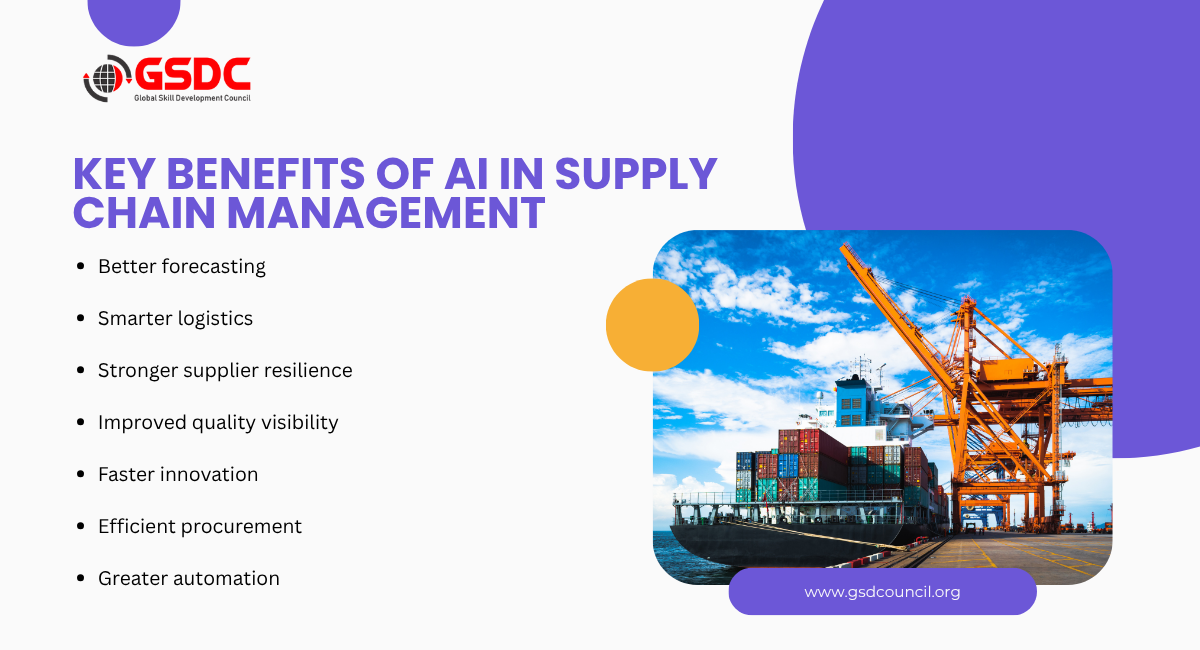
Here’s what the case studies make clear about the benefits of AI in supply chain management:
- Better forecasting: AI helps teams see demand shifts earlier and plan with more accuracy.
- Smarter logistics: Routes, deliveries, and capacity decisions become faster and more efficient.
- Stronger supplier resilience: Risks are spotted before they turn into disruptions.
- Improved quality visibility: Issues are detected early using real-time analytics.
- Faster innovation: Product ideas can be tested digitally, reducing development time.
- Efficient procurement: Contract analysis becomes quicker and more consistent.
- Greater automation: AI supports end-to-end processes, enabling proactive decision-making.
These trends show why generative AI in the supply chain is becoming essential - and why many professionals now explore an AI in supply chain management course to stay relevant.
Implementation Considerations Before Adopting AI
Before adopting AI, companies should ensure readiness in a few key areas:
- Data quality - Clean, reliable data leads to accurate outcomes.
- System integration - AI must connect smoothly with ERP, WMS, and TMS.
- Team skills - Many professionals pursue a generative AI in supply chain management course to build confidence.
- Governance - Clear rules ensure responsible AI usage.
- Change management - Teams need support as workflows evolve.
Preparing Your Team for the AI-Powered Supply Chain
As organisations move toward an AI-driven future, skilled teams become their biggest advantage. Many professionals now seek an AI supply chain certification or supply chain AI certification to build practical, job-ready skills.
The Certified Generative AI for Supply Chain Management program by GSDC helps teams master real AI applications, automation tools, and data-driven decision-making - making AI easier to apply and far more impactful.

Conclusion: The Future of AI-Driven Supply Chains
The shift toward an AI-driven supply chain is already underway. Companies across industries show how generative AI in supply chain improves forecasting, logistics, risk visibility, and decision-making.
As disruptions rise, organisations that embrace supply chain automation and AI tools will remain resilient, responsive, and competitive. AI isn’t just shaping the next chapter of supply chain management - It’s becoming the foundation of it.
Related Certifications
Stay up-to-date with the latest news, trends, and resources in GSDC
If you like this read then make sure to check out our previous blogs: Cracking Onboarding Challenges: Fresher Success Unveiled
Not sure which certification to pursue? Our advisors will help you decide!