7 Best Practices for Secure Agentic AI Adoption in Enterprise
Written by Matthew Hale
AI agents are not just improving workflows; they are changing how businesses operate.
With advances in agentic AI and autonomous AI systems, organizations are using AI agents in business to handle tasks, analyze data, and support real-time decision-making. This shift is accelerating agentic AI adoption and expanding the role of AI driven automation across the enterprise.
On the other hand, transforming such systems from merely supporting work to actually performing work without human intervention also leads to greater risks.
Almost 60% of companies consider AI security and governance to be the major obstacles to AI adoption; therefore, agentic AI security should be an integral part of the design process.
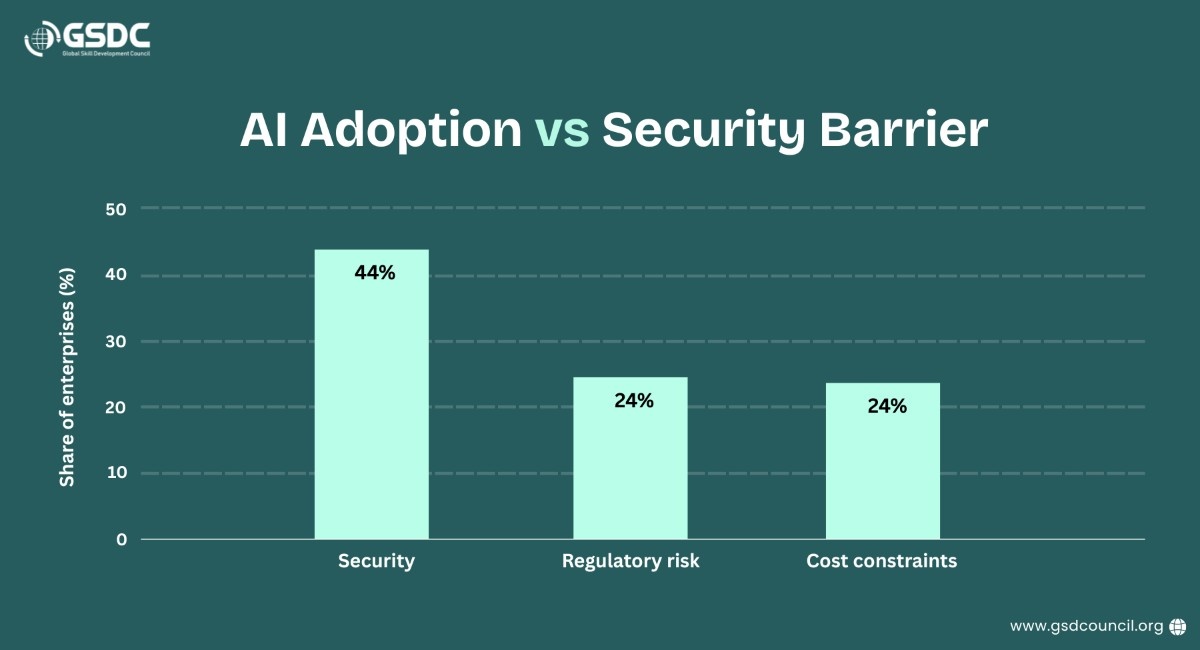
Organizations need to have a well-defined and systematic method of securing AI adoption that will ensure that these systems will be working within established controls, limited access, and governance frameworks.
Here are 7 strategies for rapid, secure agentic AI adoption that this blog will be discussing to give organizations the leverage to continue with their journey with assurance and in a regulated manner.
What Is Agentic AI?
Agentic AI refers to AI that is able to take action on its own. This means that the AI system is able to decide what to do, plan what to do, and take action towards fulfilling those plans. This is in contrast to AI tools that simply respond to inputs given to them.
In simple terms, agentic AI does not simply respond with answers but is able to take action.
It is this approach that is taking AI automation in business to the next level. This is because AI automation is used in most business workflows.
It is in this regard that the role of AI agents in business continues to grow as more and more AI agents become autonomous. This means that there is a need for control and oversight of AI agents in business, especially those that have access to enterprise resources.
Why Secure Agentic AI Adoption Matters
Clearly, agentic AI brings speed, reduced manual labor, and greater capacity for teams to scale decisions. Productivity is already increasing by 20-40% for companies, indicating that AI automation is having a business impact.
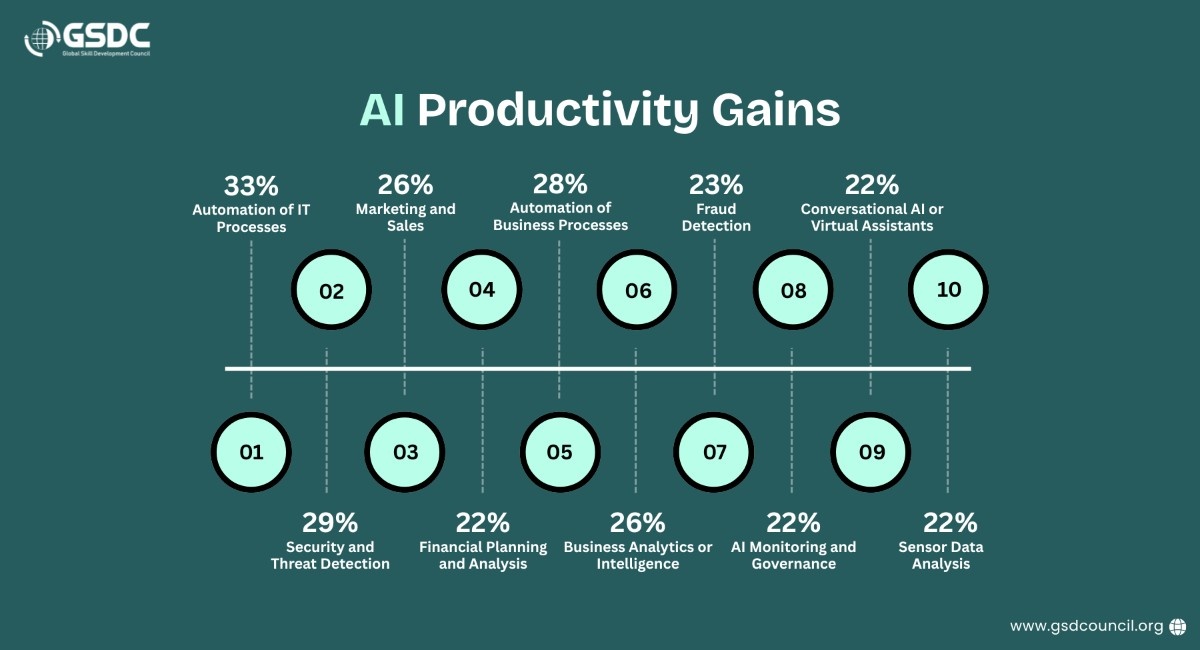
However, as AI takes on more work, the level of risk involved also goes up. If there are no proper access controls and if the monitoring is not up to the mark, it is possible that the data could be compromised or the AI may take some unintended actions.
This explains why securing AI used by businesses has become a major worry. Companies should have robust controls, enhanced transparency, and well-defined rules.
These are key AI security best practices and an essential part of responsible AI adoption. Without the right safeguards, AI can drive productivity, but it can also introduce significant risk.
7 Tips to Accelerate Secure Agentic AI Adoption
To accelerate secure agentic AI adoption, organizations need practical steps that balance innovation with strong governance and control.
1. Start With Governance Before Scaling
A common mistake in agentic AI adoption is scaling too quickly without clear rules.
Before expanding AI use, organizations should define approved use cases, data access limits, human review steps, ownership, and compliance requirements. It is important to clearly define what AI agents can and cannot do, set approval workflows for high-risk actions, and assign ownership for oversight.
Many organizations still lack proper governance frameworks, which slows secure AI adoption and increases risk. For teams using AI agents for enterprise, governance should involve security, IT, legal, and business teams.
2. Assign Identity to Every AI Agent
Every AI agent should be treated as a real user with a distinct identity.
This is important in agentic AI security because it allows us to trace what each AI agent does and hold it accountable for what it does. Each AI agent should have its unique identity and avoid shared or anonymous access to systems and data, and each action should be traceable.
Identity issues are a major contributor to security issues, and this is a mainstay in enterprise AI security and best practices in general.
3. Use Least-Privilege Access
Whether you are learning how to make an AI agent or deploying one, it is important to give it only the access it needs.
Avoid broad or unnecessary permissions. Access should be limited to only the required systems and data, supported by role-based access control, and reviewed regularly as roles and workflows change.
This approach reduces risk and strengthens enterprise AI security, especially when working with autonomous AI systems.
4. Set Clear Action Guardrails
Agentic systems do not just respond, they take actions.
This makes it important to clearly define what actions are allowed, when approvals are required, and where limits should be applied. Organizations should restrict access to sensitive operations, set triggers for human intervention, and block high-risk or irreversible actions.
This is a key part of best practices for agentic ai security, as risks often come from actions, not outputs. Building these guardrails effectively also requires a strong understanding of how agentic systems behave in real scenarios, which is why many professionals explore learning paths such as an Agentic AI Foundation Certification.
5. Monitor and Track Everything
For the effective implementation of AI in an organization in a secure manner, organizations must have complete visibility into how AI functions.
This means that everything must be monitored and tracked. Many organizations today do not have this visibility in place. This is where monitoring comes in. Developing this skill means that an individual must have hands-on knowledge about monitoring tools and frameworks.
This is the reason many organizations today are opting for learning programs through organizations such as the Global Skill Development Council (GSDC).
6. Test Before Deploying
In fact, AI agents, like any other critical system, need to be tested thoroughly before deployment.
Organizations should identify risks involved with, for example, misuse of access, prompt rewriting, unexpected behaviors, and failure situations. For this reason, besides adversarial testing, one needs to verify access control and permissions, test fallback and error-handling mechanisms.
Testing is an integral aspect of AI security best practices, particularly as AI-driven automation significantly expands.
7. Build Skills and Awareness
Technology alone will not be enough to get the job done. People must have the proper skills to effectively manage agentic AI adoption in a secure manner.
This requires that individuals be made aware of AI security issues and governance, and that learning and awareness be promoted within IT, security, and business departments. Organizations must invest in learning to keep pace with the rapid evolution of technology and provide individuals with real-world skills in AI.
When these elements are combined, it’s possible to move agentic AI forward in a manner that balances innovation with security and reliability concerns.
Developing Skills for Secure Agentic AI Adoption
As agentic AI adoption grows, the need for the right skills becomes critical.
For the teams dealing with autonomous AI systems as well as AI agents in business, there is a need to understand the operation of AI systems as well as the management of the risks involved in the use of AI, including the best practices in AI security.
There are professionals seeking the Agentic AI Foundation Certification, while organizations are using the Global Skill Development Council (GSDC) for the development of skills in AI security.
Final Thoughts
Agentic AI is changing business practices through the use of AI automation and AI-driven processes. However, it’s not just speed that’s required to make this a success; it’s control.
This series of 7 tips to accelerate secure agentic AI adoption provides a practical way to move towards faster adoption of agentic AI securely.
As growth increases, so should the focus on agentic AI security, governance, and trust in AI-driven decisions.

Related Certifications
Frequently Asked Questions
Stay up-to-date with the latest news, trends, and resources in GSDC
If you like this read then make sure to check out our previous blogs: Cracking Onboarding Challenges: Fresher Success Unveiled
Not sure which certification to pursue? Our advisors will help you decide!