How to Become a Generative AI Expert: Step-by-Step Guide 2026
Written by Kelroy James
Generative AI is not a matter of choice anymore. It has, very quickly, transformed into one of the most essential capabilities of the workplace, like writing text, generating images, producing code, analyzing data, and helping in making the most important business decisions.
In its AI State report 2025, McKinsey said that 88% of organizations are applying AI in one or more business functions, thus indicating a worldwide move towards AI-powered business operations.
To those professionals who are still wondering what is generative AI, how does generative AI work, or how to master generative AI for career growth, this guide is a practical and clear plan. It doesn’t include complex theories or heavy math. It is just a set of essential steps to be taken from scratch to expert level, borne out of real needs of organizations and the top generative AI trends influencing 2026.
Why Generative AI Skills Matter in 2026
- Enterprises resort to generative AI to enhance their output and automate their repetitive work.
- Professionals holding generative AI skills become distinctly competitively advantaged.
- Almost half of the companies (42%) have acknowledged that generative AI has directly led to an increase in their productivity.
- Companies look for individuals who have an AI-related certificate or have undergone some training.
- The use of ethical AI is gradually becoming a requirement in the workplaces of the future.
- AI literacy has turned into one of the basic expectations that most job roles entail.
- Creating a career in generative AI will keep you relevant in the future.
Step 1: Understand the Basics - What Generative AI Really Is
Before beginning any generative AI course or generative AI learning path, build a solid understanding of the fundamentals.
What Is Generative Artificial Intelligence?
Generative AI is an artificial intelligence system that produces new content-text, images, voice, code, or video-based on patterns learned from large datasets.
You already see it in everyday tools like:
- Chatbots that draft emails
- AI writing tools for blogs
- Image and video generators
- Coding assistants
Understanding the 5 main types of artificial intelligence helps you see where generative AI fits in the broader AI ecosystem.
How to Get Started
Start by watching short videos, reading easy-to-understand articles, experimenting with free generative AI tools, and noticing in which apps AI is already available for use.
New users can benefit from a well-organized course such as the Generative AI Foundation Certification that not only explains the basics but also prepares for the advanced level and real-life projects.
After you have these basics down, you can go further into the AI concepts.
Step 2: Become a Confident User of Generative AI Tools
The fastest way to learn generative AI is by using it consistently.
Start with text-based AI tools to draft emails, summarize documents, create ideas, and write simple code. Use image and video generators for marketing visuals, social posts, concept design, and fast creative output.
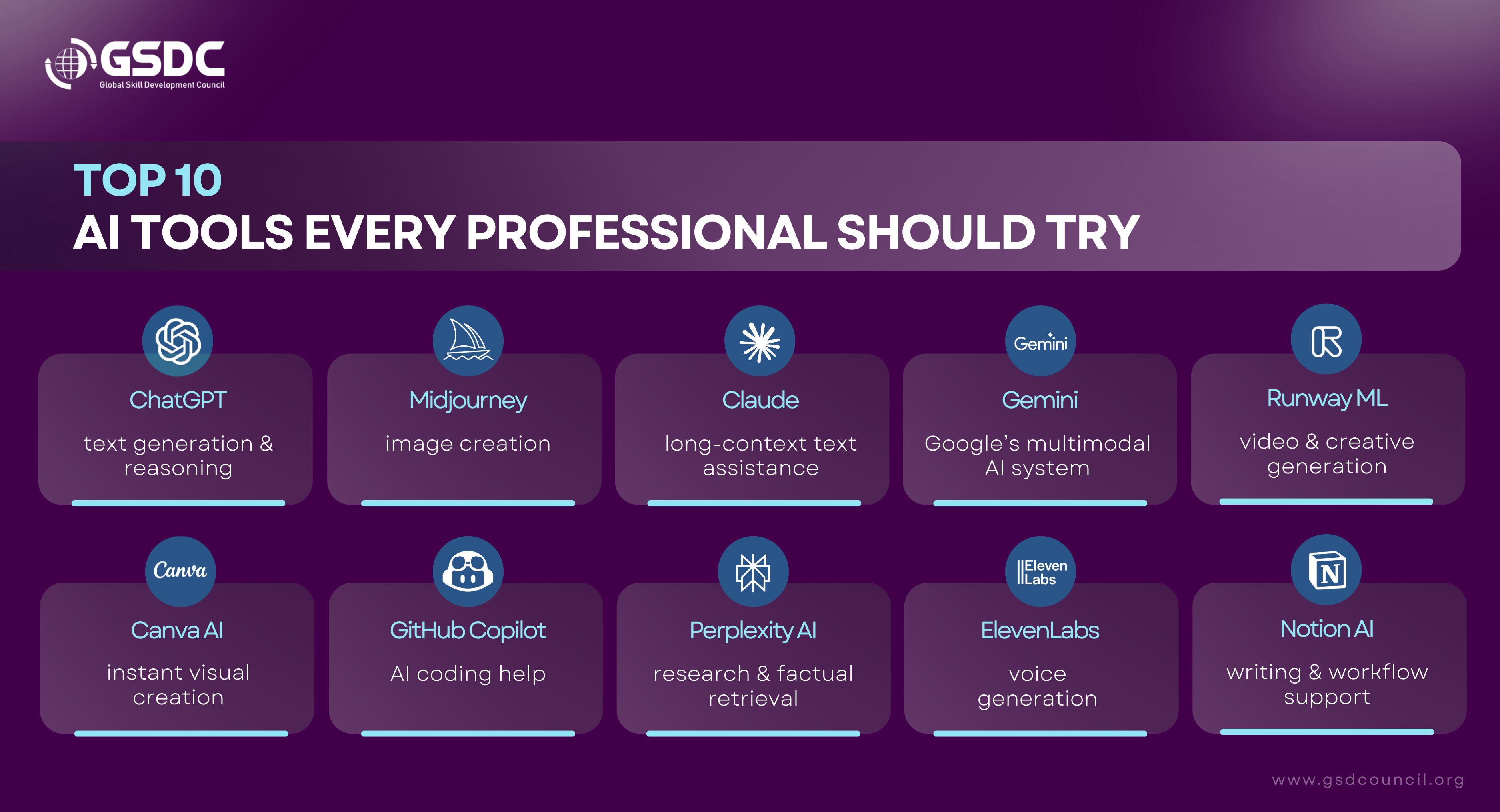
Trying multiple tools helps you understand what are the best AI tools for your workflow.
To improve results, refine your prompting: be specific, provide context, share examples, and test variations. This builds practical skill and confidence.
Step 3: Apply Generative AI to Real Work Problems
This is the stage where you shift from casual user to practitioner. Start by asking:
- How can generative AI reduce manual work?
- Where can it save time or improve accuracy?
- Which tasks can be automated in my role?
Real Examples From Leading Companies
- Coca-Cola (Marketing): Implemented generative AI for global digital ad visuals creation, thus cutting down the time of creative turnaround.
- Unilever (HR): Enables AI in writing job descriptions and candidate screening, thus the hiring process is getting faster.
- Microsoft (Developers): GitHub Copilot is the tool that makes teams able to finish coding tasks up to 55% faster.
- Klarna (Support): Two-thirds of support interactions are now handled by the AI agent.
- Amazon (Operations): AI is used for generating SOPs, reports, and forecasts, thus the company is saving a lot of hours from manual work.
Create a simple learning log: noting down the task, the generative AI tools you used, the improvements you observed, and what still needed for editing.
A certificate such as the Certified Generative AI Expert credential may be useful if you decide to apply AI in a more systematic way and align your projects with industry best practices.
Step 4: Develop Critical Thinking About AI Outputs
A true generative AI expert doesn’t accept AI responses at face value. They evaluate them carefully.
Ask yourself:
- Is this accurate? Always verify facts.
- Is it relevant? Ensure it fits your context and audience.
- Is it safe or biased? Watch for unfair or harmful assumptions.
- Is it ethical? Consider privacy and responsible use.
By 2026, companies will value professionals who can judge AI as well as they can use it-because critical thinking ensures trust and quality.
Step 5: Go One Level Deeper Into Generative AI Development
Once you’re confident using tools, explore how generative AI works behind the scenes.
Key concepts include:
- Large Language Models (LLMs)
- Prompt engineering frameworks
- RAG (Retrieval-Augmented Generation)
- Fine-tuning and embeddings
- APIs and integrations
- Data pipelines for generative AI development
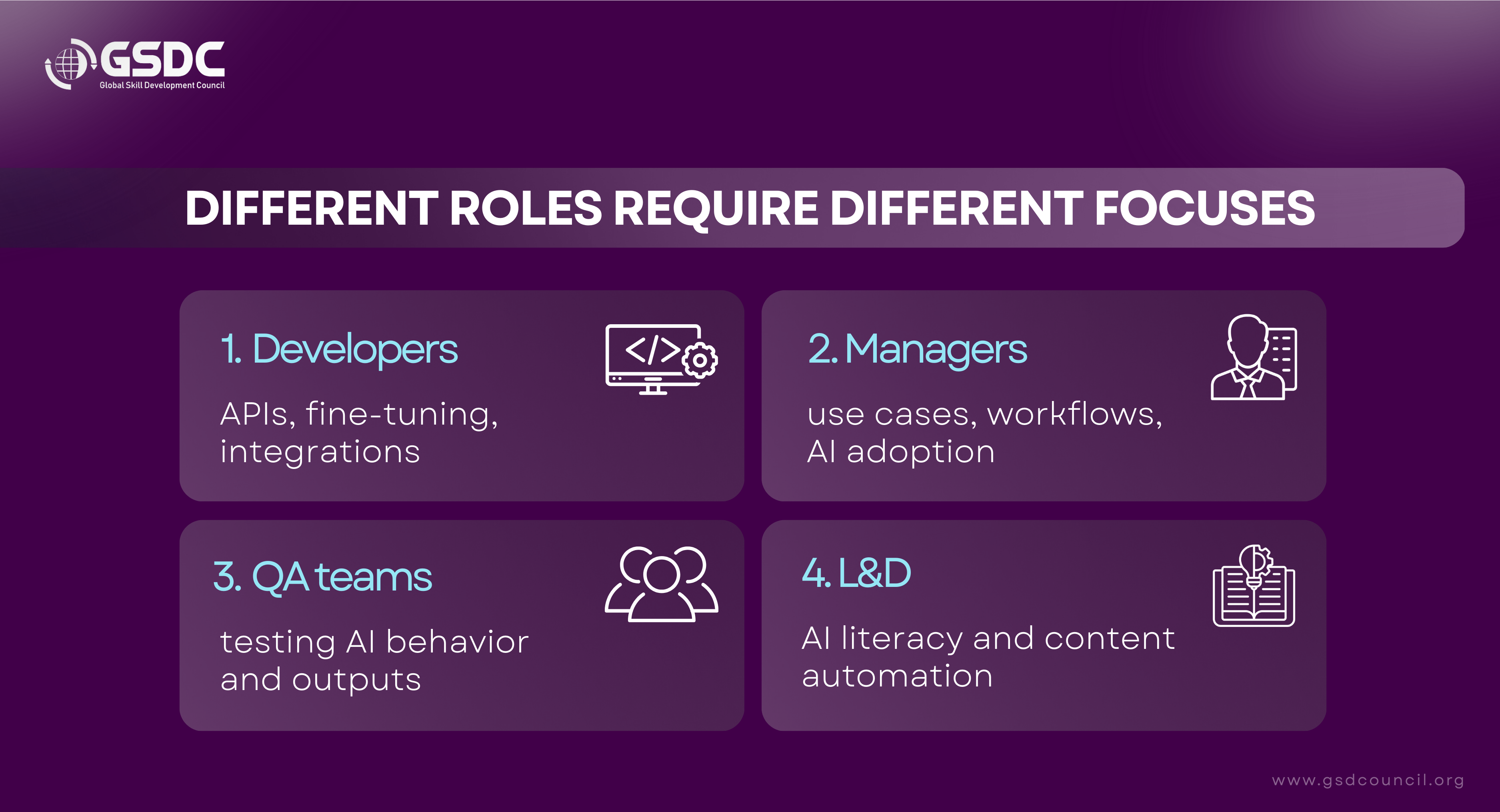
Many professionals use structured learning resources from global bodies like GSDC, which provide clarity on LLMs, RAG, fine-tuning, and more.
Step 6: Build Small Projects (Your Portfolio Starts Here)
To be seen as a generative AI expert, you need visible proof of your skills.
Start with small, practical projects:
- Internal FAQ chatbot
- Marketing content generator
- Workflow automation assistant
- Knowledge retrieval tool
- Personalized learning assistant
Document the problem, your approach, the generative AI tools used, improvements achieved, and the final outcome. These become strong portfolio assets for interviews and promotions.
Step 7: Learn about Ethical and Responsible AI Practices
As the use of AI spreads, companies will be more and more concerned with the responsible use of AI.
Some of the core principles are:
- Transparency: Making sure that the users understand the process by which AI-generated outputs are derived and used.
- Fairness: Ensuring that AI systems do not generate biased or discriminatory results.
- Data Privacy: Safeguarding sensitive information and ensuring that prompts do not reveal confidential data.
- Safe Usage: Refraining from using AI to generate harmful, deceptive, or high-risk outputs for real workflows.
- Regulatory Alignment: Adhering to the new AI laws, standards, and organizational governance policies.
An expert to the core knows the limitations of AI, understands the situations in which AI should not be used, does not produce misleading results, and works towards the reduction of bias. The ethical skill is indispensable for the implementation of AI technology in the workplace in a safe manner.
Step 8: Use a Professional Generative AI Certification to Add Structure
Once you have practical experience, use a recognized credential to attest to your expertise.
Professionals are increasingly searching for:
- AI certification programs
- Generative AI certification for beginners
- Best generative AI certification options for career growth
The GSDC Generative AI Expert Certification, a globally renowned program covering advanced concepts, real-world use cases, prompt engineering, responsible AI practices, and practical project work, is one reliable route.
A structured certification puts you in a strong position for competitive 2026 roles by teaching you advanced skills, project development, application comprehension, and verifiable expertise.
Download the Hands-On Practice Workbook free for learners!⚡
Build practical skills with step-by-step exercises & mini-projects 📘
Final Thoughts: Your Way to Becoming a Generative AI Expert by 2026
It is not necessary for you to be a hardcore developer if you want to be successful with generative AI. What counts is knowing what generative AI is capable of and what it is not, being able to use leading generative AI tools in a confident manner, and implementing AI in daily tasks.
Work on small projects, always use your critical thinking when evaluating outputs, and adhere to ethical best practices. Take a professional generative AI certification to deepen your knowledge and always keep learning.
If with small and consistent steps you start today, then in the future you will be able to master generative AI, create a solid generative AI career path, and be noticed as a trusted generative AI expert in 2026.

Related Certifications
Stay up-to-date with the latest news, trends, and resources in GSDC
If you like this read then make sure to check out our previous blogs: Cracking Onboarding Challenges: Fresher Success Unveiled
Not sure which certification to pursue? Our advisors will help you decide!