Managing Sandbox & Production AI for Safe Testing & Deployment
Written by Kelvin Ibrahim
Artificial Intelligence is no longer confined to innovation labs or experimental pilots it is now deeply embedded in how modern organizations operate, compete, and grow. From intelligent automation in customer service to predictive analytics in finance and healthcare, enterprise AI is driving faster decisions and unlocking new efficiencies across industries.
However, this rapid integration comes with a hidden complexity. While AI systems appear seamless to end users, behind the scenes, they require rigorous AI testing, validation, AI lifecycle management, and governance. A single misstep, such as deploying an untested model or exposing sensitive data, can lead to operational disruptions, AI compliance violations, and reputational damage within minutes.
This blog explores how organizations can effectively manage AI sandbox and production AI environments to strike the right balance between innovation and responsible AI. It delves into the risks of poor environment management, the importance of AI governance, and the best practices needed to ensure safe, scalable AI deployment and AI model deployment in today’s fast-evolving digital landscape.
Why Managing AI Environments Matters Today
AI is no longer a futuristic concept; it is embedded in everyday business operations. From automating workflows with AI automation tools to enhancing customer experiences, organizations are rapidly integrating enterprise AI into their systems.
However, this rapid adoption comes with challenges:
- Increasing regulatory pressure (e.g., GDPR, data privacy laws)
- Growing concerns around AI security, data security, and misuse
- Rising expectations for system reliability and accuracy
- Greater risk of reputational damage due to AI failures
With AI evolving quickly, organizations must ensure that innovation does not come at the cost of AI governance, AI compliance, security, and control.
Understanding Sandbox Environments
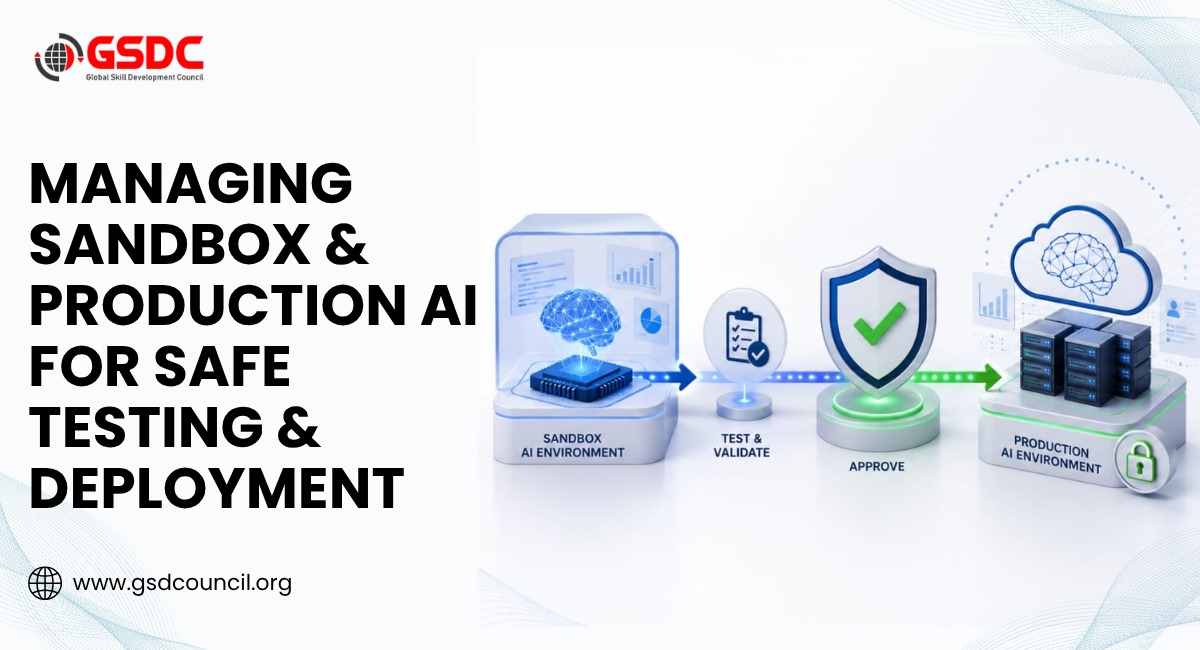
An AI sandbox environment is an isolated, low-risk space designed for AI testing, experimentation, and innovation.
It allows teams to explore AI capabilities without affecting real users or production systems. If you're wondering what is a sandbox, it is a secure environment where developers and data scientists can safely test models, applications, and workflows before deployment.
The Three-Layer Architecture for AI Deployment
A production environment is where AI systems operate in real-world conditions. This is where applications interact with actual users and live data after successful AI model deployment.
Key Characteristics of Production
- Handles real business data and transactions
- Requires high reliability and uptime
- Operates under strict AI governance and AI compliance rules
- Includes continuous monitoring and audit logging
Unlike sandbox environments, production is not a place for experimentation. Every model deployment must be stable, predictable, secure, and aligned with AI lifecycle management practices.
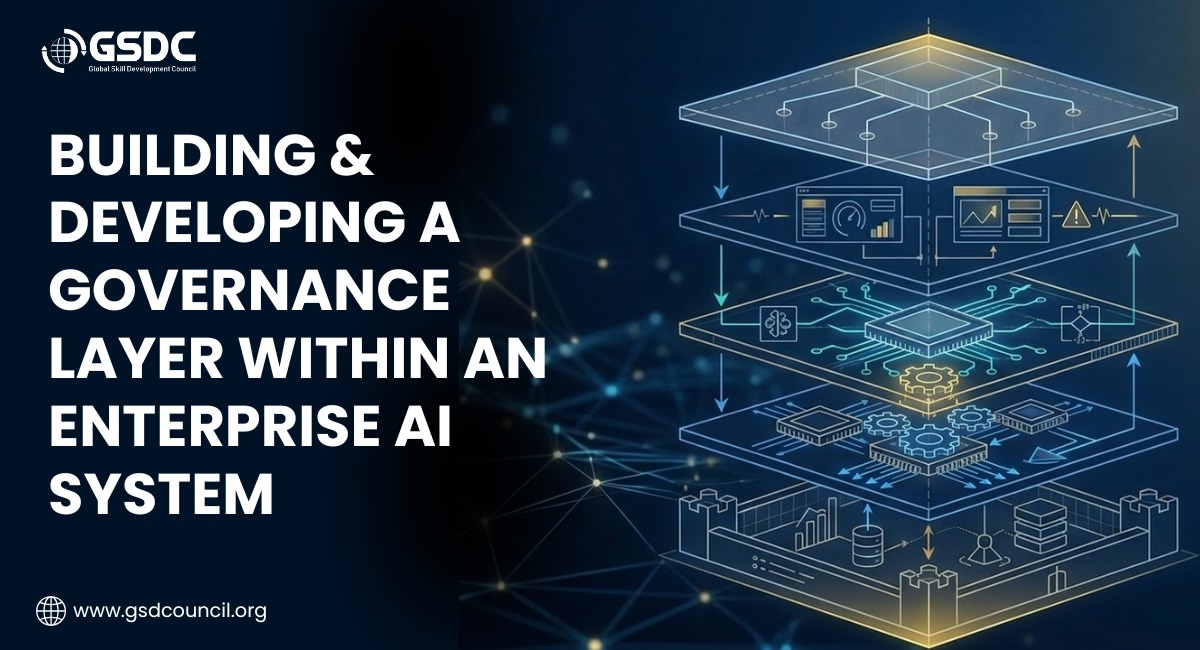
The Three-Layer Architecture for AI Deployment
To manage AI systems effectively, organizations should adopt a three-layer architecture for machine learning model deployment and AI deployment.
1. Sandbox Environment (Experimentation)
- Focus on creativity and AI testing
- Use synthetic data
- Encourage rapid iteration
2. Staging Environment (Validation)
- Validate performance and scalability
- Ensure compliance with AI governance framework policies
- Test real-world scenarios in a controlled setting
3. Production Environment (Deployment)
- Handle real users and live data
- Ensure stability and reliability
- Enforce strict governance and monitoring across deployment platforms
This structured approach ensures that AI systems are thoroughly tested before reaching end users and supports reliable AI model deployment.
The Role of Governance in AI Deployment
AI governance is a critical component of managing AI environments. A well-defined AI governance framework ensures that AI systems are safe, compliant, secure, and accountable.
Why Governance Matters
- Bridges the gap between experimentation and AI deployment
- Reduces risk and ensures consistency
- Enables scalability across the organization
- Supports responsible AI
- Ensures accountability through logging and monitoring
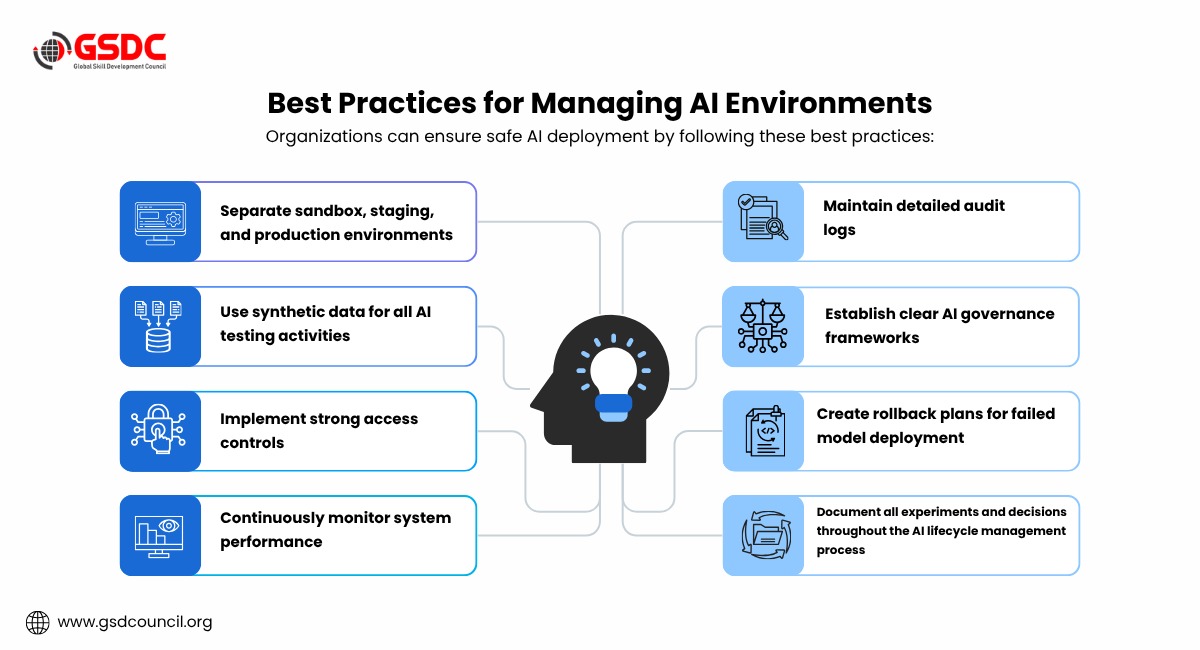
Key Governance Layers
- AI security reviews
- Model risk assessments
- Data privacy controls
- AI compliance checks
- Business approvals
Without AI governance, AI becomes an unmanaged risk rather than a strategic asset.
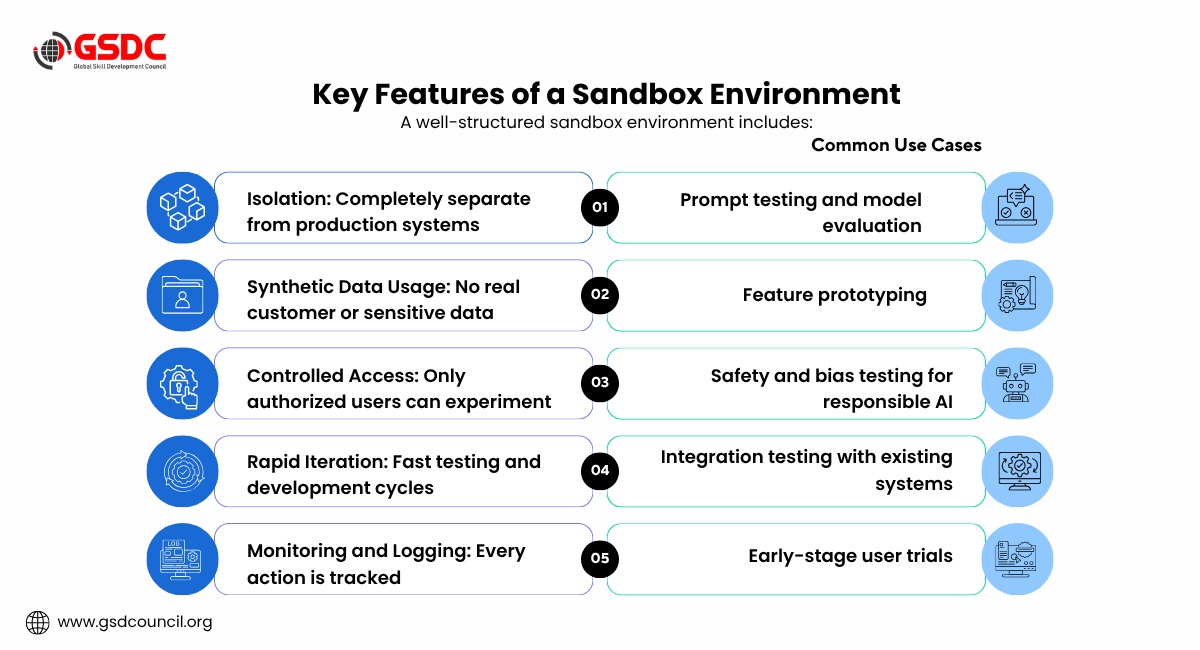
Designing a Safe Sandbox Environment
To ensure effective experimentation, AI sandbox environments must be designed with AI security and control in mind.
Core Principles
- Isolation from production systems
- Use of synthetic or anonymized data
- Restricted and controlled access
- Implementation of guardrails and limits
- Comprehensive logging and monitoring
What the Sandbox Must Protect
- Real customer data
- Sensitive employee information
- Production systems
- Organizational AI compliance boundaries
A secure AI sandbox ensures that experimentation does not compromise organizational integrity.
Become a Certified AI Testing Tool Expert with GSDC
As organizations increasingly rely on enterprise AI, the demand for professionals who can validate, test, and govern AI systems is growing rapidly. The GSDC Certified AI Testing Tool Expert Certification equips learners with the practical skills needed to perform AI testing, support secure AI model deployment, strengthen AI governance, and ensure responsible AI practices throughout the AI lifecycle management process.
Covering modern AI testing tools, quality assurance techniques, risk assessment, and compliance best practices, this certification helps professionals build the expertise required to deliver reliable, secure, and production-ready AI solutions across diverse business environments.
Common Mistakes to Avoid
Despite best practices, many organizations make critical errors:
- Using real customer data during testing
- Skipping staging and validation phases
- Deploying without proper AI governance
- Lack of monitoring and logging
- No incident response or rollback plan
Avoiding these mistakes is key to building reliable enterprise AI systems.
The Required Mindset Shift
Successfully managing AI environments requires a shift in mindset:
- Sandbox = Innovation and experimentation
- Staging = Validation and control
- Production = Responsibility and accountability
Treating all environments the same leads to inefficiencies and risks. Each environment must be managed with a distinct purpose and level of control while following AI lifecycle management and AI governance best practices.
Conclusion
AI is transforming how organizations operate, but with great power comes great responsibility. Managing AI sandbox and production environments effectively is essential for safe experimentation, AI testing, and reliable AI deployment.
By maintaining clear separation, implementing a strong AI governance framework, and adopting structured AI lifecycle management processes, organizations can:
- Innovate confidently
- Reduce operational risks
- Ensure AI compliance
- Strengthen AI security
- Deliver consistent and trustworthy responsible AI solutions
Ultimately, the success of enterprise AI initiatives depends not just on technology, but on how responsibly it is managed.

Related Certifications
Frequently Asked Questions
An AI sandbox environment allows organizations to perform AI testing and experiment with AI systems in a controlled, low-risk setting without impacting real users or data.
Separation prevents untested features from affecting live systems, protects sensitive data, strengthens AI security, and ensures AI compliance with regulations.
Risks include system failures, data breaches, AI compliance violations, and reputational damage due to untested or unreliable AI behavior during AI model deployment.
An AI governance framework ensures that AI systems are secure, compliant, and accountable by enforcing policies, monitoring usage, and managing risks throughout the AI lifecycle management process.
A safe strategy includes AI sandbox testing, staging validation, production monitoring, strong AI governance, access control, rollback planning, and secure machine learning model deployment.
Stay up-to-date with the latest news, trends, and resources in GSDC
If you like this read then make sure to check out our previous blogs: Cracking Onboarding Challenges: Fresher Success Unveiled
Not sure which certification to pursue? Our advisors will help you decide!