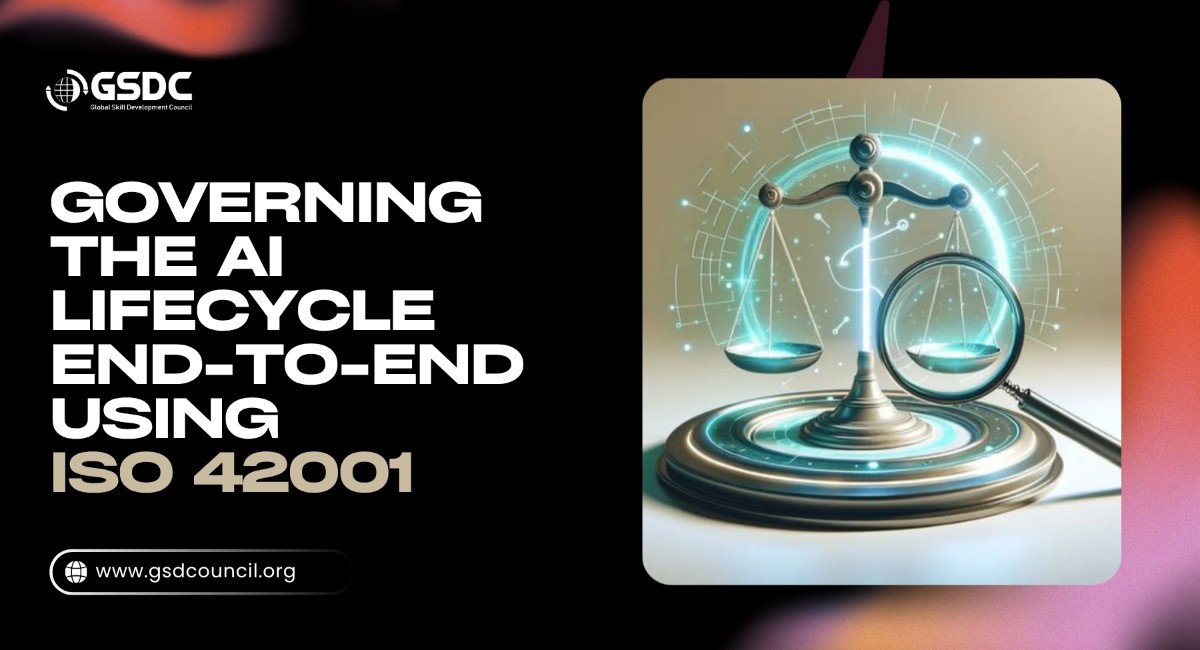
Governing the AI Lifecycle End-to-End Using ISO 42001
Written by Sanam Makadia
Artificial Intelligence is no longer a futuristic technology. It is now a core part of how organizations operate. Businesses are using AI to automate work, analyze data, improve customer experience, and make faster decisions across the AI lifecycle and broader AI development lifecycle.
However, AI also brings serious risks. AI systems process large amounts of sensitive data, influence important decisions, and impact people directly. If AI is not managed properly, it can lead to biased results, data leaks, compliance failures, and loss of trust.
This is why understanding what is AI governance and adopting a structured AI governance framework aligned with ISO/IEC 42001 and ISO 42001 AI governance principles has become critical.
Why AI Governance Has Become a Critical Need
The speed at which AI is being adopted has created new challenges for businesses.
AI Adoption Is Growing Rapidly
Most organizations are already using AI in some form or are planning to implement it. From customer support to cybersecurity, AI is transforming operations across the AI model lifecycle and overall AI lifecycle management.
AI Decisions Affect Real People
AI systems now influence hiring decisions, credit approvals, medical analysis, safety systems, and customer interactions. A wrong AI decision can directly harm individuals and businesses, highlighting why AI governance is important.
Increasing Regulatory and Legal Pressure
Governments and regulators are paying close attention to how AI is used. Organizations must ensure compliance using a responsible AI governance framework that aligns with global standards like ISO 42001.
Risks of Using AI Without Governance
When AI is used without proper controls, organizations face serious issues such as:
- Shadow AI usage by employees
- Data privacy violations
- Biased or unfair AI decisions
- AI hallucinations and incorrect outputs
- Lack of transparency
- No clear accountability
The key point is simple:
If something goes wrong with AI, it is not just a technology failure. It is an artificial intelligence governance failure. That is why understanding why is AI governance important is now a business priority, not just an IT concern.
ISO/IEC 42001: A Structured Framework for Responsible AI Governance
ISO/IEC 42001 is the first international standard specifically developed for AI management systems, offering a complete AI governance framework for organizations adopting end-to-end AI solutions.
It helps manage AI risks, ensure accountability, and maintain compliance across the entire AI lifecycle governance process. The standard applies to everyone involved in who is developing AI, including developers, business leaders, and risk teams.
Designed to integrate with standards like ISO 27001 and NIST, ISO 42001 strengthens governance without replacing existing systems. It focuses on managing AI systems after deployment rather than explaining what is an AI model or how to code it.
Governing AI Across the Entire Lifecycle
True AI governance means controlling AI from start to finish across the AI lifecycle, also known as AI lifecycle management or AI development lifecycle.
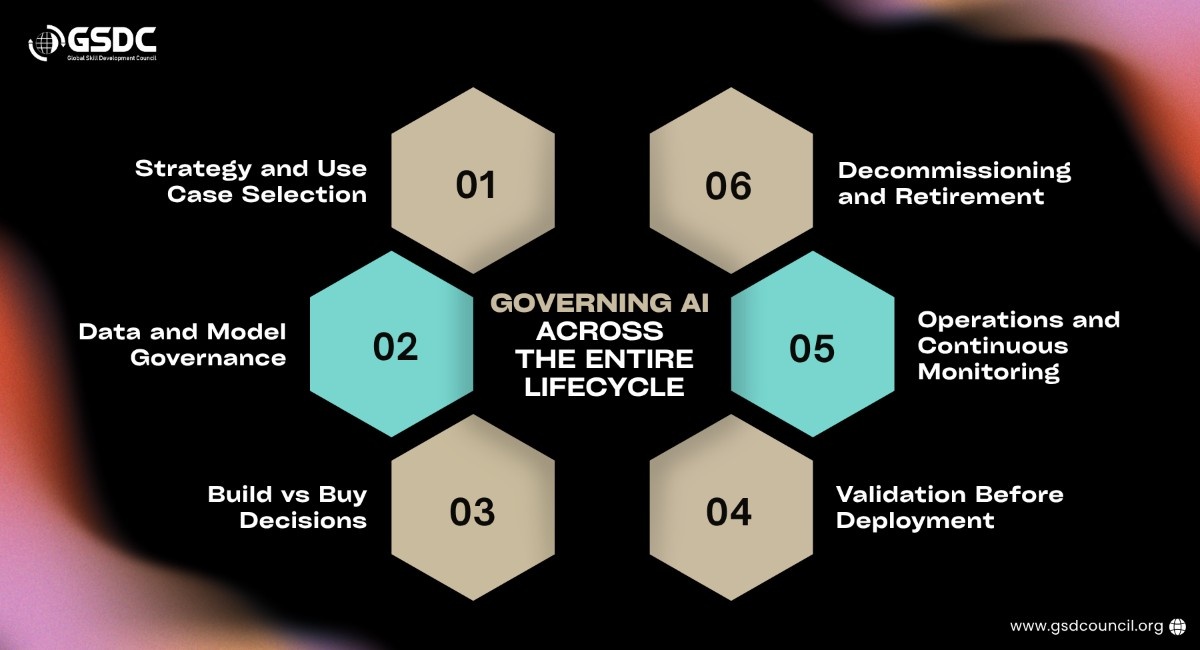
1. Strategy and Use Case Selection
AI governance begins even before an AI system is chosen.
Defining Why AI Is Needed
Organizations must first clearly define the purpose of using AI. AI should solve real business problems such as improving efficiency, reducing costs, or enhancing services.
Establishing AI Policies
Clear policies must be created about how AI can be used, what is allowed, and what is prohibited.
Defining AI Risk Appetite
Every organization must decide how much risk it is willing to accept from AI systems.
Aligning AI with Ethics and Business Goals
AI strategies must align with ethical principles, legal requirements, and long-term business objectives.
This stage ensures AI is adopted in a planned and responsible manner.
2. Data and Model Governance
AI systems depend on data and models, making governance critical.
Understanding what is an AI model and managing the AI model development process is essential for reliable outcomes.
Managing Data Quality
The accuracy of AI depends on the quality of the data used to train it. Poor, incomplete, or biased data will lead to unreliable AI outcomes.
Handling Sensitive and Personal Data
Organizations must ensure that personal and confidential data used in AI systems is protected and used legally.
Managing Third-Party Data Risks
When using external AI platforms, organizations must carefully assess how vendors handle data privacy and security.
Proper Documentation
All AI-related data sources, training methods, and processes must be documented for transparency and accountability.
This stage ensures AI decisions are based on trustworthy and well-managed data.
3. Build vs Buy Decisions
Organizations must decide whether to develop AI internally or use external platforms.
Internal Development
Some organizations build their own AI models tailored to specific business needs.
Using External AI Services
Others rely on SaaS AI platforms such as generative AI tools provided by third parties.
Managing Vendor and Supply Chain Risks
When using external AI tools, organizations must assess:
- Vendor security controls
- Contract terms
- Data handling practices
- Transparency of the AI model
Avoiding “Black Box” AI
Many third-party AI systems lack transparency. ISO 42001 requires organizations to manage these risks carefully.
Whether AI is built internally or purchased, the same governance principles must apply.
4. Validation Before Deployment
Before any AI system is used in real operations, it must be thoroughly validated.
Testing More Than Just Accuracy
An AI model can be technically accurate but still unsafe, biased, or unsuitable for business use.
Checking for Bias and Fairness
Organizations must test whether AI produces unfair or discriminatory results.
Testing for Misuse Scenarios
AI must be evaluated for potential misuse, security risks, and unintended consequences.
Formal Risk Acceptance
All identified risks must be reviewed, documented, and formally approved before deployment.
This stage ensures AI is safe, fair, and reliable before going live.
5. Operations and Continuous Monitoring
Governance does not stop once AI is deployed.
AI Behavior Changes Over Time
As new data enters the system, AI performance can drift and produce unexpected results.
Continuous Monitoring Is Required
ISO 42001 requires:
- Ongoing performance monitoring
- Logging and traceability
- Security monitoring
- Regular audits
Incident Management
Organizations must have clear processes to handle AI-related incidents and failures.
This stage ensures AI remains aligned with its intended purpose throughout its use.
6. Decommissioning and Retirement
One of the most neglected parts of AI governance is what happens at the end.
Planning AI Retirement
When an AI system is no longer needed, it must be retired properly.
Protecting Data and Intellectual Property
Old AI systems contain sensitive data and business knowledge. Improper retirement can create major security risks.
Capturing Lessons Learned
Organizations should document what worked and what didn’t to improve future AI projects.
This approach aligns with structured lifecycle thinking similar to what is product lifecycle management, but applied to AI systems.
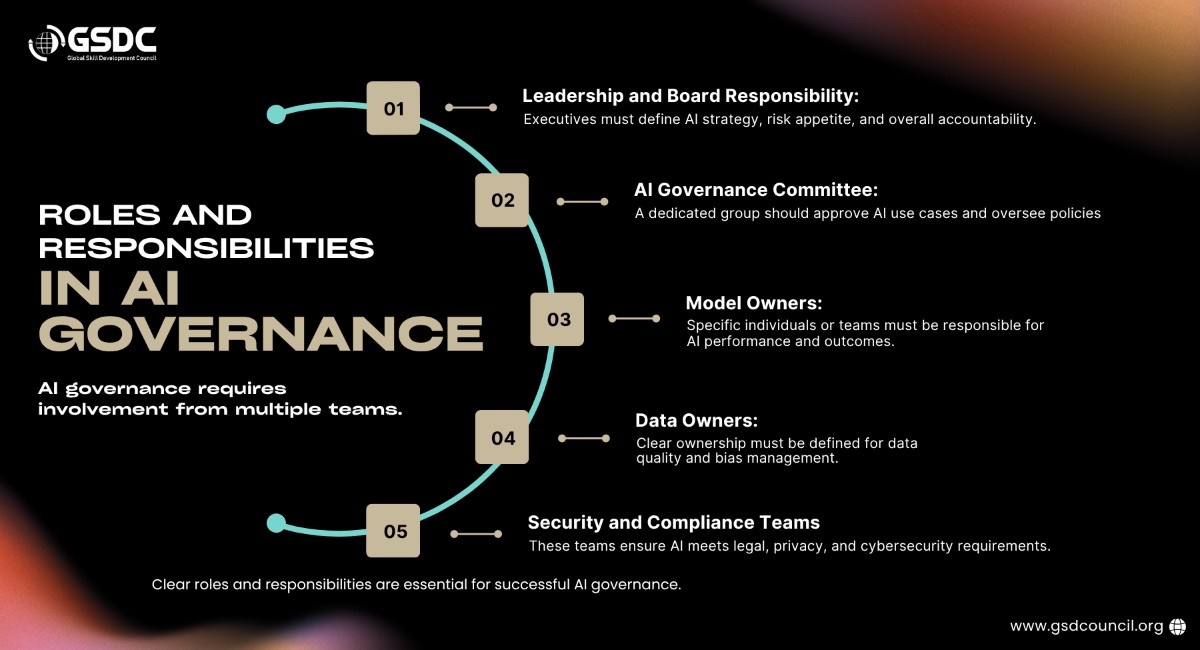
Building a Responsible AI Culture
Technology alone cannot ensure responsible AI use.
AI Awareness Across the Organization:
AI is used by many departments, not just IT. Everyone must understand AI risks and limitations.
Training Business Users:
Employees must be trained on responsible AI usage and how to handle AI outputs correctly.
Reducing Shadow AI:
Unauthorized AI tools can create major risks. Organizations must provide approved platforms and clear guidelines.
AI governance must be embedded into the culture of artificial intelligence governance practices.
Common Pitfalls to Avoid
While implementing ISO 42001, organizations should avoid these mistakes:
Treating ISO 42001 as a Checklist:
AI governance is more than compliance. It requires real risk management and oversight.
Overengineering the Process:
Governance should grow gradually. Trying to build a perfect system on day one can slow progress.
Not Involving Business Teams:
AI is a business tool. Business leaders must be actively involved in governance decisions.
Ignoring Third-Party AI:
External AI platforms must be governed with the same rigor as internal systems.
Avoiding these pitfalls leads to smoother and more effective AI governance.
Strengthening AI Governance Capabilities
As AI adoption accelerates, organizations need structured governance and skilled professionals to manage risks effectively. The Global Skill Development Council (GSDC) supports this need through globally recognized programs like the ISO 42001:2023 Lead Auditor Certification.
This certification equips professionals to audit, manage, and strengthen AI governance frameworks aligned with ISO/IEC 42001, enabling organizations to ensure responsible, compliant, and trustworthy AI systems.

Conclusion
AI offers huge opportunities, but it also brings risks.
Understanding what is AI governance and why AI governance is important is essential for every organization adopting AI.
ISO/IEC 42001 provides a complete AI governance framework for managing risks across the entire AI lifecycle, from development to retirement.
By adopting ISO 42001, organizations can build secure, compliant, and scalable end-to-end AI solutions, ensuring long-term success in an AI-driven world.
Subscribe to Our Newsletter
Stay up-to-date with the latest news, trends, and resources in GSDC

Related Certifications
Stay up-to-date with the latest news, trends, and resources in GSDC
If you like this read then make sure to check out our previous blogs: Cracking Onboarding Challenges: Fresher Success Unveiled
Not sure which certification to pursue? Our advisors will help you decide!